

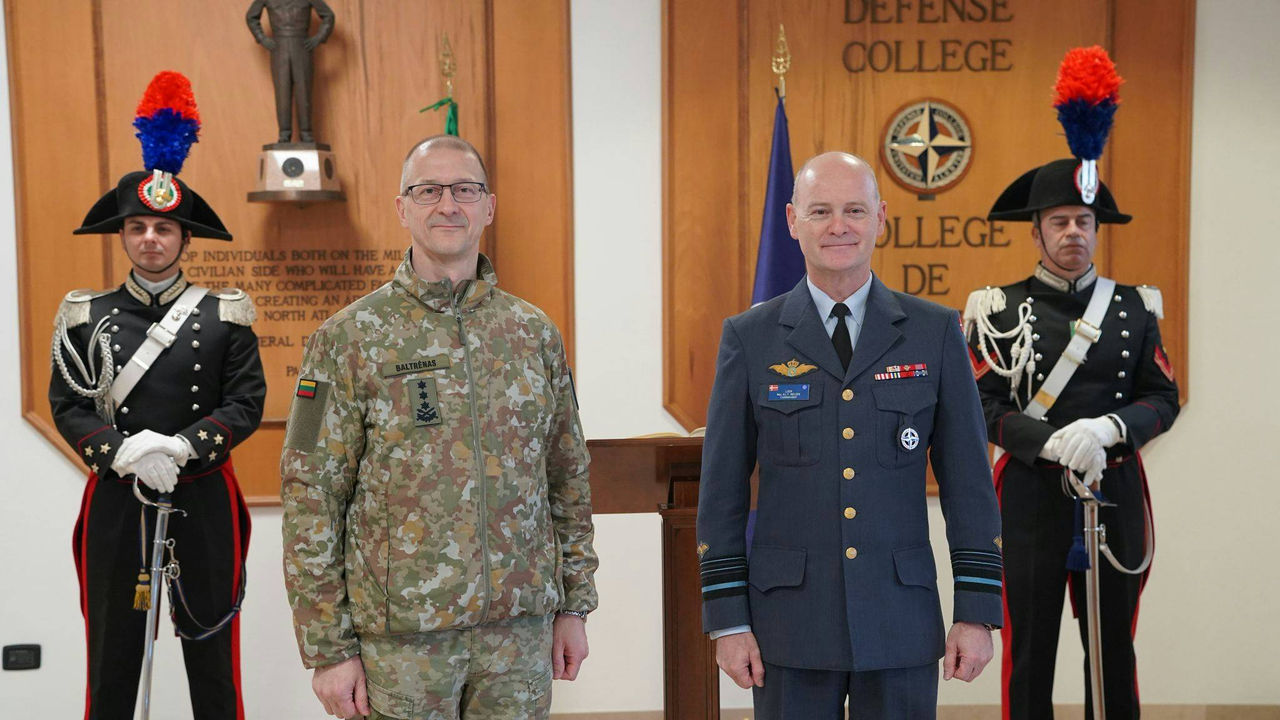
Lieutenant General Remigijus Baltrėnas, Director General of the International Military Staff, has completed a two-day visit to several NATO structures in Italy, including facilities in Naples and Rome, according to the organisation.
The visit, which took place on 14 January, included engagements at Joint Force Command Naples, the NATO Strategic Direction-South Hub, and the NATO Defense College. NATO said the meetings focused on regional security dynamics, ongoing missions, and the development of future military leadership.
At Joint Force Command Naples, Lieutenant General Baltrėnas met with the command’s Chief of Staff, Lieutenant General Rodolfo Sganga. Discussions covered security developments on NATO’s southern flank, cooperation with neighbouring regions, and the command’s role within NATO deterrence and defence planning, as well as updates on the NATO Mission in Kosovo and the NATO Mission in Iraq.
Commenting on the visit, Lieutenant General Baltrėnas said: “Allies understand the significant impact that instability in the southern neighbourhood have on NATO overall, shared security. The role of JFC Naples in contributing to safeguard NATO’s southern flank is absolutely critical. Military personnel and civilian staff in Naples work tirelessly to ensure that NATO’s awareness and readiness align with the demands for security, today and tomorrow.”
Joint Force Command Naples is one of three operational-level headquarters within NATO’s Command Structure. Its role is to plan and conduct military operations in support of the Alliance’s collective defence and crisis response tasks.
During his visit to the NATO Strategic Direction-South Hub, Lieutenant General Baltrėnas received briefings on the hub’s work examining political, economic, and social trends across Africa and the Middle East. The hub supports NATO decision-making by engaging with regional partners and improving situational awareness in areas affecting the Alliance’s southern approaches, according to NATO.
The organisation stated that improved understanding of regions including North Africa, the Middle East, the Sahel, and Sub-Saharan Africa contributes to identifying opportunities for cooperation and strengthening stability along NATO’s southern borders.
The final stop of the visit took place in Rome at the NATO Defense College, where Lieutenant General Baltrėnas met with the College’s Commandant, Lieutenant General Max A.L.T. Nielsen. Discussions reviewed progress in senior-level education programmes, examined trends in modern warfare, and considered approaches to preparing future strategic leaders.
Reflecting on the visit, Lieutenant General Baltrėnas said: “The NATO Defense College in Rome plays a pivotal role in training future leaders from NATO Allies, Partners, and international entities, equipping them with a 360-degree understanding of defence and security. Throughout its history, the NDC has trained more than 9,000 officers, many of whom have gone on to hold strategic-level leadership positions.”
He added: “The college plays an immense role in securing NATO’s future. Our responsibility is to prioritize its support, management, and continued evolution, ensuring the institution effectively prepares leaders for the challenges of tomorrow’s warfare.”











What will Halfwit come up with for this one?
It’s hardly going to instill fear into Europe’s enemies is it.