

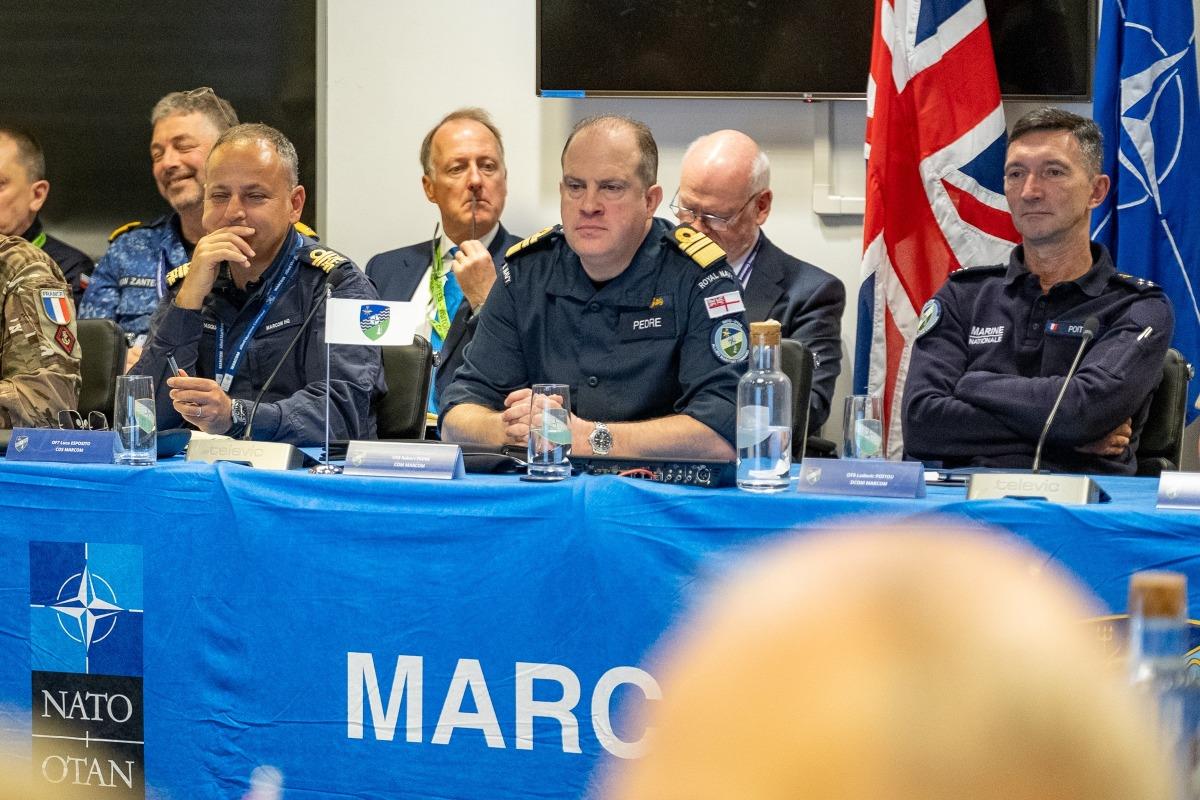
NATO’s Allied Maritime Command hosted chiefs of navy, fleet commanders and senior leaders from across the Alliance at its annual Maritime Operational Commanders’ Conference at its headquarters in Northwood from 15 to 17 April, with discussions centred on the future of NATO’s standing naval forces and the integration of uncrewed systems into maritime operations.
Vice Admiral Robert Pedre, Commander of Allied Maritime Command, said the Alliance was living in “consequential times and an era of great power competition marked by rapid technological change and sophisticated and adaptive adversaries” and that maritime power remained “foundational to NATO’s collective defence, security and prosperity, serving as a critical domain for deterring adversaries, protecting over one billion Alliance citizens and securing vital and often contested sea lines of communication.” He said the contributions of every allied navy to NATO’s standing naval forces were “immensely valued, clearly demonstrating Alliance cohesion and resolve.”
This year’s conference focused principally on NATO’s standing naval forces and their contribution to allied deterrence, alongside a discussion about the need for continued operational experimentation and integration of uncrewed systems into NATO’s maritime operations. Participants also discussed ways to enhance information sharing and strengthen security cooperation across missions including Operation Sea Guardian and the current Neptune Strike, Baltic Sentry and Arctic Sentry enhanced vigilance activities.
Senior leaders and planners from Joint Force Commands and other Allied Command Operations staffs also participated, engaging in discussions around the evolution of MARCOM as a warfighting headquarters, preparing for short-notice contingencies and maintaining a high state of operational readiness across their areas of operation.
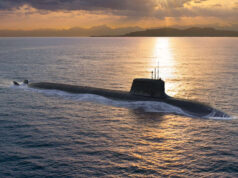


Seems prudent for NATO to set up a third standing Maritime group with a sole focus on the GIUK GAP and the Bear GAP. These ships could be exclusively based on frigates and destroyers operating CAPTAS 4 sonar or possibly CAPTAS 2.
The force could be primarily composed on British and Norwegian T26 and Canadian Rivers with contributions from other navy’s like France and the USA that also operate CAPTAS 4. The position of the force will be to prevent the Russians from rushing the bear gap with submarines.
It appears the NATO naval strength will blossom in the early 2030s – plenty of time for our adversaries to make hay?
Our enemies navy’s are in a much worse state at present. The threat is likely after 2030 as Russia and China ramp up SSN production which is a big if in the case of Russia.
Naval strategy is build strategy and the UK is building. We have more major surface combatants ( frigates, destroyers and cruisers) under construction than any other country other than China (including the USA) and we have seven nuclear submarines currently under build.
We just reactivated two major surface ship building facilities (Belfast and Rosyth) and we are doubling the size of our nuclear submarine production facilities. In addition we are adding additional dry docks both fixed and floating and we are also bringing in Allie’s like Australia and Norway into direct production and deployment schedules of naval vessels.
Unfortunately navy’s take time to build but we are also adding in new drone programs to supplement what we have today and we are getting close to finally getting all our T45’s back and we hopefully have sight of things finally starting to get better for the SSBN and SSN fleet.
Thank you, Jim, for the ‘leg up’. It’s good to get some reassurance. One thing is clear: the world is looking at UK defence equipment with a keener eye these days as our kit performs well on the Ukraine battlefront and T26 becomes a firm favourite with a few navies. Sadly, CH3 will be outstanding but not enough hulls to make a big impact on the UK MBT fleet or exports. We must attain the high ground in defence equipment and technology where we have been so successful in the past.
Agree, would have been great to see CH3 as an export winner,
I should be a quick discussion, we ned more of everything and the stuff already ordered needs to be delivered quicker.