

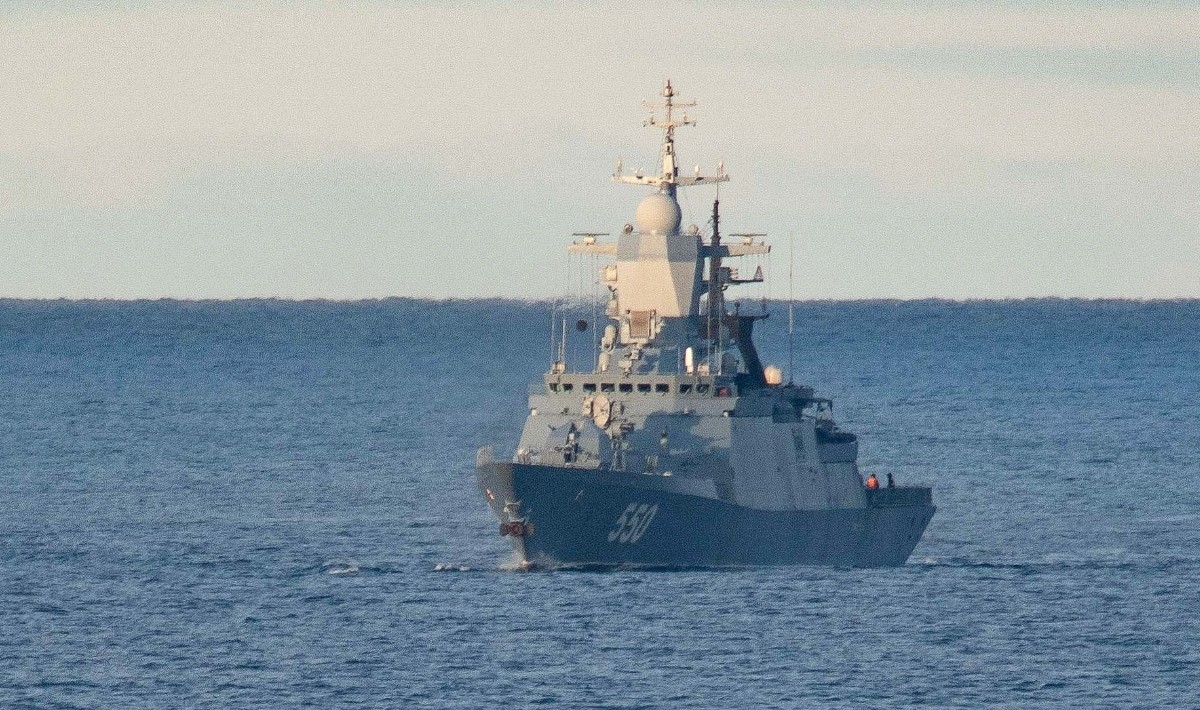
Russia has had no naval presence in the Mediterranean since June, the first time in a decade, and allied warships in European waters now outnumber Russian vessels by roughly three to one, a NATO official has told the UK Defence Journal.
The official said: “Russia has had no naval presence in the Mediterranean since June. That is the first time in ten years.” On the balance of forces, the official said: “The ratio of allied ships to Russian vessels is three to one, and not all of those are on NATO taskings. For submarines, the ratio is likely to be higher.”
The caveat attached to that is that the figure is an average and an estimate, with the position in any given area varying case by case. We understand the absence from the Mediterranean has been brought on by the reassignment of the Russian fleet to other tasks, chief among them escorting shadow fleet vessels carrying sanctioned oil.
NATO estimates there have been 13 boardings of shadow fleet tankers, which we understand has forced Russia to reallocate ships to monitoring that trade rather than deploying them further afield.
Allied Maritime Command has confirmed the pattern on the record. Lieutenant Commander Tim Pietrack, spokesperson and director of public affairs at MARCOM, told the UK Defence Journal:
“While we won’t comment on specific observations of Russian ships and movements, I would note that we see a trend of Russian navy ships escorting merchant vessels through the Baltic Sea and other areas around the Euro-Atlantic region. These escorting activities take up valuable days at sea for the Russian navy, and it places strain on their ability to generate naval forces for other missions.”
He also told me that “there’s no area around the Euro-Atlantic region where the Russian navy operates that Allies are not closely monitoring their activities.”
Russian warships have not disappeared from European waters, though. We understand vessels remain active around Northern Europe, which points to reallocation rather than withdrawal, with ships held closer to home and to the tanker routes they are now escorting.
The question now stands whether Russia can still be considered a global navy at all when it is no longer deploying across the world’s oceans. The escort tasking is having a direct effect on what Russia can put to sea elsewhere, and the constraint is compounded by a shortage of replenishment ships.
A NATO official said to me, “They lack oilers. They do not have the means to deploy substantially.” Asked where this leads, the official described it as a “longer term” degradation of Russian capabilities, and said it was not likely to recover soon.
Tom Cotterill at the Telegraph covered this too, you can read his item here.
No oilers
The Russian Navy lacks oilers in sufficient numbers to sustain deployments at distance, and has recently been reduced to refuelling from a repair ship. Using a repair ship “hull to hull” for the task is a substitute rather than a solution.
Readers will want to note that the vessel used was an Amur class ship, a Soviet-era Project 304 floating workshop of around five thousand tonnes, built to repair ships at forward anchorages, with machine shops, foundry equipment and accommodation for technicians rather than any replenishment-at-sea gear.
A purpose-built oiler has tensioned highline rigs, derricks and hose systems designed to hold a fuel line steady between two moving hulls, along with the station-keeping and fendering arrangements to make that safe.
Without that equipment, two ships passing fuel must sit far closer together for far longer, and water flowing between two parallel hulls at close range drops in pressure and draws them towards one another, an effect that has to be corrected continuously with helm and throttle. Any lapse risks collision, and a fuel line parting between two vessels in contact carries an obvious fire and pollution risk. The practical consequence is that the transfer can usually only be attempted in calm conditions and at low speed, which limits where and when a deployment can be sustained and leaves both ships vulnerable while it is happening.
An oiler exists to refuel warships and supply aviation fuel at sea, and without one a task group is tied to friendly ports. Russia lost that access in the eastern Mediterranean when the Assad government fell, putting the naval facility at Tartus and the air base at Khmeimim beyond reliable use, and it has been moving material to Tobruk in Libya since. Russian warships have not disappeared from European waters.
How the departure was tracked
The open source monitoring account Itamilradar dated the departure to 30 June, when the frigate Admiral Kasatonov and the oiler Akademik Pashin left the Mediterranean for the Atlantic following a port call at Oran in Algeria. Russia established its permanent Mediterranean task force in 2013, and at its height the deployment ran to around fifteen warships supporting operations in Syria.
The shore support that made a permanent Mediterranean deployment possible has now formally gone. Syria and Russia reached an agreement in August ending Moscow’s use of the Hmeimim air base near Latakia and the naval facility at Tartus as military outposts, with Damascus taking control of the air base and the commercial berth at Tartus under its civil administration, and the military facilities at both sites becoming joint training and qualification centres. The Syrian foreign ministry described the arrangement as a reorganising of the Russian presence along the coast and the most significant development since negotiations began around eighteen months earlier.
Russia has been moving material to Libya in the meantime, unloading at Tobruk and working on airfields around Benghazi and in the interior, though none of that yet amounts to a replacement for a naval base with repair and refuelling capacity. Behind it sits a Black Sea Fleet that has absorbed severe losses to Ukrainian strikes and a surface fleet with no tankers available to refuel warships at sea, which limits how far any of them can travel.
What Russia does still maintain is a warship permanently stationed in the English Channel, where the frigate Neustrashimy took over the patrol from Admiral Grigorovich in July. That vessel is there to escort tankers past British and French disruption of the shadow fleet, which is the same tasking that has emptied the Mediterranean, carried out within sight of the Kent coast rather than off Syria.
The British contribution
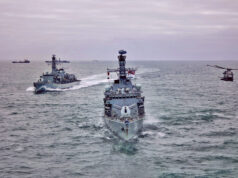
The Royal Navy spent 21 days in July monitoring Russian naval and shadow fleet activity in UK waters and the North Atlantic, with activations up 25 per cent across the first seven months of the year compared with 2025. HMS Somerset, HMS Tyne, HMS Mersey and HMS Severn were all involved, alongside Wildcat and Merlin helicopters.
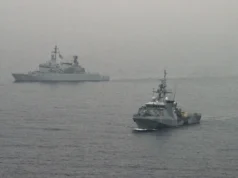
Much of that work has been escort shadowing rather than interception. The Russian frigate Neustrashimy repeatedly transited the UK area of responsibility escorting shadow fleet tankers, with HMS Severn taking over from HMS Mersey to follow her through the Dover Strait, and HMS Tyne closing to five nautical miles while the frigate conducted gunnery outside UK and French territorial waters.
Britain has sanctioned more than 500 vessels associated with the trade, and Russian oil and gas revenues fell by 24 per cent year on year in 2025.

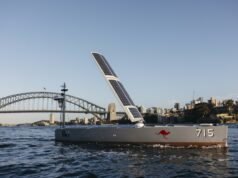
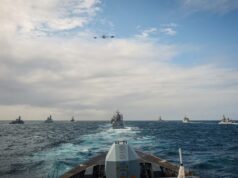
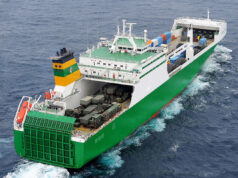




The reality is there are more friendly aircraft carriers in the Mediterranean than first rate russian navy assets, but excluding a handful of it’s latest attack Submarines the third world superpower likes to think it could compete in a hot war.
Probably because such a war is unlikely to stay conventional for long. It would likely escalate to the tactical nuclear level where Russia has the decided advantage.
Agree with the overwhelming advantage the russians have in the tactical field but surely in order to press home said advantage they would need the launching assets to be available in location ready to strike?
Eastern Europe it’s a no brainer but the Mediterranean? There’s a lot of targets and thats not even factoring in the US Navy 6th fleet, Gibraltar and Cyprus. The russian doctoring would always be to go nuclear hence NATO’s role would be to ensure that if something did go live then the russian navy would be turned into rusting Hull’s…..
Any peer on peer conflict with Russia is likely to see both horizontal and vertical escalation… meaning escalation to the region and to the level where the Russians have the advantage. Given increasing questions about the American nuclear guarantee any confrontation with Russia carries very high dangers for Europe.
As a thought 3 of those ships are to be retired by 2028 . Tune, Mersey ands Severn. Wildcat AH going in 27/28 with HMA in the early 2030’s . Somerset probably has 5 years in service . Lacking OPV in the future with the Navy focused on drones will be interesting to see how this plays out