

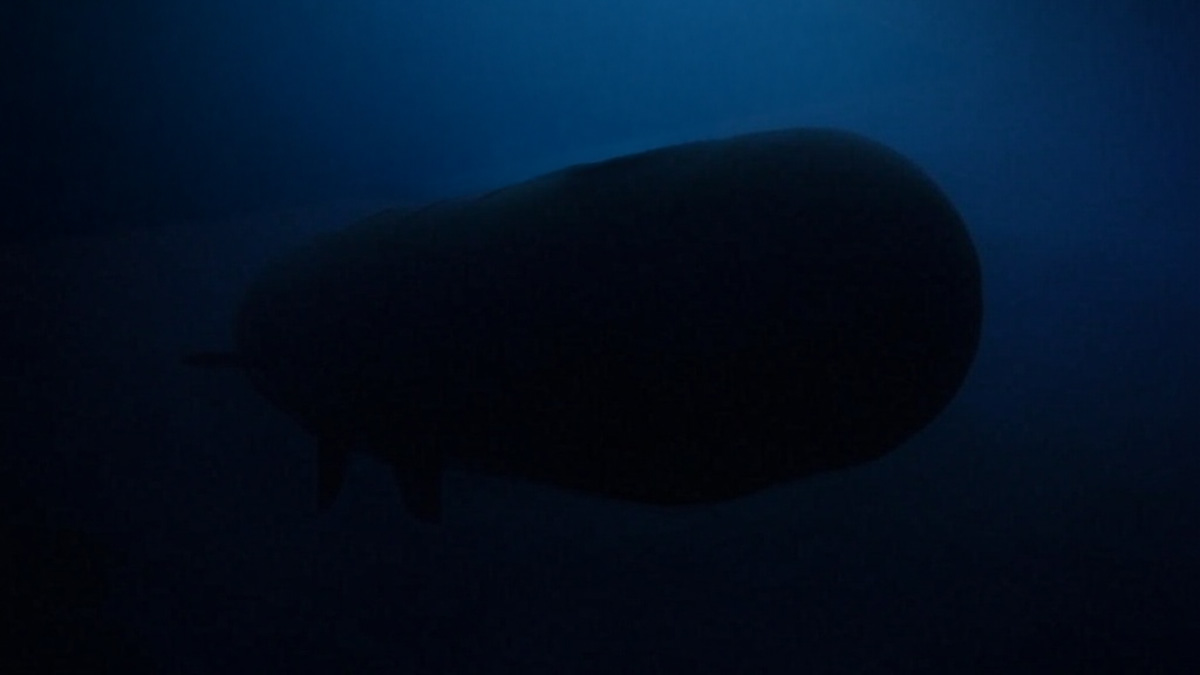
The Ministry of Defence is looking for a system to recover autonomous underwater vehicles that have broken down at sea, capable of lifting a craft up to seven metres long and three tonnes in weight, the department stated in a market engagement notice.
The notice, identifier was published on 18 August 2026. Estimated contract dates run from 1 February 2027 to 1 February 2029, with a tender notice expected around 31 October 2026, and the department says delivery could fall within the 2026/27 financial year subject to funding, approvals and lead times.
The requirement exists because the current arrangements are improvised. According to the notice, the system is intended “to provide the Ministry of Defence with a safer, more controlled and lower-risk method of recovering AUVs during non-standard or emergency recovery operations”, working either on its own or alongside a vessel’s existing crane, and compatible with a broad range of ships with differing deck layouts, freeboards and crane configurations.
The safety case is set out as the department says the system “is intended to reduce reliance on improvised recovery arrangements and improve operational resilience where the primary recovery system is unavailable or unsuitable. The system should reduce personnel exposure at the vessel edge, help mitigate the risk of person overboard incidents, and reduce the likelihood of damage to the AUV or host vessel.”
On the scenarios it has to cover, the notice states an interest in “solutions that are simple to rig, transportable, recoverable in challenging maritime conditions, and support emergency recovery scenarios where the AUV has suffered propulsion, communications, navigation or power-system failures.”
Recovering an uncrewed submersible in a seaway is among the harder routine tasks in maritime autonomy. A vehicle that has lost propulsion cannot position itself alongside, one that has lost communications cannot be commanded to surface at a chosen point, and a three-tonne object moving independently of the ship in a swell is a hazard both to itself and to anyone leaning over the side to catch it. Crews have historically improvised with poles, lines and grapples, which is precisely the practice the department is trying to end.
The system must be suitable for repeated operational use in the maritime environment and supplied with certification, operating instructions, maintenance information and inspection requirements. The department is also interested in maintenance and support services, training options and the average lead time from order to delivery.
The notice is classified under common procurement vocabulary codes for uncrewed underwater vehicles and marine equipment, and is listed as particularly suitable for small and medium-sized enterprises and for voluntary, community and social enterprises. No supplier engagement events are planned, with expressions of interest to be submitted by email by 18 September.
The size envelope points at the larger end of the Royal Navy’s uncrewed underwater fleet. The service has been expanding in this area through autonomous mine countermeasures systems and through trials vessels including the extra-large uncrewed submersible Cetus, built by MSubs of Plymouth, while the Strategic Defence Review of 2025 set out an intention to pair crewed submarines with uncrewed vehicles for monitoring the North Atlantic and protecting undersea infrastructure.
The department notes that issuing the notice does not commit it to carrying out any procurement.








That seems rather small given lots of our drones, such as the Sea class are 11 metres long.
Might be more for Proteus deep-sea AUVs or MCMVs, the Sabertooth AUVs from SAAB go up to 4m and 2000kg.
But most LUSVs will be beyond the weight limits for this.
OT, but hopefully of interest
Independent, verified data from OSINT groups (such as ISW, NASA’s FIRMS satellite system and Exilenova+) alongside Russian milbloggers confirms that Ukraine is actively bypassing Russian air defences to hit high-value targets deep inside Russia. Though Russia’s official Ministry of Defence claim of an 800+ drone single-night interception rate is certainly “dezinformatsiya”
While the Russian MoD routinely claims to shoot down 100% of incoming threats, geo-located video footage, thermal anomalies, and complaints from pro-Russian milbloggers reveal a reality of successful deep-penetration strikes hitting airfields, missile factories, ammunition depots and logistics networks
Struck on August 1, 2026 using precision Ukrainian long-range assets, the Navlya Drone Storage & Launch Facility in Bryansk was seriously damaged. This was a highly secretive underground storage and preparation base for Russian Geran-2 (Shahed-type) and Gerbera kamikaze strike drones. Satellite image reconstructions by independent OSINT analyst Harbuz and Dnipro OSINT confirmed that the strike successfully penetrated two of the three heavily fortified underground shelters. High-resolution imagery revealed massive blast craters and explicit thermal signatures showing secondary detonations and fires spreading directly out of the bunker entrances
Targeted and successfully neutralised during a synchronized drone and counter-battery sweep on the night of August 17–18, 2026, the Ustynka and Zhuravlyovka UAV Control Stations in Belgorod have been totalled. The Russian tactical military infrastructure containing ground control stations used by operators to steer reconnaissance and FPV strike drones over the frontlines are now one large joined-up crater.
In August 2026, Ukrainian “Flamingo” long-range cruise-missiles targeted the Progress Rocket Space Centre in Samara. OSINT analysts verified that this critical assembly plant produced electrical equipment for Soyuz-2 launch vehicles, which deployed Russia’s military communication and satellite constellations. The Russians have made no comment about this but on the night of 16-17th August the facility was still burning fiercely
Hit on August 16, 2026, the Kamesnsky Combine facility in Rostov was seriously damaged. OSINT project VARTA and Exilenova+ used satellite data to confirm that Ukrainian strike assets penetrated multiple air-defence layers (including Pantsir-S1 and S-300/400 systems) to hit five distinct production zones. NASA’s FIRMS satellite data tracked massive thermal spikes at this plant, which produced rocket propellants for Smerch, Uragan, and Tornado-S multiple launch rocket systems
In mid-August 2026, the Russian insider Telegram channel “Spy Dossier” published footage showing the total destruction of the major Yalynske Russian ammunition dump in Donetsk Oblast. GEOINT analysis paired with NASA FIRMS satellite data confirmed secondary detonations, showing that several Ukrainian strike assets bypassed local electronic warfare to ignite the ordnance.
Again in August 2026, the Ukrainian General Staff and independent milbloggers confirmed successful strikes on the Karlivka warehouses, holding tactical equipment and ammunition, severely disrupting frontline logistics
Ukraine is launching unprecedented large drone salvos deep into the Moscow and Rostov regions. However, the Russian MoD artificially inflates interception counts by tallying Ukrainian decoy drones (like the Parodiya type) alongside actual strike variants. They also routinely lie about the success rates. rarely providing any geolocatable video or pics
Rather than corroborating the Kremlin’s claims of perfect intercepts, prominent Russian milbloggers frequently complain about the lack of physical protection. Postings criticize the military leadership for failing to construct reinforced concrete hangars for aircraft and for relying entirely on improvised physical nets and earth berms, which Ukrainian drones continue to penetrate.
We know that these successful offensive actions by Ukraine are severely hurting the Russians because they have re-started threats against the UK this weekend.
We should re-double our efforts and help Ukraine burn Moscow to the ground.
Like the iran war..we won’t get the full or clear picture of What’s really happened on the ground..
For the global media, Slanted Speculation and political leanings are now far more important..
Independent, verified data from OSINT groups (such as ISW, NASA’s FIRMS satellite system and Exilenova+) alongside Russian milbloggers confirms that Ukraine is actively bypassing Russian air defences to hit high-value targets deep inside Russia. Though Russia’s official Ministry of Defence claim of an 800+ drone single-night interception rate is certainly “dezinformatsiya”
While the Russian MoD routinely claims to shoot down 100% of incoming threats, geo-located video footage, thermal anomalies, and complaints from pro-Russian milbloggers reveal a reality of successful deep-penetration strikes hitting airfields, missile factories, ammunition depots and logistics networks
Struck on August 1, 2026 using precision Ukrainian long-range assets, the Navlya Drone Storage & Launch Facility in Bryansk was seriously damaged. This was a highly secretive underground storage and preparation base for Russian Geran-2 (Shahed-type) and Gerbera kamikaze strike drones. Satellite image reconstructions by independent OSINT analyst Harbuz and Dnipro OSINT confirmed that the strike successfully penetrated two of the three heavily fortified underground shelters. High-resolution imagery revealed massive blast craters and explicit thermal signatures showing secondary detonations and fires spreading directly out of the bunker entrances
Targeted and successfully neutralised during a synchronized drone and counter-battery sweep on the night of August 17–18, 2026, the Ustynka and Zhuravlyovka UAV Control Stations in Belgorod have been totalled. The Russian tactical military infrastructure containing ground control stations used by operators to steer reconnaissance and FPV strike drones over the frontlines are now one large joined-up crater.
In August 2026, Ukrainian “Flamingo” long-range cruise-missiles targeted the Progress Rocket Space Centre in Samara. OSINT analysts verified that this critical assembly plant produced electrical equipment for Soyuz-2 launch vehicles, which deploy Russia’s military communication and satellite constellations. The Russians have made no comment about this but on the night of 16-17th August the facility was still burning fiercely
Hit on August 16, 2026, the Kamesnsky Combine facility in Rostov was seriously damaged. OSINT project VARTA and Exilenova+ used satellite data to confirm that Ukrainian strike assets penetrated multiple air-defence layers (including Pantsir-S1 and S-300/400 systems) to hit five distinct production zones. NASA’s FIRMS satellite data tracked massive thermal spikes at this plant, which produces rocket propellants for Smerch, Uragan, and Tornado-S multiple launch rocket systems
In mid-August 2026, the Russian insider Telegram channel “Spy Dossier” published footage showing the total destruction of the major Yalynske Russian ammunition dump in Donetsk Oblast. GEOINT analysis paired with NASA FIRMS satellite data confirmed secondary detonations, showing that severa lUkrainian strike assets bypassed local electronic warfare to ignite the ordnance.
Again in August 2026, the Ukrainian General Staff and independent milbloggers confirmed successful strikes on the Karlivka warehouses, holding tactical equipment and ammunition, severely disrupting frontline logistics
Ukraine is launching unprecedented large drone salvos deep into the Moscow and Rostov regions. However, the Russian MoD artificially inflates interception counts by tallying Ukrainian decoy drones (like the Parodiya type) alongside actual strike variants. They also routinely lie about the success rates. rarely providing any geolocatable video or pics
Rather than corroborating the Kremlin’s claims of perfect intercepts, prominent Russian milbloggers frequently complain about the lack of physical protection. Postings criticize the military leadership for failing to construct reinforced concrete hangars for aircraft and for relying entirely on improvised physical nets and earth berms, which Ukrainian drones continue to penetrate.
We know that these successful offensive actions by Ukraine are severely hurting the Russians because they have re-started threats against the UK this weekend.
There are plenty of trawlers up for grabs at the moment both twin beam and stern trawlers could find and lift that sort of weight, now is the time to buy as the over-heads is so costly they cannot make a living from fishing.
Hope they have thought about broken down LUSV as well.
So room for a skeleton crew as needed, or even hopefully optionally crewed.
Might need a helicopter to winch teams aboard, except the Wildcats are being withdrawn. I hope that one quietly dies a death…
Intresring they already consider these drones as likely to fail…!! Sad if they were to do so at an unfortunate moment in battle…!
If you want to recover a drone the safest way is surely to use another drone geared to recovery operations.
I sort of feel this seems a little obvious.