

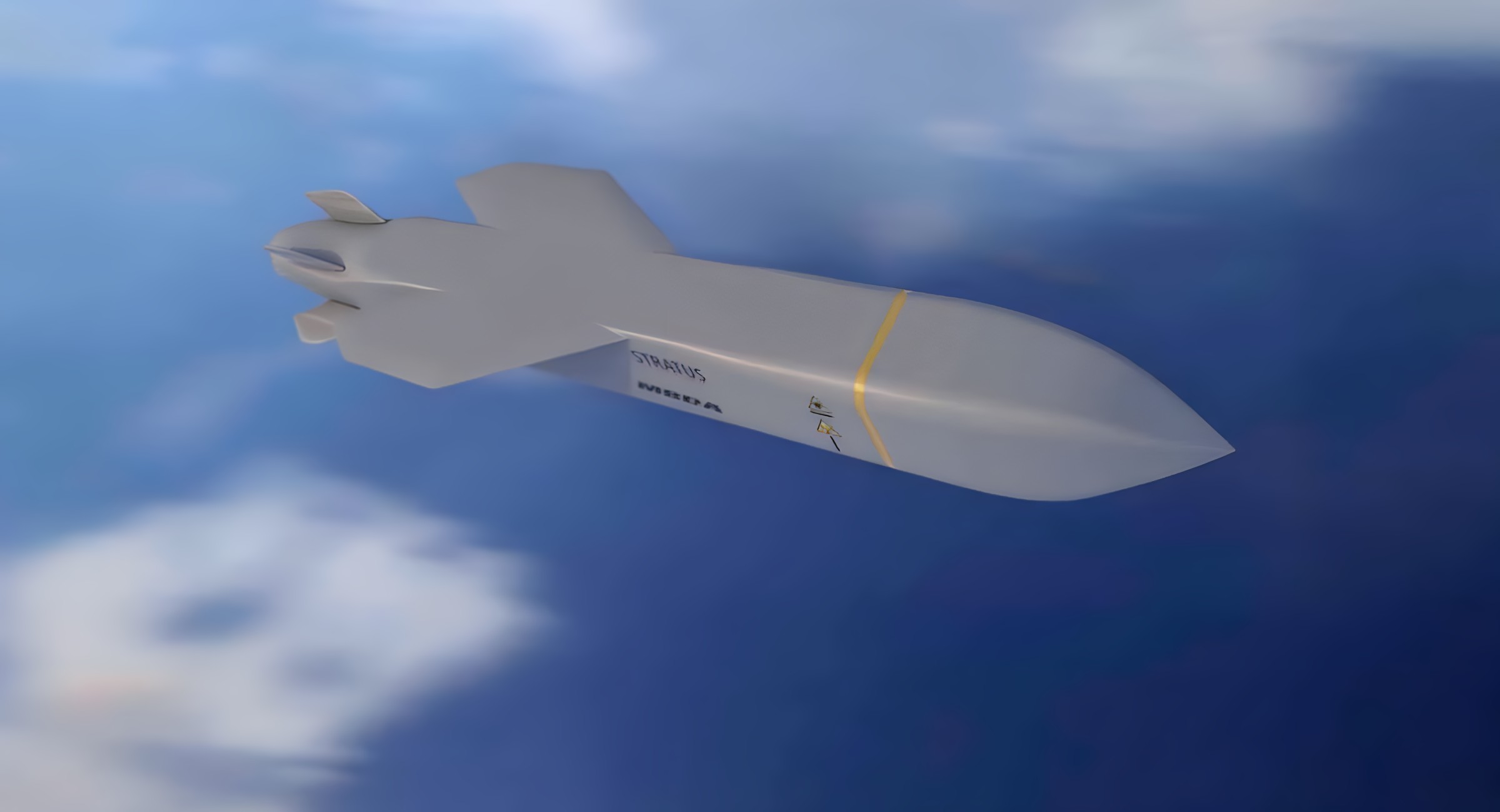
The UK Government has confirmed for the first time that the Royal Navy’s new Type 26 frigates are planned to carry the STRATUS LO strike missile, following a written parliamentary reply outlining how the service intends to meet its Future Offensive Surface Weapon requirement.
Responding to a question from Conservative MP Ben Obese-Jecty, Defence Minister Luke Pollard said the Royal Navy has “a requirement called the Future Offensive Surface Weapon (FoSUW) which will provide a long range anti-ship strike weapon with land attack capabilities, compatible with the Mk41 Vertical Launch System.”
He stated that this requirement “will be met through the Future Cruise Anti-Ship Weapon (FCASW) programme, which comprises two concept solutions, STRATUS LO and STRATUS RS.”
Pollard confirmed explicitly that “the STRATUS LO concept is planned to be integrated onto the Type 26 frigate to meet the Royal Navy FoSUW requirement.”
The confirmation places the Type 26 at the centre of the UK’s adoption of the STRATUS missile family, a UK–France programme rebranded from FC/ASW in 2025 and joined by Italy. STRATUS LO is a subsonic, low-observable cruise-strike weapon designed for long-range engagements against land or maritime targets, intended to provide a modern replacement for older systems including Storm Shadow, SCALP, Harpoon and Exocet.
The wider STRATUS programme will field two complementary missiles: the stealth-optimised STRATUS LO and the high-speed STRATUS RS, the latter focused on rapid supersonic engagements. Both are intended for deployment across air and maritime platforms, with integration centred on Mk41-equipped vessels such as the Type 26.





Only one type? – I’m surprised and disappointed
I suspect that the UK has been cold on the supersonic missile for some time.
Mach 3 doesn’t buy you much at the cost of range, loss of stealth and likely much higher cost.
The USA also cancelled its super sonic missile LRASM A and just stuck with the sub sonic Low observable LRASM B
Super sonic missiles seem now to come with many of the limitations of high speed weapons but without the hard to defeat capabilities of hypersonic weapons.
A one size doitall missile is long overdue now. Enough of the sales pitch, patter and garbage, what the military needs is a missile that will create chaos, murder and mayhem, whatever target it is launched at.
Otherwise scrap everything, and just move on to laser weapons!
Sorry Tom but that is a pipe dream in the foreseeable future and likely will never be a ‘do it all’ weapon system even in defence. Immediate goals wise, it’s estimated you need something in the class of a 300Kw weapon to be seriously effective as an all-round multi mode defence platform, that so far in terms of operationally is still a years away ambition. The US has been heading down that road in demonstration iterations since at least 2014. Can’t find effective range for the still in development US programmes of today with test lasers of that power level but the Indian one is claimed to have a 20 kilometre effective range. One presumes that’s in relatively ideal conditions too and of course the target has to be visible. So I think we can see how far we are from a real time weapon to take over the role of anything but shorter range defensive missiles, though that n itself would be a very valuable asset and why such effort is being put into laser development, microwave weapons too. As for offensive strike operations well that’s not even on the horizon in terms of an operational weapon, putting such a weapon on a worthwhile aviation platform is merely fanciful, defensive against incoming anti aircraft missiles the maximum present proposals for next Gen aircraft. More nuanced use of lasers defensively and offensively short of ballistic effects is a more practical proposition mind.
We are ‘told’ by ‘alleged experts’ that rockets, missiles cannot do this that and whatever… It is not in the interests of defence companies to be honest about anything. Realistically a one missile ‘fits all’ concept/idea has been looked for, for decades. If such a thing were to ‘hit the shops’ anytime soon, 1000’s of defence jobs would be announced the day after. That’s not speculation, its a fact.
Recently, Türkiye successfully used a drone to shoot down a jet. The event was fantastic news however it was only a question of time, before one company/country or another managed to do this.
Whilst it is fantastic news, the penny has no doubt dropped with those on the side of piloted aircraft. Owning and operating squadrons of Fighter aircraft, should soon now be a thing of the past however… job losses, loss of revenue, unhappy shareholders etc etc, will put paid to this technology, as well as other projects within the next few years.
The defence industry is not interested in technologies that will ‘cheat’ them out of profits, neither are their shareholders. Politicians, lobbyist groups, high ranking military advisors maybe even high ranking career military officers, are not in the habit of advocating peace. Peace does not create billions, trillions and gazillions of £’s $’, or Japanese yen. Warfare or the so called prevention of warfare creates industry, jobs and money.
Scrap everything and move onto lasers…. You have no idea what you’re talking about
Good news. Also by default will be going on type 31s as well making the RN frigate fleet that much more dangerous.
How do you know it’s going on T31 anytime soon
Is there going to be a cannister launched Stratus-Lo variant? Does this mean then that the RN will/won’t have NSM on its T26s for a hi-lo mix?
Naval Strike Missile is replacing Harpoon, but only temporarily. STRATUS will replace Naval Strike Missile when it’s ready. Presumably it’ll be scaled for MK41 VLS.
Hopefully they will keep the NSM as well.. type 26 only has 24 MK41s if you have say 8 ASW weapons in there that is 16 stratus.. having those 8 deck mounted NSMs will give you 50% more strike missiles for essentially zero cost as they are already paid for.
It is a bit troubling. Slots for VLS are limited on ships. Exocet on French frigate are not in VLS but in 8 deck mounted tubes that can be reloaded at sea. VLS is not the perfect solution.
You’d hope that’s how they’d be thinking to and it looks like our other T26 customer will do the same. The Norwegian model was even showing 4×4 NSM at one stage. Same with the T31/ AH140.
Is Stratos Lo then going to be on the P8s and even F35Bs down the track?
The F35B was originally planned to have Storm Shadow, but this got canned on saving funds. But as a sweetener to the RAF, it was promised that FCASW would be integrated. Now the current Government have said it might or might not. I think it will only happen if the MOD gets a real funding increase.
Hi Jonathan, to be fair, most escorts whether they be destroyers or frigates only carry 8 AShMs in cannisters. Burke’s are probably the only exception, and only because SM-2 and Sm-6 can pull double duty (if I recall).
If you’re not having to ripple off air defence missiles in all directions, 24 VLS tubes is quite a lot for other weapon types in my view. Especially for an ASW frigate.
One of the reasons the USN cancelled the Constellation class, was due to it only having 32 MK41 VLS cells. This is based on their analysis of Red Sea operations against a non-peer enemy. They said if the ship faced a peer enemy it would quickly be overwhelmed. Luckily the T28 will also get 48 CAMM launchers along with the 24 Mk41 cells. Does make you think what the Navy will do fitting out the T31 though?
.
I didn’t know that was one of the reasons cited for the Constellations, as things go.
I find that a bit hard to agree with though- what are they calling a “peer enemy”. Frigate to frigate, of any navy, I would argue that the Constellation’s fit out was an overmatch. What peer threat is the frigate supposed to have to match up against in this evaluation? The entire coastal defence system of Yemen is the equivalent of what peer threat, a Russian cruiser, Chinese super-destroyer?
That’s like saying that WW2 frigate designs should have been rejected because they wouldn’t have been able to face the Bismarck 1-1.
While I am all for making sure it’s our sailors that sail into harbour in one piece, standing at attention at the rail, I wonder if sometimes we’re not making the right assessments of power…
Whilst it would be good to have both NSM and STRATUS LO on T26 (and T31, assuming that also gets strike-length Mk.41), given the competing priorities for funds and the small number of NSM systems we bought (11?), I think the most likely scenario is that the existing NSM just remain for T45. At least there would be enough to equip all the active T45s and have reloads or maybe to double up and have 16 per ship.
NSM might stay on T45 and T31.
Nothing is zero cost as everything that goes bang requires maintenance and certification.
Zero capital cost.
That would make sense for both types. If it turns out that we can’t afford or find room for 32 Mk41 on the Type 31, then filling what we have with CAMM or CAMM-ER and retaining canister launched NSM might make for a more balanced GP.
That was always the implied plan with 11 sets of NSM.
The fitting of NSM to T45 is announced and we should see a test firing quite soon.
If T31 doesn’t get more than 12 missiles cells we might as well bin it
Why not have the ASW missile cannister launched? Opens up far more possibilities for export and ships like the Rivers or even RFAs. It could, and this is a big ask even be AC (or even SSN) launched for longer/ faster reach into the UW world?
Its been done before. Italian MILAS for example, good range and speed and comes in 2×2 cannisters so shouldn’t bee too difficult to fit somewhere on the decks so it won’t waste the limited VLS space on the Type 26.
The interim nature of NSM was always nonsense. It was trotted out (and the placeholder named as interim) for three reasons: to avoid the French thinking we were going cold on FC/ASW, to counter the Treasury saying you can’t have FC/ASW as you already have a missile, and temporarily as an argument why we shouldn’t get a missile at all, because it was only interim anyway. Furthermore, Harpoons came off T23s and T45s and Stratus has never been scheduled to go on either of these classes of ship. NSM is the replacement for Harpoons for the next decade and more. Stratus is the anti-ship missile for T26. Which missile(s) will go on the T31 is still open to question. Everyone thinks it’ll be NSM, but that’s never been announced.
It hasn’t been announced but the maths works at 11 sets of NSM on T45 and T31.
Why the Treasury always gets directly involved in the minutiae of such matters baffles me. They cant even get their act together on the larger issues.
I dont think it would make sense to add deck mounted canisters to T26/31 when you have MK41 VLS.
NSM was meant as an interim solution. Possibly they will continue in service on the T45s.
Good news .
Not much else they could put it on really unless they relent and actually fit Mk41 to the T31.
Isn’t that the plan with the CIP on the T31s? Can’t just be the absolutely silly 12 CAMM farm?! Why did they even bother with that? You could probably put 12 on the B2 Rivers.
12 gives an ability to shoot down multiple air threats or MPA from whatever the classified range is of CAMM.
Basic was the cost fit that got the project built, it they had gone full fact on the design ship they would never have been ordered, and the opportunity to produce a factory, skilled warships and escort orders lost.
Over the life of the ship and it’s size refits will be easy .
Rivers lack the damage control , combat systems and magazine capacity for complex weapons.
I believe the River 2 has the BAE CMS-1 combat management system so integrating additional weapon systems is feasible. The R2 also features significant modifications compared to the Amazonas OPV. Quote from Think Defence web site dated June 2016. “ improved watertight integrity, fire safety modifications, enhanced firefighting facilities, automatic emergency lights, magazine protection and the installation of a machinery space walkway (which will clearly give easier access to machinery at sea, allowing emergency repairs) suggest that the R2s, unlike the BAES OPVs, are designed to engage in battle and sustain damage. Or, in other words, they are real, if lightly armed, warships”. Good training for the apprentices 🙂
We’d be far better off developing CAMM in a box, and putting one or two CAMM containers on the Rivers if necessary for an urgent need. Adding VLS to Rivers is a recipe to add cost, complexity and headcount. If we intend to use them as OPVs it’s unnecessary. If we are intent of sending Rivers to the Gulf as direct replacements for an escort, I can understand why we might want CAMM, but I don’t think the OPVs would be used in the same way as the escorts, and I don’t believe adding VLS is necessary at this point.
So we are replacing the 3 B1, I would like to see a B3 version with either the bofor 40 or 57 gun a hanger for wildcate, then using 3 of the B2 to place the B1
With the current Funding situation,and the workload the Shipyards involved in Building Warships have,a River Batch 3 is very unlikely at this time.
Apologies if I gave the impression R2 should get Mk41, I don’t. And I think even (containerised )CAMM would need a pricey radar upgrade. A 57mm and some Martlets or Streak would give a useful enhancement in point defence for modest cost.
Not if their weapons fit is deck mounted. That’s really the damage control and magazine issues solved and I think they have a combat system installed already.
In preparation for a rainy day I think we should have a 20% larger corvette version prepped up and ready to build. Certainly the idea should be a paper excercise and could have export potential.
One would hope, but I will wait to see the colour of their money before believing anything government says.
We already new the Stratus missiles were planned for the British frigate – the interesting part of this article is that the Minister being questioned did not mention the Stratus RS, referring instead only to the Stratus LO.
I think there are couple of possibilities we could potentially draw from this:
1. The RN intends at this time that only the Stratus LO will enter service aboard the Type 26 frigates.
2. The RAF and RN intend to purchase only the Stratus LO, and to leave the RS to the French, who are the leading nation on that missile.
I wonder whether this is because there will be a delay in Mk41 integration for the RS, or, alternatively, that there is no real intention to fit the RS into the Mk41, and instead desire to leave it as a canister and air-launched munition.
Another angle to consider might be that the RN has lost faith in the concept of a mid-supersonic, sea-skimming missile as a useful tool in the modern naval environment (useful compared to other missile types).
I suspect the RAF will go for the stratus R/S due to its SEAD/DEAD capability as well as ability to target high value strategic aircraft at range.. every serious airforce is now looking at missiles 600-1000km range that can target EAW aircraft.
If you consider a strike.. typhoons coupe cart load of stratus R/S for long range SEAD/DEAD to be directed by the 5th and 6th generation aircraft before they penetrate the air defence system..
These capabilities are I think one of the reasons you will see 4.5 generation aircraft acting as bomb trucks for many more decades.
Not in the RAF they won’t Jonathan, they are fully committed to a Gen5/6 fleet by 2040. We can expect Thypoon tranche 2 to receive minimal upgrades and only the Tranche 3 will get the Radar 2 and all the rest of the goodies….
The RAF will double down on batches of F35A, as when they can afford it, to run alongside Tempest.
They should be F35Cs!
I agree with that reasonning. The Stratus RS is the missile needed to open the route and clear the Sky of large plateform.
It would be great if it could be launched from the deck of a civil ship, to gain quickly strike power and volume. A cargo fleet carrying stratus and hundreds of drones, even vtol one with interceptor capabilities would be able to provide mass for offensive operations.
Putting complex Weapon Systems on Civilian Ships is a bad idea at the best of times – also it would contravene Maritime Regulations surely ?.
Hum, perhaps… Though Shield AI push for this idea agressively in USA. They promote a VTOL bomber or fighter for this very purpose. USA want’s to protect it’s sea lines from Chinese aeronaval force in Pacific océan. With only 20 carriers overall, they cannot do things properly. Russia just sent drones from it’s shadow fleet. So I would not take for granted the idea of putting weapons on merchant ship is ruled out.
I think it is reasonable to plan and prépare weapons systems for it. Germany did it too in WW2. And many Times UK did it as well.
May be check also the LMP from Naval Group, on the short range defense idea… It can be fitted anywhere.
It could also be a question of development time. STRATUS-LO is on track for a 2028 introduction into service- only 3 years away. STRATUS-RS is scheduled for 2032-35. It could just be that they don’t want to announce a timeframe for a missile still 8-10 years away from introduction.
RS is, last time I checked, supposed to be near-hypersonic at mach 5, it could also be that they’re tweaking it to get a bit more speed out of it, and they don’t want to announce before that’s done? That’s pure speculation on my part.
My thinking too, let’s be honest the MoD don’t tend to make decisions early do they. I think that missile’s exact design and capabilities is not yet concreted so would be difficult to form an accurate plan not to mention costs for its incorporation, just a desirability discussion at present, so tbh they would be stupid to announce a plan that they won’t even be around to put into place, let alone know whether it would be affordable, practical and desirable from a ship launched platform.
As for its capability a high supersonic speed missile isn’t effective whereas a low hypersonic missile automatically is, we can get too caught up in the hype of that ‘magical’ term hypersonic at times. We gave at least two missiles that are near hypersonic already, I doubt pushing them through that Mach 4 line would make them of itself better missiles indeed it could affect their accuracy which is why many hypersonic missiles aren’t in the later part of their flight profile.
Aren’t we shadowing with Australia on something like RS or Hypersonics?
Stratus RS has a SEAD/DEAD capability. It can target SAM sites (incl radar, C2 and launchers in vicinity) even once the sites turn off their radar, this was said during a french arms committee meeting recently. This suggests that missile will have an alternate guidance other than radar homing , as well as ability to deploy sub munitions to strike not just the SAM radar but other elements of teg system as well.
Obvioulsy this is vague and subject to interpretation, and we will have to wait until details about actual capabilities are made public.
As well as strategic aircraft such as AEW assets.. which is huge and why I think the RAF will buy it.. you don’t need SEAD/DEAD on a frigate and launching a large Mach 3-5 at high altitude or even at low altitude against a target within the radar horizon because it will be like a finger of death point back at your ship..where as an aircraft launching an RS can simply piss off before anything comes looking for it.
100% agree not a weapon meant to be ship based, but huge deal for aircraft.
France has not had a dedicated SEAD/DEAD weapon since retiring Martel almost 20 years ago, this is welcome news and is long overdue. range is also rumored to be well past 500km. so very useful vs AWACs also, and with its speed against time sensitive targets.
anyway details are lacking/unconfirmed but it sounds promising, we’ll just have to wait and see for officially announced capabilities. TBC
oops * almost 30 years, not 20
Yeah, the RAF also got rid of its SEAD/DEAD systems following the retirement of Tornado, which is far from optimal. Ideally, both nations will put in large bulk buys (1000-2000 each) of both missiles and just get the factories moving and the prices falling.
I’m a little worried that should the UK go cold on the Stratus RS, France could quite understandably do the same for the LO variant.
i don’t know, but I doubt France would not order Stratus Lo, this is a capability they have and needs replacing -> MDcN fired from Fremm and subs, Exocet from ships, subs and aircraft, as well as SCALP from aircraft.
there is value in low flying long range subsonic missiles against fixed land targets and ships as we have seen in the past, and recently in Ukraine
anyway it is still early days, details are few so interesting to follow for next few years as info emerges and things become clearer
I thought sub munitions were a legal no no to uk and europeans?
not sure about UK laws. But there are some weapons with sub-munitions in use in Europe, like
– sub launched nuclear missiles with MIRV
– the franco-swedish Bonus artillery shell carries 2 sub-munitions that can each target a vehicle
– the french Apache anti-runway missile (Storm Shadow/Scalp were derived from) carries 10x sub-munitions
– Ukraine uses ATACMS, and that sprays a wide area
– not to mention frag grenades, air burst shells etc…
so the cluster munitions ban must have some caveats
Let’s hope each ship will carry a decent missile load, instead of being a 1 shot weapon.
Wasn’t it that only 4 Exocets were carried per vessel when they first entered service
I do think there needs to be consideration on what is the place for tomakawk moving forward, it’s still the only available choice for our SSNs, there is the possibility of using Exocet SM40, but its range is only 250km which is to short as it will put your launching SSN very close enemies coast and well undercover.
The role of Tomahawk seems fairly straightforward till the late 2030s. The Astute-class will need to continue using the small stockpile of tube-launched TLAM left – there’s no credible alternative that is available for tube-launch apart from the MdCN, and I don’t see the RN biting on what is essentially a worse version of what they already operate, nor do I believe integrating the French missile would be viable. I believe there are plans to improve the performance of the MdCN considerably, but I’m not wise to the timelines.
Following the introduction of the SSN-AUKUS, and the expected shift even closer to the American CMS architecture, presumably TLAM will continue to be the missile of choice for the British submarine fleet well into the 2060s. There’s the possibility that the Stratus LO could be integrated for vertical launch, but I doubt it. The CPS missile, however, might be a very potent system that would be well worth considering by the RN.
In short, I predict TLAM sticks around well into the 2060s, as the principle (and likely only) truly long-range conventional strike system employed by the RN. From the looks of things, Stratus LO is much more of a Storm Shadow (practically the same length, width and height, and so presumably as slightly improved range of 500-750km?). That’s fine for ship-to-ship work, and decent for ship-to-shore as well, but it won’t deliver the truly deep striking capability of the 1600km TLAM. If CPS could be procured, then the RN would have a truly formidable set of armaments.
I’m not sure about your STRATUS LO assessment.
MBDA seem very proud of their new propulsion for it, and aren’t even showing whether or not it has an air intake even though it’s most likely a turbofan. They’re both Mk41 sized missiles using modern technology, there’s no reason why it shouldn’t be able to compete with the ancient Tomahawk for range, at least 1000km.
Yeah, fair enough, my estimates were a little conservative. The JASSM-ER is slightly smaller than the Stratus LO (4.2m compared to an estimated 5.2), yet still achieves roughly 1000km range (from an air launch). Stratus LO should probably be able to achieve similar from a surface launch.
It turns out my estimates for the range of the TLAM were a little conservative as well, however. It turns out the TLAM can make approximately 2400km in its Block Va version, according to Naval News. The ground-launched nuclear TLAMs could reportedly make almost 2800km back in the 1980s.
So, whilst I was probably off the mark with my assessment of the range of the LO, and definitely off the mark with that of the TLAM, I don’t think it changes might my point at all, really. The TLAM will still significantly outrange the Stratus, unless you think that MBDA and Safran can create an engine efficient enough to increase the range of the Storm Shadow five times over, in the same amount of space.
FYI MBDA MDcN surface launched missile is estimated to reach 1400km, (1000km when submarine launched)
I don’t see any reason why Stratus Lo would not match or exceed 1400k from a ship, probably even more from an aircraft
The MdCN is a much larger missile (almost a metre and a half longer than the Stratus LO), and so benefits from extra fuel. It’s also significantly larger than the TLAM, yet interestingly doesn’t approach the vast range that TLAM offers.
oops see reply below
Cant see why a missile cant be fat and then shed the drop tank after it gets motoring instead of being longer.
FYI MdCN is about same size as TLAM block V (6.5m vs 6.25m – both with boosters) and offers similar range (estimated 1400km vs 1600km)
there is no official range data – these are estimates, so not actual.
As far as the article you refer to; that info is just way off base and unsourced. I like Naval News, but the quality of articles depends greatly on who is writing. I would not put much faith in an article written by a random freelance journalist with a bachelors degree in graphic design and writing. Not suggesting the guy is an idot, but he is clearly not a qualified expert with any background in engineering, aerospace, etc…
Raytheon officially presents the Tomahawk as a 1,000 mile missile on their website (which equates to roughly 1600km). There are no range improvements from Block IV to V, the improvements are related to a modernized TACTOM (datalink), improved navigation system, improved targeting to strike moving ships, and a multi effects warhead to hit multiple land targets.
MBDA do not even indicate range on their site.
if it makes you happy, you can split hairs all you want based on wiki info, speculation in articles, etc…. but France designed the MdCN to offer comparable performance to Tomahawk. I’ll trust their expertise and experience in achieving what they set out to do rather than wild speculation without tangible evidence.
PS please don’t use TLAM-N as an indicator of conventional Tomahawk range figures and suggest 2,400km range. TLAM-N is a highly classified retired nuclear cruise missile. Impossible to even find a picture of that version of the missile. It was rumoured to use a bigger booster offering much longer range than regular Tomahawks. But it’s classified and it’s all pure speculation.
Fair enough, you’re clearly more knowledgeable than me when it comes to naval cruise missiles. I will mention though that the 2400km range figure is for the conventional TLAM and crops up in several different sources. The TLAM-N is actually speculated to broach 2800km, but, as you say, may have been upgraded to reach those distances.
I think it’s more likely that the French are simply significantly underselling what their system can actually do. They’ve been known to do it before, for example, with the SCALP-EG, or the Aster. But again, we’ll never have proper confirmation. Perhaps, should the MdCN reach the age of the TLAM, we might know a little more about it.
Hopefully next we get on with procuring a VLA torpedo system because as it stands currently the worlds best sub hunter has very limited options to defeat the very thing it’s designed to counter.
12 gives an ability to shoot down multiple air threats or MPA from whatever the classified range is of CAMM.
Basic was the cost fit that got the project built, it they had gone full fact on the design ship they would never have been ordered, and the opportunity to produce a factory, skilled warships and escort orders lost.
Over the life of the ship and it’s size refits will be easy .
Rivers lack the damage control , combat systems and magazine capacity for complex weapons.