

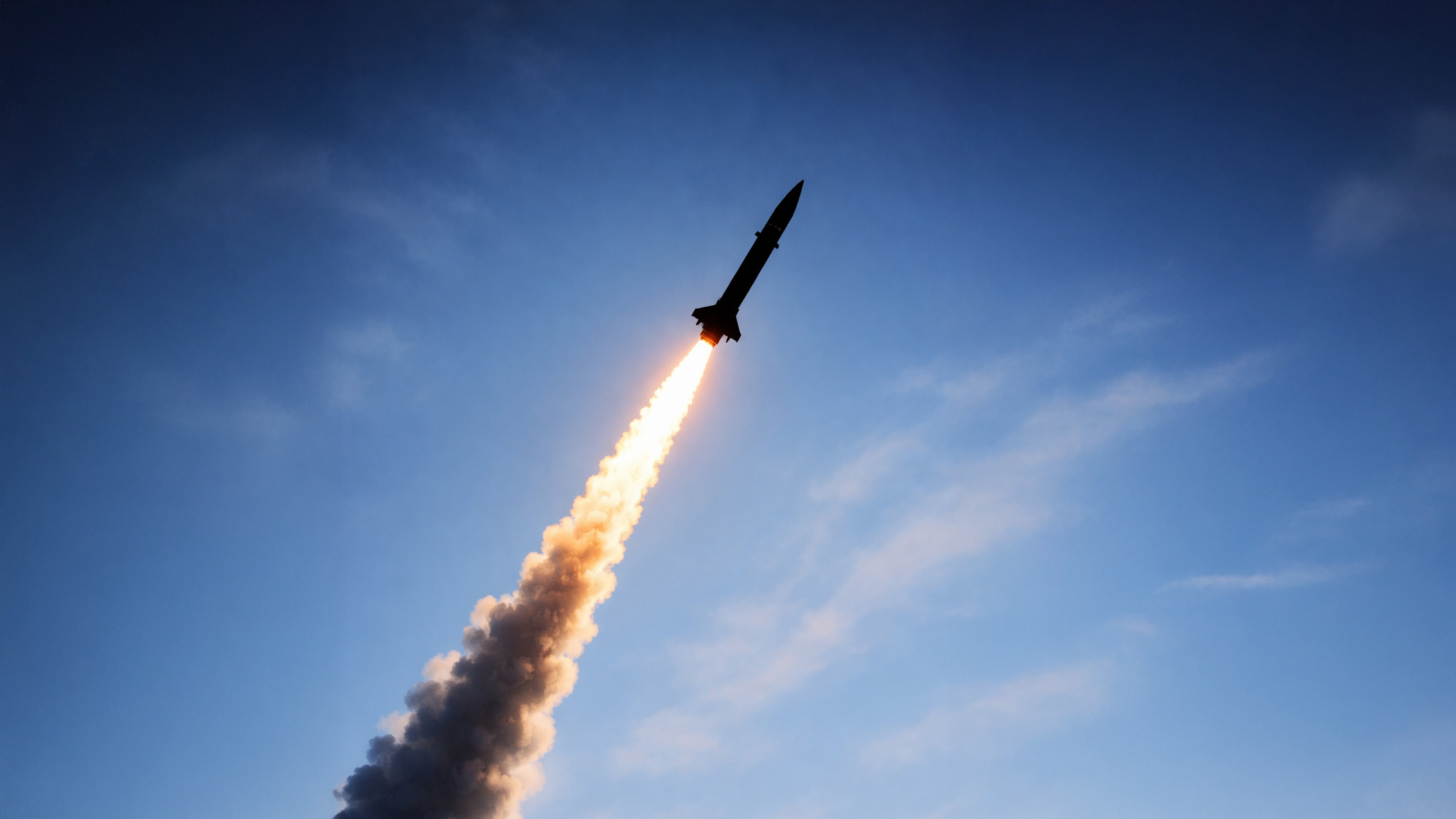
A new low-cost surface-to-air missile being developed with European allies will initially be fielded with a minimum deployable capability before being upgraded through successive improvements, according to a written parliamentary answer from Defence Minister Luke Pollard.
Responding to Conservative MP James Cartlidge, Pollard said the project is progressing under the Low-cost Air Defence Effector programme within the NATO-aligned LEAP initiative announced in February.
“The new weapon system will be introduced through the spiral acquisition model, delivering a Minimum Deployable Capability followed by iterative enhancements,” Pollard said.
The programme is currently moving into the industrial selection stage, where proposals from industry will be assessed. “The low-cost air defence effector project under the LEAP initiative… is now entering the international industrial selection phase,” he said.
Pollard also confirmed that the system has not yet been given an official name. “No project name has yet been allocated and the name of the weapon system will depend on which proposal is taken forward into production,” he said.
The concept demonstration phase is now beginning, and the final designation will only be decided once a specific design has been selected for production.
The project is intended to deliver a new generation of lower-cost air defence weapons designed to counter large numbers of airborne threats, including drones and missiles, while easing pressure on more expensive interceptor systems currently used by NATO forces.









I could see a role for an IR seeker missile to complement CAMM very much in the same way Ukraine has been firing ASRAAM from the ground. However it’s still likely to be expensive.
It seems much better to have drones hunting drones and missiles hunting missiles and aircraft.
The US Coyote missile seems to be the best example so far deployed.
The problem here is context or should I say the requirement. Yes we want a low cost surface to air missile (SAM). But crucially what is it designed to counter or intercept. The piece above only describes being able to counter large numbers of airborne threats. Which could be anything from small quad copter drones up to ballistic missiles and everything in between. The target set or what the missile will be designed to intercept, will determine the missile’s required performance, the type of seeker it needs, its ability to counter jamming and countermeasures. Which then determines its cost.
For example if this is to only counter slow speed drones. i.e. ones that cruise at speeds less than 300mph. Do you really need a rocket motor or can it be propelled by a propeller system? So long as the weapon has a higher overtake speed it can be used as an interceptor. Clearly it would be advantageous to have a very small time to intercept. Which then determines how the SAM is going to be used. Is it going to be for point, local or area defence? As this will determine how big the missile needs to be, to house the fuel/batteries/engine. However against simple drones you could use commercially off the shelf components, such as a Raspberry Pi for the ECU, a camera and lidar used in a mobile phone for the seeker, along with a 3D printed body, powered by a Lithium battery pack driving a set of RC plane motors and servos. Along with a small plastic explosive fragmented charge. This would put it in a similar cost bracket as the drones it would be up against.
However, the Government’s press release says that the Low-Cost Effectors & Autonomous Platforms (LEAP) initiative: “Its first focus will be on a new surface-to-air weapon – a lightweight, affordable weapon designed to counter the drone and missile threat.” As soon as they say missile threat, that also opens up a whole load of new questions, such as what type of missile threat, subsonic, supersonic, hypersonic or ballistic?
The Martlet (LMM) has already be proven by Ukraine, to be capable of taking out drones very easily, but also shown to be able to intercept subsonic cruise missiles. However, it will be very hard and nigh on impossible to intercept anything travelling faster than Mach 1.5, unless its heading directly towards the launcher.
So perhaps, the spin on this is that the LEAP is not just one effector, but a number of or a family of effectors. That use more commercially off the shelf components, rather than costly bespoke components.
Read only the other day that Israel during Iron Dome development acquired Toys r Us own brand electronics for their first Interceptors. Don’t know if there is a lesson there or not.
Absolutely there is a lesson: avoiding perfectionism.
Why can’t we just…..add….
The words of death for most defence projects.
So I do actually believe in the idea of a realistic low tech approach that can mop up 80% of drones very cheaply. We have plenty of ~£50k products that can take down the better drones so it is pointless making that weapon again.
Wonder if also a mobile gun+LMM-STARSTREAK based shorad might also be purchased like the Boxer Skyranger 30 or a Moog RWS turreted vehicle? If to replace Stormer it could also go on a Ajax chassis?
Hope they don’t forget the “counter everything else that’s not a drone” threat requirement too.
Are we buying some in 2031, just like the rest of everthing that will be ready by then. We can talk about it, window shop, give it a fancy project name and do nothing else, state normal. Its fine every thing will be ready, and in service by 2031 the Government love that date as its after the next election, not thier problem.
“Minimum deployable capability”
Is that in performance or in minimum number of assets fielded?
If it’s the former, ok.
If it’s the latter, is that a way of saying we won’t be buying many and it’s left to the next government?
Whatever, at aome point the many dozens of military key points will need defending, even if this is only aimed at low performance Drones.
Performance, but with this to be improved upon with each “spiral”.
Spiral is a form of iterative development.
Thanks.
Yes, thanks makes sense.
Hello mate,
My guess is that there will be an element of ‘both’.
Spock is right about the spiral development, but I would guess that a number of each standard of weapon will be procured otherwise you end up with lots of low capability effectors needing upgrades and we know how expensive that can be!
My guess is that to keep the weapon relatively cheap they will allow the Pk (single shot probability of a kill) to be lower than would normally be acceptable e.g 0.6 rather than 0.8 to 0.9, which is what we usually aim for. To compensate you simply fire more weapons at a given target. The cost win comes about by choosing Pk that gives to a low enough cost to justify using two shots to achieve a cumulative Pk of 0.8 to 0.9…
Brimstone was initially designed to use more than one shot per target, but by the time they got into service the technology had improved to such a level that one shot would do the job!
Cheers CR
Hi Mate. Well explained, thank you.
They may select some ‘new’ promising tech that would normally need millions to develop to the required level. So bringing into service early you get something useful and the development is in part paid for by initial production runs allowing more units to be procured…
Cheers CR
CR,
indeed, spiral development can be a positive model of systems maturation, but unfortunately, all can cite egregious counterexamples, to wit: F-35 Programme. Structured as a spiral development endeavor, generally perceived to be successful, until the infamous Block 4 clusterflock unfolded … 🤔😱
Hello mate,
Yeh, that one is always in the back of my mind whenever I / we talk about spiral development. My sense of it is that baby steps are needed to make it work, whereas Block 4 seems like a they fell into the old overly optimistic ways of being able to do lots and lots of clever stuff in one glorious endeavour. Ooops!!!
Cheers CR
Isn’t the probability curve a bit different here?
Some drones will have wildly different characterIstics. So a pK of 0.85 could be quite easily achieved if quadcopters etc were included.
So I can see a pretty effective system being pretty low end and the top 15% can be dealt with using some of our existing systems.
It is a balance between big stockpiles and pace of manufacturing against exquisite performance. The UK approach used to be mainly exquisite to keep tech levels but now we have the tech but need mass.
Hello SB,
I agree the Pk value vary with the nature of the target. I was trying to explain, badly it seems, how low cost effectors with a low Pk on a given class of targets can still be effective by using multiple shots.
I was also pointed out to FormerUSAF out that spiral development and exploitation could spread the development cost keeping individual effector cost low even as the capability is improved.
In summary, I think if this program is handled well it could take on more capable threats, within sensible limits, and still be a cost effective system for ‘cheaper’ threats such as the type of drones produced by Iran. In other words the very kind of system you describe.
The temptation, of course, will be to develop the system into something exquisite…
Cheers CR
It is all about cost effective solution sets….
Agreed, mate.