

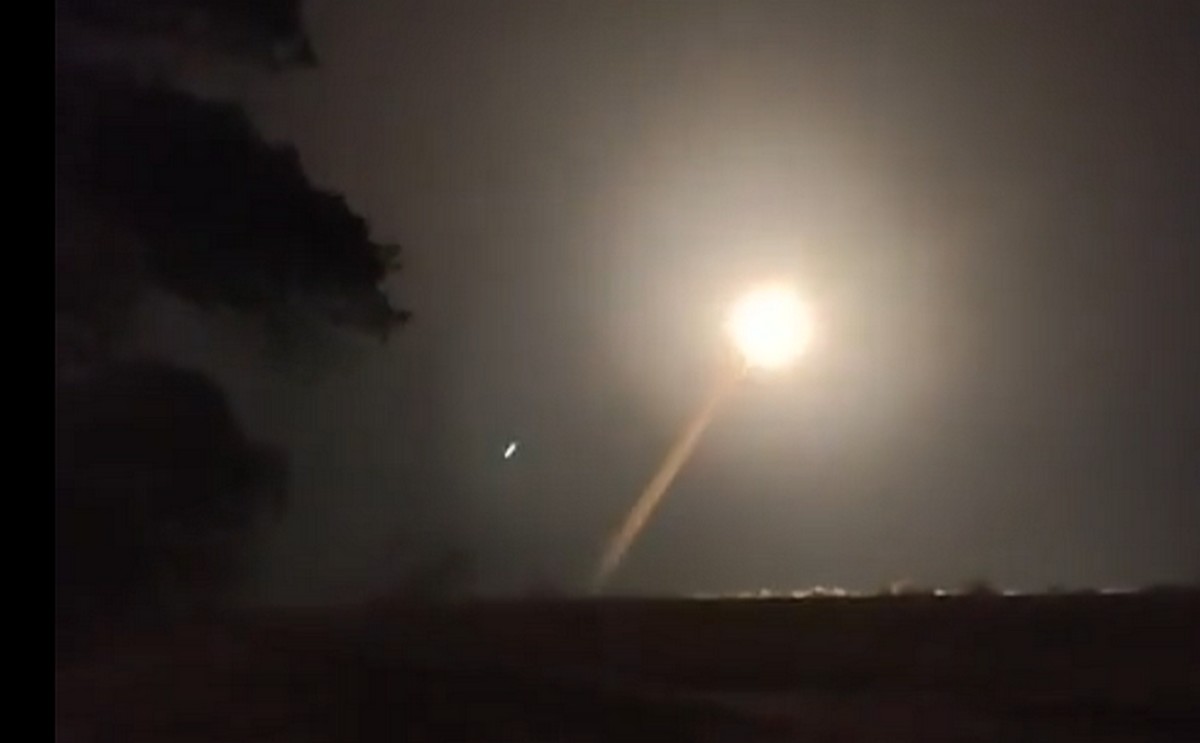
Ukraine has used a domestically built tactical ballistic missile in combat for the first time, President Volodymyr Zelensky has said, naming the weapon as the FP-7 and signalling that the next task is building it in quantity, according to the president in a post published on Thursday.
Writing on X, Mr Zelensky said: “Ukrainian tactical ballistic missile. FP-7. First combat use. Thank you for the result. Next up: production. Glory to Ukraine!”
No target was given, and Kyiv has declined to say what the missile struck. The brevity of the announcement is itself the point, since a first combat firing is a political statement about Ukrainian industry as much as a military event.
Ukrainian tactical ballistic missile. FP-7. First combat use. Thank you for the result. Next up: production. Glory to Ukraine! pic.twitter.com/IxdjVg51c1
— Volodymyr Zelenskyy / Володимир Зеленський (@ZelenskyyUa) October 1, 2026
The FP-7 is made by Fire Point, the Ukrainian company set up in 2022 that has become one of the more visible names in the country’s wartime weapons industry, and which also produces the FP-1 one-way attack drone and the FP-5 Flamingo cruise missile. The missile is launched from a standard truck trailer rather than a purpose-built transporter erector launcher, an approach that keeps cost down and makes the launch vehicle harder to distinguish from ordinary traffic.
Published figures for the missile vary between sources and none of them have been independently verified. The announced range has been given as between 200 and 300 kilometres, with a warhead variously described as 150 or 200 kilograms, a circular error probable of around 14 metres and a terminal velocity of 1,200 to 1,500 metres a second. Analysts tracking the programme have assessed that the airframe derives from the Soviet 48N6 interceptor used by the S-400 system, rebuilt with composite materials and modern electronics, and the manufacturer has claimed that the resulting speed gives it a better chance of getting through air defences than the Russian Iskander.
Roughly seven months separated the first reported test from this firing, which is fast by any peacetime standard and reflects how much Ukrainian procurement has compressed since 2022.



Will be interesting to hear much more about the progress of this system and the sort of targets it can take out, the more options the better especially in the ballistic realm.
What the Russian Ukrainian war is showing us more than anything else is that conventional strategic weapons matter a hell if a lot.. you need to be able to hit the enemy nation in its vitals over and over.. if you are not able to do that you are simply a victim taking more and more damage until you are forced to the peace table..
The problem with European defence is that it’s essentially been focused on defence and in general defence only ever lost wars it does not win them.
Certainly one of the loudest messages here to the Russians is that if you use tactical nuclear or Chemical equipped missiles, we are one step closer to returning the compliment with a reliable and accurate delivery system.
Possibly the only way Kiev could now end this war, short of a Russian military coup ( not impossible, as the Russian military machine is steadily being reduced to scrap in the Ukrainian meat grinder), would be for Ukraine to acquire a nuclear capability.
Ukraine could argue the Budapest Memorandum of 1994 is null and void, considering the other signatories failed in their obligations and they are therefore re-acquiring a nuclear deterrent.
Excellent – hopefully it will destroy plenty of Russian folk and infrastructure.
They deserve it.
The original 48N6 interceptor was first fielded by the S300 SAM system back in the 90’s. It was a two stage solid rocket, that in its original form could hit speeds approaching Mach 6. The latest versions used by the S400 is a single stage missile, and is supposed to be capable of reaching Mach 8 speeds. Russia has been using the older 48N6 versions as surface to surface rockets where their large 140kg warhead, for a surface to air missile, comes in handy against ground targets. The FP-7 is derived from this missile as Ukraine was/is also a S300 operator.
What’s happening with our myriad of cruise/ballistic missile initiatives? It’s gone a bit quiet.
I had a 10 page list of them all somewhere…
AA