

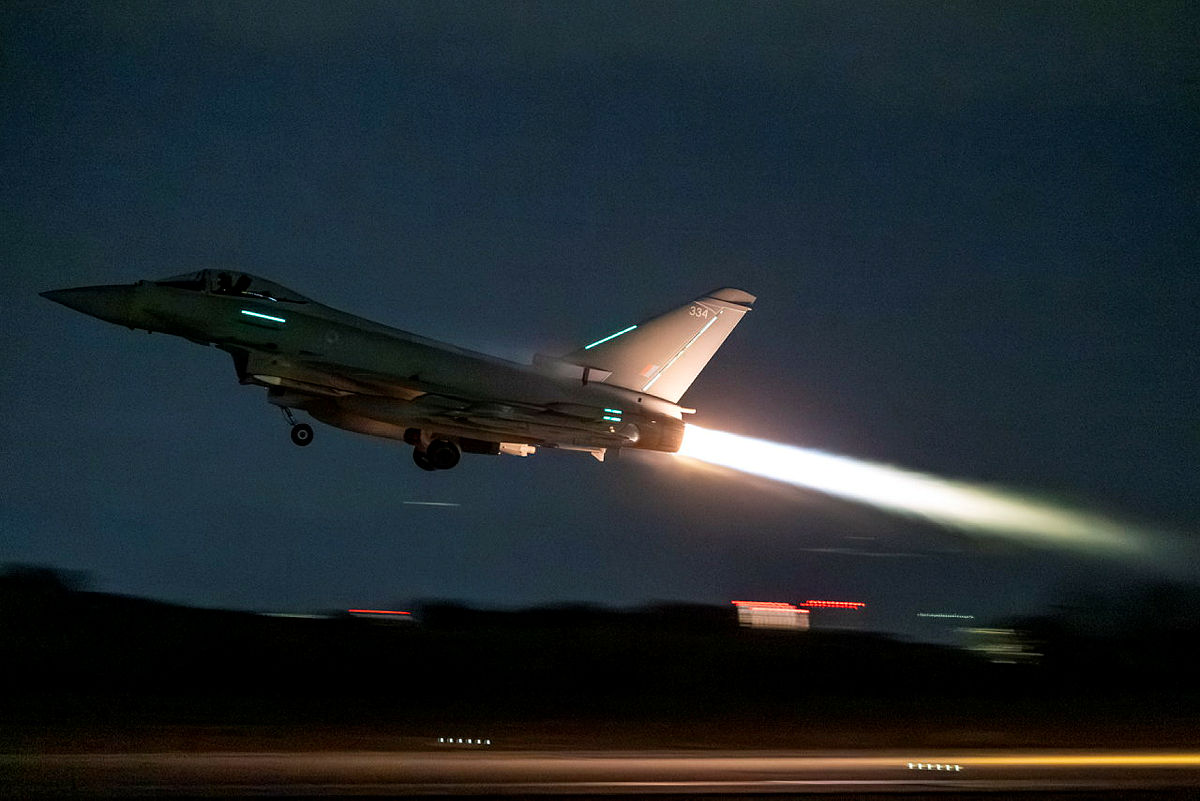
The Royal Air Force has launched what it describes as the UK’s largest homeland defence air exercise, bringing together British and NATO aircraft for nearly three weeks of training focused on defending the UK and fighting alongside allies in a major conflict, according to the RAF.
Exercise Cobra Warrior 26-2 runs from 14 September to 2 October and involves personnel, aircraft and command-and-control specialists from the UK, Germany, Italy, the Netherlands and the United States. The exercise is intended to test how quickly allied forces can integrate, operate from British bases, sustain complex missions and fight in contested airspace as part of a NATO force.
Chief of the Air Staff Air Chief Marshal Sir Harv Smyth said: “The return of great power competition across the globe and the significant, and growing, threat posed by Russia to the UK and NATO makes this, by far, the most dangerous period in my 35 years of military service.”
He added: “This is why the RAF is investing in our People and our capabilities – to defend the UK, deter our adversaries and, if necessary, defeat them across the Air and Space domains.”
Smyth said Cobra Warrior was being used to rehearse how the RAF would respond to aggression alongside its allies. He said: “Cobra Warrior gives us the opportunity to practise our response to aggression, ensuring we are testing our defences and ability to operate alongside NATO partners during a real conflict.”
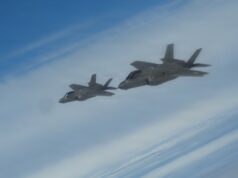
The RAF contribution includes Typhoon and F-35 Lightning combat aircraft, P-8A Poseidon maritime patrol aircraft and aircraft from the Air Mobility Force, including Voyager tankers. They are operating alongside Italian and German Eurofighter Typhoons, US Air Force F-15, F-16 and F-35 aircraft, NATO E-3A airborne warning and control aircraft and KC-135 tankers.
The mix gives the exercise a broad air combat and support element, combining fighters with surveillance, maritime patrol, airborne warning and control and air-to-air refuelling aircraft. Cobra Warrior is also being used to test the RAF’s ability to protect and continue operating from its home bases while integrating allied forces at speed, a central part of the service’s Warfighting Ready and NATO First priorities.
The exercise marks the culmination of the UK Qualified Weapons Instructor courses, the RAF’s highest-level post-graduate warfighting qualification. Crews are being put through complex tactical scenarios intended to test planning, command and control and the execution of large multinational missions.
Italian personnel are operating from RAF Waddington during the exercise.
Italian Deployment Commander Major Valerio C said: “We are truly honoured and excited to be here at RAF Waddington to train alongside our NATO allies and international partners. Cobra Warrior represents the premier tactical training environment, offering an invaluable opportunity to enhance our interoperability, refine joint tactics, and strengthen our collective readiness.”
He added: “Participating with our aircraft and personnel allows us to test our capabilities in complex, contested and high-threat operational scenarios. The integration and shared expertise between our nations are what make the Alliance so strong. We look forward to a productive exercise and to flying shoulder-to-shoulder with our partners and qualifying Weapons Instructors.”
German Air Force personnel are meanwhile operating from RAF Cranwell, where the RAF says the deployment is being used to strengthen the relationships needed for allied forces to operate together during crisis or conflict.
RAF Cranwell Station Commander Wing Commander Mathew Thornton said: “RAF Cranwell is delighted to welcome our German Air Force colleagues to the Station for Exercise Cobra Warrior. This Exercise provides an opportunity to strengthen our long-standing professional relationships, train alongside one another and build lasting friendships.”
He added: “Visits such as these are invaluable and we are incredibly proud to welcome them to RAF Cranwell.”
Cobra Warrior brings together combat air, maritime patrol, air mobility, air-to-air refuelling, command and control and multi-domain activity within a single large-scale exercise, with the RAF using the event to test both homeland defence and the ability to operate as part of a NATO force in a high-threat environment.


surely it should be the RAF on its own. rather than with NATO. what I am suggesting is this a con in the reason we don’t and cant defend ourselves. so we join with NATO planes to give the impression that we are bigger and stronger than we really are. if the RAF did it on their own .first. then we would know in advance what we can d. and what we lack. surely in a state of war. NATOs first defence is Europe . and we after send planes to defend euroland we may have nothing left to defend our selves.
this is only an opinion and i may we have this completely wrong. perhaps you guys will put it right for me.
thank you.
Any attack against the UK or any other NATO member would be a NATO Allied response. Every conflict we have been apart of since the end of the Cold War has been as part of a coalition with allies. That’s why we train together constantly. We come together as one force.