

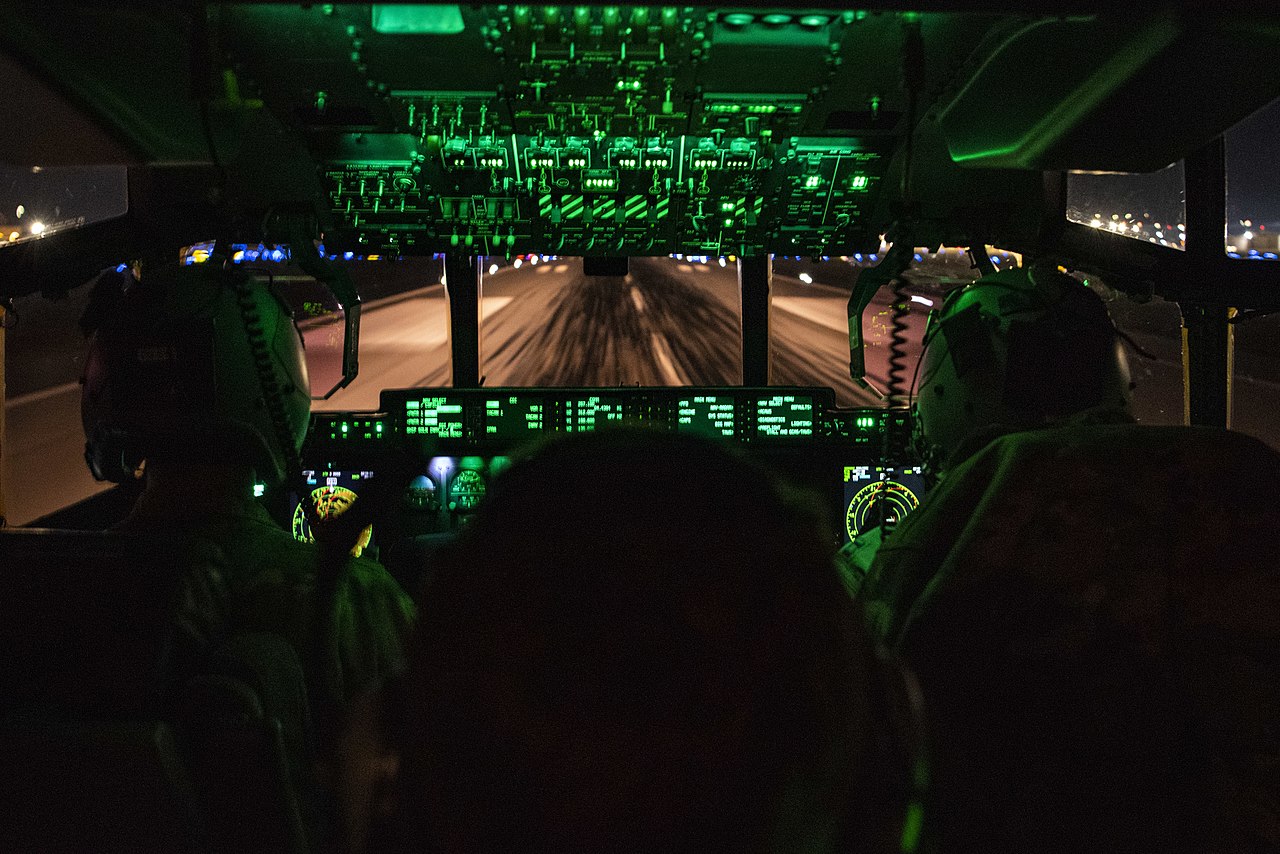
Rolls-Royce has signed an agreement with Sabena technics to provide engine support for the binational French and German C-130J fleet through to December 2030, the company stated.
The deal is a subcontract under CAROLUS, the ten-year operational readiness and maintenance programme awarded in January 2026 by France’s Directorate of Aeronautical Maintenance, which named Sabena technics as prime contractor. Rolls-Royce joins as strategic propulsion partner, supplying flight-hour-based sustainment for the AE 2100D3 turboprops that power the aircraft under its MissionCare model.
The fleet comprises five C-130J transports and five KC-130J tankers flown by the Binational Air Transport Squadron at Évreux-Fauville Air Base 105, north west of Paris. Under the arrangement, Rolls-Royce field service representatives will be stationed at Évreux alongside Sabena technics personnel and at the company’s main maintenance hub in Bordeaux, with integrated logistics and spares support intended to keep engines above agreed readiness thresholds.
Meagan Rater, director of US mature programmes for defence at Rolls-Royce, said in the release that bringing MissionCare to the fleet allows the company to embed its team directly alongside Sabena technics, describing the arrangement as “a hands-on partnership where our OEM engineering expertise will be on the ground every day”.
Hervé Grandjean, chief executive of Sabena technics, said his vision under CAROLUS was to build an integrated support network guaranteeing availability, and that having the engine manufacturer embedded with his teams means “we are proactively managing aircraft readiness together”.
The squadron at Évreux is an unusual arrangement in European air transport. Established under a Franco-German agreement signed in 2017 and formally activated in 2021, it operates a pooled fleet in which French and German crews fly the same aircraft, with maintenance and training shared. Each nation contributed to the ten aircraft, and the unit was created to give both countries a tactical airlift and air-to-air refuelling capability suited to special forces support and short, unprepared strips, roles the larger A400M is less well matched to.
Germany ordered its three C-130J and three KC-130J aircraft through the United States, with deliveries running from 2021, while France procured two of each in an earlier purchase that filled a gap between the retirement of older Transalls and the arrival of the A400M in full numbers. The KC-130J variant allows refuelling of helicopters and tilt-rotors as well as fast jets, a capability neither country previously fielded in that form.
The AE 2100 is built by Rolls-Royce North America at Indianapolis and shares a core with the AE 1107C engine used in the V-22 Osprey and the AE 3007 turbofan. It delivers around 4,600 shaft horsepower on the C-130J and drives a six-bladed composite propeller, an arrangement that gives the J model markedly better field performance and range than the earlier Hercules variants it replaced.
Sabena technics, headquartered at Bordeaux-Mérignac, provides maintenance and modification services across military and civil fleets and has held support contracts for French Air and Space Force aircraft including the Transall and various government transport types.




A fleet… Wow, better than the royal airforce
All 10 of them. Ill stick with the RAFs A400, C17s and Voyagers thanks.
RB,
Wonder why RAF was not willing to contribute its C-130Js (12?) to this consortium/partnership? Presumably OPEX would be reduced?
Hi mate. The RAF doesn’t operate the Hercules C130J anymore. The last 14 were cut in the 2021 defence review.
“We are cutting a vital asset as it’s reached the end of its useful life” says the British military, decades before everyone else considers doing the same.
I see, thats why Marshall’s bought them, replaced the center wing boxes ( giving them another 20 years of life) and sold them on for a good profit!
Yep, definitely reached the end of their lives…
It was a simple ‘radical fleet cut’, without replacment, one of so many over the years.
Thanks for the clarification, but by all accounts we still need them and we don’t have them. I’m glad we at least made some money on them, which I gather we didn’t on the Harriers. Which were also used for many years after we got rid, just like Tornadoes in Germany after we binned ours.
Plenty of money saved; more cuts needed afterwards.
I’m afraid so, the reality was the C130J fleet required Wing Box replacement after years of supporting sandbox operations. The MoD said they would go because @they were no longer needed@ and would be replaced by a follow on A400 order.
That of course was utter bollox! It was a simple cut. If it wasn’t, we would have replaced the lost lift from the 14 strong C130J fleet with 8 additional A400’s. That would be a rough ‘like for like’ Airlift replacement capability.
They were never ordered, nor will they ever be. I suspect they will start retiring the C17’s from 2030 too.
Remember the words “Sunset capability”
Right….
Indeed mate, indeed….