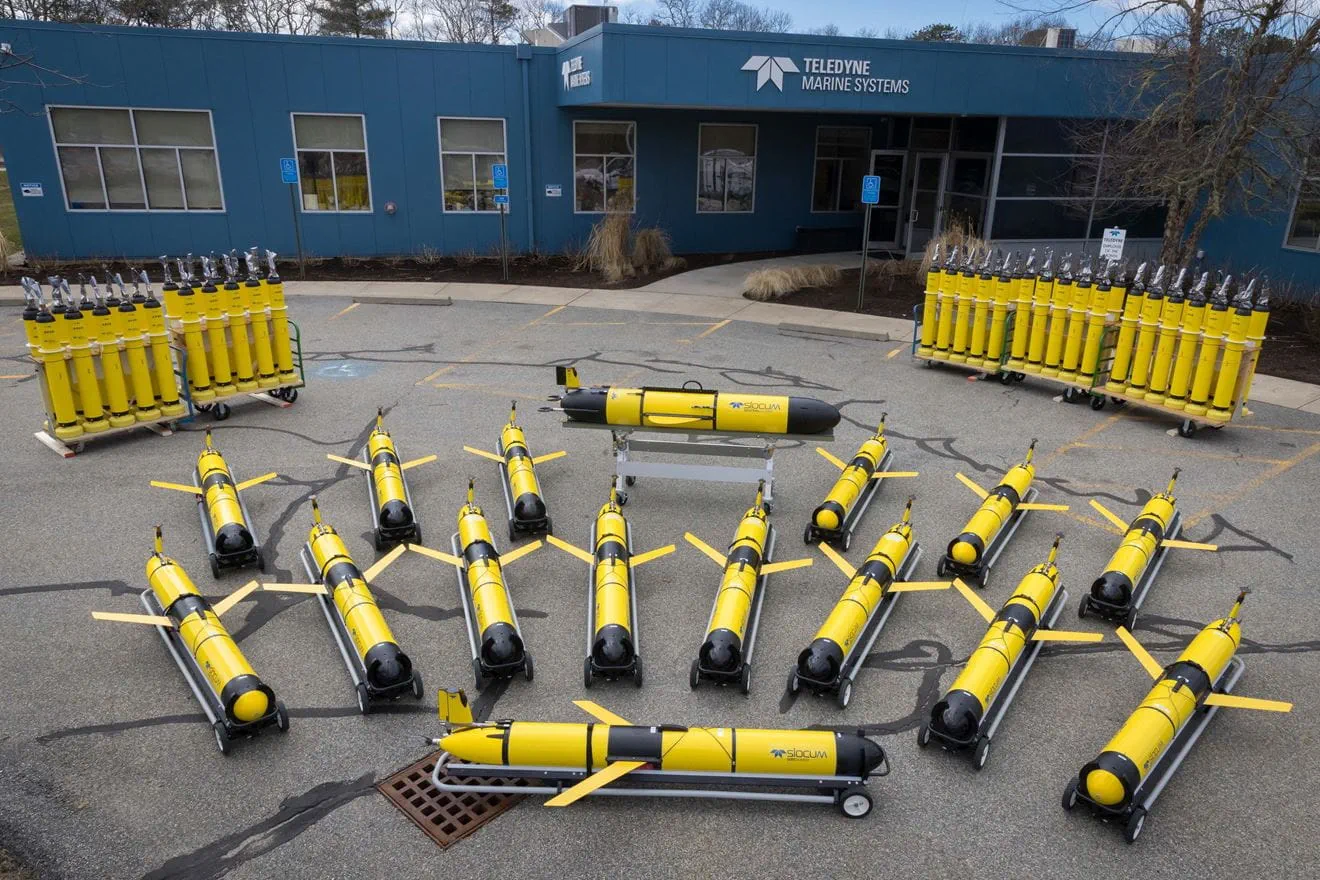
The Royal Navy is set to expand its ocean data gathering capability under a new contract with Teledyne Marine, aimed at strengthening environmental intelligence for operations.
The agreement forms part of the service’s Future Maritime Data Gathering programme and will see a range of autonomous systems delivered to frontline Information Warfare meteorological and oceanographic operators.
Under the contract, Teledyne will supply uncrewed platforms including Sentinel and Slocum gliders, as well as APEX floats capable of taking subsurface measurements. These systems are designed to collect long-endurance data from complex and remote maritime environments, supporting operational planning and maritime safety.
According to the Royal Navy, the capability will contribute directly to Atlantic Bastion, the UK’s effort to improve situational awareness and resilience in the North Atlantic. The data collected is intended to improve understanding of the underwater environment and support decision-making in contested maritime areas.
“This investment in autonomous ocean sensing strengthens the Royal Navy’s ability to understand and operate in an increasingly contested North Atlantic,” said Commander Mark Butcher, Hydrographic and IW METOC Capability Sponsor. He added that persistent data from such systems enhances understanding of the underwater battlespace and supports tactical exploitation of environmental conditions.
The programme builds on existing use of Teledyne autonomous platforms and reflects the growing role of uncrewed systems in naval and NATO operations. According to the company, the systems will provide reliable and actionable ocean data to support defence and wider maritime missions.
“This award reflects the Royal Navy’s continued confidence in Teledyne’s autonomous underwater vehicles and ocean observing technologies,” said George Bobb, President and CEO of Teledyne.