

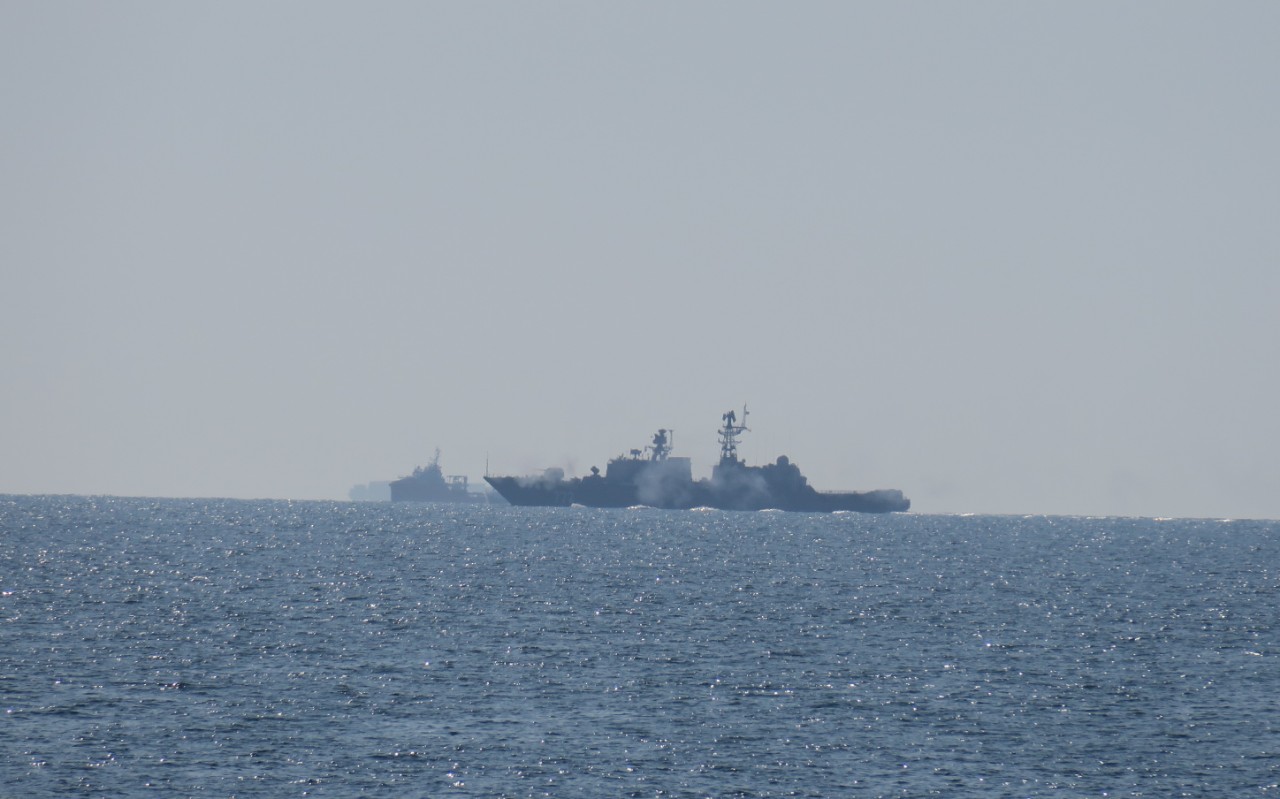
Royal Navy warships and helicopters spent 21 days on operations monitoring Russian activity in UK waters and the North Atlantic during July, with activations to track Russian units up 25 per cent across the first seven months of the year compared with the same period in 2025, the Royal Navy stated.
Four vessels were involved. HMS Somerset, HMS Tyne, HMS Mersey and HMS Severn were dispatched alongside Wildcat helicopters from 815 Naval Air Squadron and Merlin anti-submarine aircraft to report on the movements of warships and submarines through the month.
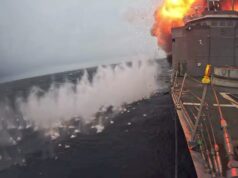
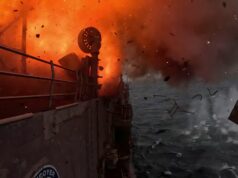
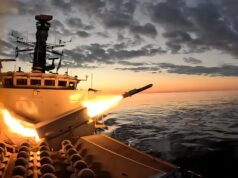
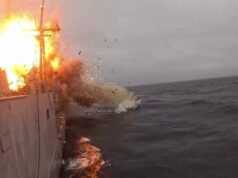
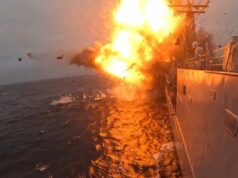
The Russian frigate RFN Neustrashimy has repeatedly transited the UK’s area of responsibility escorting shadow fleet tankers within recognised traffic lanes, according to the Royal Navy, tying up operational capacity in guarding cargo. On 20 July the frigate conducted gunnery firings outside UK and French territorial waters while Portsmouth-based HMS Tyne was on task. The patrol ship moved to five nautical miles as the Russian vessel fired, continuing to gather intelligence and observing the fall of shot, which the service records as around twenty rounds from the frigate’s 100mm main armament along with fire from her 30mm battery.
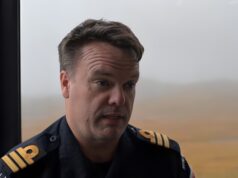
Lieutenant Commander Sam Fields, commanding officer of HMS Tyne, said in the release that “through sustained presence and close cooperation with allies, HMS Tyne was ideally suited to this task”, providing reassurance and monitoring while allowing other fleet units to continue their commitments.
HMS Severn was activated twice during the month, first shadowing the frigate RFN Admiral Grigorovich as she sailed east from Ushant towards Dover, then taking over from HMS Mersey for a three-day mission between 23 and 26 July to intercept and shadow Neustrashimy. Severn kept watch as the Russian ship escorted the shadow fleet tanker MV Vulkan out of the Baltic, through the Dover Strait and towards Ushant, with the two British patrol vessels handing over again as Neustrashimy headed back east.
Lieutenant Commander Dom Jacobs, executive officer in temporary command of HMS Severn, said his crew had adapted quickly between the Fleet Ready Escort role and the ship’s training output as Fleet Navigation Training Ship, adding that this “shows the versatility of my crew and the other OPVs to deliver a range of tasks”.
The Type 23 frigate HMS Somerset returned to Plymouth on Friday 7 August after a four-month deployment monitoring surface and sub-surface activity in the North Atlantic, having covered more than 24,000 nautical miles. Her tasking formed part of the standing operation protecting the nuclear deterrent, and she deployed with an embarked Merlin from 814 Naval Air Squadron.
Commander Matt Millyard, Somerset’s commanding officer, said the deployment demonstrated what the Royal Navy exists to do, and that he was “immensely proud of every single member of the ship’s company” for work that included tracking submarines and operating alongside NATO allies and the Carrier Strike Group.
The activity follows the UK interdiction of the sanctioned shadow fleet tanker Smyrtos in the English Channel in June. Britain has sanctioned more than 500 vessels associated with the trade, and the Royal Navy notes Russian oil and gas revenues fell by 24 per cent year on year in 2025.
Neustrashimy is the lead ship of her class and operates from the Baltic Fleet base at Baltiysk, while Admiral Grigorovich belongs to the later Project 11356 series built for the Black Sea Fleet. The River-class offshore patrol vessels used to shadow them are lightly armed by comparison, carrying a 30mm gun and machine guns, and are routinely assigned to escort and monitoring duties in home waters.



“HMS Tyne was the ideal shop for this task”
You mean the only ship available for this task!
HMS Tyne would be the equivalent of sending HMS Victory up against a Dreadnaught!
If these patrol ships are going to be continuously sent to escort major Russian warships then it’s time they were “up gunned” with some ASM weapons.
Not sure you’re right.
No Russian vessel is going to starting firing at RN vessels during these confrontations. To do so would be an act of war, and the Russians know what the consequences would be.
HMS Tyne will have done a good job observing, listening, etc.
I agree James, not sure why anyone would think we should waste a scarce high end warship babysitting old Russian warships. If interdiction work was to be done against a Russian warship then it would be carried out by wildcat using sea venom. The Batch 1 Rivers are perfect for this job and it’s nuts we are not extending them given the massive shortage of frigates.
I think in the longer term the B2s will come home, and the work they are doing in the far east will be done with T31s.
I agree, I just think we need to wait until the early 2030’s given the massive hole in the escort fleet and the big increase in Russian warships near home.
Not much point.
All 3 are still planned to be decommissioned next year!
I wonder what the RN and MoD have up their sleeves? As surely such an act of self mutilation, although common enough with HMG the way they’ve treated the military over the decades, is a step too far this time.
There’s nothing to replace them apart from the River B2s, which would be another act of self harm, as they’re doing a fine job doing the diplomacy presence flag waving soft power role once conducted by Frigates.
I’m sure the ‘plan’ is another capability gap….
Why not a few more T31s or the shorter AH120s that Babcock and Saab were working on? These 85m OPVs with a 20mm great and utilitarian as they’re just don’t cut it. They want to spend millions on drone boats and testbeds , why not some well spent millions for 3-4 B3 Rivers or ICE Thames class 85 OPVs, helo and drone capable? Leave the B2s for current ops, backed up by T31s.
You don’t think something Arrowhead based is “slightly” overkill for the task?
A few more (3-5) T31 orders would be ideal BUT..We haven’t seen one up and running yet.
BAE won’t be building anything other than T26 until 2040. The UK won’t go to another overseas yard for RN frigates. This is yet another capability gap that the RN saw coming and has done nothing, it would seem, to avoid.
Drones still need mother ships but none are coming soon either.
Because we couldn’t build them fast enough. We need several small, cheap opvs, even smaller than the B1s would be fine; we aren’t going to send them to the Americas again. 60m c. 600 tons. £270m for 6. Extend the B1s until they arrive.
Drones drones and more drones ain’t it👍
A gap implies it’ll be filled. The bottom line is the B2’s where supposed to replace the B1’s which then got a stay of execution and where recommissioned, so when the B1’s finally retire the “gap” that opens is filled by the B2’s while the B2 gap is just going back to being a capability we don’t field.
In reality the B2s are actually fill the GP/patrol frigate gap.. because 15 years ago the RN would not dream of sending out an OPV to do what the rivers are doing.
The UK EEZ patrol function really needs about 15 vessels if your looking at a joint mine warfare/patrol function
Deployment wise you need
1 Caribbean
1 Falklands
1 Antarctica ( ice hardened)
2 UK EEZ
2 mine warfare
So if you can scrape a 2 for 1 deployment rate you’re looking at about 14-15.
In reality that how many of the Norwegian patrol vessels they should be ordering over the next 15 years or so, they could probably get way with a mix of 10 of the ocean going 90meter vessels and 4-5 of the brown water 55meter vessels.
I suspect we will in future see them being given a friendly escorts around British water by vessels like the K3 and Oceanus17, which would probably be considered a insult by the Russians if it wasn’t for the Ukraine showing the effectiveness of drone weaponry.
The only Defence minister I ever heard agreeing that this might not be a good move was James Heappey, who thought that replacing them with Batch 2s was not necessarily a good use of resources. Otherwise the insanity that is replacing B1 with B2 and B2 with T31s is still plan A.
It would be good to have the Rivers 2 back from the far east, as they will make an ideal EEZ monitoring fleet.. ( that’s the whole point of a OPV).. sadly they are tied up doing the job we would once have GP frigates going, that in reality they are not designed to do.. far east presence work is the whole point of the T31 and have a couple of GP frigates with MK41 silos and the ability to throw cruise missiles will be significant.
In reality we need a minimum of 8 OPVs for EEZ work as we need to at any one time have 1 for the Caribbean, 1 for the Falklands and 2 deployments in home waters.. so you can just about manage that with 8 as they have a high level of readiness compared to complex warships..
With Russia playing games in the channel the role of the overseas patrol squadron is even more important.
Hopefully they will keep the rivers 1s running until they can replace them with some Norwegian patrol boats.
The rivers 2 I would very much consider upgrading with a 57mm cannon and a hanger for an autonomous rotor.
Morning Daniele-long time! For me there is literally no explanation that makes sense for the decision to retire the 3 Batch 1’s next year with no replacements on the horizon! From the info at hand that leaves one ageing T31 to monitor this vast area. Surely the operational cost of keeping these 3 OPVs can’t be much in the greater scheme, particularly in view of the threat levels from the Russian Navy? Also, while I am on my soap box, the Type 31 programme kicked off 7 years ago and still no sign of an in service new frigate maybe even before 2030!! Meanwhile here in SA the Boks narrowly defeated Argentina 17 to 10 with some of the crowd unfurling a Las Malvinas banner. The world is a strange place my friend
Cheers
Morning my friend, good to see you back here.
Perhaps they intend to use the remaining Hunt MCMV.
Whatever, the world of UK Defence is often demented and illogical. But all is well, as HMG say so and Russia might attack by 2030 or sooner and we’re replacing all assets and actually expanding them…..
Well we can’t harm them with out triggering a war. But you know it would be a awful shame if Ukraine got their location and real time tracking of those ships.
The replacement for a River B1 is….or possibly SHOULD be …another River B1!…or a B 1 1/2.
Or perhaps a River B3 with a modest 40mm gun upgrade, better radar and the ability ( space in the currently small command centre) to operate drones of some type.??
AA
The next set of patrol vessels are likely to be the Norwegian family.
100% AA. Round about 2006 the Ministry of Defence solicited comment on the future shape of the Royal Navy. I told them 2 things-dont make the same mistake as Wilson did in 1964-cancelling the new carriers and Tsr2 etc after having spent millions of pounds already. This time round get something toward the cost of the hard assets for the 400 million already spent at that time. Secondly, build more OPVs for anti piracy,showing the flag, monitoring etc at a fraction of the cost of tying up expensive frigates. They listened to me 🙂 So at the risk of sounding immodest, how come they are not able to make decisions this time based on common sense?
It’s likely that Glasgow and Cardiff will enter service about the same time as the B1 Rivers leave. How lean could you make a T23 crew? Could we deploy a couple of the T23s, stripped of their TSAs, as replacements for the B1 Rivers in their UK waters patrol role? That would enable the B2 Rivers to continue their global deployments with any refit gaps filled by new T31s.
Morning my friend, good to see you back here.
Perhaps they intend to use the remaining Hunt MCMV.
Whatever, the world of UK Defence is often demented and illogical. But all is well, as HMG say so and Russia might attack by 2030 or sooner and we’re replacing all assets and actually expanding them…..