

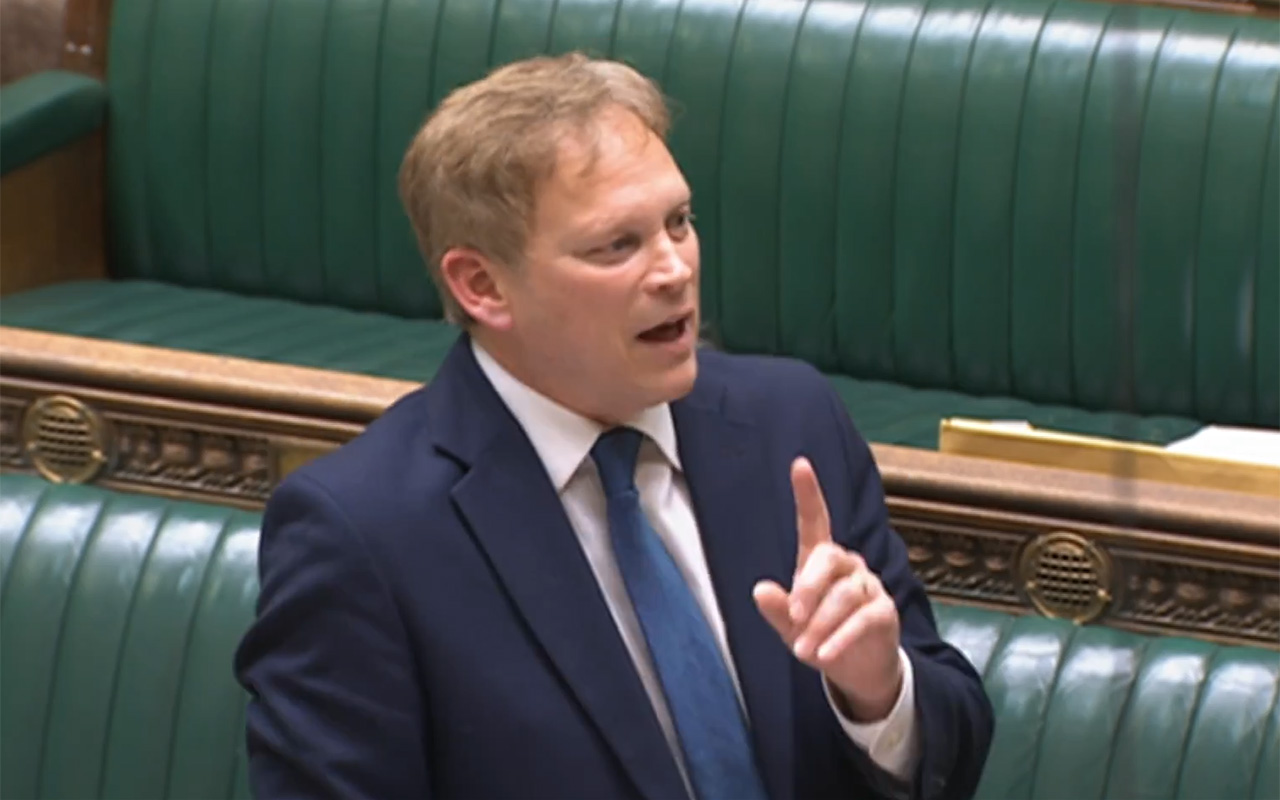
Former defence secretary Sir Grant Shapps has defended his decision to withhold briefings from senior parliamentarians for around a month following the Afghan data breach, telling MPs he believed wider disclosure could have put lives at risk.
Giving evidence to the House of Commons Defence Committee, Shapps acknowledged that he chose not to brief the shadow defence secretary, the Chair of the Defence Committee or the Chair of the Intelligence and Security Committee during the early stages of the crisis. Pressed by committee chair Tanmanjeet Singh Dhesi, Shapps confirmed the delay lasted about a month, arguing that his priority was first establishing the facts before widening awareness of the breach. He told MPs that the decision was not about trust, but about risk management.
“In any crisis situation, the first thing to do is not to widen the scope,” he said. “The first thing is to find the facts and then start to brief others.”
Shapps repeatedly insisted that even a marginal increase in the number of people aware of the existence of the compromised list could have increased the danger to Afghan nationals and British personnel.
“Even a 1% greater risk is a 1% greater risk that people will die, including British forces,” he said.
Committee members challenged that justification, pointing out that journalists, activists and Afghans were already aware of the breach, and that details had appeared publicly online. The chair described the failure to brief elected MPs as a serious breakdown in democratic accountability. Shapps rejected that criticism, arguing that executive authority must sometimes override parliamentary convention in extreme circumstances.
“There are just times where the state has to go about its business through Executive power,” he said, adding that he would rather justify his actions to Parliament later than explain why people had died. He also pushed back on comparisons with routine parliamentary scrutiny, stating that some information could not be shared even with senior MPs. “There are lots of things that we do not share with parliamentarians,” he said, citing nuclear submarine positions and classified operational details as examples.
The exchange formed part of the Defence Committee’s inquiry into the Afghan data breach and the handling of resettlement schemes, with Shapps appearing alongside former defence secretary Ben Wallace and former armed forces minister James Heappey. The committee has yet to publish its conclusions, but members indicated that they believed the decision to restrict briefings had worsened the political and institutional fallout from the breach.








Absolute nonsense and a total cluster fuck from start to finish!
Agreed.
So many ministers are examples of why politicians to me seem almost obsolete. People of such little talent in charge of the great departments of state.
The whole thing was an operation which ministers knew, that most people would be fully against it, and certainly if they knew the scope and the numbers involved mate!
It’s a bit like learning we are still funding and supporting illegal immigrates even after we have deported them!
Yep 👍
Seems government,s have been secretly bringing back ISIS brides now!WTF next?
By design, of course.
Farouk ( miss his revealing posts) worked out there must have been dozens of interpreters for every single soldier by the numbers that ended up involved, rightly, or wrongly.
Of course mate, always by design and kept under the radar! Farouk, always a great and knowledgeable contributor!
Everyone who ‘cared’ about Afghanistan a couple of days ago have all of a sudden gone quiet.
Strange that isn’t it? But I bet if Trump turned up and said something stupid as usual, the froth squad would appear! The whole plan was a con job, regardless of the reason it was implemented! It’s already been shown that it became an Afghan grave train of bullshit (understandable of course) lying, and limited if zero checks by the Foreign Office on the people clambering to come to the UK! All the while being covered up in the planing, implementation and after stages. Cheers.
Nothing like Trump to get everyone caring all of a sudden 👍
🤣👍
Wow, still nobody has been triggered, maybe at last they’re ignoring you. Which I know you’ll be more than happy with mate.
I hope so mate it does get repetitive and boring but you know some of these contributors, they cannot control themselves on certain subjects, and other thoughts and ideas which do not conform to their own bias, is not allowed. But like a first year student get together really mate 🤣👍
would’ve put votes at risk, as with all the other cover-ups