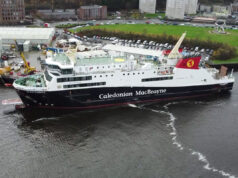
Speaking to the UK Defence Journal, Scottish Labour MSP Paul Sweeney has welcomed the Scottish Government’s intention to directly award Ferguson Marine a four-vessel contract, describing the move as “very welcome news indeed”, but has set out a detailed case for far wider reform of Scotland’s commercial shipbuilding model.
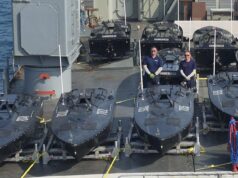
The proposed award covers phase two of the Small Vessel Replacement Programme, including two small CalMac ferries alongside a Marine Research Vessel and a Marine Protection Vessel. Sweeney said he had pressed ministers for months to use the Section 45 exemption under the Subsidy Control Act 2022 to enable a direct award of the patrol and research vessels to the Port Glasgow yard.
He said the announcement provides “a stable demand signal”, arguing that “volume is key to the stability and viability of any shipyard”, but warned that the contract must be treated as “the fundamental baseline of something that needs to be much bigger”.
Sweeney called for a dedicated skills pipeline across Scotland, including apprenticeships and mid-career retraining to support the adoption of new technologies, alongside what he described as “a relentless focus on productivity”. He also pointed to the reported £14.2 million capital investment and said clarity was needed on how that funding would be deployed.
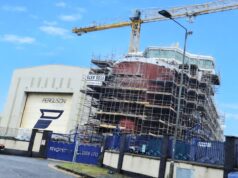
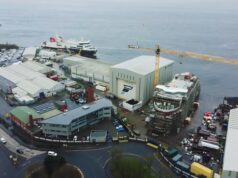
Citing the First Marine International benchmarking report into Ferguson Marine’s facilities, Sweeney said “significant improvements” are required. He identified the installation of a modern steel panel line as a priority, noting the long lead times involved in procuring such equipment. He also argued that ship construction should be brought fully under cover, stating it was untenable to continue building vessels outdoors on an inclined berth in west Scotland’s climate.
The MSP further highlighted physical constraints at the yard, including limitations on constructing vessels above 100 metres in length. He suggested that any long-term plan for commercial shipbuilding in Scotland should consider how facilities can work together, including the potential integration of Ferguson Marine with Inchgreen dry dock to enable assembly of larger vessels. With the UK Government committing £20 million to upgrade Inchgreen Marine Park, he said there was an opportunity to align UK and Scottish investment to create a more flexible national capability.
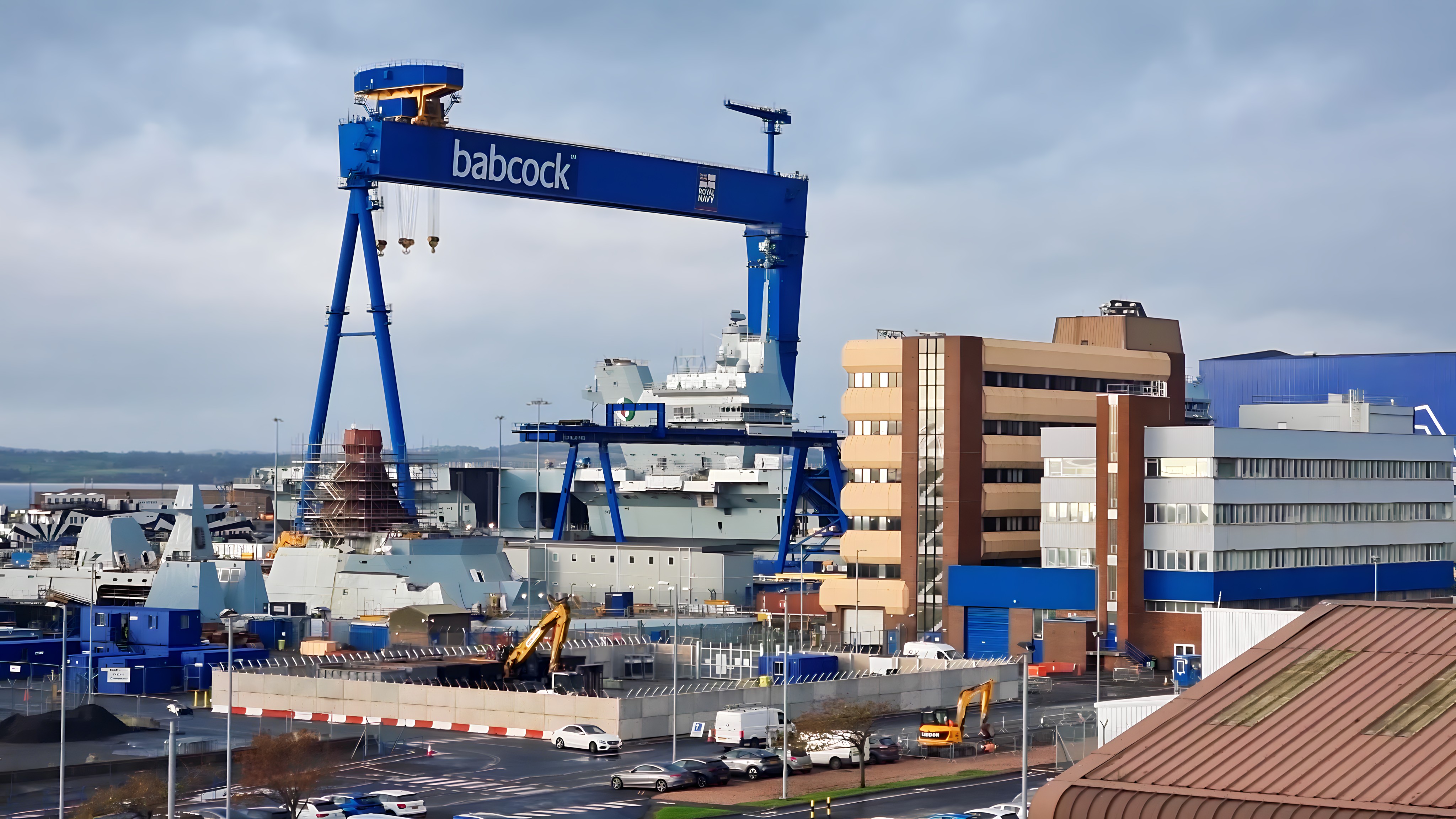
In making the case for modernisation, Sweeney contrasted Ferguson Marine’s current set-up with facilities at Rosyth and Govan. He noted recent milestone events at Babcock’s Rosyth yard and highlighted the fully enclosed build halls at BAE Systems’ Govan site, arguing that similar standards should be pursued if Scotland is to compete internationally.
A significant element of his argument focused on the absence of a competitive shipbuilding finance framework at UK level. Sweeney described this as a “massive glaring gap”, arguing that without access to patient capital and competitive financing instruments, Scottish and wider UK yards would struggle to win non-public sector contracts.
He pointed to European examples, including German long-term, low-interest lending models and Spanish tax leasing arrangements that allow VAT deferral, effectively reducing upfront costs. Such mechanisms, he argued, enable yards in countries including Finland, Germany and Spain to secure commercial work. He referenced the recent award of a Northern Lighthouse Board vessel to a Spanish yard as evidence of the competitive disadvantage faced by UK shipbuilders.
Sweeney said shipbuilding is capital-intensive and characterised by low margins, making financing structures as important as infrastructure. He noted that prior to the financial crisis, RBS had been a major global ship finance bank, suggesting that the UK once possessed tools that are now absent.
While acknowledging Scotland’s leading role in naval programmes such as Type 26 on the Clyde and Type 31 at Rosyth, Sweeney described commercial shipbuilding as comparatively underdeveloped. He argued that the four-ship award should mark the beginning of a coherent, cross-party industrial strategy for commercial shipbuilding across Scotland, supported by UK-wide reform of ship financing, rather than another reactive intervention.
He concluded that the challenge now is to “join all these strands up into a comprehensive plan”, ensuring Scotland can compete sustainably in the global shipbuilding market.