

The UK and Norway have agreed to intensify joint operations in the North Atlantic in response to a documented 30 percent rise in Russian naval activity near UK waters over the past two years, the UK Defence Journal understands.
The announcement accompanied Norwegian Prime Minister Jonas Støre’s visit to RAF Lossiemouth, where both leaders met maritime patrol crews tracking Russian vessels such as the intelligence ship Yantar.
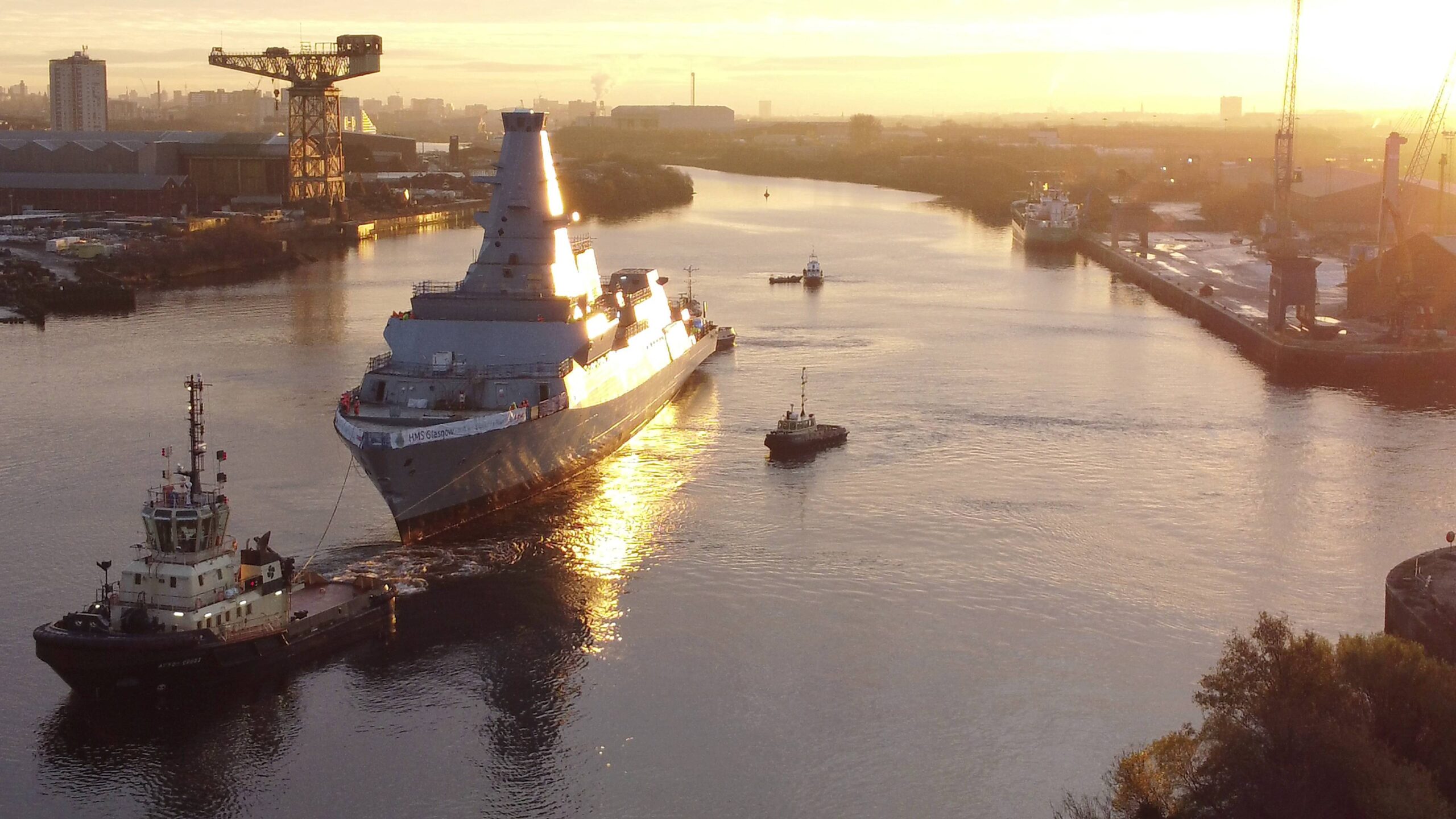
According to the UK Government, the centrepiece of the Lunna House Agreement is closer cooperation built around upcoming British-built Type 26 anti-submarine warfare frigates operated by both navies. The arrangement aims to create a fully interoperable force able to monitor Russian submarine movements and protect undersea infrastructure including pipelines and data cables.
Prime Minister Keir Starmer said the increase in Russian activity underscored the need for closer cooperation. “At this time of profound global instability, as more Russian ships are being detected in our waters, we must work with international partners to protect our national security,” he said. “This historic agreement with Norway strengthens our ability to protect our borders and the critical infrastructure our nations depend on.”
The agreement follows the September deal under which Norway ordered at least five Type 26 frigates, joining the UK’s eight-ship programme. The Government describes it as the largest British warship export contract to date, supporting more than 4,000 jobs.
Defence Secretary John Healey framed the effort as part of a broader shift toward reinforced northern security. “In this new era of threat and with increasing Russian activity in the North Atlantic, our strength comes from hard power and strong alliances,” he said. He added that “for over 75 years, the UK and Norway have stood shoulder to shoulder on NATO’s northern flank,” and that the new framework will see the two forces “patrol the North Atlantic as one, train together in the Arctic, and develop the advanced equipment that will keep our citizens safe.”
Beyond surface-ship cooperation, the agreement widens industrial and technological links. London will join Norway’s programme to develop offshore support vessels that will act as motherships for uncrewed minehunting and undersea-warfare systems. The Government says this will accelerate the shift toward autonomous capability in the High North, an area NATO has identified as increasingly exposed to Russian undersea activity.
Other measures include year-round Royal Marines cold-weather training in Norway, expanded collaboration on Sting Ray torpedoes, adoption of Norwegian naval strike missiles for Royal Navy ships, and joint wargaming initiatives intended to align operational planning.



💯👍🏻
Any news on if Denmark and Sweden are choosing type31/arrowhead 140?
Some comments online suggest a deleted posting suggesting they are going with the AW149 in a joint buy as well?
Yes read that, Norway spilled the beans!
And “lots of helis too” and “for Army SF use” which is intriguing as I took that to mean our side too, Puma was RAF SHF, the Dauphins are Army, and I thought they were being retained.
Norway were also Looking at 6 more AW101s for a further search and rescue base.. it’s that or the HH 60W.. there is another competition for 6 AAW rotors which is between AW101 and sea hawk.. so there are 12 potential AW101s up for grabs..that’s big.
I had though Norway had also ordered 6 MH 60R as a partial replacement for its 14 NH90s that were withdrawn.. it’s also halfway through negotiations for 9 HH-60ws for special forces ( a £2.6 billion dollar deal).. to replace older bell 412s..it also has a further 9 search and rescue NH90s it’s not yet though about replacing..
So if Norway has decided to abandon its U.S. rotor purchase and future rotor purchases and instead get them from the UK that is huge all iin all you could be looking at 12-21 AW101 ( 15 search and rescue and 6 ASW) and 23 to 32 AW149s.. so up to 44 rotors from the Uk.. added to a UK order that’s a lot of westlands rotors.. infact Leonardo would be slavering at the mouth as it would be one of the biggest rotor deals in Europe.. that would give discounts galore.. so we may now have the reason why the NHM programme was delayed.. to be honest I think the fact they have announced Norway is going for stingray tells you that they are ordering ASW Merlin’s and if they are ordering ASW Merlin’s they are probably ordering search and rescue Merlin’s…
I think Norway may have looked around and seen the geopolitical winds and not liked what it is seeing and looked to its only local and essentially none aligned peer as its partner of choice.
“Prime Minister Keir Starmer said the increase in Russian activity underscored the need for closer cooperation. “At this time of profound global instability, as more Russian ships are being detected in our waters, we must work with international partners to protect our national security,” he said. “This historic agreement with Norway strengthens our ability to protect our borders and the critical infrastructure our nations depend on.”
I see Norway as our closest natural ally, so that is fantastic. But….. surely then, actually spend more money on your own armed forces then as well as relying on alliances, no?
Your “biggest defence spending increase since the end of the Cold War” is spin of the highest order that you know FULL WELL that little of it is trickling through to conventional forces as most goes on numerous other voices eating at the “defence” table that I have listed countless times already.
The 3 River B1s are due to be cut, most of the the MCMV are already gone, there are 7 Frigates left when arguably 20 are needed, and only 9 P8 when the Nimrod MRA4 requirement was for 21! At least the P8s have arrived now, the previous incompetent lot suggested using Hercules transports to close the MPA gap…oh and they have gone as well.
HMS Proteus is but a single vessel that does nothing to actually stop anything, only detect, and HMS Stirling Castle, even if she was diverted to this task from MCM, has no crew and is often alongside.
Rhetoric with little or no action, Mr Starmer….
What are you doing about that???
More HMS Proteus.
More P8.
More escorts.
More patrol vessels.
More of everything.
Where….?
How about an announcement that you intend to increase manning levels in the RN for a start? A process that will take years to implement.
You grandstanded about the pay increase…but used existing MoD money to pay for it! Not new money.
And…from Tweedledum on to Tweedledee..Mr Healey.
““In this new era of threat and with increasing Russian activity in the North Atlantic, our strength comes from hard power and strong alliances,” he said. He added that “for over 75 years, the UK and Norway have stood shoulder to shoulder on NATO’s northern flank,” and that the new framework will see the two forces “patrol the North Atlantic as one, train together in the Arctic, and develop the advanced equipment that will keep our citizens safe.”
Tick….gets in the “keep our citizens safe” line, and concentrates on alliances that have been there for DECADES, including when the forces were bigger and the RN had 50 escorts, while ignoring your own military. Hard power? What hard power, and how can it be in multiple places at once?
Daniele, you are so right, and I suspect we are going to see a sizable increase in Russian rhetoric in the coming New Year. The Nordic countries know too well what it is like to be invaded and will do what it takes to avoid a repeat, and the UK needs them as close allies. The current ‘mill pond’ situation, occupying Whitehall and the UK’s defence, is starting to annoy me hugely, and when defence does hit the headlines, it’s anything but about material expansion. The current state of the British Army is dire, with our young troops driving around in museum pieces with little or no changes before 2027, and even then, the Ajax may still be barred from use. When it comes to the RN, we are facing a similar situation to 1940, when it took too long to build new warships and their numbers were too small. What is required is the equivalent of the ‘Flower Class’ vessels that can be quickly built and at multiple locations. Many of these platforms could be mainly autonomous patrolling sensitive national infrastructure, thus releasing the expensive ships to carry out global duties. The Type 31 appears to be progressing at the pace that we desperately need, and some have suggested their construction rates could be accelerated. All three services need urgent government attention if the UK is to protect its homeland and international commitments, and that will require some extraordinary and possibly unpopular financial management and courage.
Really spot on summary. 100 years ago we had the largest navy on the globe. Within the last 25 years our incompetent leaders have reduced the RN to possessing little more than 1 deployable flotilla and a carrier
🎻🎻🎻 …..19 escorts is our lot. Future growth in hull numbers will be LUSVs and MCMVs.
Agreed. That was the new low benchmark reached when the T22B3s were cut.
We’ve dropped as the T23s fall apart before new comes in.
8 T26 plus 5 T31 plus the T45s returns to that level, one day.
But of course, HMG will spin it as “the greatest shipbuilding in a generation” or words to rhat effect.
And there is the trick. That may well be true, and takes the emphasis and the headlines, but it hides the truth that they don’t highlight, that it keeps the RN at bare minimum.
Your spindoctor mind tricks don’t work with me….as Jabba the Hut said to Luke Skywalker…”Your Jedi mind tricks don’t work with me boy!”
That said, if we were to get 5 UT 512L style offshore patrol / MCMV vessels to ‘replace’ the batch 1 Rivers, Enterprise and Echo, and 6 MRSS ‘strike frigates’ I wouldn’t be too upset.
I’d go for that.
On MRSS, I consider it a miracle of we get more than 3.
3 Bays. LPD, Argus, others, all long forgotten.
The new low benchmark. Always stick to the benchmark and hail it as progress.
I’m less pessimistic. It’s clear that what the RN want from MRSS is very much more capable than anything the Albions or Argus could do. Ellida Strike in particular has twice as much heavy lift capacity as a Bay and arguably more than the Albions with the newer fast landing craft; 4 Merlin hangar with the troop capacity to use it; actual strike weapons rather than, well, nothing, and the CICs are looking to be very useful as well.
All in all a solitary ES would be a heck of a lot more useful than our Bay+Argus LRGs and if we surged to two of them together at a hot point with a T31 they’d be a very capable force.
So 3 wouldn’t be a disaster (though 4 would be better) and would give us a better balanced force now we have CVAs. They would however have to be backed up with more capable Point replacements for the volume movement of vehicles and suchlike.
All sounds exciting, I did read about Ellida back in the day on NL?
And J and ABC have detailed it well here as well.
Fact is that the other ships existed, Ellida doesn’t, yet.
And now, we have 3 Bays left and the honourable Defence Minister had the gall to actually say “no reduction in amphibious capability…”!!!
On the Points…..yes, we saw something on that here about a new program to replace those. Hope they’re RFA and not sponsored Reserves as I think the four Point crews are. They were six.
To add, if they’re duel role in effect as a way of saying “we have more Escorts” it is a win win for HMG. But if the RM are now raiding in RIBS with a handful of LCVP and LCU left, why do we even need bigger?
Personally on the MRSS I would like to see 2 proper amphibious helicopter docks that can support a battalion. Then 4 littoral strike frigates.. a GP frigate load out with the ability to support company based strike group.
One reason why they only need 2 large Assault ships is the species on the replacement for the point class if you read the spec are essentially full fat logistic auxiliaries that can do over the beach landing.. they are required to be able to offload at sea onto Mexeflotes, can take defensive armaments, have off loading ramps onto mexaflote fore aft starboard and port.. as well as the ability to flood and maintain different angles of trim for offloading purposes, have enhanced survival.. no commercial company is going to want to run these.. I think they are planning for the RFA to take on the point replacements.. as the bays and Argus go out.
All these plans. Great on paper but show me the money and the people and I start to believe.
Meanwhile, we are going in the other direction and assets are being loat, 2 billion needs saving this year, reportedly, and the Army might lose its first new Armoured combat vehicle in decades that isn’t a panicked OTS PPV or an AVRE.
Jonathan, thx for sharing your thought provoking research on the Point replacements – reminiscent of Karel Doorman? The Point class spec, the letting go of Albion class and the emergent 29,000 ton ideas for MRSS tell me that what we are witnessing is the slow motion ( funds limited) execution of a coherent strategy for UK expeditionary capabilities. It’s rumoured that the Puma replacement AW149s are being given to the army. Didn’t the AAC practise using their Wildcats off QE a while back? I’m sure your ideas could be made to work – both BAE and Babcock have published concepts for ( 10-12k ton?) ‘strike frigates’ and LHDs are a known quantity. For me the really encouraging thing is that the RN have leveraged all their experience ( arguably more than any other nation with the possible exception of the US) and had the ambition to come up with a completely new type of warship – 29,000 ton Ellida strike? San Antonio, Canberra and Mistral – eat your heart out. The choice of Gwyn Jenkins as 1SL confirms to me that this is the UK diplomatic, political and military direction – serious global influence.
Yes I have to say I found the Point replacement requirements very interesting as these are not your bog standard bulk RoRo vessels and go well beyond a basic strategic sea lift vessel and well into amphibious operations… I can’t see ships of this spec being civilian operated…
Vessel Size: Vessels should be less than 200m in length and 8m in draught.
Cargo Scope: Vessels should be capable of carrying International Maritime Dangerous Goods Class 1-9 cargo as well as provide cold chain storage
Capacity: Providing a minimum of 15600 Lanes in Meters (LiMs) at a minimum of 2.8 metres wide across a minimum of 4 vessels.
Operating Environment :Vessels should be capable of functioning under the full range of environmental conditions (such as hot, cold, humid & wet) in all seasons, and in the littoral, from arctic to tropical as well as the open sea.
Power & Propulsion: Vessels should be able to run on globally available fuel sources as well as be adaptable to future fuel solutions.
Range / Speed : Built and operated to commercial standards for fast and economical RoRo Vessels to provide Strategic Sealift Capability in support of UK Operations, deployments and exercises, also configured for extended range at economical speed.
Structure: Vessels should have strengthened hulls and decks to enable transportation of military equipment, minimum 5T/m2.
Ice Class: Ice Class 1A this is the criteria for determining a ships ability to navigate through sea ice.(that is essentially winter ice in the Baltic)
Survivability:Enhanced survivability is required to mitigate against physical loss of a Vessel.
Protection: Vessels should be able to be equipped to accept weapons and protection systems.
Ramps: Vessels should have a self-supporting main ramp for offloading to Mexeflote, including both Stern (supported SWL 150mT / self-supported 75mT), and Side Ramps (supported SWL of 75mT) for efficiency and resilience.
Mexeflote Operations: Vessels should be equipped with an internal ballast system capable of altering the trim outside normal parameters to permit roll-on roll-off transfers direct to Mexeflote.
Crane: Vessels should have at least 1 crane able to move 20 & 40 ft ISO containers and cargo, to enable rapid deployment and operational flexibility.
Cargo Access: Vessels should allow access to all containers at sea while they are fully secured to the ship.
Deployability:Able to deliver cargo, to the right place, for the right time, without damage or degradation and exploit the most expedient transit routes, including Panama and Suez canals.
A sizeable and very well aimed bucket of cold water over the P.R. release. A particular irritant to me, living where the backbone of our army and navy have been recruited from over the past century, was the twisted recruitment campaigns that tried to rival Jaguar Landrover in modish nonsense. Before anyone chimes in I had nice conversation with three uniformed female cadets in a supermarket collecting for Remembrance Day. They were enjoying being part of something of meaning and significance that gave a structure and self confidence. That is not trivial.
I agree.
On recruitment. Ah yes, what was it the RAF Group Captain said to his subordinate….”I don’t want this white trash” after which she quit in disgust and it made headlines.
Of course, I don’t see the then CAS facing the music for that now? No more than whoever started Ajax.
ZERO accountability.
Representation from all sides of our nation is good, in whatever skin colour or religion you are, I’d love to see Muslim Regiments for example….fat chance… but I get why people would think exclusive units are a bad idea, .but look at any photos and it is a sea of white faces, many from working class backgrounds that comprise our military.
The diversity obsession can only do so much but should never be at the expense of your main pool of recruits, which in the RAFs case was happening and whites sidelined.
Hate to be Danny Downer but this announcement seals the coffin on the RN getting any more than 8 T26’s. The Treasury will be rubbing their hands in glee.
Who ever suggested we’d get more? No serious defence commentators I’m aware of.
I’ll be on my knees in relief if we get the 8 without some being shipped to Norway and the RN left empty handed, again.
Haha 😂. Fair comment. Expect next thing we’ll be asking the Norwegians to send one off round the world with the carrier group.
Well I actually had no issue with that…..but…
I like Norway, and the people, and how we’ve been firm allies for a long time without any of the political “fun and games” carried out by the likes of France regards Brexit and post relations.
The fact that Oslo also appreciate us by giving London a tree every year due to our actions in the Second World War has always touched me as well.
And the small fact that there’s a strong family rumour we are from Scandinavia, and I’m possibly of Viking blood as beyond my northern Scots background in my family tree going back to the late 1700s ( Gordons, Sinclairs, Browns, Lewis, Gordons, and Cormacks all in it ) my DNA test says I am 50% Sami, the Reindeer herder peoples from northern Finland!
So I’m biased….
I don’t think anyone thought we would get more than 8.. it was a possibility to pop an extra or 2 on the line to keep it running before it swaps to the T83 but now Norway are getting 5+ T26s that line is running to at least 2040.. most people are laying bets on more type 31s
I don’t like to see us casually settling for an 8+5 Hi/Lo establishment that was set in peacetime. We are at war, albeit a grey one at this stage and the Russian sub threat is our greatest existential threat. Im currently listening to the Sky wargame podcast (late to the game i know) and although i knew the state of our military it was stark to see how we had little active deterrent to Russian subs in the Atlantic. Alliances are great but recent experience has shown that it only takes a change of government for your staunchest ally to decide they want to do something else.
There is nothing in itself wrong with hi lo mix and the reality of high is it’s harder to shift.. 8 Type 26 will be fine as long as a supported buy some mass of ASW.. remember the US done not even have a high end surface ASW combatant platforms.. it has lots of low end ASW ( ABs are not high end ASW) supported by specific capabilities such as TASS boats.
I would also argue that the it’s unlikely the T31 will remain Lo as long as they do a good capability upgrade on it…a frigate with a 57mm, x2 40mm, 8 NSMs, 36 CAMM and some mk41 silos, able to take a Merlin is not low end and if you wanted more frigate based ASW you could put a tail on a T31 and it would be no worse than an AB class at ASW.
So any expansion of the frigate fleet should be T31s with adaptive load outs. Because the T26 line will now be busy building a joint fleet of 13+ T26s.. what should be considered is can they build an AAW version of the type T26 on the same line or does it need a completely new ship.
I agree with Danielle. We keep hearing lots of noise about strategic defence initiatives with key European partners. But are not seeing any new Kit or spending. Where is the DIP that is running well late. Can someone have a word with Rachel in accounts to get some cold hard cash. So we can get more Ships- Planes – Tanks and personnel. The Russians only understand two things Strength and Power everyone knows it but we keep dragging our heels. Labour need a big heap of JFDI!!!
I don’t like to see us casually settling for an 8+5 Hi/Lo establishment that was set in peacetime. We are at war, albeit a grey one at this stage and the Russian sub threat is our greatest existential threat. Im currently listening to the Sky wargame podcast (late to the game i know) and although i knew the state of our military it was stark to see how we had little active deterrent to Russian subs in the Atlantic. Alliances are great but recent experience has shown that it only takes a change of government for your staunchest ally to decide they want to do something else.