British Defence Intelligence says Ukrainian drone strikes damaged the Novomoskovsk Azot Chemical Plant, a major Russian industrial site linked to chemicals used in military explosives production.
Ukrainian long-range drone strikes have damaged one of Russia’s largest chemical plants and are highly likely to have disrupted production there, according to a new assessment from British Defence Intelligence, the UK Defence Journal understands.
[1/2]
Latest Defence Intelligence update on the situation in Ukraine – 26 August 2026.Find out more about Defence Intelligence’s use of language: https://t.co/LD3hsOHHYW#StandWithUkraine pic.twitter.com/PbSJUDylnw
— Ministry of Defence 🇬🇧 (@DefenceHQ) August 26, 2026
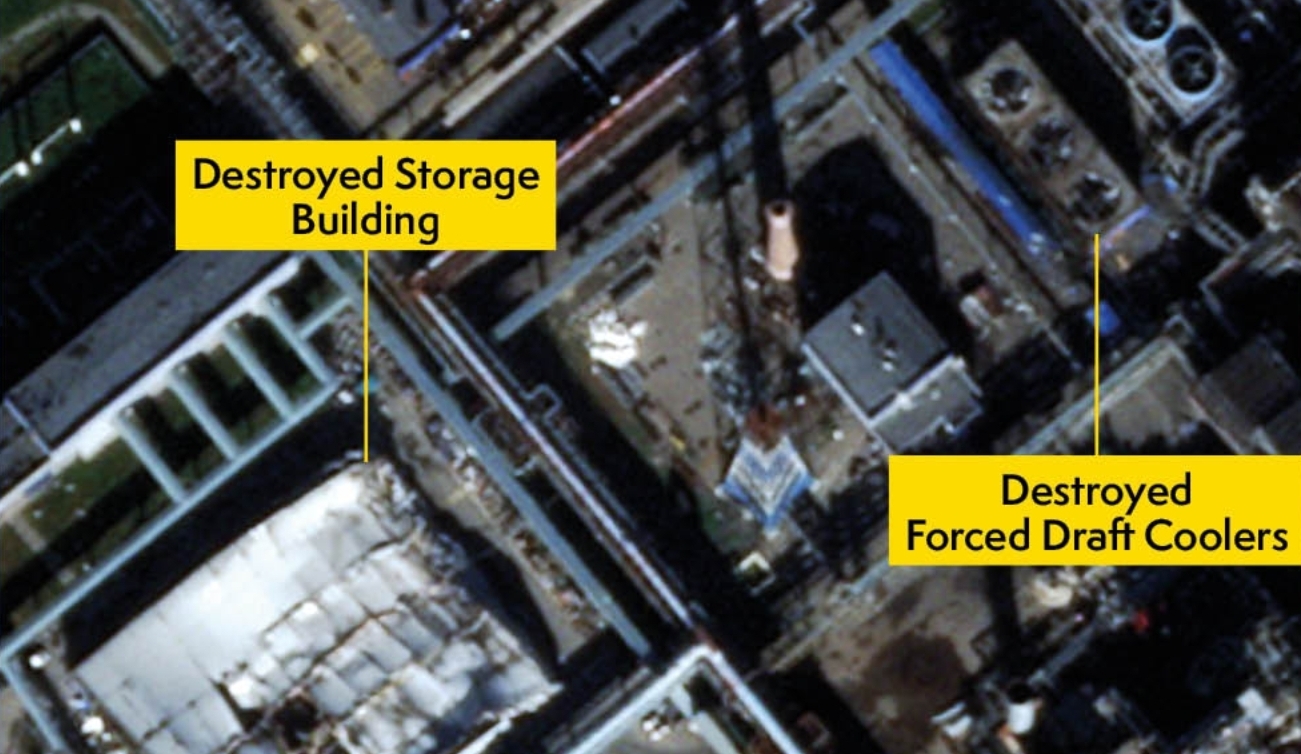
The Ministry of Defence said Ukraine struck the Novomoskovsk Azot Chemical Plant on 14 and 26 June using uncrewed aerial systems, targeting a facility approximately 350 kilometres from the Russia-Ukraine border. British analysts examined commercial satellite imagery taken on 16 and 30 June and identified damage across several parts of the complex, including forced-draft coolers, a pipeline, a storage building and supporting infrastructure.
The imagery released alongside the assessment shows a storage building and forced-draft coolers identified by the MOD as destroyed following the first strike, while later imagery from 30 June shows a destroyed pipeline and continuing damage to the cooling infrastructure. Defence Intelligence also identified damage to the transformer yard of an adjacent power plant around 2.5 kilometres east of the chemical plant’s main facilities.
The MOD assessed that the cumulative damage was “highly likely” to have disrupted production at the site, although it did not provide an estimate of how much capacity had been lost or how long repairs might take. The assessment is based on satellite imagery and British intelligence analysis rather than information released by the plant’s operator.
Novomoskovsk Azot is described by Defence Intelligence as one of Russia’s largest chemical plants, producing nitric acid and fertiliser products. The MOD said the facility has also been linked to the provision of chemicals which support Russia’s military explosives production capability, giving it relevance beyond the civilian agricultural and chemical sectors.
[2/2]
Imagery showing damage at Novomoskovsk Azot Chemical Plant, Russia. pic.twitter.com/4ou66LcJHe— Ministry of Defence 🇬🇧 (@DefenceHQ) August 26, 2026
That connection makes the plant part of a broader category of dual-use industrial facilities which Ukraine has increasingly targeted during its long-range strike campaign. Nitric acid and related chemical products have extensive civilian applications, but some of the same industrial inputs are also important to explosives and energetics manufacturing, meaning damage to production can affect supply chains feeding the Russian defence sector.
British Defence Intelligence said the June attacks formed part of a wider Ukrainian campaign against critical Russian infrastructure and defence-industrial facilities, with the pace and depth of those operations increasing noticeably during the first half of 2026.
The MOD assessed that Ukraine has “highly likely conducted more and deeper strikes against Russian military industrial targets in the last six months than at any previous period of the war.” It added that those attacks had likely disrupted production across several industrial sectors, including micro-electronics, energetics and missile manufacturing.
Novomoskovsk lies well beyond the immediate front line, meaning strikes against the plant require long-range systems capable of navigating deep into Russian territory. The MOD did not identify the specific Ukrainian drone type used in either June attack, and its update did not provide details of Russian air-defence activity around the site.
The satellite imagery does, however, provide visible evidence of damage consistent with the British assessment, including destruction to buildings, cooling equipment and pipeline infrastructure. The later image from 30 June also suggests that parts of the plant remained damaged more than two weeks after the first recorded strike.
British Defence Intelligence’s wider conclusion is that Ukraine’s deep-strike campaign is placing increasing pressure on Russia’s military-industrial base by targeting not only weapons factories themselves but also the chemical, energy and electronics infrastructure required to sustain production. The precise effect on overall Russian output remains difficult to quantify from satellite imagery alone, but the MOD’s latest assessment indicates that disruption is now being observed across multiple sectors.