Ukraine wants to cut the number of soldiers it needs on the front line by a factor of ten using ground and aerial robots, but machines are still not reliable enough to replace troops holding territory, according to the head of the country’s defence technology cluster Brave1.
Speaking on Ukraine’s stand at NATO Edge 26 in İzmir, Oleksandr Bornyakov, chairman of Brave1’s supervisory board, said one of the cluster’s priorities for next year was what he called the robotisation of warfare. “We want to test and implement the concepts where robots fight, not people, and we move people far away,” he said.
Ukraine had been testing since 2024 a concept that puts the minimum number of people on the front line, with ground and aerial systems working together in attack and defence, to see what kind of force they could hold off. “Our idea is that we can change on a doctrine level the amount of people that, according to the books, has to be in front. So maybe instead of 50 people, we can put five people, and we can substitute them with different means that work together and have the same effect,” he said. “Less people, but more impact.”
He was clear, though, that the war had shown limits. “What our war shows is that you can’t actually hold the territory without troops that are in trenches, so there is no way the machines can just substitute,” he said. The most they could do for now was reduce the risk and the number of people needed, even in the heavily surveilled dead zone behind the front. Asked whether ethics was the reason, he said it was not. “It’s just that technology right now is not so reliable that it can substitute people,” he said, pointing to moisture, fog, sensor failures and blasts that disrupt connectivity. “Then the enemy can just walk in, and those means are not working. So the human has to be there still. It’s not about ethics. It’s just about safety.”
Dr Cristian Coman of the NATO Communications and Information Agency (NCIA), which helps run the joint UNITE Brave NATO programme, speaking alongside him, said robots would change what soldiers do rather than simply how many are needed. “You actually move the effort from manual labour into more intellectual area,” Coman said, with people still required to plan how robots will be used, programme and maintain them.
Coman said NATO was learning from Ukraine’s drone forces and its battalions and divisions dedicated to drones, which do not yet exist in NATO’s structure, and that the Alliance’s focus was making sure allies’ own autonomous and robotic systems could operate together.
Breaking dependence on China
Bornyakov said the other priority for next year was components. More of them, he said, had to be made in Ukraine and Europe, because otherwise neither could produce at scale in a crisis. “If you don’t do this, and in case of something happen, we cannot just produce something at scale, because you have to go to China or some other countries that is not going to sell your needed components, like chips, like integrated circuits, like lithium batteries, like magnets for rotors,” he said. “So we’re going to put more and more efforts to have our own independent component base.”
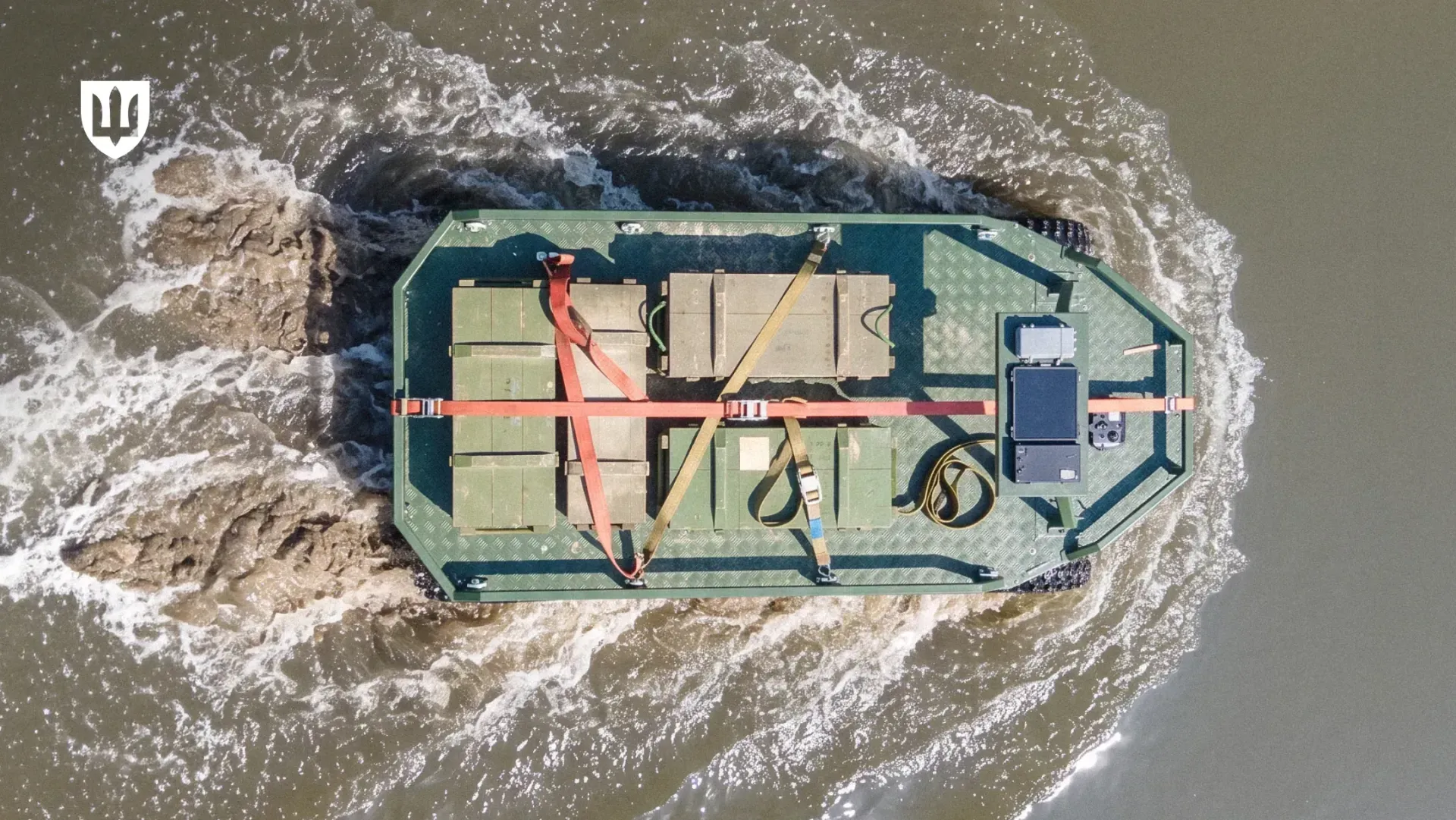
It is a problem Ukraine knows from the start of the full-scale invasion. Bornyakov, then a deputy minister of digital transformation, said the Army of Drones initiative began in 2022 by buying and repairing Chinese drones, before Ukrainian engineers showed they could build their own and Brave1 was set up to do the same systematically across other domains, from ground robots and electronic warfare to air defence sensors and radars. The cluster now works with more than 2,500 companies and, he said, had brought ground robotic platforms into service that did not exist in Ukraine’s forces before it, alongside interceptor drones now being developed abroad.
The message has resonance at NATO Edge, where supply chain security and the speed of fielding new technology have featured throughout the week. Allied militaries are still working out how to buy drones and robots at Ukraine’s pace, and Bornyakov’s argument is that the next advantage will come not only from new systems but from controlling the parts that go into them.