

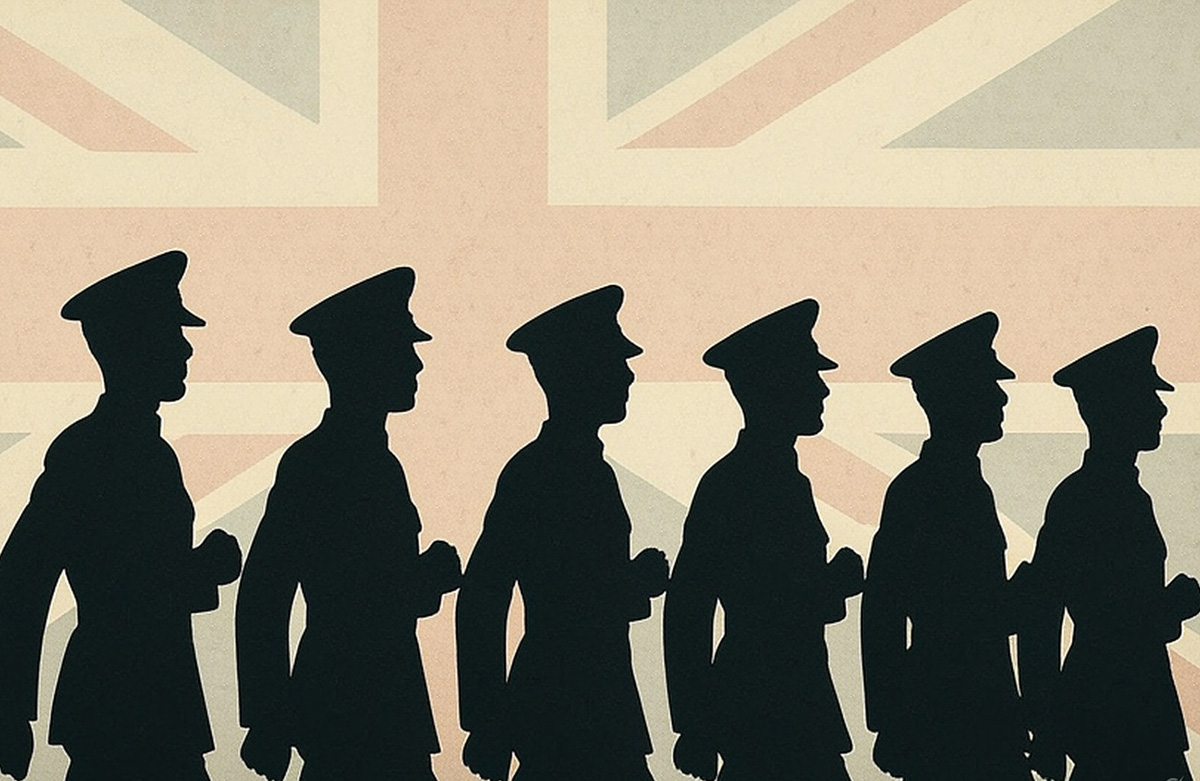
Veterans at an Onward event ahead of the second reading of the Northern Ireland Troubles Bill said the legislation is destroying confidence in government promises and corroding trust among serving personnel and key allies.
The panel included Operation Banner veterans, former Special Forces personnel and Mark Francois MP, who argued that ministers are dismantling the 2023 legacy framework without credible justification.
Opening the session, Onward director Simon Clark said the bill would “remove the existing mechanism for granting immunity from prosecution” and “restore the right to bring civil claims”, reversing the system designed to end decades of litigation. He warned that the proposed structure gives veterans “two tier justice at its worst” and cited the joint letter from nine former four star officers that said the “fear that lawful actions may later be judged unlawful will paralyze decision making” and that lawfare poses “a direct threat to national security”.
Paul Young of the Northern Ireland Veterans Movement said the legislation reopens the cycle of inquests, civil claims and criminal referrals. He argued that the 2023 act stopped a system dominated by “so called human rights lawyers” whom he said had been “making millions out of legacy”. Young said the new bill returns cases to a judicial environment in which veterans cannot trust the process. “They intend to put civil cases back into the Northern Ireland judiciary”, he said, adding that this reintroduces the “playbook” that pushed soldiers into court while IRA perpetrators avoided prosecution. He said widows are not expecting convictions and that claims the reforms serve families are “an absolute lie”.
Colonel Simon Barry said veterans feel deceived. He argued the process signals a willingness to concede to political pressures and that historical cooperation failures by the Republic of Ireland make its involvement contentious. He cited cases including Kingsmill and Warrenpoint and said the Republic “would not let” investigators examine a firing point linked to an attack. “If someone is going to say to me that the forensics are going to be better now than they were then, they are taking us for a clown”, he said. He called the reforms “a betrayal of people who in good faith stuck their lives on the line in a democracy”.
Francois read a detailed statement from a military wife whose husband was gravely injured in an IRA attack and repeatedly targeted while in hospital. She wrote that reopening legacy cases will not provide closure. “If Labour think that I will be given closure, it is a load of rubbish”, she said. “We are the forgotten ones still living that night.”
Gilly, a former Warrant Officer, read a statement from a former Special Forces operator known as Soldier Z. He wrote that morale is deteriorating and personnel are resigning because they no longer trust political assurances. “Some of our finest service men and women are resigning”, he said, describing repeated arrests on “charges that were nothing more than rumors”. He said promises of protections are “disingenuous reassurances” and argued the bill “diminishes trust between the armed forces and its government”. He warned it is already damaging confidence among allies. “Our US allies are watching. Many of our enemies are watching”, he said, adding that the current course signals abandonment of those asked to take the most acute risks.
When asked whether ministers’ assurances could be trusted, Barry said the protections are weaker than those in the 2023 act and that verbal commitments carry little weight. “Until it is in the bill, it is worth absolutely nothing”, he said. “Tommy does see this”, he added, arguing that serving soldiers understand the consequences.
The panel also warned that the bill is undermining military relationships. Barry said senior American and French counterparts ask “what the hell are you doing” and view the UK as damaging its strongest capability. Gilly said allies treat the British forces as a benchmark and that when trust weakens, “they slip”. Francois added that elements of the SAS are “under strength because so many soldiers have left over this issue”.
All three veterans commissioners for Scotland, Wales and Northern Ireland have raised similar concerns. Francois quoted their joint statement warning that anger among veterans is deepening and that “the trust of the veteran and serving community depends upon” visible action.







Perhaps its time that we thought about suing this mickey mouse Government for instigating a two tier legal system
Our soldiers should have automatic immunity when it comes to dealing with terrorists.
Imagine allowing the Taliban to be able to sue the british army. Anyone associated with the IRA or Sinn Fein are no different
That’s just a matter of time.
Unless something dramatic changes in the governance of the country, I can’t help but agree with you
Update: The Troubles Bill passed in the commons, shameful
No longer would I ever deploy on operations again overseas for this Country and certainly not this Government. There are a hell of a lot of high quality veterans who are becoming more and more pissed at the way these clowns are treating them and pandering to our previous enemies and the useful left wing fools in the Labour Party. However I am still willing to use my experience, knowledge and skill set to defend this nation and decent people, on UK soil, from the enemy within, no matter where they appear from, and whatever status in society they think they are, as are a very large proportion of my ex colleagues! I suppose I will now wait for the prevent team to give me a midnight knock!!!
Well said.
Ditto