

Twenty six compliant industry proposals have been assessed during the first formal tendering phase of the Atlantic NET programme, the Ministry of Defence has confirmed, following parliamentary questions about the status of emerging undersea surveillance systems.
The clarification was provided in response to written questions from James Cartlidge MP, who asked whether contracts or orders had been placed for two systems referenced in a Ministry of Defence press release on undersea warfare technology published in December. Responding on behalf of the department, Minister of State Luke Pollard said that no procurement decisions have yet been taken.
“No contract or orders have been placed for the Herne large diameter uncrewed underwater vessel,” he said. “Procurement of such platforms would be conducted in accordance with UK commercial law, through a fair competition.” Addressing the second question, Pollard added: “No contract has been placed for Seabed Sentry. Procurement of such platforms would be conducted in accordance with UK commercial law, through a fair competition.”
Pollard also provided new detail on the progress of Atlantic NET, a programme intended to examine how persistent anti submarine warfare sensing might be delivered through service based models rather than through a single platform acquisition. “The first formal element of the tendering process for Atlantic NET commenced in September 2025 and was completed in January 2026,” he said.
“This involved the assessment of 26 compliant industry proposed solutions for ‘Persistent ASW Sense (ISR) as a Service’ and followed on from six months of regular two way industry engagement with approximately 327 companies in the supplier base. These are largely UK based, or have UK elements in their proposals.”
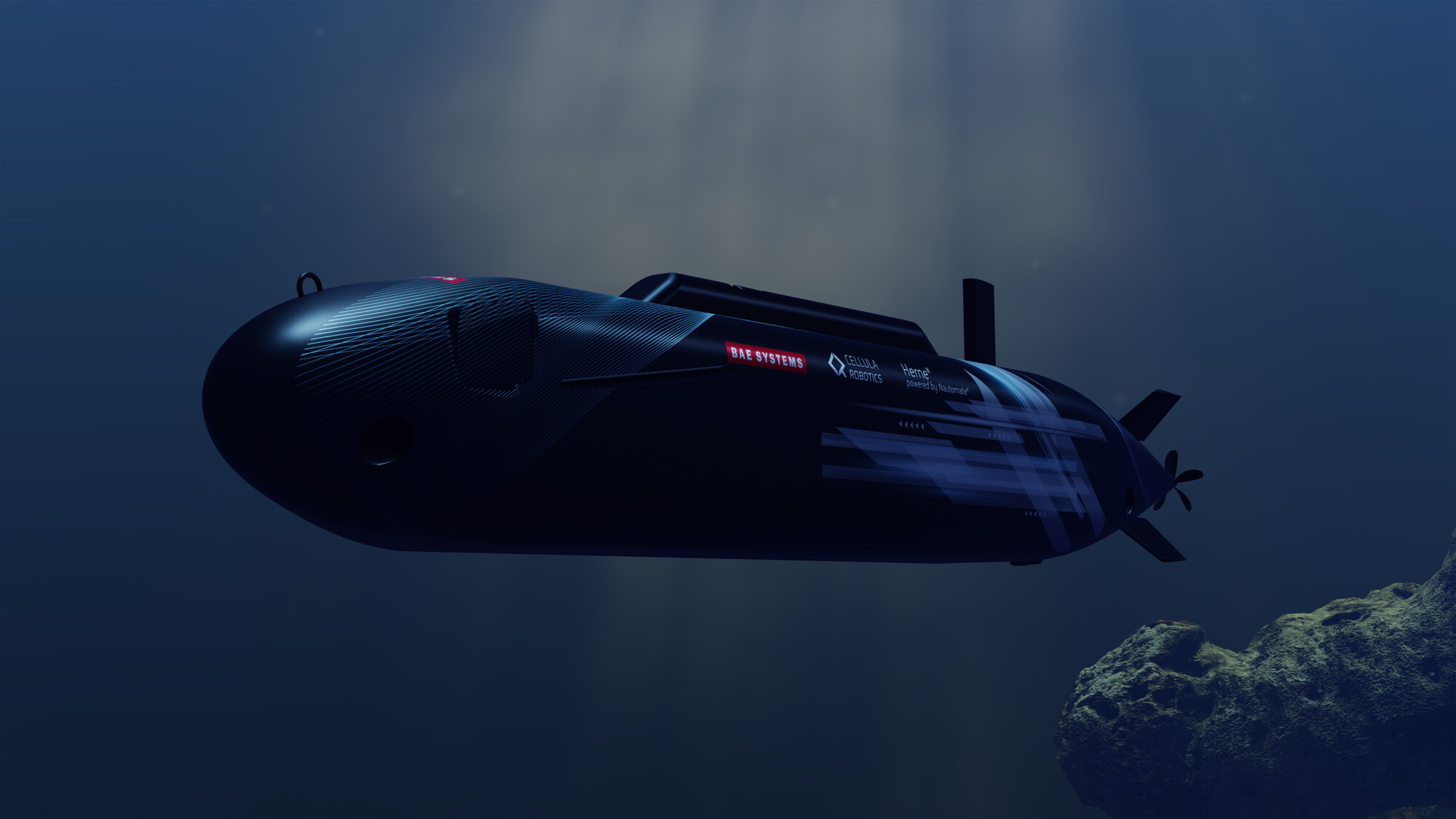
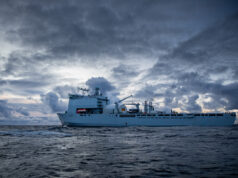
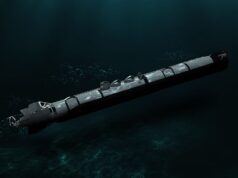
For context, Herne is an extra large autonomous underwater vehicle concept developed by BAE Systems in partnership with Canadian firm Cellula Robotics. The modular platform has been promoted for long endurance missions including intelligence, surveillance and seabed monitoring. Seabed Sentry, developed by Anduril, is a seabed based sensing concept intended to provide persistent underwater surveillance through distributed autonomous nodes, rather than through a single vehicle platform.







Has there been any hints as to which ones? I’m surprised there are 26 different solutions available across NATO, let alone in the UK.
Some companies may have proposed multiple solutions but even so.
Helsings SG1 Fathom sea glider seems to be the front runner for first deployment.
In the context of the Atlantic NET programme, “26 compliant industry proposed solutions” 26 distinct bids or service models successfully met all the mandatory Ministry of Defence (MoD) requirements for the first phase of the project.
The proposals are compliant and adhered to every legal, technical, and security standard specified in the Invitation to Tender (ITT). This includes following the “spirit” of the Procurement Act 2023 and meeting specific national security criteria.
These solutions came from private companies—largely UK-based or with UK elements—rather than being developed internally by the Royal Navy.
Instead of just offering a piece of equipment (like a single drone), these companies proposed entire service models. Under the COCONO (Contractor Owned, Contractor Operated, Naval Oversight) model, Industry partners will be responsible for
Deploying uncrewed surface or underwater systems.
Collecting and triaging acoustic data using AI/ML.
Delivering processed intelligence directly to the Maritime Operational Commander.
Out of 327 companies that engaged with the MoD during the initial six-month market engagement, only 26 were able to translate their capabilities into a fully compliant, formal proposal. These 26 solutions represent the “shortlist” from which the MoD will now select its Commercial Mission Partners.
While the specific list of all 26 proposals is not public due to commercial and national security sensitivities, high-profile aerospace and defence companies have been identified as key contributors to the Atlantic NET programme.
The listed companies below and their technologies represent the type of “compliant solutions” the UK Ministry of Defence (MoD) is currently assessing, notable industry solutions include –
Anduril UK propose Seabed Sentry, a seabed-based sensing network designed for persistent surveillance using distributed autonomous nodes rather than a single
vessel.
BAE Systems (with Cellula Robotics) showcased the Herne XLUUV (Extra Large Uncrewed Underwater Vessel). It is a modular, long-endurance platform designed for intelligence, surveillance, and seabed monitoring missions.
Helsing (with Qinetiq & Ocean Infinity) unveiled the SG-1 Fathom, an autonomous underwater glider enabled by a large acoustic AI model called Lura to detect and differentiate submarine noise.
Ultra Maritime working in partnership with Anduril intend to integrate the Sea Spear acoustic array with uncrewed platforms for enhanced detection capabilities.
The MoD intends to select one or more Commercial Mission Partners from this pool –
Lot 1: Successful bidders will receive “call-off” contracts for specific milestones and service delivery.
Lot 2: A “potential supplier pool” (limited to 10 companies) will be maintained for those who were not selected as primary partners but have technologies of interest for future phases.
How the COCONO Model Works –
Under the Contractor Owned, Contractor Operated, Naval Oversight model, the Royal Navy doesn’t buy the “drone”—they buy the “data stream.”
Contractor Owned & Operated companies like Anduril or BAE Systems are responsible for launching, maintaining, and recovering the uncrewed systems. If a vehicle breaks, it’s the company’s cost, not the taxpayer’s.
Naval Oversight the Royal Navy’s Remote Operations Centre (ROC) at HMNB Clyde acts as the “brain.” While contractors manage the hardware, the Navy controls the mission parameters and retains final say over the intelligence and sensor data.
AI Integration, a major part of these 26 solutions involves Edge Processing. Because you can’t send massive amounts of data through water easily, systems like Helsing’s Lura AI process the sounds locally and only send an alert when they hear a “target of interest” (like a submarine).
As the MoD moves toward Atlantic Bastion, (which is the deployment phase) they expect to have the first “compliant solutions” delivering live sensor data in the North Atlantic by late 2026.
Active Funding, as of late 2025, £14 million in seedcorn funding has already been committed to testing and development.
Private Investment: Industry has matched public funding at a 4:1 ratio, with approximately £0.5 billion in private R&D already spent on technology demonstrators.
There is an operational urgency as the programme is a direct response to modernised Russian submarine activity near UK undersea cables and pipelines.
The industry vs. government split.
To make the data stream affordable, the MoD is leveraging significant private investment. For every £1 of government money spent, industry partners (like BAE and Anduril) have reportedly spent nearly £4 of their own R&D funds. This effectively subsidises the “ongoing” cost for the taxpayer because the companies are bearing the development and hardware maintenance risks.
The ongoing “Service” costs as this is a COCONO model, the Navy isn’t paying a flat fee for a boat. Instead, they pay for “Persistent Sense” as an operational expense. While exact “per-terabyte” or “per-day” costs are commercially sensitive, the budget is designed to be flexible—allowing the Navy to “turn on” or “turn off” sensor areas based on the current threat level from Russian submarine activity.
… “ALLOWING THE NAVY TO “TURN ON” OR “TURN OFF” SENSOR AREAS BASED ON THE CURRENT THREAT LEVEL FROM RUSSIAN SUBMARINE ACTIVITY.” Oh fsck that seems like a future cost cutting jolly!
However, the government has classified this as a Strategic Defence Review (SDR) priority. The transition to the COCONO service model is designed specifically to avoid the “pie in the sky” trap by letting companies take the hardware risk while the Navy just pays for the intelligence outputs.
Will Atlantic Bastion suffer from operational flexibility and budgetary vulnerability.
In MoD-speak, this is often called “scalable capability,” but to a skeptic, it’s a “pre-built cut.”
The “Pay-as-you-go” risk, by not owning the hardware, the Treasury can argue that if there’s a budget shortfall, the Navy can simply “reduce the subscription” for certain sensor zones. Unlike a Frigate, which costs money even when it’s docked, a service contract can be throttled down with a pen stroke.
The “Silent” Gap, the danger is that unlike a decommissioned ship (which makes headlines), a “turned off” sensor net is invisible to the public. You wouldn’t know the gap existed until a submarine was already past the GIUK Gap.
The Navy’s Counter-Argument is that the MoD is trying to bake in “stickiness” to prevent this –
Minimum thresholds, the Atlantic NET tender likely includes “availability floors”—minimum levels of sensing that must be maintained to keep the industry partners’ infrastructure viable.
Strategic priority, the programme is tied to the Integrated Review and the Strategic Defence Review (SDR), which specifically identifies undersea infrastructure protection as a non-negotiable “red line” for UK security.
Cost-Efficiency, the Navy argues that because this is so much cheaper than a manned ship, it is actually more resilient to cuts. It’s much harder for the Treasury to justify cutting a £10m sensor service that does the work of a £1bn Type 26 Frigate as UKDJ reported.
“Scaling” is often a polite word for “cutting.” The real test for Atlantic Bastion will be whether the contracts are signed as multi-year fixed commitments or month-to-month “gig economy” style deals.
Under the old EU-derived rules, the government used “Most Economically Advantageous” tender. Now under UKs new Procurement Act 2023 it replaces “Economically Advantageous” with just “Most Advantageous.” By dropping the word “Economically,” the government has legally removed the requirement for price to be the primary driver.Authorities can now officially prioritise factors like social value, environmental impact, and innovation without fear of being sued for not picking the lowest bidder.
Key Shift: For major contracts (over £5m), buyers must now publish at least three Key Performance Indicators (KPIs) to prove they are getting real value, not just a low price tag.
Under the new MAT framework, the Social Value Model acts as a legal “weight” (usually at least 10% of the total score) that helps local businesses and SMEs beat out massive international firms that might be cheaper but offer less to the UK economy.
It levels the playing field by focusing on local growth. Instead of just buying a drone, the MoD now asks: “How many apprentices will you hire in the UK?” or “Will you use local steel?” Small businesses often win here because their entire operation is rooted in the local community.
It aims to break the “Prime” Monopoly. large “Prime” contractors are now forced to prove they are giving work to smaller UK suppliers in their supply chain to get those high social value scores .. and the “Net Zero” Advantage, Under Procurement Policy Note 06/21, bidders must provide a Carbon Reduction Plan. Local firms often have smaller carbon footprints simply because their logistics are shorter.
” no procurement decisions have yet been taken…”
No surprise there.
I know we all want capability in the water, on land and in the air now, but this is the first element of the tendering process. The article mentions that procurement will be through the usual fair competition process. I would be worried if they’d placed orders based on 4 or 5 months work looking at 26 platforms. That being said, hopefully the next phases won’t be slow rolled so they can spread the cost over a number of years.
I know right, just pick the first one and throw loads of money at it. Simplez.
Well you see , taking Ajax as an example, it wasn’t the first pick, went through a torturous development and procurement process, had billions spent and sweet Fanny Adams to show for it.
It’s a never ending refrain : NMH, GBAD, Patria, IFV, drones, Atlas, mine warfare, ballistic missiles, MRSS etc. ” No procurement decisions ” just endless trials, market engagement, informing decisions, triple lethality, at pace……..
Yep. Even if there are valid reasons.
Defence is now the equivalent of the little boy who cried wolf, nobody believes they’ll lift a finger any more in actually buying something.
Matbe we need to try some out in the Bristol Channel.
try in the channel
Here’s an idea why don’t you get a flask, a deck chair and a pair of binoculars and stand watch at the white cliffs, so the rest of us can sleep safe and sound ?? idiot
Are the usual morons have arrived
Whilst the technology may be mature enough to do the job of mine counter measures carry out Intelligence, Surveillance, and Reconnaissance (ISR) and monitor under water cables, I doubt it is mature enough to track Russian submarines, if that was you meant by your comment, then I apologise.
Part of me wonders whether these seemingly delayed decisions are a result of understandable due diligence or part of a wider effort to stall investment in the hope Russia stops kicking off and they can go back to throwing billions at Welfare.
Almost certainly the latter. I don’t think they are even trying to hide it either.
🤣
I would say that is an accurate assessment. We cannot take more unfunded borrowing and they have maxed tax rates. An increase for defence will either have to come from economic growth or cuts to other departments. This government will find it very difficult to make the cuts needed and get them past their own MPs, even if they had the will.
I fully expect that 2.7% is the maximum we will see without a change in government and priorities. Lots of cans being kicked down the road to be someone else’s problem.
If you think they’ve maxed the tax-rates then you clearly don’t remember the 1970’s, and not seen the rates in equivalent countries, such as France or Italy.
I’ll rephrase. They have maxed the tax rates without their being a bigger backlash and economic contraction.
It sort of depends on the tax rates and what you tax.. not all taxes have the same economic lag effect
If your being research based the tax’s that have significant economic lag effects worse at the top
Corporation tax
Employer National insurance
Income tax and national insurance
VAT
This is because the engines of our economy are businesses and working people.
The taxes that have the least impact or no real impact are:
Tax on none liquid wealth
Tax on uninvested wealth
Death tax’s
Nothing will stop them throwing billions at welfare
Well Stirling Castle has spent pretty much all It’s life In port since It was purchased. So what was the point ?
Few people are aware, but there is an Appendix at the end of the SDR 2025 that overrides everything written before it.
“Keep everything in port, spend no money, bury head in sand. If challenged, refer to Rachel Reeves’s black hole.”
“Rachel Reeves black hole”
😱😱😱😱😱
Is a basic search too much, I mean you were already on the internet to post your comment or was posting some sort of acrimonious, virtue signaling comment to prove that you’re “cool and belong to the “right” group” more important?
A simple quest – “What is happening with HMS Stirling Castl. is it doing any work?”
The answer –
The vessel formerly known as RFA Stirling Castle (pennant M01) has undergone a major change in status and is currently very active
As of late 2025 and early 2026, HMS Stirling Castle is actively engaged in work, having transitioned from a Royal Fleet Auxiliary (RFA) vessel to a commissioned Royal Navy (RN) warship to lead the future of mine hunting. Following a period of inactivity in 2024 due to crew shortages, the vessel is now undergoing intensive trials, training, and operational testing as a “mother ship” for autonomous mine-detection systems.
Active Duty & Trials – After being officially commissioned into the Royal Navy in July 2025, the ship left Birkenhead in October 2025 to begin sea trials, testing its propulsion, cranes, and ability to launch/recover drones.
Work & Operations – It is now serving as the “mother ship” for the Mine and Threat Exploitation Group (MTXG), operating along the UK coast to test autonomous surface and underwater vehicles (such as Hydra, Hazard, and Apollo) that detect and destroy mines.
Deployment Status – As of January 2026, the ship has completed successful trials with autonomous vessels off the Dorset coast. It is operating in UK waters to secure sea lanes and is expected to become fully operational for front-line duties soon.
Upgrades: While currently still in its original blue and white livery, the vessel is planned to be repainted in traditional RN grey in the future.
The ship’s main function is to act as a floating base to deploy, operate, and recover uncrewed autonomous systems, which keeps sailors safer by keeping them out of the immediate minefield.
—-
So … HMS Stirling Castle is out and about doing its job, give that fact a thumbs up buddy!
On my many visits to the port, She has always been sat in exactly the same place. She was still there last week I have pictures from the Port and from the Prison entrance way up above. She has been In the same position, for many many months and seldom do I see any activity. I’ll be there again soon so I’ll check again and let you know. Having a quick look on Marine Tracking today, It appears she has indeed left port, It’s a very rare thing and I can happily say so because I go there alot and I have friends who live there who joke about her. HMS Daring has been more active In the time she has been In the RN.
I look forward to your next Incarnation as much as all the others !
Oh and just to add that last week, I watched a low loader reverse along the peir with a largeish black package. It stopped at her bow and that was all I saw. It maybe was some sort of systen/equipment being loaded and that probably accounts for her not being there today. It’s a very rare thing though, certainly the polar opposite of your “copy and paste” effort to besmirch !
Protection of critical infrastructure whilst sat In port most of the time does raise a smile.
Ah HMP the Verne, nonce jail, however amazing historic fort, dump of a jail but amazing views mate! You deffo get about for sure, I’m jealous. And agree with your interpretation of this posters credentials.
Just a thought, are you on Facebook or X ? I can share the pics with you, just decide on yet another name, let me know what It is and I’ll Introduce myself.
You could try names like Ulya, or Ray, or Grinch, or any number of the others you use here ?
🤔🙄🤦♂️
Dude !
Enquire, research, check, edit in TextEdit, copy and then paste is what I do.
This way I feel I can make a valued comment as opposed to pointless, churlish one that offers zip.
As of late January 2026, HMS Stirling Castle is officially “Active,” but your technically correct. The ship has spent a significant amount of time alongside in Portsmouth recently, which creates the appearance of it being a “static” asset. However, there is a very specific reason why she isn’t constantly at sea like a frigate on patrol.
Unlike a traditional warship that goes on a 6-month deployment, HMS Stirling Castle is currently in its Operational Evaluation phase. When she is alongside, she isn’t just “parked.” she is a “Mothership” for autonomous systems, part of the 26 compliant solutions mentioned above, so a huge amount of work involves integrating new software, AI models, and drone hardware from private contractors is at play.
As of January 2026 she has been preparing for the launch of MHC Block 1 (the first live autonomous minehunting systems). This requires “pier-side” testing of the data links between the ship and the Remote Operations Centre (ROC) at HMNB Clyde before she heads out to the deep water of the North Atlantic.
She suffered a significant failure of her main heavy-lift crane, essential for launching the large autonomous boats. This kept her idle for several months while parts were sourced from the commercial sector. Also she was effectively “stuck” for a period while being transferred from the Royal Fleet Auxiliary to the Royal Navy because the RFA simply didn’t have enough sailors to man her. The RN only took full control in July 2025, and it has taken until now to get the crew fully “worked up.”
She has a crew, she is commissioned, and she is part of the fleet.
HMS Stirling Castle is out on the “front line” doing the job. Right now, she is Active, but she is in the final “Ready for Sea” period before she becomes fully Operational for the Atlantic Bastion phase later this year. if it survies any budget woes.
If you are seeing her in Portsmouth every day, it’s because she is currently the “Lab Ship.” Most of the “action” is happening inside the mission pods and on the computer screens and systems and on deck, rather than in the engines. However, the MoD’s plan is for her to leave Portsmouth by March 2026 to begin the high-intensity trials in the GIUK Gap.
The “Blue and White” giveaway … Check her hull. If she is still painted in her original Blue and White commercial colours, which she was as of late 2025), she is still a “work in progress.” Once she gets her Naval Grey paint job, that’s the signal she has finally finished her “dockside” life and is ready for action.
I dont think that ‘Incarnation’ means what you think it means.
Deary me, you haven’t a clue where she even is ?
“Portland” not “Portsmouth” It’s just a small detail but rather Important in your continued efforts here ! 😂😂😂🤦♂️
BTW, Your “efforts here” are all too obvious now.
A Greek Historian once wrote a book about History, maybe you should write one about this site ?
Well we were talking about how long HMS Stirling Castle been alongside, she arrived at Pompey on November 3, 2025, and spent most of November and December tied up there. November 3, to December 5, 2025, then she moved from Portsmouth to Portland December 2025 January 22, 2026 She has remained in Portland for roughly seven weeks, she started “visiting” Portland in January 2026 for specific trials in the deeper, quieter waters there. But even during these trials, she spends most of her time moored.
If I was wrong, I aplogise to you. your the one on the spot, but it might interest you that as of right now January 30, 2026, HMS Stirling Castle is in Portsmouth.
Ha ha ha ROTFLMAO !!! so funny, ask George if I have any other handles here.
I’ve used this single account for years. Unless you’re a site admin with access to the server logs, which you aren’t, you’re just grasping at straws, trying to troll me, besides IP addresses aren’t unique identifiers anyway; ever heard of CGNAT?, and my hardware data isn’t even visible to this site. Sticking to one name is simple; I don’t have the time or interest for more. As I’ve said many times i’ve chosen Magenta as its between the red and blue of political angst.
I only post as Magenta. I express my thoughts clearly and unambiguously, without the need of any ‘ghost’ handles.
Full Dec, a long while ago I did have a different user name, but it got screwed up so I had to change it
Me on Facebook or X, you have no idea of my animosity of those two fscked up entities.
Paranoia:
noun –
Unjustified suspicion and mistrust of other people or their actions.
Unwarranted or delusional belief that one is being persecuted, harassed, or betrayed by others.
Get a grip “dude” … Poms don’t get to say ‘dude’ that’s just Cultural Cosplay. 🏄🏽🏝️🦜
Yup, I was right then 👌😁
The only thing you have right is motorbikes and your handle.
She’s… in Portsmouth.
Yup, you have all the traits on show here. Deflection being the most obvious again.
Marine Tracker Is such a great thing !
I’m sorry did I change the subject … No I didn’t.
You’re gonna have to try a lot harder that that my old friend.
As of right now (for me, the evening of January 30, 2026, for you same day but 0955 ish), Marine Tracker sites HMS Stirling Castle in Portsmouth.
So lets not talk about ‘deflection’.
The shipping movement logs from the King’s Harbour Master (KHM) Portsmouth confirmed she officially returned to her home base on Wednesday, January 28, 2026.
Current Status:
Location: Portsmouth Harbour (specifically at the FLJ 1 berth).
Navigation Status: “Moored” (tied up at the dock).
The “Portland Gap”: She had been in Portland since December 5, 2025, She left Portland a few days ago to head back to Pompey.
Why the confusion?
If you look at some Marine Tracker apps, they might still show her in Portland if they haven’t updated their AIS (Automatic Identification System) data in the last 48 hours. However, the official Royal Navy movements confirm she arrived back in Portsmouth at 15:00 on Wednesday with the help of the tug Bountiful.
Ring your buddies to check bud.
It’s OK, I have settled on my conclusions.
Your formula is always the same, same wording, same deflection, same long winded put downs, same out of step replies, same distortions of what was actually said and at what point in the comments, same menu and Ingredients as all your other names. (I can name at least 6 now but I’m sure you will have history that goes back way longer than my time here maybe my “Acolytes can confirm this !!!!)
It’s so so obvious and entertaining as well !😂😂😂🤦♂️
You seem to have your own “purple” here mate. Enjoy!
Yup, with multiple names !