

The government has set out a detailed defence and security assessment of the war in Ukraine, with the Minister for Defence Readiness and Industry, Luke Pollard, arguing that Russian battlefield narratives have repeatedly failed when set against intelligence and operational reality.
Opening his statement to the House, Pollard framed the conflict in stark human and strategic terms, noting that Ukrainians are now marking “their 1,394th day of resistance since Putin’s full-scale invasion, and their fourth Christmas of the war.” He said the UK’s objective remains to secure a just and lasting peace by ensuring Ukraine is “in the best possible position on the battlefield and at the negotiating table.”
Pollard directly challenged Moscow’s public messaging, stating that claims of progress “have been exposed as disinformation time and time again.” He pointed to the cost of Russia’s campaign, telling MPs that “Russia has suffered over 1 million casualties to gain around 1% of Ukrainian territory since the stabilisation of the frontline in 2022.”
He highlighted the fighting around Pokrovsk as emblematic of this imbalance. According to Pollard, “in more than a year of fighting for the comparatively small city of Pokrovsk, Russia has advanced only 15 km, equivalent to 40 metres a day.” He added that despite recent announcements from the Kremlin, “although Putin claimed to have finally taken that city ahead of the recent visit of the American negotiating team, it is our defence intelligence’s assessment that pockets of Ukrainian resistance continue to operate there.”
The minister argued that these battlefield realities underpin Ukraine’s diplomatic leverage. “Right across the frontline, it is Ukraine’s continued strength on the battlefield that gives it strength at the negotiating table,” he said, adding that the UK will “continue to work with our allies to boost that strength and secure the credible security guarantees needed to underpin a just and lasting peace.”
Pollard set this within a broader strategic frame, warning “As we approach the fifth year of fighting since Russia’s full-scale invasion, this Government are in no doubt that the frontline of UK and European security continues to run through Ukraine,” he told the House. He contrasted the present moment with the situation a year earlier, saying “twelve months ago, there was no clear route to ending the war,” whereas “today, the US-initiated peace process represents the brightest path towards securing a just and lasting peace that we have seen since the start of the full-scale invasion.”
To support that process, Pollard confirmed intensified military planning. “The Defence Secretary directed military chiefs this week to review and update the Multinational Force Ukraine military plans, so that we are ready to deploy when peace comes,” he said. This includes “revising and raising readiness levels as we continue to work with allies to maximise pressure on Putin’s war machine, to strengthen Ukraine’s hand on the battlefield and to grow its defence industrial base.”
The statement also set out the scale of UK support already delivered. Pollard said the government has provided “a record £4.5 billion military support package this year,” including “tens of thousands of rounds of advanced missiles and ammunition, 85,000 drones, up from the 10,000 gifted last year, and the new Gravehawk air defence system.” He added that more than “62,000 Ukrainians” have now been trained in the UK, with the programme extended until at least the end of 2026.
On industrial cooperation, Pollard said the UK is working to ensure Ukraine’s defence future rests increasingly in its own hands. “To boost Ukraine’s indigenous defence industrial base so that its destiny is increasingly in its own hands, I have led further trade missions to Kyiv,” he said, citing new government-to-government agreements and a £1.6 billion deal for 5,000 lightweight air defence missiles, supporting 700 jobs at Thales in Belfast. Pollard told MPs that “Russia’s economy is getting weaker: military spending is around 40% of the budget. Its VAT is rising and its social spending is falling.” He said the UK will “continue to work with our allies to tighten the screw on the Russian economy,” referencing new sanctions across Russia’s oil, military and financial sectors, alongside efforts with EU and G7 partners to unlock support for Ukraine using immobilised Russian assets.
Pollard concluded by underlining the wider stakes, warning that “with increasing grey-zone attacks across Europe, Ukraine’s security remains our security.” He added that the government remains committed to standing with Ukraine “for as long as it takes,” and reaffirmed that any peace must be built with Ukraine at its centre, because “Ukraine is too militarily powerful and too determined to defend its sovereignty for peace to be built over the country’s head.”




Finally, a grown-up analysis of the current situation in Ukraine. 1 million casualties for 1% of new ground in three years is a thought provoking equation. Putin is not winning.
Ukraine’s weakness is its smaller fighting population, and Trump’s insistence on pushing for peace quickly rather than supporting Ukraine militarily for another 12/24 months and then offering peace. That gives Putin the political high ground.
I suspect NATO are quite happy for the war of attrition to continue. The more men and materiel Putin loses, the less his ability to threaten Europe. More time also gives NATO a space to spend serious money and get onto a war footing (Starmer, Healey, Reeves, are you listening).
No – Putin is winning because he doesn’t care what it costs. It has now got to the point that if he buckles he will loose more than this war. Ukraine doesn’t need to win – it just has to outlast Putin. Russia will do the rest.
Spot on.
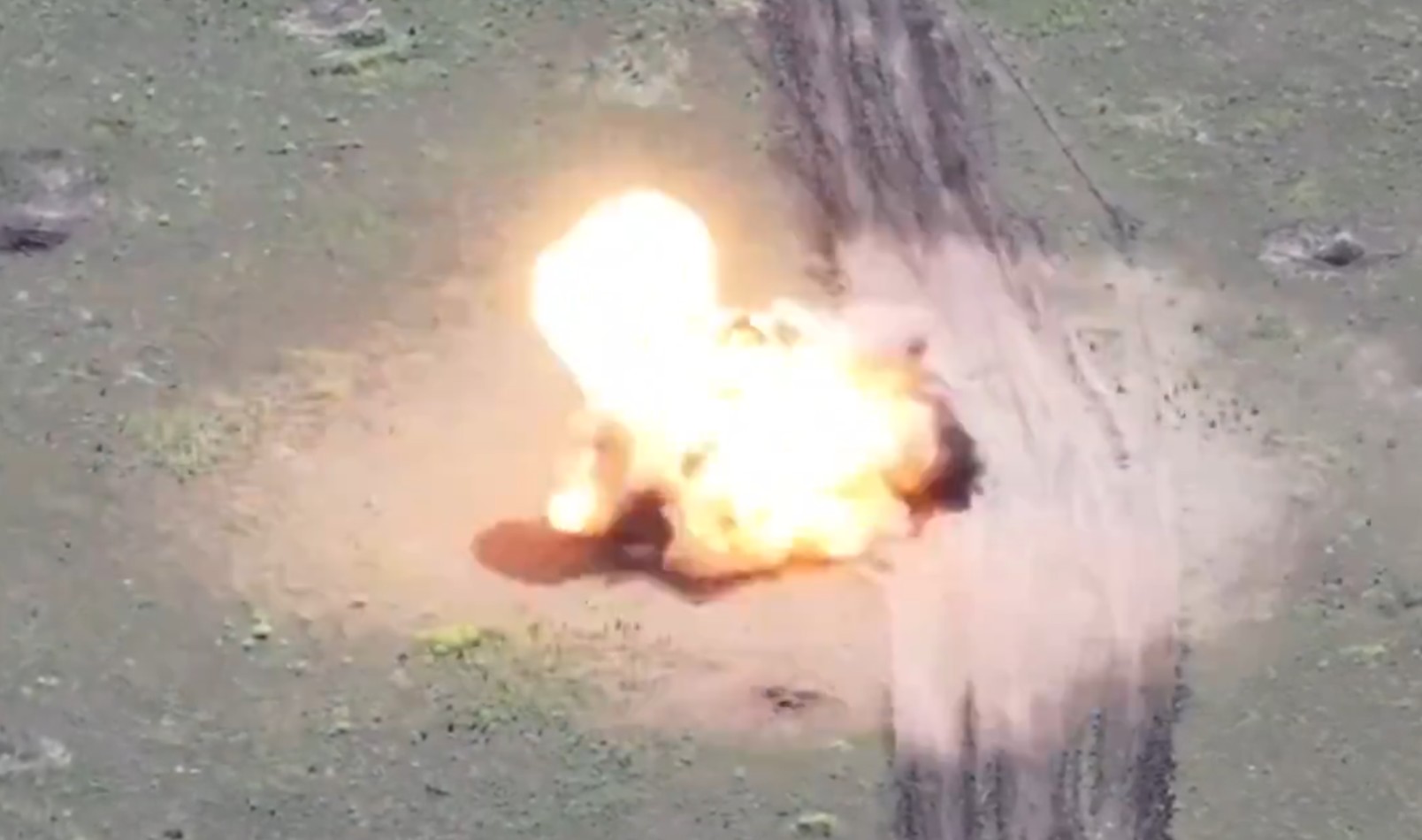
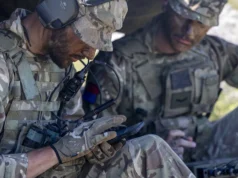
FYI the photo at the top of this article is recent drone footage of two Russian vehicles charging across open fields without any support in a doomed attempt to establish a forward position. Both wiped out by drones.
‘…..so that we are ready to deploy when peace comes’
Peace isn’t coming. This conflict has carried on and off for over 100 years. Any ceasefire will simply be a pause.
Russia is intent on taking Ukraine, Moldova and the Baltic States….and it will not stop, will never stop….
That means that Article 5 will be triggered, sooner or later….
HMG need to get real and front up…..or get off the Security Council.
Britain is in breach of its security assurances to Ukraine, its commitment to NATO and its responsibilities as a permanent member of the UN Security Council.
We have noteven responded to the murderous use of CBRN weapons on our own soil.
As a direct consequence, our conventional deterrent has zero credibility and we have war, once more, on Continental Europe.
Systemic reform, a reforming government, is required.
Pollard paints a picture solely of Russian incompetence, weakness and high casualties. OK, but will it bolster those who oppose increased defence spending here at home as the Russian threat is downplayed? A SWOT analysis on the Russian forces is really required.
As regards MNF-U, is it still Starmer’s position that we would only send logisticians and training teams? They would of course need sufficient Force Protection…but is it envisaged that we would also have Combat Arms in the streets? My mind goes back to Warriors in a white UN paint scheme in the Former Yugoslavia in the 90s….jolly useful for Peace Support Operations, those Warriors! I hope we are not getting rid of them anytime soon!