

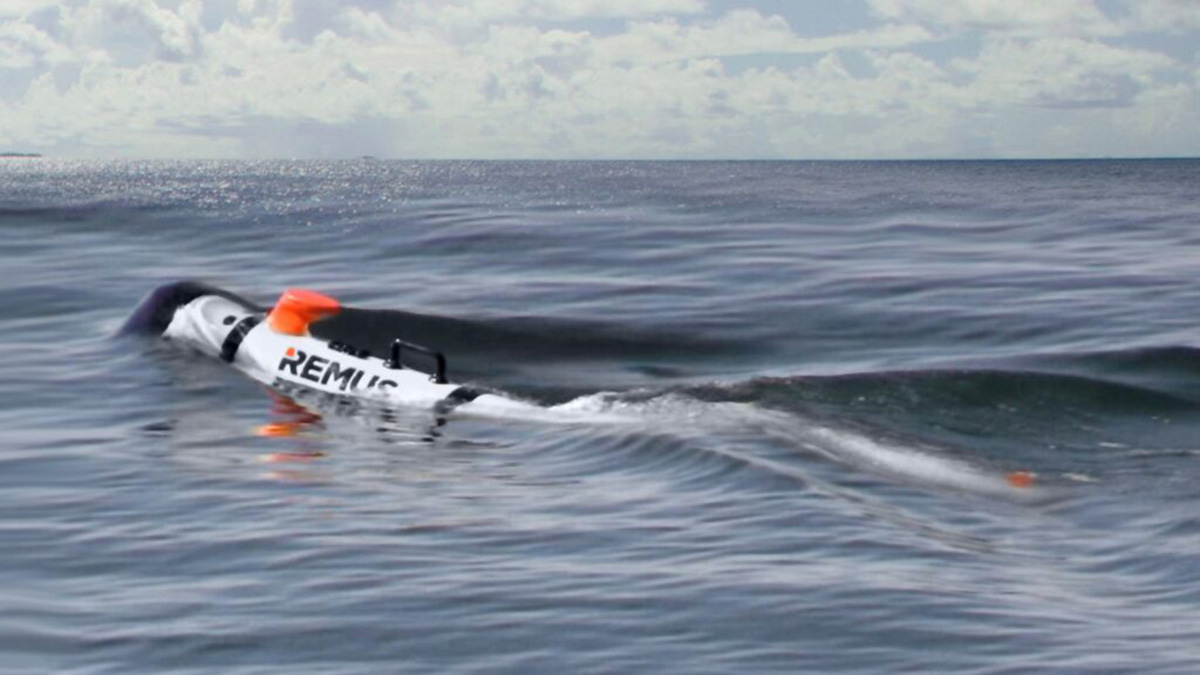
HII has outlined how its UK operation will support unmanned systems activity across Britain and Europe, including an increase in local jobs, expanded technical work on underwater vehicles, and a role in future surface autonomy activity linked to its ROMULUS programme.
HII told UK Defence Journal and other journalists that the Portchester site currently employs seven staff and is expected to grow by between eight and ten additional roles as activity increases.
The company said the new posts would cover a range of functions rather than a single discipline. “The facility here currently we are seven personnel,” HII said. “With the work that we anticipate… we envisage between eight and 10 additional jobs, both for administration, project management, as well as technician and training roles.”
The company said the UK site will carry out a wider range of work on REMUS unmanned underwater vehicles, particularly at the REMUS 620 level, including assembly-level activity where licensing allows and work linked to submarine launch and recovery systems. It said the available space allows multiple activities to be conducted under one roof. “We’ll be able to have the capability of REMUS 620 assembly, torpedo tube launch and recovery system support, and launch and recovery system service and support within a building,” HII said. The Portchester site is also expected to support a greater volume of training activity. “This new facility will also allow us to increase our training capability to our customers and allied navies, allowing us to have multiple training sessions at any one time,” the company added.
While stopping short of describing the UK site as a full manufacturing line, HII confirmed there is intent to undertake a level of production in the UK where feasible, with a focus on ancillary systems and assembly-level work rather than complete vehicle manufacture. “There is intent to do a level of production in the UK, where possible,” HII said. “Especially things like the launch and recovery systems for the 620, as well as basic level assembly of the 620 vehicles themselves.” The company linked this approach to growing expectations around domestic industrial participation. “The intent is to try and put more emphasis on what we can do within the UK, as we believe that UK content for UK contracts is more and more important,” it said.
HII also made clear that its objective is to keep European sustainment work in Europe rather than routing systems back to the United States. “Our goal is not to move things back and forth between the US and this office,” the company said. “It’s really to do as much as we can here locally.” Beyond the Royal Navy, HII confirmed the UK site supports a wide range of European REMUS users, with customers across northern and western Europe able to route systems to the UK for repair and maintenance where required, alongside support delivered directly from the UK to operators. “All the REMUS users have the ability to send their systems to the UK for repair and maintenance,” HII said, adding that the site also acts as a base for outward-facing support.
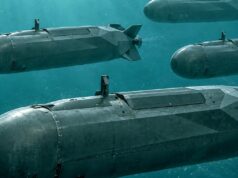
On submarine operations, HII said work on torpedo tube launch and recovery of unmanned underwater vehicles is continuing and has moved beyond early experimentation. It referred to previous public testing and said further development work is ongoing. “We continue to test our REMUS 620 for torpedo tube launch and recovery,” the company said. “The capability is real. It’s been in the water, it’s field tested, and it’s operational.” HII also confirmed ongoing engagement with a UK partner to understand how weapons handling infrastructure can support integration with unmanned vehicles, describing this as practical compatibility work rather than conceptual study.
Surface autonomy was another area discussed. HII said it is working on both purpose-built unmanned surface vessels and autonomy systems that can be integrated onto existing vessels, describing its autonomy software as modular and capable of being installed on a range of hulls. “It’s the nature of the system as a drop-on autonomy,” HII said. “Ultimately, we can effectively autonomise any vessel available.” As an example, the company described a recent conversion for an unnamed customer. “From the time we hit the ground in that country until we were doing a demonstration with a fully autonomous vessel… was about 10 days,” it said. HII said the UK site is intended to support future demonstrations of surface autonomy for European customers, including bringing vessels into the facility for hands-on integration and testing.
On operational use, HII said mine countermeasures remain the dominant mission for REMUS systems, alongside seabed survey tasks, while interest is widening as requirements evolve. “Predominantly it’s being used for mine countermeasures,” the company said. “As seabed warfare requirements increase, such as critical infrastructure protection, the system becomes more and more applicable.”
Addressing market demand, HII acknowledged increased competition but said procurement volumes are rising as navies move from limited trials to fleet-level adoption. “In the past, customers would ask for quantities of ones and twos, and now we’re up into 10s and 15,” the company said. HII attributed continued demand to the modular design of its unmanned systems, which it said allows payloads and onboard technology to be upgraded over time, extending service life and reducing the need for wholesale replacement.




I’m into the Government conducting a review of all Shipbuilding and Dockyards in the UK. Too many have been repurposed into Housing, Waste Disposal or other Non Marine functions. This would mean an amendment to New Planning legislation. If the Ship building plan is to move forward it needs to be in the right direction. It cant be like the cowardly sell out of our fishing, on the whim of a PM who isn’t a savvy negotiator. Sites need to be under a plan that gives priority, not exclusivity, to UK based companies or individuals. Too much has been given away. Too much employment and business has been given away. If necessary a law will have to be passed to ensure compliance and where necessary give or underwrite improvements and modifications. Other European countries are much better than us in this regard.