

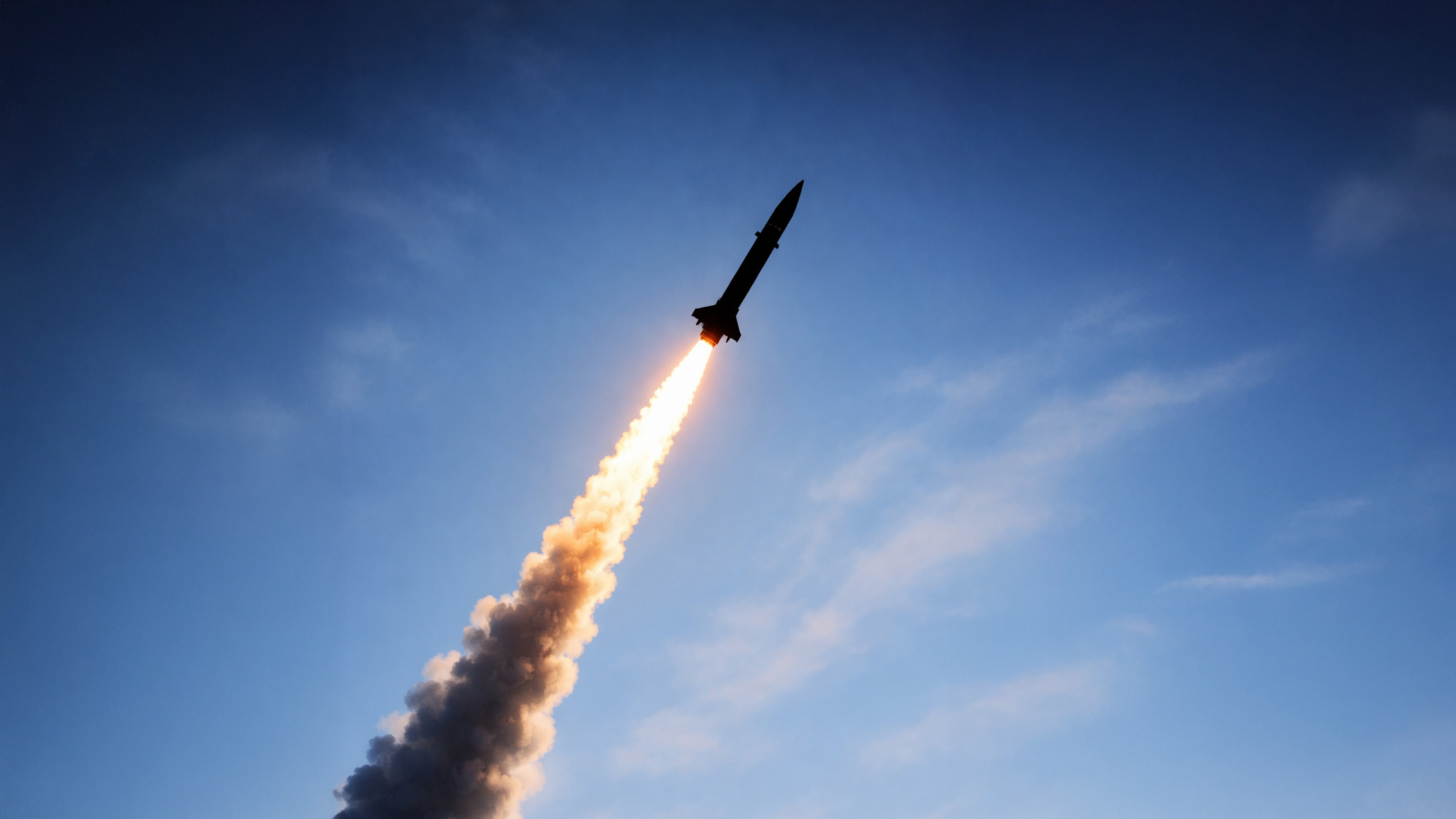
The UK has joined France, Germany, Italy and Poland in launching a new multinational initiative to develop low-cost air defence weapons aimed at countering drone and missile threats across Europe, the Ministry of Defence has announced.
Unveiled at the European Group of Five (E5) meeting in Krakow on 20 February 2026, the ‘Low-Cost Effectors & Autonomous Platforms’ initiative, known as LEAP, will focus on developing advanced but affordable surface-to-air systems. The first project under the scheme is expected to be delivered by 2027.
According to the MOD, LEAP will prioritise rapid development and adaptability, drawing lessons from battlefield innovation in Ukraine. The programme will seek proposals from both major defence manufacturers and small and medium-sized enterprises.
Its initial focus will be on a new lightweight surface-to-air weapon designed to counter drones and missile threats, with an emphasis on reducing development timelines compared to traditional acquisition cycles.
Defence Minister Luke Pollard said: “European security is at a pivotal moment. The UK and our E5 partners are stepping up – investing together in the next generation of air defence and autonomous systems to strengthen NATO’s shield and keep our people safe.”
He added: “From innovation in our defence industries to our ironclad commitment to Ukraine, we’re showing that European nations are ready to deter, defend and if necessary, fight, together. I’m proud of UK leadership on European security – building partnerships, developing capability and standing with Ukraine to protect our shared security.”
The announcement comes as the UK expands cooperation with European allies on long-range precision and hypersonic weapons, with government spending on such projects exceeding £400 million this financial year, according to the MOD. The E5 grouping, comprising Europe’s five largest defence spenders, is intended to reinforce NATO’s deterrence posture, strengthen industrial resilience and coordinate support for Ukraine amid ongoing Russian aggression.






The E5 is an interesting group it’s only just over a year old and has met 7 times..the fact it’s focus is the largest and most powerful European nations and not just the EU is interesting.. and hopefully shows that the UK can exist as an independent power within a new European geostrategic post NATO reality.
UK join or push this effort: I think push and lead this effort from a French stand point. And we are please to participate. It is discussed as such on opex360, the French equivalent to UK defense journal, where this site is highly regarded. Their is also hartpunk from Germany that we look into. Good to see these kind of cooperation format. Jeff is another UK lead initiative that we follow a lot. Many things have to be done, we are not out of the wood yet, but things are heading in the right direction now. Not EU, pragmatic approach. The consensus at EU level is very hard to reach, for the time being on defense matter. Though it still delivers a bit.
I’d thought this had been sorted. Asraam bolted to a truck. Are we going to see something actually new! Can’t wait.
at £200k ea I wouldn’t call ASRAAM low cost especially when compared to the cost of a drone,
They are talking about interceptors cheaper than the drones themselves. Shahed type drones are less than 10k each. ASRAAM way to expensive
I believe the ASRAAMs we sent to Ukraine were an older generation and not the latest and greatest but it’s true – old stock or not – they are way more expensive than a drone!
Putting numbers into perspective, the UK is looking to provide Ukraine with 100,000 drones a year – 85,000 so far between April and October 2025 – but Ukraine uses about 3.3 MILLION drones a year! To be a viable defence strategy we need to be able to produce these things in ridiculous numbers. To be fair, a lot of the UK drones have been higher cost/value types rather than bargain basement.
That’s 9,000 drones/day – every day of the year. That’s an insane amount!!! What can they possibly be expending them on at that rate?
Totally agree, but it seems to be accurate (ish). Yet several sources report this including Bloomberg – ‘Ukraine is deploying around 9,000 drones per day to fend off Russia’s ongoing assaults, according to a top Ukrainian military official, a figure that underscores just how crucial drones have become to the ongoing war. That number includes bombers, intelligence and logistics drones, Ivan Pavlenko, chief of the electronic warfare directorate of Ukraine’s armed forces, said via webstream at the Cipher Brief conference on Tuesday.’
Almost all of these are low cost quad copters and Russian counter measures knock out 90% of them. So it’s more like 900 a day prosecuting targets.
Agreed. But it does put things into perspective – we need these things in very large numbers for modern warfare.
Just hope that if ever things do come over the “UK fence” sonetime that there’s sufficient stock for the UK to defend itself.
Excellent, we can sell them the CA Skyhammer (which has already had extensive test flying, they fire a prototype weekly apparently) and Starhammer (which is in the prototype and early test flight stages) as short range air defence systems which are extremely cheap.
Why do we need the other countries’ contributions when we are perfectly capable of this ourselves? Unified supply chains are not necessarily a good thing.
What do you know about Cambridge Aerospace? Their website has nothing on it, just their name on it. There seems to be very little information.
A good article to read is
calibredefencecouk/dsei-uk-2025-cambridge-aerospace-to-present-air-defence-solutions/
or
edrmagazineeu/dsei-2025-cambridge-aerospace-skyhammer-and-starhammer-fast-developed-answers-to-drone-and-missile-threats
They were founded in autumn of 2024 by a Cambridge aerospace professor (hence the name) and Grant Shapps and went around covertly securing $100m of investment. That allowed them to develop Skyhammer which is a 30km range, high subsonic interceptor with an active radar seeker and reported £30-40k cost. They then started early development of Skyhammer, which is variously quoted as 20km or 10km range, supersonic missile very similar to Tamir and higher cost for more difficult targets using the same seeker.
At DSEI 2025 they went public, presumably to secure more investment. Because they have so much funding they can afford to turn over their production line and continuously produce prototypes even without orders, which allows them to iterate lots and also means they could ramp up production if they were suddenly required to.
That’s all from digging through articles or video interviews.
Thanks for that. Ever since hearing about them at DSEI, there has been little to no information about them.
Those ranges you’re quoting are pretty decent. Do you reckon there’s could be naval applications here too. Maybe on a RAM/Sea Streak type launcher?
The active seeker would make Starhammer a decent naval defence missile as it wouldn’t need guidance all of the way to the target like Martlet does, and it also has extra range. It’s slightly bigger than RAM with slightly more range claimed, though both numbers are probably very vague.
However it would probably be held back by the fact that it’s been designed down to a price rather than for maximum capability. If it costs a tenth of what RAM does that doesn’t bode well for the per-shot pK, so any launcher would need a lot of missiles in order to match RAM for pK in a CIWS situation.
Surely looking to the past and a gun firing an explosive fragmentation shell is the cheapest option against drones, especially the costs of keeping it operational over extended periods and deploying in significant numbers? It screams to me as a problem where we can keep the solution simple instead of over complicating things.
Nets.
Butterfly Nets, that’s what you need, with girt long andles.
🤣
What’s the range of gun systems mind? Need an awful lot of systems to cover any likely attack over a landmass and NATO borders generally. Makes sense to compliment them with longer range interceptors of some kind it seems to me, keeping expensive systems as a further back up?
Hi Spy, was thinking the same. You don’t hear of any UK adoption of the Terrahawk, SkyRanger, or Tridon. Even for basic Shorad. All available right now.
Pollard stating we are stepping up again.
That’s good!
What’s happening with DragonFire, directed energy weapon? Developed by MBDA UK, QinetiQ, Leonardo UK, and the DSTL, it was supposed to be the future of anti-missile/anti-drone systems. And 10p a shot!(???). It would appear the aim is still to shoot lumps of metal into the sky at megabucks per shot. Still, why develop a cheaper, more effective, system when you can join the Europeans in another expensive project…?
Good point
“Dragonfire” ?
Ahh yes, Dragonfire Is amazing, It’s capable of hitting 100mph Tennis balls costing 50pence each, from a range of two miles and only costs 10 pence per shot. At just £60 Million per unit, It represents the cutting edge, world class capability that T45’s need later this year whilst parked up near Wimbledon.
“Four”
“New Balls”
I can assure you that Dragonfire is progressing very well. I have seen a number of the drones that were used in the swarming attack trials. These were the smaller quadcopters drones. But here’s the important bit, each of them was taken out by what I’d class as a head shot. To put that in to perspective, the laser would have to switch between each target, focus on the nose section, burn through and then move on to the next one. I can’t tell you how many were in the swarm but there were more than 4. Plus the “whole” swarm was taken out at what would be termed the classical CIWS distance.
At the presentation they didn’t give the laser’s power output or the exact distance the swarm was engaged at. However the results were pretty impressive. Questions about larger and more robust targets, were answered with those trials are on-going. But the RN must be confident that Dragonfire has matured enough that it can be fielded to engage more than just small quadcopter drones.
You could deploy Dragonfire on the back of a Man HX truck. But you’d need another just to carry the genset, along with another carrying the fuel. Traditionally you need double the amount of electrical power for a given laser power output. There have been a number of smaller less than 50kW lasers being used from vehicles. But these will be limited to only targeting the smaller types of drones.
Thanks Davey – very encouraging. But still a big job when you have several hundred drones and missiles coming in at once. Onwards and upwards, then!
Cynical note….look at the scramble for low cost now, and mass. Then think back decades and see how the MIC has milked the taxpayer.
That’s nice, and sensible and should have been done years ago. However… low cost air defence weapons/missiles, only means as low cost as ‘extortive manufacturers’ want them to cost.
In reality all NATO/Western governments should get together, decide what is needed, put out a tender notice, and then negotiate a price on their terms.
cant do that. it makes sense. MOD would never back it