

“Freedom of movement throughout continental Europe is crucial for collective defence.” – General (US) Christopher G. CAVOLI, former Supreme Allied Commander in Europe (SACEUR).
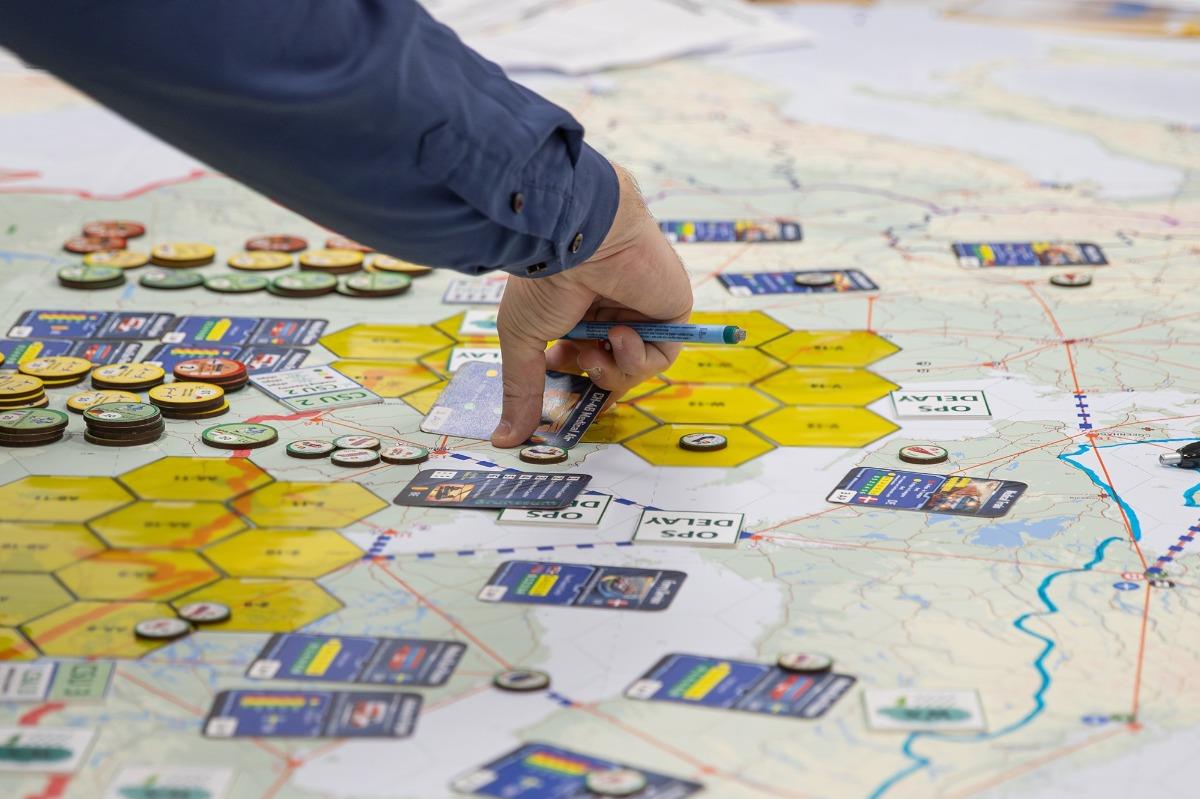
Later in March, in Ulm, NATO will exercise force deployment and sustainment to prepare for 2027 live exercises. Organised in JSEC barracks from 16 to 26 March 2026, Exercise Steadfast Foxtrot 2026 will gather NATO Commands and Member States to share experience, to understand and further discuss the timely, detailed information required to support its operations and missions.
NATO’s strategy to deter and defend the Euro-Atlantic area requires a permanent and flexible ability to project, protect and sustain forces at any time within and from its area of responsibility. The Joint Force Commands and the Component Commands set the operational requirements (i.e. the required volume of forces, the expected timings and the locations) through planning and conducting the NATO operations and missions. The Allied Joint Support and Enabling Command (JSEC) is responsible for setting and optimising the conditions for an effective and efficient deployment of forces and their related sustainment while minimising the impact on the national, local economy and society. Permanently linked to NATO Strategic and Operational Commands, JSEC operates in close coordination with all NATO Member States to synchronise and align the 32 national operational deployment and sustainment cycles and, on SACEUR’s orders, it coordinates the activation of the Reinforcement-by-Forces and Sustainment Network (RSN) in time and space.
The RSN is the Allied tool, developed and prepared in peacetime, operated and used in crisis and conflict to ensure deconflicted and permanent deployment and sustainment flow in support of NATO exercises, missions and operations. It is a multi-dimensional network, integrating transport and transit infrastructure with military and civilian capacities and procedures, to maintain a fluid forces and sustainment flow all way through the operations. From a physical perspective, sea, rail, and airports, border crossing points, multimodal routes, and accommodation, storage sites are georeferenced and structured in mobility corridors depending on their accommodating and support capabilities. A functional layer completes the physical perspective with the administrative mechanisms supporting transit of military goods, equipment, and units throughout the area.
Should a crisis require a NATO deployment from or through the Alliance territories, SACEUR would activate the RSN according to a tailored reinforcement and sustainment plan developed by JSEC. Such a plan aims at setting the optimised conditions for using the RSN and permanently adjusting the capacities to the crisis and the operational demand signals. It defines the RSN activation in time and space, providing the necessary information to the hosting nations to prepare and deploy their requested capacities. It also provides the details for an optimised use of the RSN to the sending nations.
Conceptualised in 2021, the RSN and its activation process are developing throughout the Alliance. NATO uses all opportunities to test and train the RSN with its Member States to have a better understanding of the activation mechanism and adjust the RSN enabling capacities and infrastructure to the requirements.
Exercise Steadfast Foxtrot 2026 will aim to test three different aspects of activating and using the RSN. During the exercise, JSEC will rehearse specific challenging parts of a reinforcement and sustainment operational plan, aiming at improving its ability to coordinate and sequence NATO and national activities from preparing to sustaining the deployed forces. It will also provide the opportunity to more deeply analyze the medical and sustainment aspects of a NATO operation conducted in Europe through two dedicated war games.
JSEC will then take benefits from the experience gained and the lessons identified during the rehearsal to mitigate the identified friction points and to refine its enabling plans in support of NATO operations and missions. Such an exercise is also an opportunity to adjust the NATO processes to improve its deterrence, its readiness and the national capacities to deploy rapidly.
The outcomes of the ROC Drill will directly feed into refining NATO’s Reinforcement-by-Forces and Sustainment (R&S) operational plan, providing invaluable insights to upgrade the current version. By testing the deployment and sustainment mechanisms in a simulated crisis, the exercise will allow NATO to identify real-time challenges and inefficiencies that may not have been previously anticipated. These lessons learned will help optimise the RSN by fine-tuning coordination procedures, transport logistics, and interoperability between NATO forces and national assets. This ongoing process of refinement ensures that NATO’s response capabilities are not static but evolve in direct response to the operational challenges encountered during exercises like Steadfast Foxtrot.
The upgraded R&S operational plan will reflect the most up-to-date understanding of how to deploy and sustain forces more efficiently across Europe. Key areas of focus may include streamlining the administrative procedures for cross-border movement, enhancing medical and logistics support structures, and adapting to emerging technologies in transport and communications. Ultimately, this iterative process ensures that NATO is not only prepared for the current operational environment but also agile enough to respond to future crises with improved speed, coordination, and effectiveness.






Oh this should be funny to read in the coming days.
Europe ain’t exactly know for its quickness and efficiency (ironic coming from a brit I know)
Hopefully it will be less embarrassing then when a Ukrainian drone team humiliated a much larger British and Estonian force
Not sure why this would be something to watch. Moving forces around Europe is something that is routinely practiced. So yes there will be some challenges, but most of them should be well understood and anticipated. It’ll probably be a very quiet lessons learned affair, especially the ROC and Wargame part.
(Also nobody was embarrased by a Ukranian Drone Unit, it was an exercise designed to learn lessons and practice. Both objectives where achieved. The only ones saying it was an embarrasement where sensationalist media, and commentators who don’t know how exercises work).