

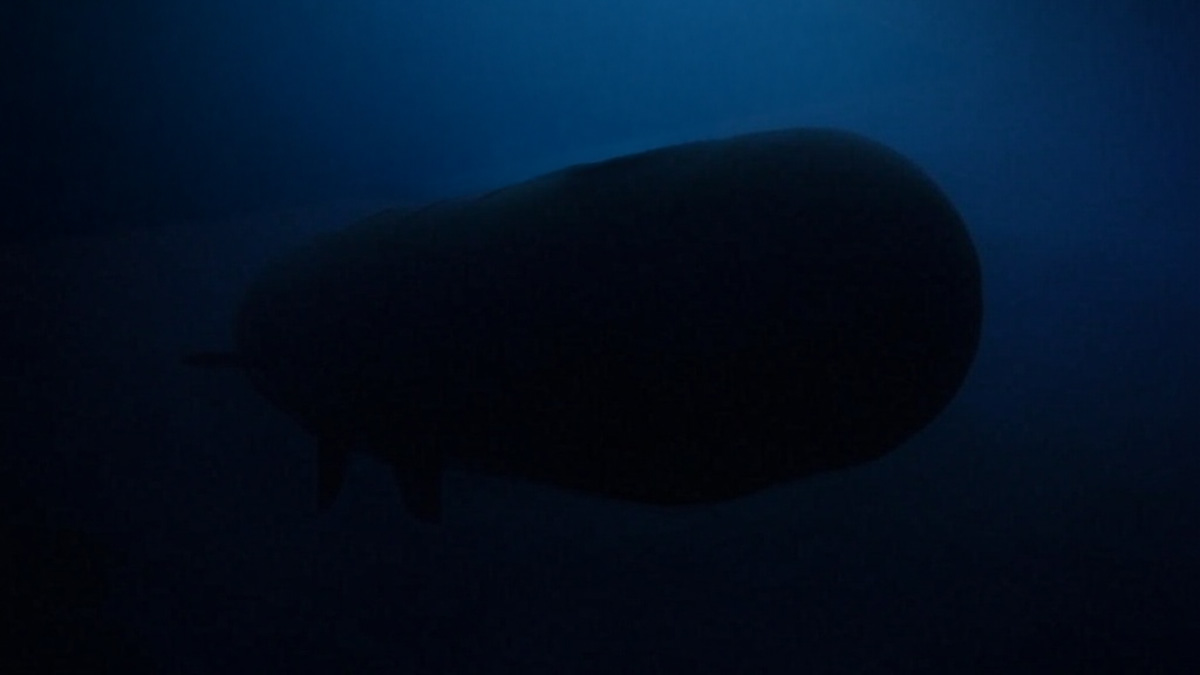
The Royal Navy has provided further detail on its Atlantic Bastion concept, offering a clearer view of how the programme is structured, how it is being delivered and the constraints it is expected to operate within.
Speaking during a panel at UDT 2026, Captain James Lovell described the effort as part of “probably its biggest innovation transformation program in a generation”, linking Atlantic Bastion directly to the Navy’s wider move towards a hybrid force integrating crewed and uncrewed systems.
He outlined five core pillars behind the concept, beginning with deterrence and anti-submarine warfare sensing, where the aim is to expand coverage through a mix of fixed systems, autonomous platforms and existing assets, including the “introduction of massive sensors… to complement existing crew platforms”, reflecting a wider focus on persistent, large-scale sensing across the North Atlantic.
A second pillar focuses on improving crewed platforms, particularly through artificial intelligence applied to acoustic processing, with Lovell noting that existing work can now be integrated into operational systems “to start to give us that decisive edge and speed of decision making”.
The protection of critical undersea infrastructure forms a third strand, now treated as a defined programme area combining mobile and fixed systems with what he described as “a certain data background backbone” to support monitoring and response, reflecting the growing operational focus on seabed assets and their vulnerability.
The fourth pillar centres on lethality, covering upgrades to existing weapons alongside the introduction of new, lower-cost options intended to broaden the range of effects available across the force.
The final element is the data architecture that links these components, described by Lovell as a “connect and decide function”, supported by dedicated facilities and data centres designed to process the growing volume of information, with “even one UUV… mission” now producing more data than earlier systems were built to handle.
That issue of data ran through the wider discussion as participants pointed to the scale of information being generated by autonomous systems, the difficulty of moving and processing it, and the barriers created by classification and commercial ownership. There are also signs of workarounds emerging, including the use of commercial-grade systems in some areas to maintain pace where traditional military approaches would slow delivery, highlighting the tension between speed, security and interoperability.
Alongside the technical challenges, the panel set out how the programme is being delivered. Captain Chris Hill described a shift towards earlier and more open engagement with industry, including “sharing the problem set… in the concept phase” and allowing companies to form consortia to develop solutions, a move away from more prescriptive procurement approaches.
He also stressed that autonomous and data-driven elements are intended “to augment, not replace, crewed platforms”.





Excellent news.
Maybe we can actually stop a simple Russian flagged cargo ship from sitting in the Bristol Channel for days now then.
This idea that we can CONTAIN The Russian Navy in what has been Discibed as BASTION OF THE ATLANTIC.IS Fantasy.!.. More Holes than a chicken fence….!
We need a large unmanned fleet with tails to do this job, your never going to cover enough area with 1 or 2 gold plated type 26s which cant defend against a supersonic missile. We have 3 classes of ships and neither one can do anything on their own.
🤣
The thing that makes no sense is the desired ability to supposedly contain the Russians for various positive reasons. Its impossible to do that outside of hostilities. The Russian navy can go wherever the hell they want outside of open hostilities between NATO and them. By the time any war is declared they will be well out into the Atlantic anyway. The Russians wont be in port the day the war starts. This dectection net, such as it is, wont cover the whole of the Atlantic, thats impossible.
Its worth remembering that the Russians have very little ability to sustain operations in the Atlantic, and the idea of the Atlantic Bastion is persistent coverage. Nothing is ever going to be perfect, but this would dramatically improve coverage and awareness.
The Russian Northern Fleet is far from the beast it was, we’re talking about a relative handful of vessels that could be on the wrong side of the net.
so imagine the weeks leading up to a hot war. A russian sub needs to get out into the north atlantic. It heads through atlantic bastion in peacetime then quietly heads off to its assigned area of operations prior to things going hot.
What the sub doesnt know is that on its way through the bastion, it picked up an XLUUV tail. It is being tracked and once a day that UUV heads up to the surface to send the coordinates back to HQ. The war starts, a P8 is sent out to the known location of the russian sub, or the nearest sub is vectored in. Bad day for the sub.
As with the drone war between US and Iran- we can afford to make far more XLUUV tails than the russians can make nuclear subs. The balance of economics will be with us on this one.
I know even less but, aren’t our proposed XLUUV’s dog slow… as in 4 knots with the wind behind, downhill ?
Yep the only way you can tail SSNs with an unmanned vessel at the moment is to use a surface vessel and then pray they don’t try to sprint out of your sensor range.
Unless we get some fancy high speed Trimaran sub chaser designed to use its sonar at 30+kts, which would be a fun design exercise.
This is likely to be the case for future war scenarios, as we are seeing in Iran regional powers with geographical access to an area will become stronger. Having large deployed sensor arrays like Atlantic bastion will give regional powers an upper handover true global powers like the USA or China.
This is very much like what we had in place for much of the Cold War before the walker spy ring when we tracked every Soviet submarine largely without their knowledge.
The main thing will be to make every Russian submarine in the Atlantic think they might have an XLUUV trailing them.
The only way to be sure you don’t have a tail will be a high speed transit at over 20knots, if our future submarines can sustain such speeds quietly then they will be immune to such counter measures. Let’s see if Russian technology can match that.
Somehow I can’t see the Chinese sharing such technology with the Russians
But what about our 4 knot XLUUV’s ?
Are we actually going to buy these faster ones then ?
How much will they be ?
So many questions, so little money.
If you consider the Russians will about 6-7 SSGNs and SSNs in the northern fleet and so could surge in say 2-3, so really what that means is picking them up in the chokepoints then being able to track them
For that you need a wide sensor band at the choke point then you need faster larger faster units that can react to the contact and maintain contact.. finally you need a more dispersed web just incase you lose contact.
I get the impression part of the Type 26 plan with Norway is for one of our ships to pick them up at the Bear gap and follow them with the frigate all the way down. I suspect this is what they did with the Akula last month.
Similar incident happened in 2022 with HMS Portland tracking Severodvinsk and Akula-class sub Vepr down the Norwegian coast after picking them up in the Arctic.
That’s about the same time Norway started thinking about a replacement frigate program. 13 Type 26 can easily counter 6-7 Russian SSN’s in the Northern fleet.
In this scenario the bear gap is the primary pick up point and the GIUK is the secondary line with large sensor array to pick up anything that was missed or recapture anything that got way from the original frigate.
Yep, in the end the choke point makes is manageable and as long as you have enough ASW frigates to track the targets into the Atlantic your golden.
This is where the bigger companion ASW drones could come into their own.. a single SSN can always slip a single frigate and it’s one small ship flight.. but if it’s a frigate with 2 extra 1000-2000 TAS drones and 4 ASW air drones and the small ship flight, in a group it’s unlikely to ever shake that off.. essentially 1 frigate becomes what was a task group with either the frigate or TAS drone repositioning.. at speed while others keep the track…
The thing is you will need 1 of these for each SSN so up to 6 in total of frigates + TAS drone groups is likely needed… so they are probably going to need to do somthing with the T31s as well.
I do think as they move this forward that one area they have underplayed is gray sub kinetic warfare.. just because the west has forgotten that war is a constant continuum and never ends, other nations have not and sensor nets of autonomous vehicles and stationary sensors are going to be a gray warfare playground..it’s going to turn into a sub kinetic battle to neutralise autonomous sensors and also protect them.
The simple reality is a commissioned warship with a crew carries the authority of that nation and to interfere with it is a massive step up the escalation ladder. But to destroy a few drones or sensors in international waters..that’s just playing the game of great powers..
It’s why I think in international waters drones will alway end up needing a Shepard unless they are cheap, disposable and you don’t mind the enemy getting the tec or destroying them for giggles.
That’s why to my mind they should be building the larger more advanced occean going surface drones with optional crews.
The idea of leaving 70 meters of ultra high tec ASW capacity siting mid Atlantic is just asking for Russia or even China to fiddle with it..steal it or accidentally run it over.
No one seems to.have picked up on the fact that our naval.bases are utterly defenceless vs cruise missiles and drones. Navies have been taking a pounding in ports recently and we don’t seem to have noticed.
I’ve gained $17,240 only within four weeks by comfortably working part-time from home. Immediately when I had lost my last business, I was very troubled and thankfully I’ve located this project now in this way I’m in a position to receive thousand USD directly from home. Each individual certainly can do this easy work & make more greenbacks online by visiting
following website—.,.,.,.,.—>>> JobatHome1.Com
I’ve been an ICT consultant for 20 years, the Atlantic Bastion project has so many red flags that it is going make Ajax seem a model success story.