

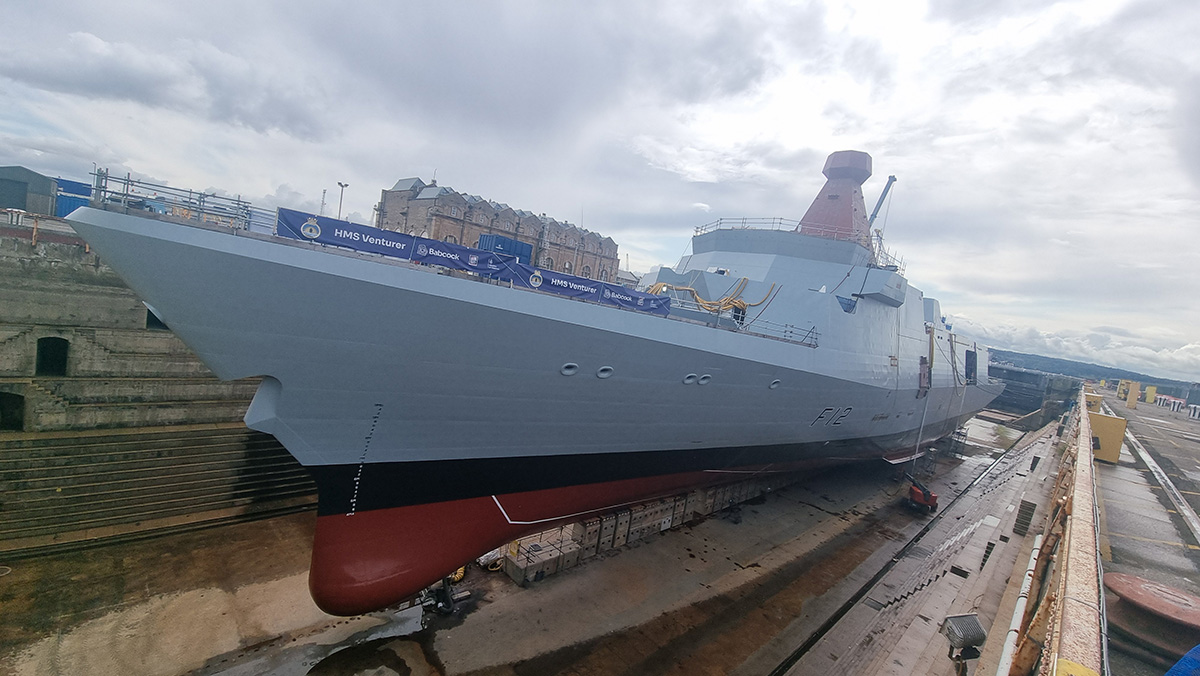
The MP for Dunfermline and Dollar has called for increased orders of Type 31 frigates, greater use of east coast assets including Rosyth dockyard, and a single funded High North strategy, in written evidence submitted to the Defence Committee’s Defence in the High North inquiry.
Graeme Downie, who chairs the All Party Parliamentary Group on Estonia and whose constituency is home to Rosyth dockyard and HMS Caledonia, told the committee that the UK should consider itself to be in a conflict with Russia and that the High North and the GIUK gap should be treated as the country’s physical frontline, warning that delay is not defence and that the UK had not yet matched its strategic ambitions with the funded plans needed to deliver them.
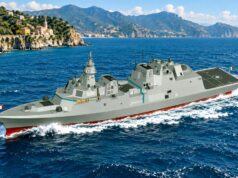
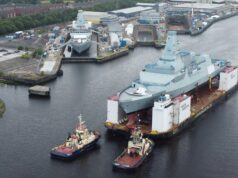
On Type 31 frigates, Downie said the government should consider increasing orders for more of the vessels, describing them as cheaper and quicker to build and adaptable over their lifetime to fulfil different roles, saying this could be “particularly critical for the future hybrid navy envisaged in the SDR and emphasised by the Royal Navy.” He noted that it was not yet determined what role the five Type 31 frigates on order would play, with the flexibility of the platform being key, but argued that with an increased maritime role required in the High North, expanding the programme made strategic sense.
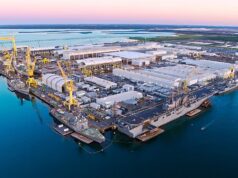
On east coast basing, Downie argued for greater use of assets such as Rosyth and DM Crombie to improve response times, resupply and deterrence posture into the GIUK gap and northern waters, saying this was how the UK could “shorten our logistics tail, reinforce allies at speed, and make presence in the High North continuous rather than episodic.”
Downie described the protection of subsea cables and offshore energy infrastructure as “the central test of our staying power in the region” and said there was a growing pattern of hostile behaviours around the UK’s cable routes and energy installations that demanded investment in seabed monitoring, resilient routing and hard power capacity to deter threats around the northern approaches, saying these were “defence tasks, not merely regulatory ones.”
On the threat picture, Downie drew on discussions with senior Estonian officials in his capacity as APPG chair, saying their view was unequivocal that northern European security was indivisible and that UK leadership in the JEF and NATO was indispensable. He said Estonian counterparts had told him that even a peace settlement in Ukraine would not stop Russian aggression but would simply redirect it, likely towards the Arctic and North Atlantic where Russian strategic priorities lie, adding that “when they offer advice, we should listen.”
Downie also cited the deployment of HMS Dragon to Cyprus following the drone attack on RAF Akrotiri as evidence of the strain on UK readiness, saying it demonstrated the limits of the UK’s ability to transfer capability rapidly between theatres and that the lack of viable support ships reduced operational flexibility and forced the country into piecemeal reactive deployments rather than coherent force projection. He warned that attempting to service multiple disparate theatres simultaneously would stretch already pressured readiness further, and argued the UK needed to concentrate on the High North as the theatre where its geography, vulnerabilities and adversaries’ intentions intersected most sharply.
On the question of allied cooperation, Downie said there was uncertainty among close allies about what the threshold for direct UK military involvement would be short of a clear Article 5 breach, and said this must be made clear, citing the risk that hybrid activity against subsea infrastructure might not trigger a NATO response, asking who energy industry leaders should call if a Russian submarine appeared next to one of their installations and saying the government must have a credible answer.
The MP also raised the Arctic’s strategic importance for critical minerals, noting that China currently controlled 70 per cent of rare earth mining and 90 per cent of processing, and that the Arctic presented a once-in-a-generation opportunity for the West to reduce its dependence on China through coordinated long-term investment, provided it was done responsibly and in line with Western values rather than by replicating the approach of adversaries.
He concluded that the UK had the talent, allies and industrial base to lead in the High North but that leadership required urgency, clarity and action, warning that “delay is not defence.”





I think Downie is right about the frigates however I think we should be buying the Babcock T32 design with a stern ramp, acoustic reduction and a larger mission bay.
They can put 16 Mk41 at the front instead of the 40mm. These can be designed specifically as minesweeper and drone mother ships tailor made for operations around the North Sea and as part of NATO maritime standing groups.
We can buy a couple of the containerised CAPTAS 2 Sonars as well and they can serve as a secondary anti submarine force to supplement the T26. We should be buying these instead of the specialist offshore support vessels we are buying from Norway.
Have Babcock put a price on that configuration?
A bog standard T31 is over 300m , they have then invested a lot of money and will want a return, I doubt an improved full fat frigate is going to be cheap when development costs are added.
If it’s close to a Type 26 cost, more Type 26 would probably make more sense as higher end ASW are needed, especially if the Chinese were to join the Russians in sending SSN into that region. The RN wanted and needed 13 even in more peaceful times. Not that they can manage what they have.
They haven’t put a price on it as the T32 contest has not been run. The Polish version of Arrow head 140 has the acoustic reduction and the CAPTAS 2 sonar so these are all known cost and an existing design. I would imagine your looking at half the price of a T26.
Babcock also indicated a substantial crew reduction to around 60.
Ultimately to get the budget for these extra five ships your looking to replace the minesweeper and possible OPV’s so an extra T26 won’t cut it. The Clyde is also stacked for work for over a decade at this point. Babcock is about to run dry.
We’ve been here before and a potential solution, or rather a temporary band aid, sometimes crops up. Why not order hull production with the minimum or no fit out? I think that’s pretty much what batch 1 gave us. Like you, Jim, I think the extended design with better mission bay access would be a great idea. However just ordering something, even if it’s two more of the same, is the right way to go. It’s clear Babcock isn’t going to start producing ships without orders so a compromise needs to be reached.
“Babcock isn’t going to start producing ships without orders.”
This couldn’t have been said better.
I’ve gained $17,240 only within four weeks by comfortably working part-time from home. Immediately when I had lost my last business, I was very troubled and thankfully I’ve located this project now in this way I’m in a position to receive thousand USD directly from home. Each individual certainly can do this easy work & make more greenbacks online by visiting
following website—.,.,.,.,.—>>> JobatHome1.Com
So “fitted for but not with” …anything..at all? Is that what was done previously ? (Genuine question). I wouldn’t have thought that would cut it, and surely would be pretty pointless , as the fitting out takes time as well ?
We don’t have Polish labour costs. Unless you want to build in Polish yards, Polish pricing is irrelevant
But we do have Polish labour.
And they might still be able to mount a 24x CAMM farm but flush with the deck on the deck behind the NSM.
Good idea, especially since it looks like T26 numbers will reduced, at least in the short to medium term. It might be a problem that we are ‘expected ‘ to buy some Norwegian built vessels as part of the T26 agreement. Could swapping the stern ramp in favour of the RR (T26) mission bay give you a ship worthy of Captas 4?
Does without saying that the order of just five type 31 wass not right the hills of these ships are very quickly built. Sn increase in the order for ten of th type and cancellation of the mythical type 31
While I think many of us here would agree with Mr Downie, it will dismissed by government as just the vested interest of his constituency, or simply ignored. The lack of a clear, long-term plan for the Navy, consistently batted away these days with a casual reference to the DIP, is exactly what the Parker Report and the National Shipbuilding Plan was supposed to overcome. Instead as the world lurches ever closer to a possible world war, and when decision speed has never been more necessary, this government seems to feel that muti-year delays are a good thing. Nothing can be further from the truth. The latest in a long line of governments to dismantle UK defences through cuts, it is on the shoulders of this one the culpability for current inaction lands, and the current Prime Minister should be ashamed of himself.
Could not have put it better myself!!! The Starmer-Reeves-Healey Triumvirate have talked a Good Game but as usual hasn’t delivered this is true with the Economy as well as Defence. “ We want Eight and we Just Won’t Wait”
Yep.
UTTER SCUM.
That is a bit too extreme Daniele. They have managed to get some new money, which is good, but nowhere near enough as yet, which is not so good. Having a stagnant economy doesn’t help, nor do doctors’ pay rises and all the other sectors demanding more money.
Right now, defence spending is completely maxed out, with a mega billion commitment to Dreadnought SSBNs, £16 bn + for the GCAP programme, £10 bn for the new frigates, etc, and a resulting black hole in the defence budget of £3bn a year.
We would all like to see more frigates, F-35s, Challengers, field artillery and the rest, but we have such.a legacy of older ships, aircraft and army equipment, all due for replacement.over the next ten years, that we would need an impossibly large injection of funds into defence just to.stand still.
Blame those who have run down defence so badly in the past, particularly over the last 14 years, who have left us in a big hole regarding equipment replacement and.about every other element of the defence estate, service numbers, pay and conditions, hollowed-out reserves and the rest.
Over the last 26 years.
I would argue the stagnant economy is just another symptom of government mismanagement. You can declare you are pro-growth as much as you like, but if the Bank of England is tasked, by law, to suck money out of the economy rather than risk inflation, growth will always take a back seat (as will unemployment). The blame stretches a long way back, but the buck always stops at the current incumbent, because only they can actually do something. The rest are history.
Hi Cripes.
I do!
Frequently, all the way back to John Major with Front Line First in 94 95.
I can list the cuts from that point, both parties are responsible, and boy have I had some rows here about that.
No more.
As for my strong words, yes, extreme. Due to 30 years of crap which has left me sceptical,
cynical, and doubtful on anything HMG do regards Defence. Though that’s my own view, I justify myself and explain beyond that to nobody.
All, utter Scum, I won’t vote or believe in anyone from Tory, Labour, Liberal Dem.
So this current government are now responsible for doing something about it.
Which is?? I see cuts everywhere and an awful lot of rhetoric.
Of those things you list, what has THIS government ordered, exactly?
What kit has been ordered, what extra people recruited since June 24?
I read once a Labour government last ordered a Frigate in the late 70s??
I have suggested this idea before on this site, but a 24-month ‘Standing Order’ warship order should overcome the current drought in new warships. This mandated procurement would be irreversible without royal consent, thus enabling the RN-assured vessel allocation over an extended period and guaranteeing UK shipyards’ stability to invest in advanced manufacturing. However, this royal mandate would be in addition to normal orders placed by the admiralty/MOD.
Poetry that mate.
I know, but only to extremists like us John! Regards.
Cheers pal, I did a self referral to “Prevent” but they told me the backlog is about fifteen years lol!
😆
Meanwhile, another real extremist stabs two Jews in north London.
The culprit was “born here” says the BBC.
Yet another fine example of a lack of integration. A dog born in a stable doesn’t make it a horse.
A pity the Police only tasered and kicked him and didn’t shoot the bastard.
Starmer came for his photo op, as he had to, and got booed.
Yep, scum.
A bit like that bloke farage, as in garage, who took us out of the EU on the back of his lies and mistruths, who helped weaken EU defence, gave a good kicking to British GDP and who you support; he and his supporters are the UTTER SCUM that betrayed this nation and perhaps they might want to go back to their roots, where right wing facists in Italy would welcome them with open arms.
I Would be interested to see how Brexit impacted Defence spending and how it weakened European defence.
Nice User Name.
The Labour Party has a vested interest too, fife and Lothian is a close to a heartland that labour has in Scotland. Labour can’t win a general election without atleast a dozen Scottish MP’s and nearly half of those would come from the area around Rosyth.
Labour needs Fife far more than it needs the Clyde which is deep SNP territory.
By all means containerise capabilities, but build the Frigates (T26 AND T31) as per current signed off design and add mass with new orders. Cyprus proves the lack of current available Frigate capacity so sort it HMG!!
Hormuz proved the lack of frigates and MCM!
& should add AAW Destroyers! A sensible buy of extra T31 for the RN might trigger some additional exports from countries looking for innovative and more value multiple purpose ships. Obviously any T31s will free up other ships do their thing. Hope all the useful T23 accessories can get re-used.
A target of 32 escorts should be set and achievable by 2040. 12 Type 26’s, 12 Type 31’s and 8 Type 83’s.
Like the numbers but that’s a big jump up. Does it match what the RN wants and needs plus all the subs must be taking a lot of the available cash? Incremental steps might be needed to get into even the 20s.
Do we also need to budget for another Stirling Castle if we are talking hybrid MCM?
Well, given.that (a) mines have not gone away and (b) that we are rushing along with reducing what was 16 Sandowns and Hunts and replacing them with just 3* Castles, I’d think we are not in a very good position regarding MCMV capability.
You can have as many little unmanned MCMV sloops as you like, but the Castle motherships can only be in one place at a time, which leaves us with very limited cover.
* HMG said, very generously, that there MIGHT be a possibility of a 4th Castle, depending on funds. I think we can rule that out for the forseeable future. All the budget is committed to some big-ticket items.
Completely agree.. the autonomous capabilities are adjuncts to the crewed ships not complete replacements
It doesn’t matter how many ships you have nothing is going through the straits. If the US navy can’t do it then non one else can either. The only way those straits get opened be force is land campaign.
Back in the day the RN would have cleared the straits with a combination of surface vessels and Royal Marines.
Depending on which ‘back in the day’ you are referring too, the straits would have been ideal territory for a cutting out expedition at Bandar Abbas!
Well guess what Iran has spent the last 40 years increasing its lethality. The straits are narrow enough to use visual searching only for targeting. Some sitting with a mobile phone and pair of binoculars can text someone in Indonesian that gets forwarded to Iran in seconds. Back in the day a kill chain would take hours to build for Iran now using commercial technology its seconds.
Put a squad of US/RN Marines on each tanker. Use Japanese mine clearing helicopters (Merlins towing sleds) & guard them with a large number of Apache providing overwatch.
And that will magically stop 18 inch rocket artillery being fired from 50 miles away how?
There are no guarantees, but you minimise the risks you can. Any 18 inch rocket will be quickly traced back & the site eliminated.
But that’s exactly why no government has made the same monumental mistake that this bunch have made now.
Ultimately Downie is right.
As others have said the costs of the Polish flavour of T31 will be well known by now.
The main thing is to get hulls into production as it takes so long from order to ISD and it is critical that there is no gap in work for Rosyth otherwise the pretty grown up NSS that Boris actually started rolling the ball on is gone in a puff of smoke. I am not at all sure that super speccing them is the way to go. What are needed are budget ships that things can be bolted onto albeit with things like Mk41 fitted as well as the wiring and cabinets present for NSM etc.
Lest we forget we are not propping up BSL basket case central but very successful design exports that have added build exports for T26 as well.
In the same breath T45’s successor needs to have a fully funded design process ASAP with a clear main gate decision on ordering and build that is set in stone so that T23/SSBN costly mess is avoided again.
A Polish type T31 variant might help to get the Narew CAMM-MR system happening for the UK as isn’t it a co-development? And get it going for landbased GBAD as well having a CAMM and CAMM-MR mix for land and sea.
The CAMM-MR is being developed by MBDA (UK) in collaboration with PGZ of Poland. So far there hasn’t been any statements of installing CAMM-MR on their Wicher class frigates. The ship is fitted with the Thales Sea Master SM400 AESA radar, which an ok radar, with about a 300km range against large airborne targets like a Tu95. The CAMM-MR would be a good pairing, the ship is also getting 32 MK41 cells, so there’s some scope for a mixed loadout. I’m not sure if they’re going to the dedicated CAMM launchers as well?
Polish costs are irrelevant unless you build in Poland
Not at all.
The component costs and integration costs are known and done. Unless we are back to wheel reinvention.
Average wage is double in the UK.
The majority costs are the systems, power and propulsion really and they will be the same.
“As others have said the costs of the Polish flavour of T31 will be well known by now”
The most common figure mentioned is EURO 3.6 billion for 3 frigates. That’s 3.1 billion UK pounds.
At those prices build more T26 @£850m or T31 @£400m.
The Polish version is good but not worth that sort of ticket price.
Completely agree, mass is none negotiable. Mass first then build capability..in the end without mass quantity disappears.
Saw on Navy Lookout Twitter recently that South Korea is offering Denmark an alternate frigate design and 4 for the price of 3 T31s. Hope Babcock can counter as cheaper isn’t always better.
*Can’t seem to see it anymore. Might have the post site wrong.
It’s on NavyLookout Instagram
The issues are around interoperability.
TACTICOS is the lingua Franca of CMS so is a big plus for T31.
Given what happened to the IH that had the collision I can’t see Denmark going for a cheap frigate with limited DC.
Many of these comments look like fantasy planning. At present it is looking like we’ll not see 8x Type 26 in RN service before maybe 2038.
The Type 31 programme cannot be far of cutting steel on Ship #5 after which what do they do. Already Babcock are asking questions about the long term order book. Extra monies might not be a simple answer, you have to have the infrastructure to spend it effectively.
Apologies for the depressing start to the day.
Everyone’s panicking we won’t see 8 but nothings been confirmed yet. ALL SPECULATION that’s been stirred up by multiple people. HMG hasn’t even published the DIP because lets be honest, the Treasury didn’t approve the first time round.
We all know spending will rise but very slowly, MoD has already announced they’re transitioning to a 10 year budget. I am confident we will see a Batch 3 order to cover the RN and RNoN orders. It’s a joke it’s taking this long but it should all be worth it in the long run.
10 year budgets dont mean anything. The last PM who lasted 10 years was Blair. Starmer wont last the year. Which ever numpty gete the job next will change things
“MoD has already announced they’re transitioning to a 10 year budget”
No they haven’t. Like the rest of UK government, they will work to annual budgets.
Why not building many small vessel? The number of hulls like 5000 tons seems to be the most important thing, rather than big ships (10000 tons). They may be easier to manufacture and still capable of operating in north seas.
Small vessels cant carry enough missiles.
And not significantly cheaper to build and definitely not easier (cheaper) to upgrade.
or crew.
And as for infrastructure, Babcock have already made it clear they can build another frigate hall behind the existing hall, Babcock just wants to see orders then they can press on. This is precisely why we need a National Shipbuilding Strategy to give these yards some confidence that they will have work for the next 10+ years, otherwise whats the point in BAE, Babcock, H&W p!ss!ng money up the wall.
3.5% should be set aside for defence now but it won’t happen because this country is so entitled and would rather have everything paid for by the state. I can understand why the DIP is taking so long but again, but i am confident it will be worth it in the long run.
There already is a UK National Shipbuilding Strategy, it’s just that the Labour crew are giving it a stiff ignoring.
By infrastructure I was not only referring to the ship building effort, I could have listed, RN crews, MoD & RN oversight etc, etc…. No point building ships we cannot man, arm or maintain. All cost when the budget is only creping higher with multiple build programmes already in play.
We all know here that we need more of everything wherever we look. With regards to T31 it should be the perfect ship to put into continuous production in decent numbers meaning no mid life upgrades and lots of export potential with both 2nd hand and brand new ships. I doubt it will ever happen but what a missed opportunity.
Like the FDI class in France?
I’m not familiar with the French programme. I know Japan have had a continious build policy for decades.
In France we have similaire issues. So the bet is to build continuously 1,5 to 2 frigates a year, whatever happens, light frigates. With them, we will have commonality and persistance at sea. Each frigates knows how to do everything, at the cost of limited firepower (32 VLS) and range. Though we look for CAMM to mitigate the issue. Guides Rockets and guns will have to do against low end threats. To increase duration on a theatre of operation, we will just increase the number of frigates.
Helps that the shipbuilders are partly owned by the state.
It sure does. Limited budget also help.
For the FDI, state decided to finance hull only, because it’s cheap and long to produce, so that we can rearm fast if need be.
I’m still keeping fingers crossed. It’s not quite a missed opportunity yet.
I like the terrace they’ve built on the fo’c’sle with reclaimed bricks…
(Sorry folks, couldn’t resist it!)
It’s for illegal immigrants 😐
Would love to see further development of Type 31 and further orders BUT
(a) the crew size needs to be reduced through further automation, otherwise we’re in danger of having ships permanently alongside
(b) ships are like cans of beer, the can is cheap and easily produced by anyone, it’s what you put inside it that really adds value.
Agree with the sentiment but cheap and easily built by anyone??? I think not pointed eared one.
My mistake, shoukd have read
“easily built by anyone except America”
The problem is these comments always seem to come either from an MP with a vested interest, so no real belief in the forces or expansion, only jobs, or are made to the HoCDSC, a group woth no teeth and no influence on anything.
HMG and MoD just divert their eyes and produce the standard rhetoric.
Now wouldn’t it be great to have a system like the French, where officers can speak freely on what they need, and the ones in committee listening are the ones who have the power to make the policy that actions it.
Defence needs reform, at the moment it’s at the mercy of whatever ideological whim the people in charge have.
I think many top brass have shouted loudly about the poor state of everything military.
The Problem is plans. promises, and good intentions get lost in the machinations of government.
Once they’ve left.
Only Saunders objected strongly.
Look at DSC sessions, officers are gagged.
Current CDS has warned out loud at the Select Committee. He explicitly talked about the funding gap to fulfil current plans, although he refused to be drawn on figures in public. He hasn’t said anything like the “corrosive complacency” comment from Lord Robertson yet.
Thanks for the correction, Jon.
Pretty much agree bearing in mind that we need more destroyers as well. Even taking into account the probable increased used of unmanned system the total frigate/destroyer fleet is still only half of what we should have as a minimum.
Totally agree with more orders, but do we have the industrial capacity?
The fitout processes are badly in need of speeding up HMS Glasgow has been fitting out for nearly 4 years now.
In the 80s/90s time from steel cut to commission was 3.5 – 5 years
Seem to recall that the third dock at Scotston is slightly shorter so can’t take a T26…. bottleneck no 1.
If Rosyth has to keep two docks for a Carrier and submarine decommissioning then there is only one there for T31…. bottleneck no.2.
Indeed, we need to factor in Infrastructure improvement costs of expanding existing and building new docks.
In the long-term these docks can also be used for maintenance work.
Still is that short in many countries. Only the UK politicians believe the Babcock’s claims that they are leading edge.
If Venturer goes to sea trials before the end of the year, then Babcock has brought Warship building back within reasonable timescales.
Caveat is, she will still be subject to FFBNW (Mk 41 VLS)
Reading the DIP budget Runes I could see an order for 3 ASW T31s to fill the RN T26 ‘Norway gap’: with acoustic quieting, Captas 2 and a Merlin. Sell some early T31s if we do get the full 8 T26. If not, keep them. And if Artisan NG is the default choice for the T83 radar and it fits on the T26 hull and mast, why wouldn’t T83 = an AAW T26? Keep the BAE design office busy with MRSS.
Suggest you don’t give up your day job.
Artisan NG won’t be the default radar for the T83, it’s not powerful enough for the anti-air dominance role. However, the BAES next generation transmitter-receiver modules (NGTRMs) that makes up the Artisan-NG antenna array, can be used to build up a fixed panel array. Which according to BAES will give the Navy a scalable multi-function radar, where it can be used to create either a fixed panel or a mechanically rotating panel, such as the Artisan-NG.
BAES have been talking about upgrading the Artisan radar on the carriers as well as the T26 with the new radar architecture. The simplest and cheapest option will be to replace the current mechanically rotating Artisan 300 with a mechanically rotating Artisan-NG. However the carriers in particular would easily accept the additional weight of four panels in place of the current Artisan. The panel arrays are significantly heavier than the single mechanically rotating array. To have them mounted higher on the T26 class, both the River and Hunter variants have had their ship’s beams increased over the base width of the T26. On the “narrower” T26, they would have to be lower and/or smaller in area. However, this problem could be mitigated, if you also include an X-band AESA radar that is a lot lighter, so could be mounted higher on the mast, where it is looking at the horizon. Whilst the larger panel arrays do the volume searching. For this to be fitted though a lot of upper structure modifications will be needed, including a new mast. Which in the current financial “crisis” is unlikely to happen.
BAES have said Sampson should be good for another 20 years, as its current performance is still on par with the latest AESA array some Navies are now using. Which should be taken with a pinch of salt. As the Sampson array is a lot smaller than the SPY-6, 7 and CEEFAR arrays. Meaning its overall transmitter power and receiver sensitivity is not on par. Fitting Sampson to the top of the T45’s mast was always going to compromise the array’s sizing due to weight. But the T45 also uses the S1850M for long range volume searching. Which does balance out the performance between the larger SPY type arrays. Though fitting the array lower on the structure, allows the array to be bigger with increased performance, as the ship can handle the weight better.
From looking at a number of images of the T83 released so far, the evolution of the designs have removed the mechanically rotating radars and replaced them with fixed panels. The latest BAES T83 images as shown by Navy Lookout. Clearly shows two types of fixed panel arrays on a large lowish four sided mast, the larger panels will likely to be L-band (S8150M replacement), along with smaller panels that will likely be S-band (Sampson replacement). Though the design is missing an upwards facing panel, needed for anti-ballistic missile defence. Additionally it would benefit for including an X-band AESA fixed panels mount at the top of the mast. Used for laying the guns on targets, as well as detecting and tracking very small objects such as FPV drones etc.
Thx. I hadn’t realised that Hunter and River class were ‘beamier’ than the original T26. Interesting to see that the rotating / fixed thinking for T83 is evolving. It looks like BAE are aiming to create a ‘family’ of radars using common NGTRMs, and I would guess, common software. Are NGTRMs suitable or needed for all radar bands?
Yes, you will need specific NGTRMs for different bands.
The antenna part of the NGTRM has to be made to work with the transmission’s wavelength otherwise you will suffer a lot of feedback, for example X-band = 8 to 12 GHz, with a wavelength of 3.73cm to 2.5cm. For L-band = 1 to 2GHz, with a wavelength of 30cm down to 15cm. The antenna size has to match these wavelengths, though you can use half-wavelength sizing for the antenna. Even when doing this the T45’s S1850M radar antenna is still massive compared to the Ku-band (12 to 18Ghz, 2.5 to 1.67cm) antenna the Phalanx uses. Commercial radars are normally tuned to operate over a narrow range of frequencies within a band. Which also means the antenna tuned length can be easier to design. Military radars try to operate over a wider range of frequencies within a band, as this means they are less susceptible to jamming. Plus you can use frequency hopping techniques to try to avoid persistent targeted jamming and tracking. Ideally you want an antenna that can cope with the whole frequency band, but with some clever electronics you make it cover parts of the next band (down and up), to give a much wider operating bandwidth. The F35’s APG-81 has this capability.
A transmitter-receiver module (TRM) has all the transmitter and receiver components packaged together behind the antenna, which is one of the reason why they are so heavy. Very powerful radar like the SPY-6 also has to use active along with passive cooling, which again adds to the weight. If I remember correctly, Sampson uses forced air cooling. Some TRM units use a separate antenna for the transmitter and receiver, whilst others switch operations using just one antenna. The antenna more or less governs the frontal size of the TRM. As the antennas within the array have to be at least a quarter to half wavelength apart in both the X and Y axis from its neighbour (the spacing distance must be the same throughout the array). If they are closer, when transmitting, more of the energy gets fed into the next antenna, rather than be transmitted outwards. Which reduces the overall transmitter power.
BAES have said their NGTRM is scalable, which could mean two things. The first is that you can scale up or down the number of TRMs to make different sized arrays. The second is that the TRM’s circuit architecture is also scalable for different frequency bands. Reading through BAES’s blurb, I think both are true.
Thx again. As someone who grew up with thermionic valves this MMIC stuff is awesome. I see though how it would be clever if you could use software to create multiple logical antennae from a single physical antenna. If the physical spacing of the modules within the array is fixed does that mean the optimum frequency hopping or changing bands goes as 1:2:4:8 and 1: sqrt 2 etc. sort of like a crystal lattice?
About to show my age. I did engineering training at a Plymouth Poly, however, the course that I did included radar theory and practical at the FE college. Who had the complete radar system from Sea Slug mounted on the roof. It was my first introduction to St. Elmo’s fire, which used to travel down the outside of the waveguides. It was completely valve driven, which was great as you could actually see things work. Many a time we used to track aircraft going in and out of Plymouth airport when it was still being used. Even tracked a few Lynx and Sea Harriers with it, which they got upset with apparently!
Frequency hopping has come on a long way. My first introduction with it was with military radios through Havequick. Which was a “random generated” code you load in to the radio, which then controlled the frequencies the radio would jump to when transmitting, all timed together using the GPS clock. The theory being the receiving radio would be using the same code, and jump in sequence with yours. Radar was bit similar. The Tornado’s Foxhunter radar had some hop capability, but it wasn’t as wide in the band as the Havequick radio could do, I think it was down to the radar’s oscillator generating range. Like I mentioned earlier frequency hopping was initially used to counter jamming. But for radar by hopping of a wider band of frequency and in a seemingly random pattern, makes it much harder to detect. Older style radar warning systems (RWR), worked by recognizing repeating transmissions of the same frequency. By introducing a random hop, the RWR finds it a lot harder to recognize frequency hopping radars.
Active Electronically Scanned Array (AESA) radar have taken this to a whole new level. Where each TRM has its own local solid state oscillator (P-N based). These oscillators can generate a wider band of frequencies, than previous magnetrons and travelling wave tubes (TWT) could. They are more frequency stable, and can be made to switch frequencies micro to milli seconds. To add to this they can now be algorithm controlled through software. So the frequency hopping can be almost infinitely randomized. For example you can now generate a number of beams from the same antenna array, but each beam will be using a different frequency. In radar terms this has created what is called low probability of intercept radars. As the radar is not transmitting on a fixed range of frequencies, but using the whole band of frequencies. Which makes it very hard for RWR to detect cheaply, it is doable, but RWR systems are getting a lot more expensive. In the F35’s APG-81 case, it also uses some frequencies from the adjacent bands. Which makes it really hard for band pattern recognition. I suspect the Typhoon’s new RADAR2 will be the same.
I’m going to give away part of my degree thesis on radar. Where we made an AESA radar that tracked foil covered cricket balls, that was sweeping a 90 degree field of view. That would then detect another radar doing the same, do a handshake with it, then transfer or receive data files with the other radar. Whilst still sweeping the area and detecting cricket balls. We had inadvertently built a data-link, that most AESA radars (especially military) are capable of doing. Its how missiles such as AMRAAM are communicated with, except we were transferring music files.
Great story…obviously inspired tennis balls as the standard unit for assessing radar quality 😂
I don’t understand why a lower fixed 4-panel radar and a high X-band isn’t standard, even rotating. It seems like a sweet spot.
I agree, using a radar tracker for gun laying will be a lot more effective than using an optical tracker, especially in all weathers.
Everyone wants extra money, nobody more than i do. Unfortunately when the crash comes in the next few years we’re going to be in such shit that spending is going down regardless of what anyone thinks. Its going to make 2008 look like a picnic.
Just double or more the T-31 order at that price they are an absolute bargain, they will be needed as the navy needs expanding plus we seem to be giving away a few T-26 to Norway so will need to cover that eventual gap in numbers.
In regards to the T-31 if we put a large order in now and in the future decide that we no longer need the numbers then export them or convert them to T-32 standard.
“Convert then to T32 Standard”
Oh go on then, tell us what that Is 🤔
It’s got a hull-mounted AESA radar, rafted machinery and other noise-reduction lagging, a towed array sonar and some torpedo tubes – so that it has a respectable ASW capability and can thus be a capable all-round patrol warship.
Which it currently is not.
Because of the shortage of available hulls, the RN has been double crewing both T45 and T23. The obvious solution is to reverse this- effectively building spare ships. By rotating these, the long periods of deep maintenance that reduce availability could be at least partly mitigated. Raising operational availability from 1 in 3 to 1 in 2 is a 50% uplift in deployable vessels without any additional manning costs.
Hi all. Does anybody think that by giving the Norwegians 2 of the 8 T26’s slots currently on contract, that the government may try to replace them with 2 more T31, and then argue that the North Atlantic would have sufficient ASW coverage with Royal Navy and Norwegian T26’s combined. They could then argue, that the RN will still operate the same planned numbers of frigates. We just end up with a less well equipped frigate force ourselves.
I suspect that some politicians are a tad untrustworthy.
More frigates good luck with that one.
And so say most of us. Decent sonar, heavier main gun, preferably 5″ for commonality with T26. Aim for a c.40 escort fleet.
An order for Batch 2 T31’s to replace the River B2 as they in turn replace the River B1’s is logical, sensible and will actually increase the UK’s military capabilities. Of course it won’t happen. Despite the governments rhetoric about rearmament, the brutal reality is still annual salami defence cuts – personnel, frigates, transport aircraft, artillery, etc. The now year long delay to the Defence Investment Plan allows the Treasury to veto any new expenditure, and Reeves is happy for this situation to continue as long as possible.
I suggest rather than demand more frigates . The insist on the presence of the Prime minister and the Chancellor and ask politely , that while every other country is rearm. The prime minister is all talk and nothing else and the chancellor seems hell bent on diverting funds away from defence. I and I suspect thousand others, who are equally frustrated about our countries defence and the lack of action by our government.