

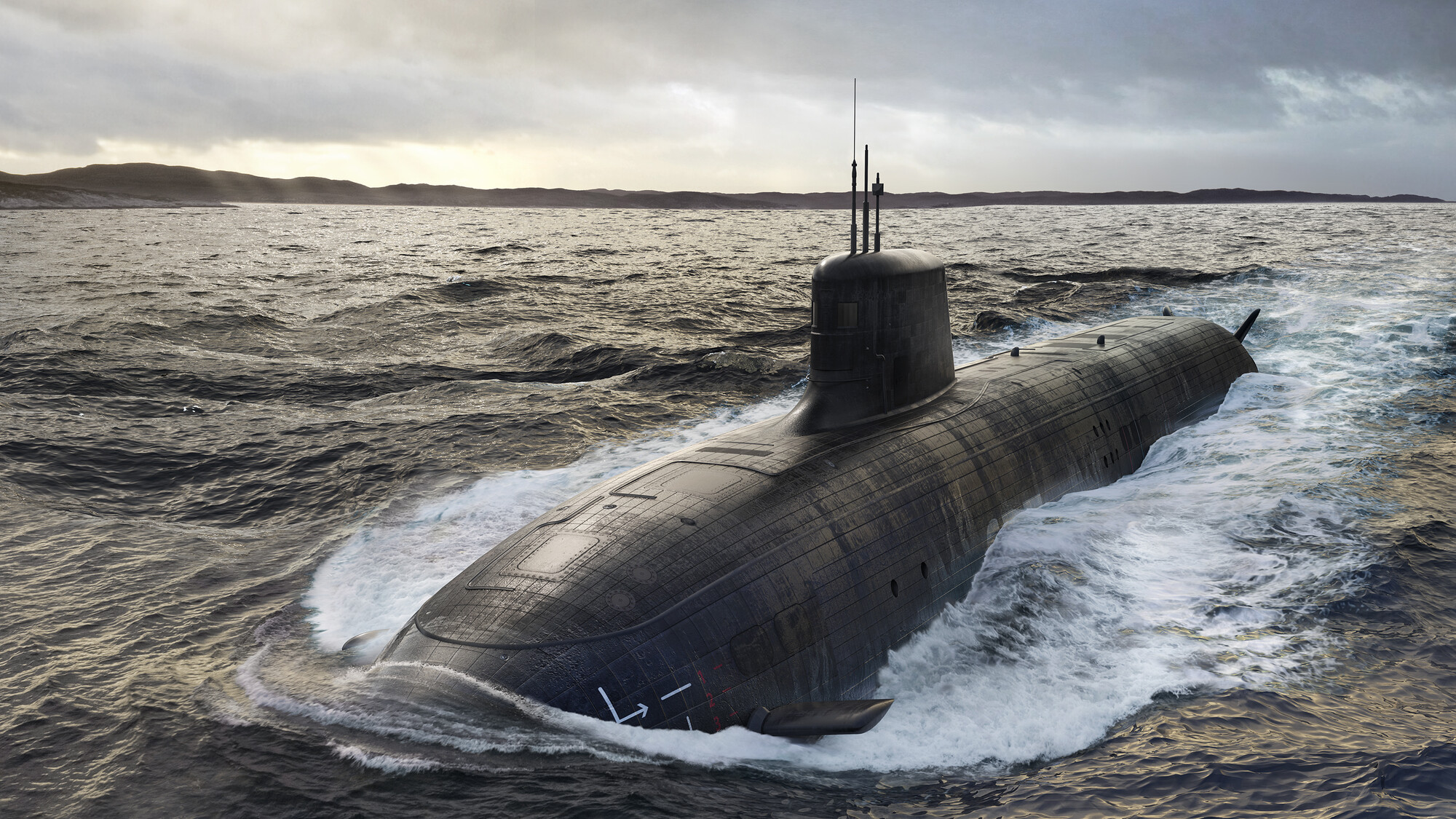
The House of Commons Defence Committee has warned that the AUKUS programme risks drifting into bureaucratic obscurity without stronger political leadership from the top of government, in a report published today that calls for the Prime Minister to take a more prominent personal role in driving delivery of the trilateral partnership.
The report, the eighth of the 2024-26 session, concludes that “a programme of AUKUS’ scale and scope will not succeed if it is perceived within Whitehall as one of many defence programmes competing for scarce resources” and that “only strong and visible political leadership from the very top of Government can counter a drift into bureaucratic obscurity and ensure that AUKUS receives the funding and priority that the nation’s defence and security demands.”
The committee is particularly critical of the government’s failure to publish a public version of Sir Stephen Lovegrove’s review of AUKUS, describing it as “deeply disappointing” that more than a year after Lovegrove completed his review, the government’s commitment to issue a public version of his findings had not been fulfilled, saying it “reflects poorly on the Government and is damaging to stakeholder and public confidence.” The committee urges the government to issue the public version of the Lovegrove report as soon as possible.
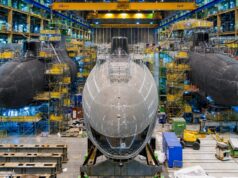
On the industrial challenge of delivering SSN-AUKUS, the report warns that timely investment in upgrading the BAE Systems shipyard at Barrow-in-Furness is crucial and has already slipped, saying that “any further failures could lead to delay in delivering SSN-AUKUS with serious consequences both for UK national security and for credibility with AUKUS partners.” Sir Stephen Lovegrove told the committee that investment decisions had not always been timely and that infrastructure upgrades had not progressed as quickly as they should have, though he said the pace of investment was now “picking up very markedly” and emphasised that it “will need to be maintained for the next 20 years at a minimum” and that there must be “no excuse for delay.”
The committee describes the regeneration of Barrow-in-Furness as essential to the delivery of AUKUS, welcoming the formation of Team Barrow and the investment committed to date but saying it does not go far enough, describing the scale of the challenge as having been “laid bare” in the evidence before them and during a visit to the town. The report calls for additional funding from central government to provide investment in housing, healthcare, transport and education, stating that “Barrow’s unique role as the home of the UK’s submarine building capability means that failure to do so will jeopardise not only AUKUS, but also the nation’s defence and security” and concluding simply that “the regeneration of Barrow is too big to fail.” The committee also recommends that Team Barrow ensure visible change is seen on the ground as soon as possible to reassure the local community that their role in the national endeavour has been recognised.
Steve Timms, Managing Director of BAE Systems Submarines, told the committee that the key challenge was around the speed of decision making, saying “clearly, to finish programmes on time, we need to start on time” and that it was about “getting the level of coherence and consensus in the early part of the programme, making the decisions that need to underpin that, and providing enough of a runway for the work ahead.”
The committee also flags the risk that Australia’s own decisions, as it works against tight timescales to develop the infrastructure and workforce required for its sovereign nuclear-powered submarine capability, could have implications for the UK’s own build schedule at Barrow, recommending that the UK government coordinate closely with Australia as it finalises its plans and develop contingencies for all possible options.
On the sustainment pillar of AUKUS, the committee warns that fulfilling the UK’s commitment to increase port visits and later rotate an Astute-class submarine out of Australia has stretched the Astute fleet to, or even beyond, its limits, saying that with submarine availability critically low the government must deliver infrastructure improvements at HMNB Devonport and HMNB Clyde at pace to relieve pressure on the fleet, warning that failure to do so risks the UK’s ability to meet its AUKUS obligations while continuing to maintain security in the Euro-Atlantic. The committee welcomed the arrival of HMS Anson in Western Australia as a positive development but was clear that the strain on the fleet was a concern that needed to be addressed urgently.
Workforce growth at HMNB Devonport is identified as key to delivering the infrastructure required to improve submarine availability and prepare for SSN-AUKUS, with the committee calling for timely and adequate funding for Team Plymouth to enable it to meet the workforce challenge and maximise defence-related growth under the city’s Defence Growth Deal.
The report notes that the SDR set out an intention to create a fleet of up to 12 nuclear attack submarines, a significant increase on the current 7-strong Astute fleet, with a commitment to continuous submarine production at a rate of one vessel every 18 months. Delivering that ambition alongside maintaining the existing Astute and Vanguard fleets and delivering the Dreadnought-class nuclear deterrent will, the committee says, require a significant uplift in industrial capacity that comes after years of underinvestment with serious consequences for the resilience of the industrial base.
On public engagement, the committee warns that public awareness and understanding of AUKUS is limited and that public support will be needed to maintain the political capital to deliver the programme across several electoral cycles, calling for the MoD to better engage Members of Parliament in communicating the benefits of AUKUS at constituency level, noting that its own attempts to engage the MoD on this had so far been frustrated.
The committee concludes that approaching five years since the partnership came into being, with changes of government in each partner nation and domestic reviews completed, now is the time to seize the opportunity AUKUS presents and demonstrate the UK’s firm commitment to making it a success.





Site was down for most of today, for some reason?
Yep, good to see it back.
It’s Putin!
It’s Trump’s fault
During the morning and afternoon I couldn’t access the site using Firefox, but I could when using Chrome. The problems seem to be over now.
It’s down regularly. (maybe 10 times now since I joined ?)
I think It needs a “Cyber Expert” to exterminate the bugs ! 🤔😁😎
(It’s only banter George)
I’ve gained $17,240 only within four weeks by comfortably working part-time from home. Immediately when I had lost my last business, I was very troubled and thankfully I’ve located this project now in this way I’m in a position to receive thousand USD directly from home. Each individual certainly can do this easy work & make more greenbacks online by visiting
following website—.,.,.,.,.—>>> JobatHome1.Com
Bugger off there’s a dear
“stronger political leadership”…so not a cats chance in hell then.
More chance of the pope wanting subs…
Bless you my son…😊
Rods from God?
starmer is a lame duck out of his depth with the dimwitted reeves and bufoon lammy on his circus’ front bench. i enjoy watching bladenock ripping him up everytime they go go head to head.
Thay’re all lame brained, that’s for sure. My wife likes the name you’ve given Bladenock. Very good.👍
Like all things Liebour? Think an agreement with another country will be honored?
Also good to see the site back up, no browser I use would show it until 11pm.
don’t let the rest of the jobs for the boys
nonce party get involved in it.
Barrow in Furness needs a strong MP grounded in Defence matters and not some Prima Dona operating way out of her depth but enjoying the perks of the job.
The current Govt needs replacing, but absolutely nothing from any Party is in line of sight as remotely being able to solve the challenges this country faces.
Seems like France 1940.
alas, yes
I had high hopes for Starmer but frankly he is a weak leader . Reeves thinks she runs the country.
Starmer will cling on and take the party down with him. Even if he is replaced , both Raynor and Streeting will be even less interested.
another two clowns in the nonce party circus.
Good luck!.
It doesn’t really matter what party’s in power, since the end of WW11 progressive Governments have run this country into the ground, with self serving greedy power hungry politicians. We invited the railway engine we were world leaders in aviation ( TSR 2) it had avionics decades ahead of anything else at the time, we have no real heavy industry left and although I still believe we have one of the best if not the best military in the world Government cuts have left it poorly equipped but still our men and women do such a good job. No one ever really asks why or were has all the money gone millions spent on Government think tanks that achieve nothing, I think 20 billion was taken in road tax last year and 7 % went back on the roads? Filling pot holes with porous tarmac mostly laid badly and again nobody really pushes for real answers getting weak explanations. I don’t know what the answer is but it seems to be a similar story all over the world leaders not carrying about anything apart from money and power sod those at the bottom , never mind tomorrow just keep on killing the sea destroying the land and still no one ever seems to shout stop we all keep sticking our heads into the sand, I hope we sort it out soon before it’s too late we can’t have much longer I hope I’m wrong
Skills fade is a thing and it’s come home to roost.
The gap between the T and A class was so long, BAE had to bring in Electric Boat to pick up the trainwreck and teach them the basics of SSN building.
We’re now on a decades long build cycle per boat, this is insane.
my son was on torbay when it left service and everyone from the captain to the dockyard cat said they could all have given years more service, now we we have SSN’S that cost twice as much and out of the seven only one is operatioal. farcical. we do it so well
my son was on torbay when it left service and everyone from the captain to the dockyard cat said they could all have given years more service, now we we have SSN’S that cost twice as much and out of the seven only one is operatioal. farcical. we do it so well
Yes
Australia and the UK will be punished for the betrayal of the original contract.
This punishment already bears a name: : Aukus …
Stop talking silly Cris
Not very courteous a comment..
Bur the facts rather : Australia was getting 12 subs for 90 BN. Now it’s getting 8 for 368 BN !!! Good deal !
Nobody knows if the USA will deliver the 3 first ones and nobody knows if the UK will manage to (help) build the 5 Aukus. Both countries say it will be difficult and both have heavy delays in their national productions. No wonder it is the worst arm procurement ever !
Hence Aukus is the punishment for… Aukus.
(The French must be laughing their head off)
Sorry, political leadership, are you serious? We haven’t had a political leader in the UK since 1950. And no Thatcher wast she was a destructive puppet for a civil service that has been destroying g the UK every chance it gets
but to be fair, the talent of her cabinet far exceeds what we have today with cooper, rayner,reeves, and the utter buffoon that is david lammy.
These delusional lunatics don’t understand basic financial issues!!! How TF do people expect them to get their heads round anything with the complexity of nuclear submarines / nuclear weapons??? Come on we’re dealing with plonkers that are throwing billions at clowns who rock up on rubber boats. False news! Nuclear fkn deterrent 🤣 Starmer think’s our heads are painted on