

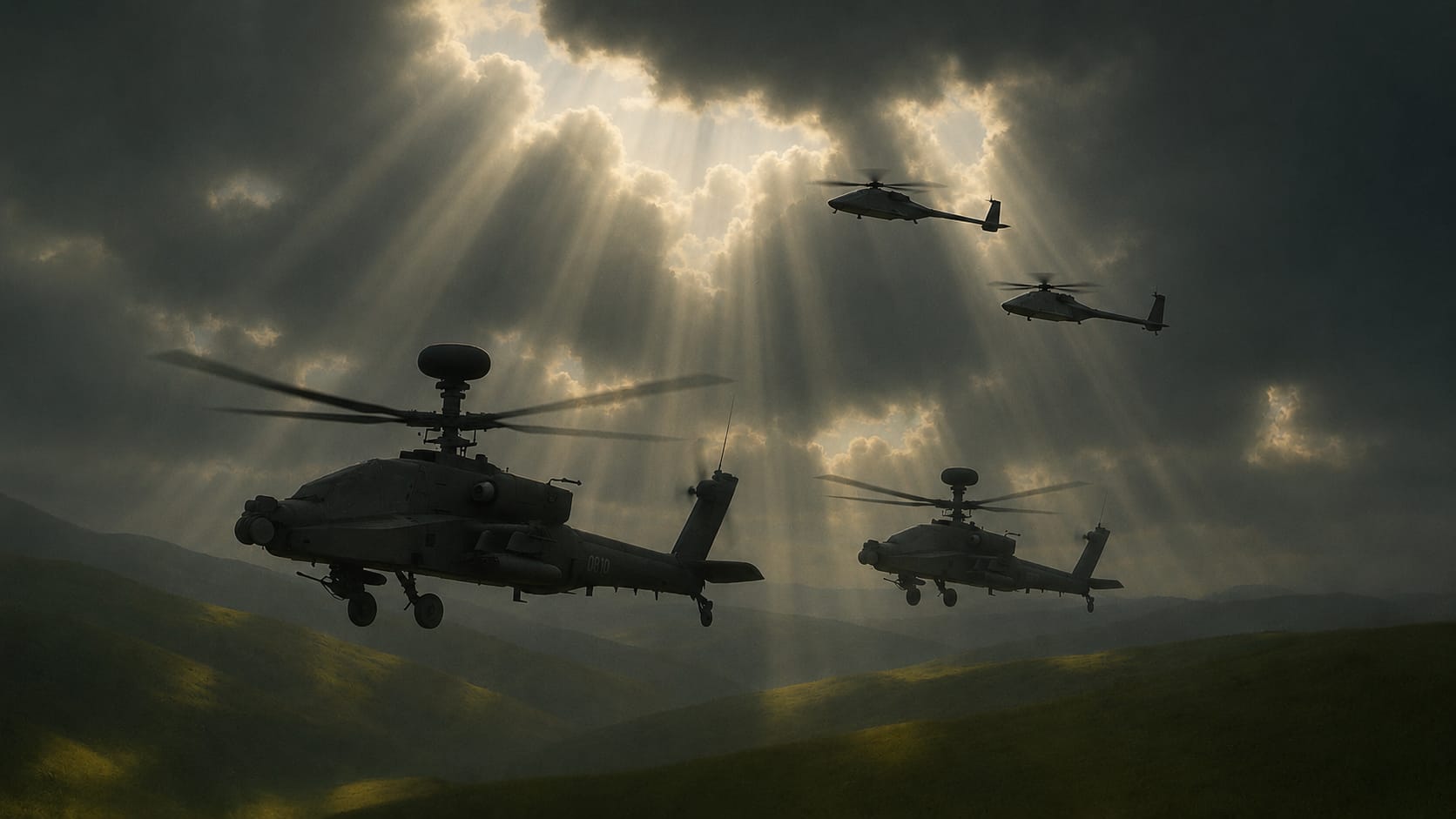
The Ministry of Defence has selected four industry partners to develop drone designs capable of operating as autonomous loyal wingmen alongside the British Army’s Apache attack helicopters, with £10 million in funding announced as Project NYX reaches a new milestone.
The four shortlisted companies are Anduril Industries (UK) Ltd, BAE Systems Operations Ltd, Tekever Ltd, and Thales UK Ltd, chosen from a competitive field to develop uncrewed air system designs incorporating autonomous capability, payloads, and sensors. The MoD intends to assess all four designs over the coming months before selecting up to two of the strongest contenders to progress to a prototype phase in autumn 2026. If prototype designs prove successful, the aim is to field an operational variant by 2030.
Project NYX is the Army’s concept demonstrator programme to develop uncrewed air systems capable of supporting Apache crews across reconnaissance, precision strike, target acquisition, and electronic warfare missions in contested environments. The drones will operate fully autonomously, with Apache pilots benefitting from the information they provide without needing to control them directly. The MoD has stated that all decisions resulting in the use of weapons will continue to be made by a human.
Minister for Defence Readiness and Industry Luke Pollard said the programme demonstrated the government’s commitment to autonomous capability. “This is British ingenuity at its best — cutting-edge drones working alongside Apache helicopters to give our soldiers an unbeatable advantage on the battlefield. The UK isn’t just keeping up with the future of warfare, we’re driving it. This government said it would act with urgency to strengthen our defences and back British industry, and that is exactly what we are doing — investing now in the capabilities our Armed Forces will need to stay ahead of our adversaries and keep this country safe.”
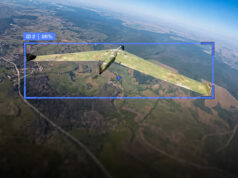
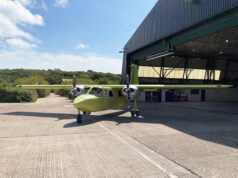
Tekever, one of the four selected partners, separately announced a new Centre for Autonomy and Engineering Hub in Bristol as part of its broader UK investment programme. The hub, which will have capacity for up to 150 employees, forms part of the company’s five-year OVERMATCH programme, a £400 million investment in UK infrastructure, technology, skills, and partnerships. The Bristol site will open in June 2026 and joins existing Tekever facilities at West Wales Airport and Southampton, with a planned manufacturing centre in Swindon. Tekever has fielded autonomous systems in Ukraine across demanding operational conditions, experience the company says directly informs its development work.
Karl Brew, TEKEVER UK Managing Director, said the programme represented a significant step in crewed-uncrewed teaming. “Project NYX represents an important milestone in the evolution of the UK’s autonomous defence capability and is the forefront of crewed-uncrewed teaming. The hugely impressive timelines of the programme also demonstrate how serious the UK is about driving change in its procurement and capability development processes.”
Project NYX is being delivered in conjunction with UK Defence Innovation, which is providing specialist delivery, commercial, engineering, and safety expertise, and builds on early funding and development work carried out by that team. The programme forms part of the government’s broader commitment to autonomous capability development under the Strategic Defence Review.
The loyal wingman concept, in which uncrewed platforms operate autonomously alongside crewed aircraft to extend sensor reach, absorb risk, and provide additional effects, has become one of the most actively pursued areas of military aviation development across NATO nations. The Apache remains one of the British Army’s primary attack helicopter platforms, and pairing it with autonomous systems capable of conducting reconnaissance or electronic warfare ahead of or alongside the crewed aircraft would represent a significant enhancement to its operational utility in contested airspace.



Who’s first for the Chop ?
I was thinking Anduril would have been towards the top of not being chopped, but one wonders what the ITAR restrictions might be with any proposal from them, or will it be at least predominantly a non US technology proposal. Thought Bae might have teamed with another producer as others seem to have skills they could do with exploiting. Tekever has a strong position too and is investing big here so must be tempting to support. Surprised there is no Turkish option selected tbh, unless one may be involved with one of the options here. Will be interesting to see how this develops and what form any such drone takes.
I’ve gained $17,240 only within four weeks by comfortably working part-time from home. Immediately when I had lost my last business, I was very troubled and thankfully I’ve located this project now in this way I’m in a position to receive thousand USD directly from home. Each individual certainly can do this easy work & make more greenbacks online by visiting
following website—.,.,.,.,.—>>> JobatHome1.Com
This says to me the MOD still don’t get it.. look at the timeline
Prototyping within a few months
Then 4 years until it’s operational.. FFS by that point it will be a couple of generations out of date…
Prototype 2026 operational, 2027 then annual spiral development.
It is what you get for drip feeding money to perfectionise a huge range of projects….
Those Apaches are relying quite heavily on the drones; there appear to be tarps over the canopies!
They are practising flying In the dark.
I assume you are aware of night-flying hoods, otherwise you have just been unintentionally rather than intentionally funny.
Sorry, I was flying Blind. Must have blacked out. Instrumentation only. 😁
Oh and yes, my humour takes many forms but Is mostly missed. (and intentionally un funny).
Cutting edge eh in 2030 we will have the very best and a sufficiency of everything
“. The UK isn’t just keeping up with the future of warfare, we’re driving it. This government said it would act with urgency to strengthen our defences and back British industry, and that is exactly what we are doing”
Act with urgency…strengthen defences…
Sigh.
Fit army wildcats with radar and/ or An EO director so they can fire Martlet first. Would be handy.
AA
AA
Wildcats will soon be cut.
Why not, they cut everything else ?
Are you sure they meant our government??
Arm the Army Wildcat, don’t be ridiculous, why would you arm the senior ranks taxi service??
General Bluster will be on the rampage at suck a suggestion…
Such a suggestion even…..