

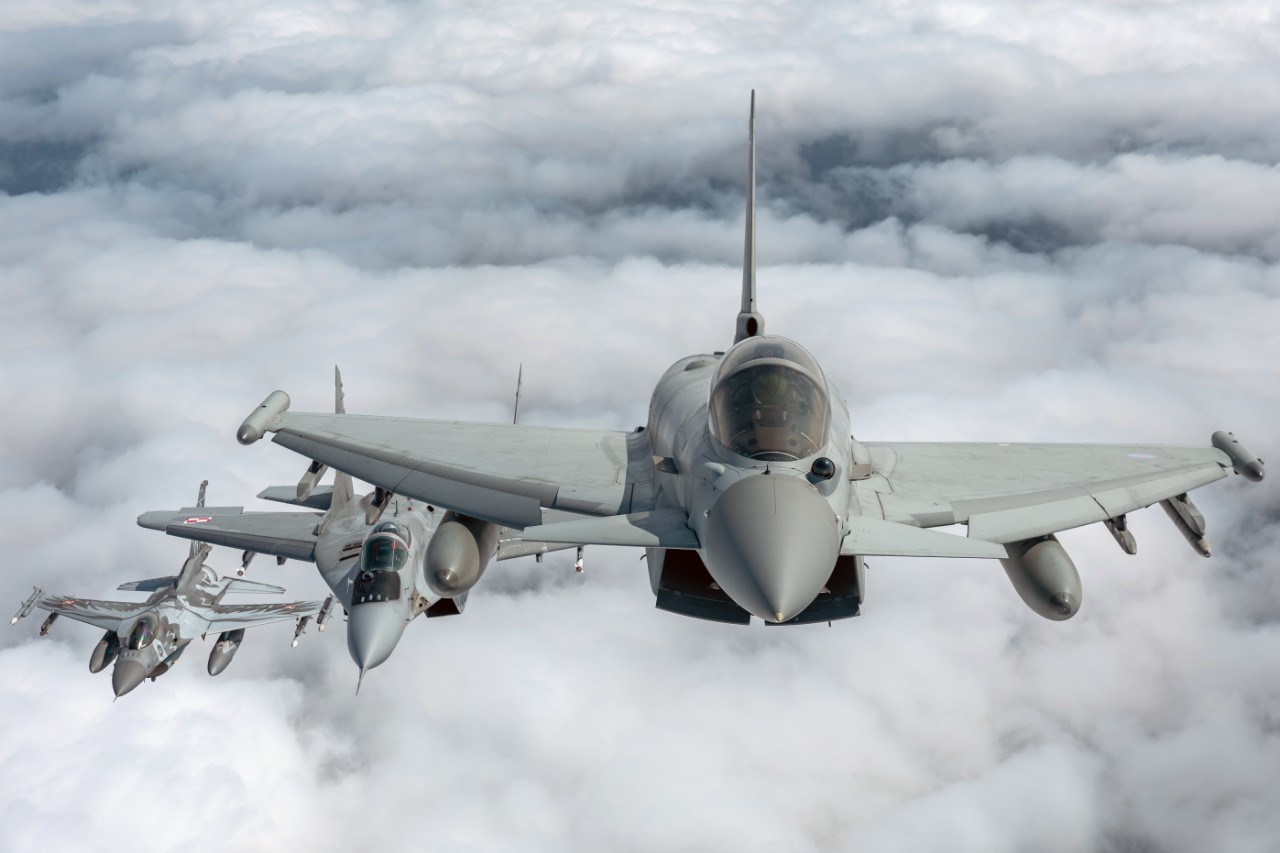
The treaty was signed at the Battle of Britain Bunker at RAF Northolt in west London, a location chosen for its historical resonance given the significant role played by Polish pilots in the Battle of Britain. The two prime ministers described Russia as the most significant long-term threat to European security and expressed the need to counter its malign actions.
The treaty text identifies “the Russian Federation as the most significant long term threat to that security and the need to counter its malign actions,” and commits both parties to “countering and deterring Russian aggression and interference in all its forms.” Both governments also resolved “to apply appropriate pressure on the enablers of Russian malign activity and aggression” and to work together to hold Russia “including its political and military leadership, to account for its violations of international law.”
Starmer said the treaty marked “the biggest step forward in our defence and security relationship with Poland in a generation,” adding that “Britain and Poland are already close allies and friends, but the challenges Europe now faces demand an even stronger partnership. Our collective work together will keep our countries safe for years to come.”
Tusk said the treaty had raised Polish-British relations “to the highest possible level” and would help “secure Poland and other countries against the Russian threat.” He added: “We want to defend Polish and British security; we want to protect cyberspace; we want to strengthen NATO as a whole — this is the essence of our treaty.” He also said: “History teaches us, and geography teaches us in a particularly painful way, that Poland must build credible alliances that will, above all, deter potential aggressors.”
On defence cooperation, the treaty commits both parties to “enhancing bilateral interchangeability and interoperability between their respective armed forces across all domains, including via enhanced joint training, education, and exercising” and to “supporting the defence industries of the Parties and their common projects, including developing joint capabilities, and enhancing co-operation in research and technology, inclusive of technology transfer.” The two nations also commit to joint procurement, greater alignment of defence industrial and export strategies, and work to identify and minimise regulatory barriers to joint programmes.
The treaty text states that in the event of an armed attack on either party, they “shall assist one another, including by military means in accordance with Article 5 of the North Atlantic Treaty.” Both parties reaffirmed what the text describes as their “ironclad commitment to NATO as the bedrock of their security, and the foundation of collective defence of the Euro-Atlantic area.”
The agreement also covers hybrid threats, with both parties committing to “share strategic approaches to the growing threat from hybrid activities, including, but not limited to sabotage, and the malign use of technologies such as artificial intelligence and drones.” Cooperation on countering foreign information manipulation and interference, cyber threats, counter-terrorism intelligence sharing and critical national infrastructure protection all feature in the text.
The treaty builds on a 2017 defence and security cooperation treaty and a 2023 joint declaration. According to reporting in Polish media, Tusk compared the accord to a treaty Poland signed with France in Nancy last year and said bilateral agreements of this kind, alongside NATO, the US alliance and the EU’s SAFE defence financing programme, form the basis of Poland’s broader security strategy.












It will be technology, weopons and people who make a difference in security thoughout Europe. This sort of thing helps but a little seed funding & private venture support would be far more likely to deter any potential aggressors.
I agree Mark though I am hoping the Poles as with the Ukranians, we can actuallytie into that, both are rather more vibrant than us in getting the best out of start ups, which is a sad reflection upon our conservativeness over many decades.
I’ve gained $17,240 only within four weeks by comfortably working part-time from home. Immediately when I had lost my last business, I was very troubled and thankfully I’ve located this project now in this way I’m in a position to receive thousand USD directly from home. Each individual certainly can do this easy work & make more greenbacks online by visiting
following website—.,.,.,.,.—>>> JobatHome1.Com
As the growing power and economy in Europe the closer bonds we can generate with Poland the better. Plus even 20 years ago when I last visited the number of young people with excellent English skills was striking which all this time later should along with our historical military ties give us a great base to work together.
The deseases the Stuarts introduced into their royal family is probably slightly counter intuitively, another factor in our favour as we can jointly hate that particular family that can only in modern terms remind us surely of the Trumps in their modus operandi.
I think Prince William carries Stuart blood through his mother Diana. So when he ascends the throne the rightful line of succession will be restored. I’m sure there will joy unconfined in Scotland, and hopefully in rebellious England too. 🙂
All British monarchs today are descended from the Stuart Monarchs, the Hanoverians took the throne after Queen Anne because they had Stuart blood with King George I being the great grandson of James VI and I
I bow to your superior knowledge of royal history. Maybe parliamenr repented of the national hara kiri it committed by dethroning James II. I never inderstood the glorification of things Dutch. I see Liverpool FC have seen the light.
i was unaware that Dianna had any Stuart blood, who knew the Royals would have cousins marrying cousins 🙂
Well, desperate measures are sometimes necessary to continue the line, as Lots daughters demonstrated. Actually, regarding the Dutch, I do accept that tulips are ok 🙂
Elizabeth and Phillip are distant cousins, both being descendants of Victoria .. who would have guessed lol
Wot wo, I recall the last time we signed a defense treaty with Poland.
Would be nice if there was more substance to this treaty, perhaps a commitment to jointly develop CAMM MR and perhaps role our an ABM version. It would also be nice to see Poland included in the JEF.
We need a multi lateral framework to defend Northern Europe than can be vetoed by a reality TV star.
CAMM-MR is mentioned. Specifically:
‘That will include the design and development of new air defence effectors, which are sophisticated munitions, strengthening air and missile defence systems, and deepening interoperability across all domains. It is also expected to include the co-production of a next‑generation medium‑range air defence missile.’
That’s in the Gov.com release about the treaty.
As to BMD, CAMM-MR is now soft-confirmed to have a low-tier terminal phase defence capability built in (some Polish industry event IIRC), sitting between SM-2 and SM-6, and is now understood to have >120km lateral range, and >20km maximum altitude, making it essentially Lidl-Aster 30B0.
Thanks for sharing, I was hoping this would be the case.
A low tier ABM capability is very welcome, especially if it’s in a more affordable package than something like SM6 or THAAD.
We need to do air-launched CAMM-MR when it comes, with folding fins it will fit in GCAP weapon bays and having an AIM-174/PL-17 type weapon that can be carried in more numbers than Stratus RS by virtue of compactness and is cheaper than Meteor will be very helpful. No doubt the Chinese will also pick up on unmanned AEW too and we need high volume long range weapons.
I agree, I could also see a role for CAMM ER to be air launched, A cheap radar guided alternative to AMRAAM that could provide something between ASRAAM and Meteor would be handy,
How effective they would be depends on how much range is lost to surface launch. CAMM has ‘in excess of 25km’ for air launch and ‘out to 25km’ for surface launch. CAMM-ER might be capable of 70-80km in an air launch version, but it still has the strange diameter changes which won’t help aerodynamics and are repeated for CAMM-MR. -ER would be something like Mica NG RF, which the French certainly seem to find a useful missile and would fill the gap between Meteor and ASRAAM nicely without the need for AMRAAM.
Should we be pinching pennies on air-to-air missiles for our premier fighter aircraft? I feel like an enlarged Meteor would be a better choice for hunting AWACS.
It’s more about stockpiles, we still have about 150 aircraft each of which can take at least 4 AAMs. By some estimates we have only about 300 Meteor so a cheaper alternative would be very useful.
Will the CAMM-MR now get put into mk41s, alongside CAMM or CAMM-ER in farms and or in mk41/ExLS or even the Naval Group CAMM vls?
Will the Poles be ordering more AH140s, and even Typhoons?
Yes CAMM MR can twin pack in mk41
That’s a good place for a missile.. especially if they can be popped onto T26 and T31
I’ve seen this movie before. Last time out we abandoned them for fifty years unfortunately.
Complete nonsense, Britain fought the whole of world war 2 and a 50 year cold war after Poland was invaded.
Polish Navy and forces were given a home in Britain.
Then promptly abandoned to 50 years of Communist rule they never wanted.
Britain spent 50 years fighting a cold war don’t talk nonsense.
It’s being reported in the media that the DIP will be published on Monday.
Steve
Which media?
I put out my neck out las week ago on UKDJ that I could see DIP was imminent at last
They have a small window to mid July to do it before Parliament breaks up until the Autumn
Please!!!!!!! and don’t foul it up the powers that be in the Treasury becuse we need to protect ourselves you ……….
I have a horrid feeling we are going to be disappointed
Please prove me wrong and no more BS
Multiple places on my Google news feed but seems to be people rereporting ipaper.
Looks like Monday 1st of June for DIP publishing.
As far as I know Keir bit the bullet on the £18 billion extra for defence. I think it’s being delayed in announcement due to the desire to get the Burnham story out of the way as well as the HS2 reset.
But did they say Monday 1st June 2026? Next one is what, in the late 2030’s? Sarcastic pessimism engaged!
If they aren’t publishing the DIP because of other things in the news cycle like Burnham, we know even more about how hopeless these people are. Totally unserious clowns.
It’s called communication strategy. No one is going to put their political future on the line and give a massive increase to a government budget without getting the positive message out in the media. It’s also important to over come the doom merchants. Waiting a week has no material bearing.
Its months late for god’s sake!!!!!!! They look like a bunch of retards and judging by the election results the country agrees with them!
99% of the country don’t care when the DIP is published ( I made that figure up, but you get the gist).
Maybe not, but everyone that cares about defence can see its pretty fucking important right now Jonathon.
Indeed, but to the voting public at large it’s essentially meaningless. The public only really care about, power, food and fuel prices.. with a side of migration and NHS.
Possibly waiting to synch in with some morale raising news….contractor trials for Glasgow?
Don’t know why we bother. Islam is the great threat to Europe and Russia is a joke in comparison.
Poland knows this, that’s why they and other eastern European countries have refused multiple times to take immigrants from the Middle East and Africa.
Hell, Poland uses tear and batons to keep these particular brand of human waste from entering their nation from Belarus in the past. Pity we never followed their example
Respect to the Polish, Hungarian and Baltic people’s who actually care about their own
I think you need to buy a horse and armour and leave the racism at the door.
🥱 Call your MP to take them into your county or city then. Let the rest of us choose to keep the cousin fuckers as far away as possible k?
People still can’t tell the difference between extremists and normal citizens.
If we treated Christianity with the same lens as we treat Islam, we’d probably learn something broadly uncomfortable about religion.
When you look up Christian terrorism and the Gunpowder plot ranks high on the list I think we can safely say your comparison is probably not an apples to apples endeavor. Clunker might not phrase it well, and he might be a bit of a bigot, but he is right on a couple of points. The first is Militant Islam is a far greater and immediate threat short, medium and long term, and I have to agree in that there are certain countries we should not let immigrate to the UK. That list may appear generally racist but you have to look at where the problems are coming from and act accordingly. And yes, but for different reasons I think Serbia, a very white and Christian country should be on that list.
The Russian threat can be dealt with a standard response. More guns, tanks, planes and bullets whereas Militant Islam is a lot more complicated.
Call me a bigot all you like but you know me and an ever increasing number of people across the continent are right.
Islam is a cancer on Europe, worse than any make believe Russian invasion. Even Germany has started deporting these vermin because they finally figured out that assimilating these “people” is next to impossible
“Make believe Russian invasion” tell us all that we need to know about you
Yes, you are a bigot.
Individuals make good or bad choices, do good or bad things and should be held accountable for their choices and actions. Knowing their religion, nationality, gender, sexuality or race in advance doesn’t give any reliable indication of what that individual will choose. Meanwhile the individuals in charge in Russia daily continue to attack Ukraine for no good reason, carry out a hybrid war against us and boast on state TV about how they’d like to destroy the UK (and have the nuclear capability to do it) so, overall, I think they probably are a bigger threat than my dentist, the guy at the corner shop or a relative handful of young Afghans whose families have scraped together enough cash for a people smuggler to put them on a rubber boat.
I think you’ve misunderstood me, or maybe I phrased it poorly.
My meaning was more that both Christianity and Islam contain teachings and practices that if followed fundamentally encourage, or outright direct violence against those not religiously aligned with the group. We shouldn’t castigate all Muslims, just as we do not castigate all Christians, or assume that all Muslims observe every teaching, just as not all Christians observe every teaching.
To simply state that ‘Islam is a cancer’ is a horrific generalisation that completely ignores the obvious nuance of the situation.
Whilst Islamist terrorism is definitely more well-known, I’m hesitant to say that it is significantly more common. Christian-motivated violence and terror globally is often pumped in with general Western ultra-nationalist right-wing terror and violence. For example, anti-migration rallies here in the UK often make use of Christian symbolism.
On the other hand, Western perception and reporting of Islamic extremism ignores potential ethno-nationalist factors due to the unfamiliarity of the general public with those issues. The result is that most terror perpetrated by actors of an Islamic heritage is reported as Islamic terrorism, thus creating a skewed perception.
.
Hope that clears up my meaning.
Thats simply untrue. The greatest number of terrorist incidents worldwide are Islamic. At least 75% and its been that way for many decades.
Reread what was written in my comment.
Then provide a source. My sources come from the EU-TE-SAT25, and their figures show that the vast majority of terrorist operations in Europe (which what we’re interested in) are ethno-nationalist, not Islamic (separate category).
Well i’ve just scanned that report you’ve quoted (its quite long) and it doesn’t say what you suggest.
Convictions and aquitalls per terrorist type 2024:-
Jihadist 320
Ethnonationalist 53
Right Wing 24
Left wing 1
Other 28
Another box above, same document you quoted above
Terrprist attacks ( completed, failed, foiled)
Jihadist 289
Right wing 47
Left wing 28
Ethnonationalist 27
Other 28
All from Europol report TE-SAT 25 you quoted….
You might want to re-read it in detail?
Fair enough – I misread it.
I would add that Europol’s last decade-long analysis showed ethno-nationalist to be behind a declining number, yet still a majority, of terrorist attacks.
But again, you’ve not actually addressed what I was saying in my initial comment, which wasn’t actually to do with the statistics, but about perception. In fact, I specifically say that I’m ‘hesitant’ to announce which is more prevalent.
Most religions are about how to be and live your best self rather than your skanky self so that you stay emotionally healthy and family and society are stable. Islam relies on strict adherence to rules and the threat of severe punishment. The Eastern religions rely a lot on meditation. Christianity relies on individual choice, sacrifice, forgiveness and the promise of a fresh start. Anthropology studies ‘tribal’ cultures in the broad sense, and usually includes the religious practices which groups use to re-inforce their group identity and sense of mutual dependence and how the continued survival of the group in the face of natural threats and competition from other groups, relies on shared responsibility. As I see it, one of the issues facing the UK is that these binding cultural and Christian rituals now apply to lots of groups rather than to the nation as a whole. Starmer was correct when he used the phrase ( which he subsequently disowned), ‘islands of strangers’. This is our problem. In the 8th century as a result of many invasions, England was a land of several tribal regions, each with its own king. There is a school of thought ( which I subscribe to) that when he wrote the Ecclesiastical History of England and used the phrase ‘the peoples of these Isles’, Bede essentially ‘Christened’ England, brought it into existence. We are the only one of the 4 nations of the Union which does not celebrate its patron saints day. We have disowned our very own selves. This is our problem. Scotland, Wales and Ireland have been keeping is spiritually afloat for a thousand years and now they are getting tired.
really when did christians last rape kill exterminate and suicide bomb?
Do you really want to go down the whole sectarian violence in Britain 1530 to 2026, because I assure you catholics and Protestants have been murdering each other in these lands in horrible ways for almost 500 years..
And u know that’s an unfair comparison. Historically Christianity has been responsible for untold horrors. As modern religions however Christianity has changed until unrecognisable, Islam however is pretty much still a dark ages religion responsible even now for horrors still occurring.
In comparison the bible preaches forgiveness in the New Testament. In Islam however it quite often talks of punishing unbelievers.
Christianity in the 20century isn’t driving multiple countries to war. Islam how ever has and still is.
The comparisons in a modern world are quite different
I don’t know Andy the real IRA were blowing innocents up 26 years ago in the name of what was sectarian violence.
It’s growing very strong in the US
“Christian nationalist ideology figured prominently in the violence of the 2017 Unite the Right rally in Charlottesville, Virginia; mass shootings at an African American church in Charleston, South Carolina in 2015, a Pittsburgh synagogue in 2018, three different spas in the Atlanta area in 2021, a grocery store in Buffalo, New York in 2022”
As a side read I would suggest “Christian Nationalism and Violence Against Religious Minorities in the United States: A Quantitative Analysis” the journal for the scientific study of religion, 2024.
All religions have an extremist fringe and at the fringes those extremists are very willing to kill for their regions.
All valid points and I in know way blame millions of Muslims. However world wide they seem to have far more violent radicals than Christianity which I think has evolved since historical times
We did for a very long time… one month you would get burned for being catholic the next for being Protestant… but in the end we grew up… hopefully we can again.
TBH you sound like the most likely result of inbreeding around here 🤷🏻♂️
Leave the Royal family out of this!!
Well said Paul
Race card doesn’t work anymore buddy.
It’s people like you who covered up the grooming gangs, its people like you that allow islamist marches to happen and its people like you that allow terrorists to walk from prison early.
You and Paul are worse than any Russian soldier and I sincerely hope that something horrible happens to you or Pauls family at the hands of these third world animals one day. Maybe then you will show some sympathy to the victims of these animals, but I doubt it 🤷♂️
You’re completely unhinged from reality 😂
If anybody is modding these comments this kind of vitriol needs to be clamped down on. It’s not okay to wish harm on others.
That’s a disgusting incitement of violence.
Im all for robust debate but you shouldn’t write you hope sombody comes to harm one day. Thats not called for. Always make your point as best you can but not that. Come on now.
I disagree. The amount of abuse that I and people like me get for daring to suggest that Islam is incompatible with the UK or western society in general is disgusting.
So yes I stand by what I said. If they want these animals in our nation, then their families not others should suffer the consequences of that view
Well that up to you, but i think you do yourself a disservice.
I agree in some part to what you say, the history of Islam is shocking. But wishing harm on someone for their views isn’t suitable for a discussion forum i don’t think.
Well said, we disagree and debate, we may even debate robustly… but some things are just wrong.
You have gone to far there you can have your view but wishing something horrible happens to someone’s family is vile and quite frankly disgusting. I hope you reflect on what you actually said and did not really mean it.
He’s right. There will be civil war in Europe because of immigration way before Russia invades any EU country. It could happen anywhere.
If you want evidence of that (as if theres not enough already) look at Sweden. Its gone from one of the safest countries on earth, to incredably dangerous with hundreds of bombings (!!!!) every year. All caused by immigrants from places like Iraq, Syria and Somalia. Sweden’s police are now buying MRAP type vehicles to go around Malmo etc.
Mass immigration has been a disaster.
Islam is a religion, and therefore as such you cannot be racist to an idea, an ideology or a religion. Gets a bit boring when the clowns throw out the racist chuff without actually knowing what they are talking about, alas however its the default setting to the simpletons on the left. Thankyou.
It’s funny how racists always have such bad English grammar, it’s almost like racism is only acceptable to the uneducated.
As usual you clearly have too much time on your hands replying to all these comments.
Then again I clearly live rent free in your head 😘
Clunker….
On the one hand, I can agree with the concerns about integration regards mass immigration, especially it seems with Islam.
That goes for all of Europe, not just the UK.
So I support a big drop in migration, and deporting illegals, simple, thus I support Reform as that is their policy.
But, bloody hell…..you use the words “animals” and “human waste” carte blanche as if it applies to all! No wonder people concerned are branded racists with language like that?
The grooming gangs scandals, yep, criminal scum, us white and black British have such scum as well. My neighbours are a lovely Turkish couple, who run their own business? They’re Muslim. We go to their house, they come to ours, they’re good people.
You just cannot tarr all with the same brush with language like that.
We went to Reading yesterday. The centre was like a scene from the third world. That’s a fact, we all know it, that’s the result of immigration at the levels it’s been at.
I don’t agree with it. There you go, it’s happened.
So the problem is assimilation, and impact on public services and welfare once enough get indefinite leave to remain
If enough assimilate and accept Great Britain as their country to support it matters not their race or ethnicity. Look at Johnson Beharry, look at the Syrian guy who tackled that maniac on the train near Peterborough. Are they human waste too?
Your language disarms your overall argument, and doesn’t do you any credit.
You’re too decent a guy to be supporting Reform. I’d suggest you go past their immigration policies and examine the rest. Unless you’re a billionaire, at best you’re going to end up worse off in every sense. At worst, Farage will start copying his buddy Trump’s tactics and corruption.
While I believe immigration is too high, current assimilation isn’t good enough, and illegals should be deported regardless, I could never support a party that wants to replicate ICE in the UK.
Thanks, Spock. Unfortunately, at this time, this immigration subject is something that I feel so strongly about I have no choice…well, I do, of course, but that’s how I feel.
We’ll agree to disagree, then, with respect. I’m always open to change my mind on evidence, if I believe that evidence.
On your second paragraph, that is my families position to a tee! Being concerned and wanting action does not equal racism. Clunker, with wording like that…..
On ICE, yes, I can see the issues, given the appalling scenes in the US. On the one hand we have a deportation system already, that doesn’t seem to work well enough. You say illegals should be deported regardless, yes, that is Reform’s policy, you’re illegal, you forfeit the right to claim asylum.
So, a question, how would you do it? Deportation is deportation, one needs securing and removing from the country, physically. How would you do it in an acceptable way? I’ve read of some examples online where due to errors people who have lived in the UK generations could be deported, who have assimilated. Awful, and wrong.
God, my Dad never claimed UK citizenship, he was here from 1962! Would he have been deported too? Would I, being seen as “only” “half” also be deported in some of these fanatics books, as I’m seen as “not British” due to my father and Italian name? I was born here, my mother is English, my grandparents and great and great great and on, British family, were amusingly mostly Welsh and especially Scots, go back hundreds of years. Am I thus being deported too? It is frustrating, but there must be a way to properly deport people. How? Avoiding the ICE debacles?
I’m glad to hear you’re sufficiently wealthy that the economy takes second place to immigration. While not a billionaire, I’m sufficiently remunerated to ensure I’m not concerned by things such as yesterday’s 13% increase in energy price-cap. But I suspect this is not the case for most, and of course would only get worse under Reform.
When you promise millions of deportations, whether there are that many illegals or not, you have to be seen to be doing something. So money has been thrown at the issue, with the ICE budget going from $10bn to $85bn per annum. To get the increase in staff, vetting checks have been relaxed, resulting in people with a history of violent convictions being recruited. They’ve also used slogans lifted from far-right and KKK propaganda in the advertising for new recruits. The training of ICE agents has been slashed and they have been given documented orders that are both illegal and unconstitutional. Instead of the promised deportation of foreign, violent criminals, they simply use SS-style raids hoping that in the location they will find some illegals.
Frankly it’s amazing more innocents haven’t been shot.
Ensuring foreign criminals are taken from jail straight to the airport is the first step.
Funding Border Force so it can track down those who have overstayed visas (most illegals fall into this category) is the second.
Limiting the number of appeals for asylum claims, along with tightening asylum criteria is the third.
But that isn’t going to give the deportation numbers that Reform/Restore/etc are promising. To get their numbers you have to start stripping people of asylum (such as the Afghans that were interpreters for the British Army), stripping previously granted citizenship, etc, etc. if they run out of foreign-born to deport, the next target will be those born of foreign heritage, and we all know the subtext that they’ll eventually offer paid repatriation for ‘non-whites’…
Thanks for that. One point of note.
“they’ll eventually offer paid repatriation for ‘non-whites’…”
Something we do already, apparently. Regardless of colour, paying people to go back, who then return for another pay check! So surely not purely a Reform thing. I read some EU nations are now considering offshoring as well, like the collapsed Tory policy.
Wealthy? Depends how you define. If I had the choice:
Of being poorer and living in a nation of my own choosing, run the way I’d like with sensible immigration policy, which protects its culture first and foremost, outside of the EU, as I voted for, with its elected MPs creating its laws and acting in its interests as we pay them for, rather than acting as globalists, seen in the pocket of big business which encourages mass migration, I choose poorer.
Or, I’m now much better off economically in a nation unrecognisable to that which I was born into in 1972 due to the population jump of around 56 million, stable for many years, to near 70 million, which I do not see as being for the better, given the housing being built all over the country side that I love, then yes, again, I choose poorer.
It amuses me how so many Remainers like to change the meaning of Brexit, saying it has failed as we are now poorer. Not one I know had voted leave had economic matters in mind, not one. They wanted more secure borders and in control of our own laws, nothing more. If we are poorer, so be it.
The former has clearly failed, the second will no doubt fail as well.
Streeting the other day called Brexit a “catastrophic mistake.” Wow, so he thinks the population voting for what they believe best to be a catastrophe, that is called DEMOCRACY Mr Streeting! Perhaps he’d have preferred no vote at all, or for the vote to have been ignored. In democracy, surely a greater catastrophe that a vast chunk of the publics wishes are ignored after the biggest vote in our history ( so I read? ) What a warped view, and again an example of the contempt politicians hold for people. which in turn makes people turn against them with such things as Reform.
I have veered into the realms of Brexit territory simply because you mentioned wealth and the economy, and that we as a UK are surely poorer financially as a result of it. My view, sure, many of us have deeper priorities, and make no apology for that to those who would happily sacrifice national identity for their own individual gain/greed.
Other medium sized powers like the UK manage to survive, somehow, with no EU.
Maybe that is what is seen as being patriotic and genuinely wanting what is best for your nation, even if in fact it turned out to be a mistake in the wider scheme of things? Despite of economics? What a selfish world we live in, and how old fashioned am I, putting nation before myself??
I’m sure to get wails of disapproval from the usual suspects now on here, fine, I really do not care, it is water off a ducks back, so, chaps, don’t bother! That is my view, for right or wrong, and this is a Defence site, not a political blog or debating society.
Ironically, if we did have a vote to re join, I might well vote return, as our political class clearly cannot see it through without having their own agendas, in my opinion.
Also, with the changed nature of the US, and the rise again of Russia, it may well be that it is inevitable that Europe unites closer in the original EU “super state” form to see off these threats.
Again, if that is our destiny…..
“One point of note.
“they’ll eventually offer paid repatriation for ‘non-whites’…”
Something we do already, apparently.”
No we don’t.
We offer paid repatriation for migrants without going down no legal status in the U.K. – apparently it’s cheaper than going through the courts (something else that needs fixing).
Their colour doesn’t enter into it.
The ‘repatriation’ I’m talking about is of the racist variety. Such as the descendants of the Windrush Generation, people born and raised in the UK and possessing British Citizenship.
There’s no evidence of people repeatedly using the paid repatriation scheme for financial ends. Their colour doesn’t pay far more to the people traffickers than what HMG offers them. It would be loss making for them. 🤷🏻♂️
The Tory Rwanda scheme didn’t “collapse”. Labour withdrew from it before it could be used.
Not sure why you raised Brexit, given I voted Leave and would again. But I voted because it was the best option for Britain, which Reform certainly aren’t.
While I would hope others would do the same, vote for the best party for Britain (eg economy, defence, NHS, immigration, etc), for many people the biggest issue is surviving financially.
But if you are talking defence, Reform are the only party with a senior official currently serving 10 years for taking bribes from the FSB…
Personally I believe in alliances, but not contrived supranational organisations. The EU will collapse, every such effort like it does.
Let’s be allied to the US, let’s be allied to the EU, but under the thumb of neither. Because we cannot always be sure they will have sane decent leaders (as Trump has shown).
Hi Spock.
We at least have common ground here.
Your points.
“No we don’t.
We offer paid repatriation for migrants without going down no legal status in the U.K. – apparently it’s cheaper than going through the courts (something else that needs fixing).”
Fair enough.
“The ‘repatriation’ I’m talking about is of the racist variety. Such as the descendants of the Windrush Generation, people born and raised in the UK and possessing British Citizenship.”
Yes, I got that first time, but I don’t agree that that is Reform policy or will be IF they ever get in.
“There’s no evidence of people repeatedly using the paid repatriation scheme for financial ends. Their colour doesn’t pay far more to the people traffickers than what HMG offers them. It would be loss making for them. 🤷🏻♂️”
Again, if that is the case, fair enough.
“The Tory Rwanda scheme didn’t “collapse”. Labour withdrew from it before it could be used.”
Wording! We don’t need to be so pedantic, surely? It failed, it was terminated, whatever, it did not go ahead, the word I used is all the same. I thought it had merit, I feel a deterrent is needed and we don’t seem to have one.
“Not sure why you raised Brexit, given I voted Leave and would again. But I voted because it was the best option for Britain, which Reform certainly aren’t.”
I explained why, not to aim at you, but at the Remainers who populate this forum who raise their heads whenever the subject comes up and want to have a row. And, as I said in the original post, economy, that is what we hear.
“While I would hope others would do the same, vote for the best party for Britain (eg economy, defence, NHS, immigration, etc), for many people the biggest issue is surviving financially.”
Undoubtedly.
“But if you are talking defence, Reform are the only party with a senior official currently serving 10 years for taking bribes from the FSB…”
Good, throw the book at him. One person does not make a party. I had that from Dave12 the other day that as some racist bastard councillor got taken down over something that means all of Reform are somehow invalid. Great, so that applies to Labour too then with the anti semitism. All corrupt!? Of course not. God, look at how many Labour and Tory ministers have resigned over the years over some corruption or another. I don’t believe that Russian stuff myself, I think it is exaggerated for political ends, like happens everywhere. Whatever, each to their own view.
“Personally I believe in alliances, but not contrived supranational organisations. The EU will collapse, every such effort like it does.
Let’s be allied to the US, let’s be allied to the EU, but under the thumb of neither. Because we cannot always be sure they will have sane decent leaders (as Trump has shown).”
Agreed.
Thanks.
The words matter, if Labour hadn’t shut down the Rwanda scheme I think it would have worked as a deterrent.
Actually 70 Reform councillors have had to quit since the 2025 local elections, and a further 10 Reform councillors have had to quit since the recent local elections. While one man does not define a party, how many Reform councillors have to resign for racist comments before you suspect there’s something fundamentally wrong with the message the party sends out to attract such people?…
As this is a Defence site, one final thought. The consensus is that Reform’s financial plans are as unhinged as the ones that brought Liz Truss down. A wrecked economy is not going to be able to afford the increase in defence spending that is needed.
They also seem to have a Hegseth view on the military: “A Reform government will ensure that no foreign court, treaty, or institution overrides… the authority of Parliament”. So farewell the Geneva Conventions, farewell international maritime law, etc, etc.
ICE is an organisation that is deporting people that have no right to be in the US. Its that simple. The vitriol is from the Left because their future voters are being thrown out. The same play book has happened in every Western country. The Left let people in, in due course those people vote Left wing parties. In Britain immigrants vote for Left wing parties 70% of the time. The data is clear on that. Happened all over Europe, US, Canada, and Australia too. Population replacement isn’t a conspiracy, its observable in the official data. Of course people are getting pissed off with ICE, their game is being ended.
ICE is an organisation with little actual organisation or oversight, that has repeatedly targeted Americans citizens, and murdered two citizens.
Not sure why you’d want to port that over the UK.
The US has deported millions of people that have no right to be there, quite right too, thats what Americans voted for. I absolutely do want that in Britain. I want all those scumbags that have no right to be in Britain got out. We’ve tried Liberalism and its been a disaster for our country. Britain is not an economic grazing strip that anyone can pitch up and take what they like.
If they are looking for staff for deportation duties my application form will be in on day 1.
ICE is the organisation that is shooting Veteran Administration nurses, of deporting people with American citizenship, of ignoring both federal law and the constitution.
But I get it, some people get-off on dressing like the military but behaving like undisciplined thugs on the streets of their country. You’d no doubt jump at the opportunity.
Im a Veteran that has fought for his country. Telic 10 and Herrick 10. So bore off.
…and you think that gives you the right to turn the UK into a fascist state?
Wrong.
Nothing whatsoever wrong with border control. If you don’t have immigration rules you don’t have a functioning country. All the illegals are going.You can cry all you wan’t, change is coming and you know it.
I didn’t say there was anything wrong with border control, except that it’s currently underfunded.
If you’d bothered to read my earlier reply to Danielle you’d know about the steps I proposed to deport illegals without going down the ICE path.
But like all extremists, you assume anyone who doesn’t agree with you must be diametrically opposed and ‘the enemy’.
Theres nothing at all extreme about deporting people that have no right to be in Britain.
“Theres nothing at all extreme about deporting people that have no right to be in Britain.”
Except you were advocating deporting people based on race, regardless of legality.
Where did i right that?
Never once have i written on this site about deporting people based on race regardless of legality. That is a lie and if you had a shred of decency you would withdraw it. You of course haven’t so you won’t.
I 100% stand by deporting people that are in Britain illegally.
“It’s a forgone conclusion you cretinous individual.”
Let me guess, it will be the start of a thousand year reich for the Fuhrage 😂
Racist, idiot, and hilariously arrogant. Do you have any other character defects you’d like to share?
Sorry, i can’t take anyone seriously that uses emogi’s over the age of twelve. You write like a teenager aswell.
Roll on the next GE, Standby.
“replacement isn’t a conspiracy”
Yes it is, ever since it was first postulated as a Jewish plot in the 1880s.
Its observable in the data.
London in 1991 was 95% white British.
Now its 35% white British.
Thats population replacement.
Well good to see you’ve admitted to your racism.
You aren’t interested in what proportion are British, no you’re only interested in “white British”. Sir Oswald would be proud of you.
The stat that matters is that 59% of Londoners were born in the UK. Given London is the largest city in Europe and one of only two cities (with NYC) to be ranked in the top tier of Global Cities, it’s surprising there aren’t more foreigners.
Nobody cares about being called racist anymore. Powell was right. Everything he said has come true. The country has been ruined and we’ve had enough. Change is on the way.
Starmer is the last gasp of the failed Liberal experiment and he knows he’s done for. Role on the next GE.
“Nobody cares about being called racist anymore.”
Good for you being happy with who you are. Thankfully the majority of the British are decent fair-minded people who are disgusted by racists such as yourself.
I look forward to you being silenced by the result of the next GE.
Well good luck with that. The polls and recent election results show you’re in for a long wait.
“Well good luck with that. The polls and recent election results show you’re in for a long wait.”
Yeah I remember the SDP, UKIP, etc all saying the same after good local election results…
If you think Labour are going to win the next election you’re just about the only one left. The cabinet don’t think so, thats why they are trying to parachute a bloke in thats not even an MP!!!
Labour are on course for 75 seats given all the polls. I hope Starmer stays, he’s the gift that keeps on giving. Hows the court case in the old Bailey going by the way?
“Now its 35% white British.”
But I’m not racist, honest guv’nor!… 😂
“If you think Labour are going to win the next election”
There you go again, jumping to conclusions and being completely and utterly wrong. 😂
A racist AND an idiot 🤷🏻♂️
Its a forgone conclusion you cretinous individual.
“Sorry, i can’t take anyone seriously that uses emogi’s over the age of twelve. You write like a teenager aswell. Roll on the next GE, Standby.”
So we’re learning more about you now – in addition to white supremacist, idiot, arrogant, and deluded, we can now add geriatric coffin-dodger too.
I’m wondering if you think women shouldn’t have careers and that the world is flat. Would certainly fit into the rest of your personality.
100% Daniele, someone I don’t always agree with but we discuss respectfully and I value your views ( although I’m always going to despise farage, no matter what you say 🤣😂).
As it should be J. 👍
a well written post Daniele – balanced commentary 👍
👍 mate.
“live rent free in your head”
Cliches, the last refuge of the inarticulate.
Do we not already do this as part of NATO?? Sounds like more political posturing and grandstanding. It’s not as if there’s an awful lot that can be deployed by the UK in Poland’s defence should Ivan begin to get antsy.
We do however the issue is that NATO can only be activated by unanimous consent by all members. It can be difficult legally to intervene in defence of a country without a specific treaty in place.
Realistically though, what could be provided? A battalion of infantry? A flight of Typhoon? It’s not as if the MOD have made resilience and strength in depth a priority.
Two divisions 1st and 3rd.
1st and 3rd div aren’t going anywhere. We are struggling to keep a battlegroup in Estonia and we have war fighting munitions for 8 days of peer enemy combat.
Depends what the threat being combatted is. For example, if it’s a cyber attack then the Poles will be very grateful of GCHQ’s expertise.
Starmer is going to get us all killed, and in this case it’s the west that is provoking the conflict, see `nsarchive, what Gorbachev heard`
How are we provoking?
Because the west reneged on its assurances to Russia it wouldn’t allow NATO to spread eastwards,read the article I referenced
Are we really still doing this myth? There was never an agreement that NATO would not expand eastward. There was however an agreement that Russia signed in 1994 to not use military force in Ukraine, and look where we are now.
what myth, are you saying the article was written, or refers to hostorical documets from antiquity ?
as for the 1994 agreement, well, that was signed when russia was under the impression nato wouldn’t be allowed to expand eastwards
do you understand now ?
Verbal agreements are meaningless. NATO never violated any actual written and signed agreements or treaties. Russia has no say on who gets to join NATO and it doesn’t justify their actions. In fact, Russias action are the primary reason that so many countries joined NATO in the first place.
no their not meaningless, they may not be legally enforceable international treaty’s but they nevertheless have moral force
and no, it’s not russia saying who can and can’t be memebrs of NATO, it’s western leaders who said former eastern european country’s couldn’t be members, (until they reneged on that assurance to russia), do you understand now ?
There was never an agreement that NATO wouldn’t expand eastwards because NATO cannot give such an agreement. It is obliged under its charter consider applications from nations wishing to join.
Where did I say NATO gave such assurances ?
“Because the west reneged on its assurances to Russia it wouldn’t allow NATO to spread eastwards” probably that bit
so where, in what you’ve quoted, have i said nato gave such assurances ?
You clearly don’t even understand what you’re posting! 🤣😂🤣😂
In what way ?
🤦🏻♂️🤦🏻♂️
You actually did say that, honest.
you need to change your meds
I like my meds just as they are thankyou..
“ted May 28, 2026 At 09:22
Because the west reneged on its assurances to Russia it wouldn’t allow NATO to spread eastwards,read the article I referenced”
is that because they taste nice ?
Banana favour, so nice like milkshake.
Sure, and Farage is the Second Coming, and the earth is flat… 😂🤣😂🤣
so you have no relevant comments, other than stupid ones ?
Just following your example 🤷🏻♂️
sorry, i’ve interrupted your playground time !
just read the article, it isn’t my interpretation, it’s comes form highly respected scholars quoting historical documents
Well you seem to be permanently on the toilet given all the 💩 you’re posting.
It doesn’t matter what the U.S. Secretary of State said to Gorbachev, he doesn’t run or control NATO.
You’re clearly ignorant of the basics.
clearly your in the toilet, this is far bigger then the US secretarty of state, read the research, it was virtually every major western leader and member of NATO, giving these assurances
you have a choice, accept the FACT’s, rethink the issues, or, accept you prefer being gaslighted !
“clearly your in the toilet” ❌
“Clearly you’re in the toilet” ✔️
It’s always the uneducated that buy into Russian propaganda and conspiracy theories.
and it’s always the pedants who fall back on spelling and grammar when they run out of arguments, (not that you began with any arguments in the first place anyway)
do you understand now ?
If you’re sloppy with easy things, like grammar, then you’re going to be sloppy in important things, like reasoning, too.
You’re the one making the outlandish claims, it’s up to you to prove the case with facts: which you have completely failed to do. It’s not anyone’s place to try and disproved your unfounded claims.
That’s how life works.
The question is whether you’re one of Putin’s useful idiots or one of his paid trolls. I’m thinking the former.
More Defence treaties signed by the Starmer-Reeves-Healey triumvirate.
We do not need more Treaties we NEED MORE SPENDING!!!! JFDI!!!
Poland has a formidable army and growing all the time. Might they be rather unimpressed by what we could ‘bring to the fight’ on the land side?
Also NATO require us to provide two divisions, Corps HQ and Corps Troops units to the ARRC. Can we supply forces uniquely to Poland to conform to a bilateral as well?
We are struggling to keep a battlegroup in Estonia, so no, we have absolutely nothing to send to Poland.
What on earth would we be sending to Poland? Our entire DAG of 14 Archer 155mm artillary??? Our entire army is currently 72,000 people for gods sake. Russia lost 45,000 troops taking Bakmut in about a month. Some people need to get real in MOD.
What we need to be doing is getting real and actually investing proper money into our armed forces, before we start willy waving.
Congratulations everyone. Well done 🤦♂️
Da fuck going on today 👀🤣 I blame the heat!
dunno, I think It’s all rather sad though. 🤦♂️
Grown Adults all acting like squabbling toddlers having a party food fight ! 😂😂😂
I think it’s fantastic! All the topics covered – Brexit, illegal immigration, Islamists, even Trump and the royal family got an honorary mention!
I was going to jump in to stir the pot with the 1,000 ‘fighting age males’ arriving over the bank holiday weekend, but I’m staying clear, emotions are already running high.
Imagine it’s your first day at UKDJ… 👀
Ha ha…. And there was me being told off for a bit of sarcasm !!!
Maybe I should act all grown up and talk about Politics, Religion and Football…. these were the three things guaranteed to cause fights when I was a Bass Manager ! (Beer not fish ! ) 😁
Unfortunately, if one poster discredits genuine concern about mass immigration with some very poor remarks ( being polite ) which I know you yourself mate and Halfwit share, as you both have referenced it, then there will be fireworks.
Those that flatly deny there’s even a problem, those that are outright racists, and those somewhere in the middle.
I myself hope I remained civil, and so did Spock to me, despite disagreement in several areas, one can still show respect.
It’s a shame when it descends to point scoring and insults, it demeans the site when posters cannot just agree to disagree and remain friendly.
Morning mate, Yes I do have my concerns, It’s just not my thing to share them on here as i just don’t think It solves anything.
The Utter Bitch fest shown In these comments just proves that point… I can’t see the purpose of such childish behaviour when all It does Is cause more hatred.
What really surprises me is that George and Team have let It all go, whilst Interjecting on my own (and others) silly sarcastic quips 🤔.
Oh and Toe Fungus seems to pop up mostly after a Spock Comment…. I do find that Hilarious.
Jim and Spock could be one and the same…. for all we know ! 😎
It’s been going on for years. Around Brexit time it was even worse.
Though the short post put downs and insulting have increased.
In “the old days” we also had Chris H in the Blue UKIP/Tory Brexit corner and SoleSurvivor ( hi mate! ) in the Red, pro Momentum/Labour/Corbyn corner. The rows were epic, but well written, paragraphs long, not the playground insults stuff.
Sole is still about, but rarely posts now.
The mods did step in on occasion, and for a few others who got banned.
I think George and Lisa have far more important things to be bothered about now, like family, and George has far, far higher profile and success in Journalism than the part timer he was. Probably no time for breaking up quarrels.
But I’m forgetting to use the proper protocols here.
Sunray and Bungalow 1! 😂
Do you think these names are still posting here but under different names ?
My experience so far here, convinces me that some posters are using more than one name and I wouldn’t be shocked If they had many names.
For Example. Spock and Jim. Very similar use of words and Emoji’s (🤦♂️) and you never see an argument between them 🤔.
David Lloyd/Mr Bell. ?
Halfwit/Dern. ?
Ulya/Magenta. ?
Call me Miss Marple 😂😂😂
Who knows.
You might also be overthinking it mate.
Ha, Maybe, but It does seem pretty obvious to me.
You always remain civil and classy, pal 👍
Me, as you know, don’t mind getting involved in a bit of drama every now and again 🫣 but I do ‘try’ to avoid it.
Regarding yours and Halfwit’s comments below about moderating or not moderating comments, I think the problem is that once you start doing that you have to be consistent. There was a lot of outrage about comments wishing harm on people yesterday. But commentators here wish harm on people probably daily, and I suppose Sunray has to be consistent across the board.
For example, if they had stepped in yesterday over comments wishing harm on someone, then they would also have to step in today, as someone has made a comment about dropping a bomb on Trump.
So I’m glad they just leave it as ‘let the ‘grownups’ sort it out themselves.’
Good way of putting it mate.
Don’t get me wrong JJ, I was just saying I’m surprised It wasn’t…… personally I’m not bothered either way as It’s just meaningless banter between faceless adults on a social media type format.
Besides, I prefer reading the Toe Fungus adds !
Oh I know, pal, but there was outrage over some of the language and calls for moderation. So my point was more about that.
There are insults being thrown around here all the time, and people sometimes wish death on others, but you can’t let it go when it’s about Yanks, Russians, or Jews and then suddenly step in because people are upset. Well, CDJS obviously could, that’s up to them.
I’m like you though, Headshed stepped in when I was throwing #s around 🤣🤣 so I’m obviously not for moderation unless it’s absolutely necessary.
I’ll say all this and no doubt end up in another public row with Sunray at some point. #RoundTwo
It’s fully on.. someone told everyone they wanted their families to suffer….
on the contrary @spock, there is absolutely no relationship between spelling and grammar and intelligence, (see einsteins school record), there is however a very strong relationship between spelling and grammar, and pedantry
as for evidence, i’ve cited my sources, you’ve just blathered
do you understand now ?
F%ck grammar I hate it… bastard semi colons.
Ain’t got a clue what the numbers going to be, but how many new missiles has the UK either got under development or signed letter of Intents for?
The UK is good at signing treaties everywhere but the world is coming to realise the truth that the wee country has nothing to back the pieces of paper.
So do we think this agreement will impact on fluoride in the water ?