

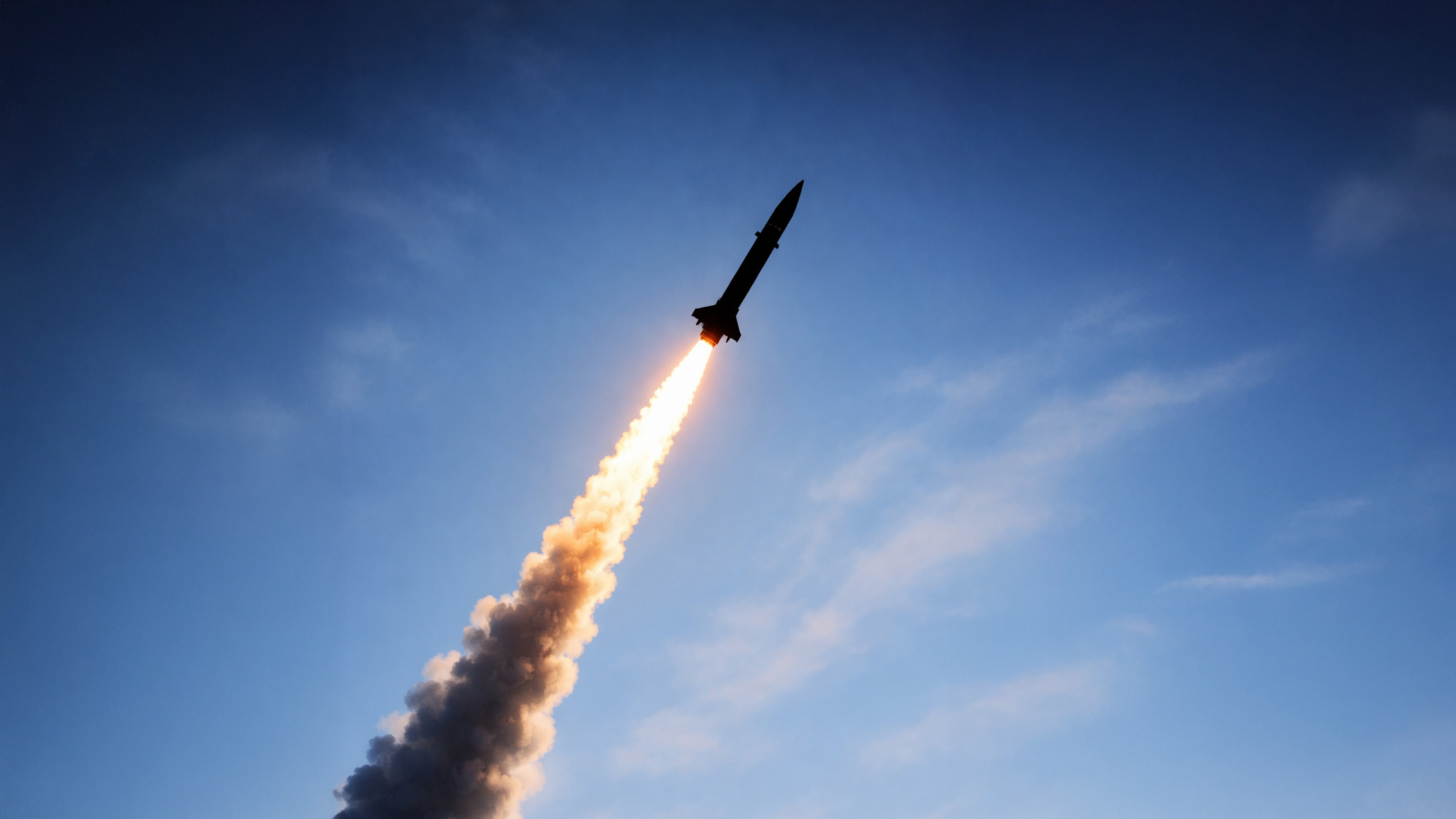
NATO Secretary General Mark Rutte has condemned the violation of Polish airspace by a Russian missile that crashed in a field in eastern Poland, saying the alliance will continue to strengthen its readiness to defend against any threat, including missile attacks.
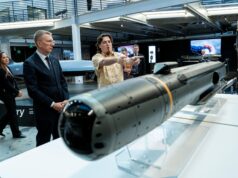
Image above is a file image of a generic missile, not illustrative of the weapon used.
Writing on X on 30 July following a conversation with Polish Prime Minister Donald Tusk, Rutte said: “Discussed with @donaldtusk the violation of Poland’s airspace by a Russian missile. Poland and #NATO activated their air and ground defences. We stand in solidarity with Poland and will continue to strengthen our readiness to defend against any threat, including missile attacks.”
He added: “This incident is yet another reckless act by Russia and a dangerous consequence of its war against Ukraine. I condemn last night’s deadly strikes across Ukraine. NATO continues to provide essential support so Ukraine can defend itself. Our commitment is unwavering.”
The munition came down in an undeveloped field near the village of Tarnawa-Kolonia in Lublin province, roughly 100 kilometres from the Ukrainian border, during one of Russia’s largest overnight aerial assaults on Ukraine in weeks. Polish authorities said the impact left a crater around 10 metres wide, with debris scattered across the surrounding field. Residents reported an explosion at about 4am that shook the windows of their homes, and sirens briefly sounded in nearby Lublin.
Visiting the site on Thursday afternoon, Tusk said the weapon was most likely Russian. “From the analysis of most of the traces, the recovered fragments point to a Russian Kh-101 missile,” he told journalists, according to the Irish Times. He added that there was “no reason to think the target was Poland,” and said Ukrainian fighter pilots had attempted to shoot down missiles approaching the Polish border.
Polish Operational Command said it detected an object approaching the border at 3:29am local time, coming within around five kilometres before turning back east toward Ukraine. At 3:40am a separate unidentified object was tracked moving westward inside Polish airspace, prompting a standby F-16 to be scrambled. The object disappeared from radar six minutes later, before the jet could make a positive identification, and an Mi-24 helicopter crew subsequently located the probable impact site.
CNN reported that NATO forces were seconds from shooting the missile down before assessing that it would crash on its own. Tusk told an emergency government meeting that “we were prepared to shoot down the missile if it had continued its flight,” according to his office.
Colonel Martin O’Donnell, a spokesman for NATO’s European headquarters, said in a statement that General Alexus Grynkewich, the alliance’s Supreme Allied Commander Europe, had spoken to Poland’s chief of defence and “underlined that NATO will continue to take all necessary measures to defend NATO territory.”
Setting out the response, O’Donnell said: “In response to a Russian missile of currently unknown type that entered Polish airspace and later crashed into Polish territory, one of many missiles fired by Russia at Ukraine overnight, NATO and Poland activated their air and ground defences.” He listed the aircraft involved as “two NATO fighter jets, which were Polish F-16s, a NATO Multinational Multi-Role Tanker Transport Unit Airbus A330 refuelling aircraft, a Polish Saab 340 Airborne Early Warning aircraft, and a Polish Mi-24 helicopter.”
Ukrainian Foreign Minister Andrii Sybiha was among the first to identify the weapon publicly, writing that a Russian Kh-101 cruise missile had crossed into Polish airspace. “This is yet another clear demonstration that strengthening Ukraine’s air defense now is urgent and serves as a guarantee for the protection of the entire Euro-Atlantic community,” he said, arguing the decision to bolster Ukrainian air defences must be taken without delay.
The incursion came during a mass Russian strike on Ukraine overnight into Thursday which killed at least eight civilians, including children, and injured more than 50, with casualty figures rising through the day. Russia’s defence ministry said it had carried out a massive strike using long-range precision weapons launched from land, air and sea, along with attack drones, against military sites in Ukraine. Moscow had not commented on the missile landing in Poland at the time of writing.
President Volodymyr Zelensky blamed insufficient or delayed air defence supplies for the deaths, renewing his appeals for interceptors as Ukraine contends with a shortage of Patriot munitions. He had stopped in Lublin, not far from the site of the following day’s crash, to meet Tusk on Wednesday as he travelled home.
Poland has faced repeated incursions during the war. In September 2025, after roughly 19 Russian drones crossed into Polish airspace and several were shot down, Warsaw invoked Article 4 of the North Atlantic Treaty, triggering formal consultations among allies. On this occasion Tusk convened an emergency coordination group and spoke with European leaders, saying that everyone had declared full solidarity and readiness to assist, but Poland had not invoked Article 4 while the investigation continued. The Kh-101 is an air-launched cruise missile carried by Russian long-range aviation and used routinely against Ukrainian targets, including in strikes on the western regions bordering Poland.
Tusk said Poland would maintain its support for Ukraine and would consider providing further aid, including additional Patriot systems.







Words words and more words. Send one back into russia, lets not muck about here, action!
Its giving NATO and allies good experience in confronting and shooting all these missiles and drones down. See whats effective and whats not. Be good to have more action with UK’s own GBAD environment. Needs more than just SkySabre allocated for the Army. What about a homeland defence regiment with shared missile inventory with the RN and RAF? Could even include coastal NSM defence.
Not sure what a proportionate response might be, Shoot a missile into an empty field in Russia – seems a bit pointless. Should we not save it for a point in time (if there is one) when Russia actually are aiming at Poland (or another NATO country.
It’s most likely an accidental incursion of some sort. Putin does not want NATO airforces joining the war.
Would that de-escalate or escalate further?
I am not sure.
This resulted in a crater in a field, nobody was killed.
Is that worth risking further escalation over?
Now if the missile had hit a town or a base resulting in deaths, then yes, some sort of demonstration response would be appropriate.
We’ve not openly retaliated for chemical weapon use on our territory or Russian sabotage and Drone flights, and Russia is sitting back without openly retaliating for our intelligence aid to Ukraine which is killing their people and destroying their assets at a magnitude faster than ours.
So NATO is winning. Cool heads needed.
Historically, Russia did not start World War three over repeated US and British incursions into their airspace either, and we did not retaliate when a Mig23 Flogger went rogue in 89 either, which was an accident like this might have been.
Does Poland not have the Aegis ashore (AA)system?
If not already doing so, share all tracks with Ukraine from AA and aircraft aams far into Russia and Belorus as possible.
Poland does have NATO AEGIS ashore system with SM3, I suspect if the missile had been going further it would have been intercepted. It might even be a goal of Russias to test SM3.