

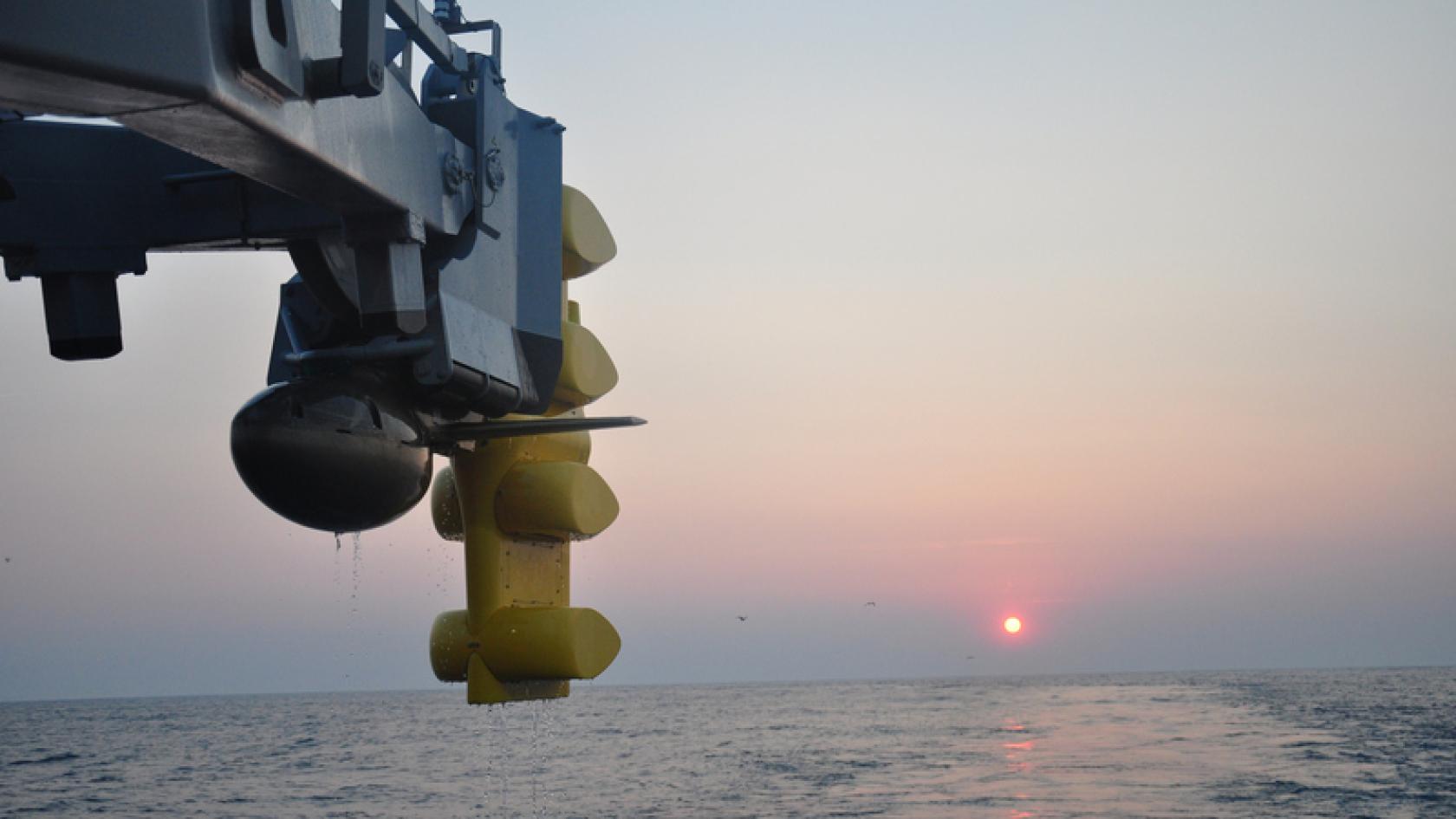
Thales Canada has been awarded a contract by Lockheed Martin Canada to supply the S2087 towed array sonar for the Royal Canadian Navy’s future River-class destroyers.
The S2087, also written as Sonar 2087, is a low-frequency variable-depth system from Thales’ CAPTAS family. With the selection, the Royal Canadian Navy becomes the twentieth navy to choose a CAPTAS variant, the company said.
The sonar is designed to detect and track quiet submarines at long range across both littoral and open-ocean conditions, and Thales describes its addition to the River-class as a significant boost to the anti-submarine capability of Canada’s next-generation surface fleet.
The award sits within Canada’s Defence Industrial Strategy and its Build–Partner–Buy framework, under which Ottawa is deepening cooperation with the United Kingdom and other European partners while seeking domestic returns through the Industrial and Technological Benefits Policy. Thales said it plans to work with Canadian industry to support the sonar across its lifecycle, with the aim of keeping maintenance and upgrade work under Canadian control. The company also linked the programme to a target of 75 percent fleet serviceability, attributing the sonar’s contribution to operational maturity and long-term supportability.
Ian Krepps, chief executive of Thales Canada, framed the system as filling a specific gap in the ships’ fit. “The S2087 adds a critical layer of capability to the River-class destroyers, ensuring Canada’s surface combatants are equipped to operate effectively in contested maritime environments,” he said, as quoted in the release. “As we deliver this advanced sonar system, Thales remains deeply committed to Canada—investing in local expertise, strengthening sovereign capabilities, and working alongside Canadian industry to safeguard the nation’s security for decades to come.”
Lockheed Martin Canada is acting as Combat Systems Integrator for the programme, leading a group of international suppliers to provide what the company calls an integrated, open-architecture solution built around the Canadian Armed Forces’ requirements. Stephen Isaacs, General Manager for Lockheed Martin Canada Rotary & Missions Systems, tied the choice to domestic industrial returns. “The River-class Destroyer Program delivers significant economic benefits to Canada, bringing advancements in Canadian technology and manufacturing all along the Canadian supply chain,” he said. “This selection is a prime example of how our partners contribute to that Canadian ecosystem.”
The interoperability argument rests on a shared design lineage. The River-class is the Canadian variant of BAE Systems’ Type 26 Global Combat Ship, the same baseline behind the Royal Navy’s City-class frigates and Australia’s Hunter-class. The S2087 is already in service with the Royal Navy and has been selected for the Hunter-class, so its adoption by Canada gives three Type 26 operators a common towed-array sonar and eases data-sharing among Five Eyes and NATO partners. The CAPTAS family itself was developed in partnership with the British, French and Italian navies, and Thales marked the order of its hundredth variable-immersion towed sonar in 2025.
The River-class will become the mainstay of the Royal Canadian Navy’s surface force, replacing the in-service Halifax-class frigates and the now-retired Iroquois-class destroyers.
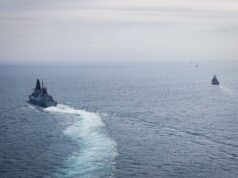
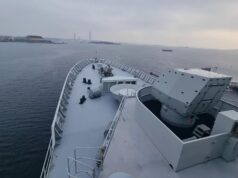


With the RN RCN RAN and RNoN all ordering the S2087 for their future frigates economy of scale, training and spare parts should come into effect. This should drive down cost for the current version and future development.
I’ve gained $17,240 only within four weeks by comfortably working part-time from home. Immediately when I had lost my last business, I was very troubled and thankfully I’ve located this project now in this way I’m in a position to receive thousand USD directly from home. Each individual certainly can do this easy work & make more greenbacks online by visiting
following website—.,.,.,.,.—>>> JobatHome1.Com
Just need the RCN to switch back to CAMM from RAM for some extra icing on the cake. 8×6 CAMM farms or ExLS.
Between 13 British and Norwegian T26 and 8 Canadian River class based in the Atlantic that’s gives us 21 of these ships patrolling the high north and reinforcing the UKGI gap, Bear GAP and North Western Passage to any Russian or Chinese SSN’s
That’s quite a force especially with USN and other NATO navies operating significant ASW assets in support further in south.
I just don’t see how Russia has much of a chance in the North Atlantic against a force like that.
Also the dozen new submarines (6 in the Atlantic) in the next 10-15 years and the dozen replacements corvette /light frigates for the Kingston class ( 6 in the Atlantic) for the RCN.
Seeing news nation very funny
Meteor strike fs no impact dust burn up wat makes it through its full of it never happened
Having you ol snake charmer
Its sweet I got a bitch i just need need sone 1 play with that no be yourself alot hot scumbags around point god love them god bless america
Some jet broken speed barrier happened last week some where video isnt real no 1 cares really keep them perky girls
Just call me jc from now on
Has anyone got a packet of imodium. Someone here is suffering from verbal diarrhea.