

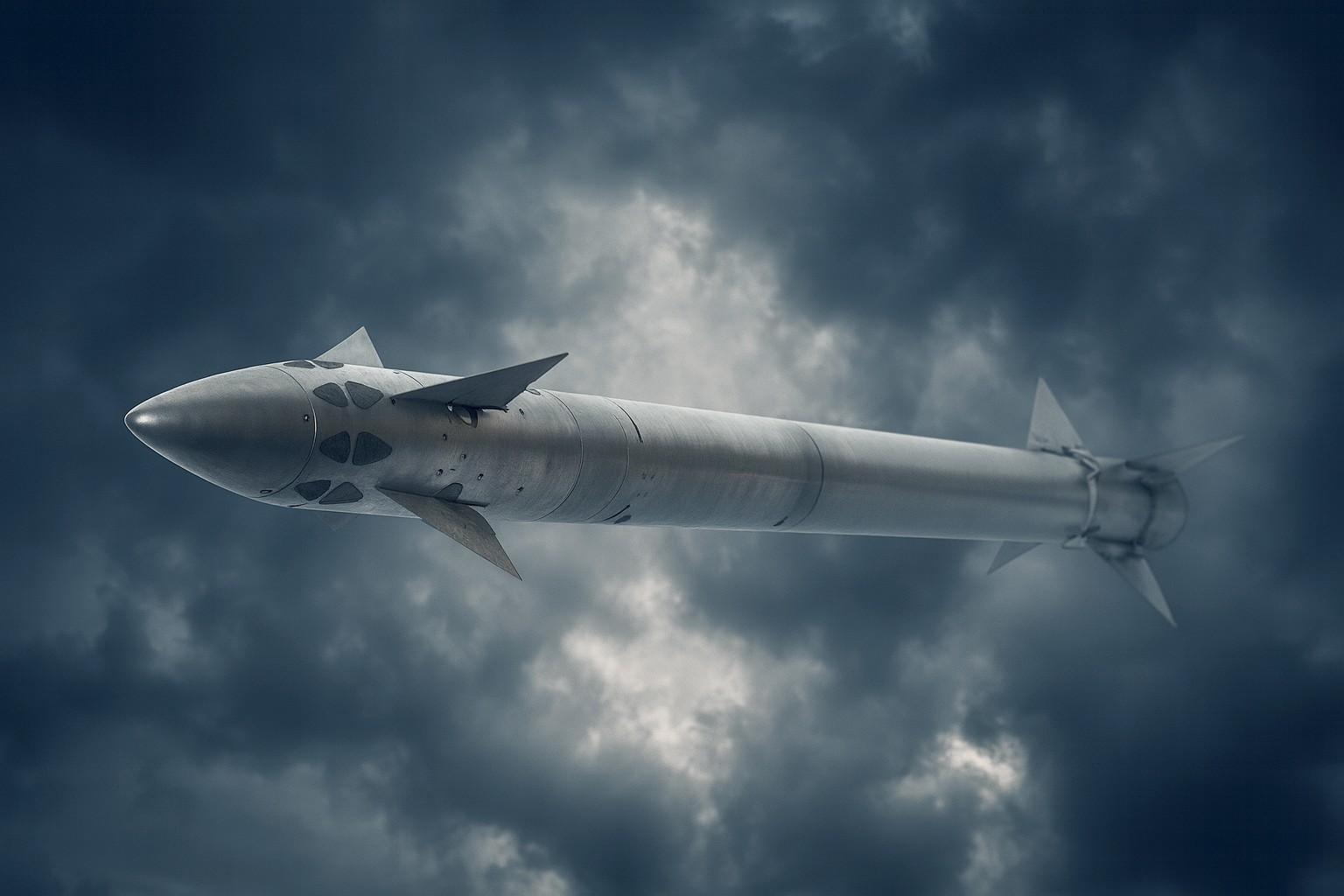
The Ministry of Defence has signed new contracts with Thales in the UK for hundreds more Lightweight Multirole Missiles, an order intended to rebuild stockpiles and support the air defence of British forces in the Middle East, according to the department.
The contracts, announced on 1 June 2026, are worth a combined £36 million. According to the Ministry of Defence, deliveries will begin in the coming months and run through 2026. The most recent agreement was placed by the National Armaments Director Group in May and follows a further order for the same missile in April.
The Lightweight Multirole Missile, known as LMM, is designed and built by Thales at its Belfast facility, where the work supports around 700 jobs. The department said the orders form part of a wider effort, run with the National Armaments Director Group, to strengthen resilience in munitions supply chains so that the UK can sustain operations alongside allies.
The LMM is a lightweight precision-guided weapon developed for use against a range of targets including small aircraft, fast boats and, increasingly, uncrewed systems. It has been adopted across all three British services, and is fired from the Royal Navy’s Wildcat helicopters as well as from ground-based launchers.
According to the Ministry of Defence, the missile has been used to defeat drone attacks in the Middle East, with more than 100 drones shot down using the weapon, including by RAF Regiment gunners operating the Rapid Sentry air defence system.
Defence Secretary John Healey described the orders as the government’s industrial partnership with the defence sector in practice. “Our UK defence industry is the backbone of our Armed Forces. This is our new partnership with industry in action,” he said. “We’re getting UK-built kit into the hands of our forces faster as we support good skilled jobs and drive growth across the UK. These interceptor missiles are battle-proven – successfully used in action by our RAF sharp shooters over recent months.” He added that the missiles would help British forces keep the UK and its partners more secure in the Middle East and beyond.
The contracts come as the UK has increased its military presence across the Middle East, with the Ministry of Defence reporting more than 1,000 personnel deployed in the region, among them fast jet squadrons and specialist counter-drone teams. British air defence assets have also operated from UK bases in Cyprus, where Wildcat helicopters carrying the missile have been used in the defence of bases and allied forces.
The LMM was originally developed for the helicopter-launched role before being adapted for ground and naval launchers, and its growing use against drones reflects a wider shift in air defence priorities. The proliferation of cheap uncrewed aircraft has placed a premium on interceptors that can engage them at low cost relative to larger surface-to-air missiles, and the LMM sits in that category.










Damn a good news story, that’s not going to go down well on here.
I’m sure they’ll find something to complain about lol.
Probably… “too few ordered”, “too long to deliver”, “not made in England”, “not hypersonic”, “no go-faster stripes”, “useless against submarines”, etc
The lack of promotion of the British knee is key issue and that requires the immediate spending of 100 billion on compulsory programme of knee measurement. The complete lack of action turning over the entirety of Gloucestershire to turnip production is OUTRAGEOUS. WHY OH WHY HASN’T THE GOVERNMENT IMMEDIATELY RESTARTED PRODUCTION OF (insert whatever piece of obsolete equipment you fancy). I hope you appreciate my depth of feeling on this issue.
I agree it’s outrageous that the planned Atomic Weapons Test Range (formerly known as “Gloucestershire”) has been turned over to turnip production instead.
‘Something something River-class OPV’ would be my guess.
Perhaps that the Rivers should all be upgraded to have LMM launchers?… plus the usual super-firing triple 16” gun turrets and belt-armour of course.
Approved. £15Bn to the Navy to procure new River Batch 3s with a lightweight LMM launcher in place of the 30mm.
Oh and mk41 too.
Mk41 for self-defence against ABM attack 👍🏻
Ah but have you considered the totally existent containerised CAMM that can just be glued to the deck and work immediately!?
Classic one around here.
Maybe fix float bags to the container and have it towed behind the River? Would make reloads at sea easier 😏
BAE Leander light frigate maybe?
😂
Ironically the first three comments on here are actually complaints of one type or another, that’s an assessment not a complaint by the way.
Standard Operating Procedure here 🤷🏻♂️
It’s a replenishment of stocks not an increase in stocks, hardly news worthy.
Nice try, it’s to replenish and increase stocks.
No it’s not.
Yes it is, the March order was for replenishment.
Replenishment, replacing stock that have already been spent.
Glad you looked-up “replenishment”, as now you might understand what the March order was. 🤞🏻
You clearly don’t understand this announcement is a re-hash of the orders from March. Replenishment =replace.
Wrong it’s not a re-hash. Clearly you’re incapable of reading an article before commenting 🤣
“ The most recent agreement was placed by the National Armaments Director Group in May and follows a further order for the same missile in April.”
i can see the fume now… its coming
I was expecting a bit more from the DIP, but it is what it is…
We are still looking at weeks for the DIP…so it looks like late june or early July.
We’ll probably be saying “next month” when we move into autumn. Hopefully not though🤞
What will be will be 👍
2027 or 2028? It needs to be later to kick the can to the next Government unless there’s been a takeover by then.
Don’t they have a big meeting of NATO in July, probably coincide with that a would have thought since baw heeds going to be there.
It’s been announced in the Commons they plan to publish before the NATO meeting… 🤷🏻♂️
Be interesting to see what they come out with to get the orange one to smile, or hopefully we argue like f#@k with him and tell him to do one.
Only Epstein knew how to get the orange one to smile…
The DIP is dripping out, one contract at a time 🤷🏻♂️
Isn’t this just replacing what’s been fired?
Is Starstreak being replaced by LMM in its entirety or are these being bought in anticipation of shooting down drones that don’t require anything too advanced?
No, I don’t think so. Starstreak remains as Stormer HVM combo.
The thing I’m wondering is whether they will order more Starstreaks for Stormer when the supplies get low or just use LMM instead.
I see. I do not know.
Officially it’s a supplementary to starstreak but who knows what the performance of LMM is against high performance tragets.
I don’t think LMM has the Tungsten Darts within Starstreak HVM, certainly not the high speed.
I’d put good money on it that LMM is a lot more capable against air targets than is offically said, given how the MoD and Ukraine can’t seem to get enough of them.
There’s also the question of how likely is a fast jet down low these days. Glide bombs are normal now and likely adversaries are unlikely to be operating under tight ROE that requires visual identification. The stated performance is more than enough to deal with helicopters.
With the exception of that one Iranian F-5 that supposedly pulled a Top Gun style canyon run to hit a US base, the chances are near-zero.
It’s probably fair to say the RAF and navy has shot off a fairly large number of these, with drone kills in the hundred and not tens reported..
It’s one of those UK weapon systems that went under the radar a bit.. but seems to be a bit of a mid 21c panacea.. just enough, effective against a wide range of targets, platform agnostic and very cheap.
It’s great news that rapid sentry is working so well and was developed so quickly and is in reality well beyond a cheap anti drone weapon but is a solid short range air defence system ( probably the true replacement for rapier ).
Keeping this production line hot and able to scale up is probably a really important national asset.
I do wonder when the army will decide that it’s got a huge anti drone and general strike capability in 1st regiment AAC and equipment all it’s wildcats with LMM
If they were maximising this, the RAF regiment would have batteries for every major airbase, the navy would have batteries for the 3 major port facilities and the army would have deployable units.. I would even go so far as to say their should be a reserve home defence set or batteries for some core civilian infrastructure we cannot lose.
Long range drones are going to be a thing and a cheap 8km range missile is probably the way forward to counter these..
In a future war you have to assume Russia would try and lob many hundreds of 2500km range 400-600kmph long range drones at the Uk and a Mach 1.5 8km range missile costing £50,000 is just the sauce for those bangers .
Agreed on all points.
Army has 2 Batteries of LML ( L M Launcher ) in 12 RA to fire LMM.
170 ( Imjin ) Battery which also acts as HQ Battery. ( Don’t know who they’re allocated to, if anyone. )
12 ( Minden ) Air Assault Battery. ( For 16 AA Bde )
Our Brigades remain mostly bereft of SHORAD cover as the 4 remaining Batteries in 12 RA on Stormer, Starstreak cannot cover all, two obviously are allocated to 12 and 20 Bdes, assume 7 Bde might have one? One of our posters, Ben, has remarked before that availability is a problem as well.
Stormer Starstreak was plentiful with hundreds in service and all manoeuvre Brigades covered until the cuts around 2004.
RAF Regiment has a handful, it is said 11 by the radar, in 34 Sqn as a part of 2 CUAS Wing.
I don’t know if any of the Army Reserve Batteries in 106 RA actually have allocations of the system.
That are nowhere near enough “Batteries” for every major RAF Station. Indeed, I understand the cupboard was pretty much cleared out to move most to the Middle East. Maybe the launchers will be spread a couple each if necessary.
RN bases protected, no.
There. I pleased the posters above with a “moan” which in reality is casting a critical eye and seeing through the spin.
Otherwise, yes, good news more are being ordered, they’re needed.
We have 11 Rapid Sentry systems and only 7 major UK air bases. Of our foreign air bases Only Cyprus is with in range of any drone threat (The RAF don’t operate Diego Garcia)
So we have enough for every RAF airbase, the system appears to be atleast as effective as Rapier ever was despite the fact it’s now our second tier system behind land Sky Sabre.
Sky Sabre did exceptionally well in defending Polish Airbases and it’s probably the best system in the world for defending airbases against low flying and saturation attacks. It’s an army system but it’s being operated as a purple capability.
Other than from Ballistic missiles UK airbases are probably better defended now than at any time since the Cold War.
Lossimouth.
Coningsby.
Marham.
Waddington.
Brize Norton.
Leeming.
Odiham.
Benson.
Cranwell.
High Wycombe.
Fylingdales.
Cosford.
Honington.
Northolt.
Shawbury.
Valley.
Plus 7 RRH plus Boulmer.
Do we actually know what constitutes a “system”? Beyond the 11 Giraffe Radar.
Don’t forget to add the critical logistic, nuclear, command, and communications nodes. All undefended.
Yes ballistic missiles are the big threat…
but then even the USA only has 44 GBIs for exoatmospheric interception of long-range ballistic missiles.
Hopefully its at least 2-3 launchers per each airfield thwn. As others have also suggested before maybe a marinised Rapid Sentry launcher with bit of ER treatment would be a goer? Pity Sea Streak never got up. Could LMM/Starstreak be adapted into SeaRAM?
I’ll be honest, I’m not really sure we face much of a drone threat on mainland UK bases- we’re too far away, with too many allied countries in between.
Cyprus, for sure, Bahrain, yes. But there’s no way an extended range Geran drone is making its way across Europe to strike Portsmouth. Or even up and around Norway and over the Faroes etc. to hit Lossiemouth.
We’re better fully filling out 3 Div and then 1 Div with proper amounts of AD that they may actually make use of.
How many is “hundreds?” As they say, 100 were used in just a couple of weeks in a low intensity (for us) conflict. In a high intensity conflict I assume we would go though these like hot cakes.
Ukraine are being sent stocks in the thousands over the course of their war, so take from that what you will.
One positive to comment on is that Belfast can seemingly ramp up production to meet this increased/accelerated production of hundreds of the missiles and complete them within the year- i.e. in the next 6 months. That’s really not bad.