

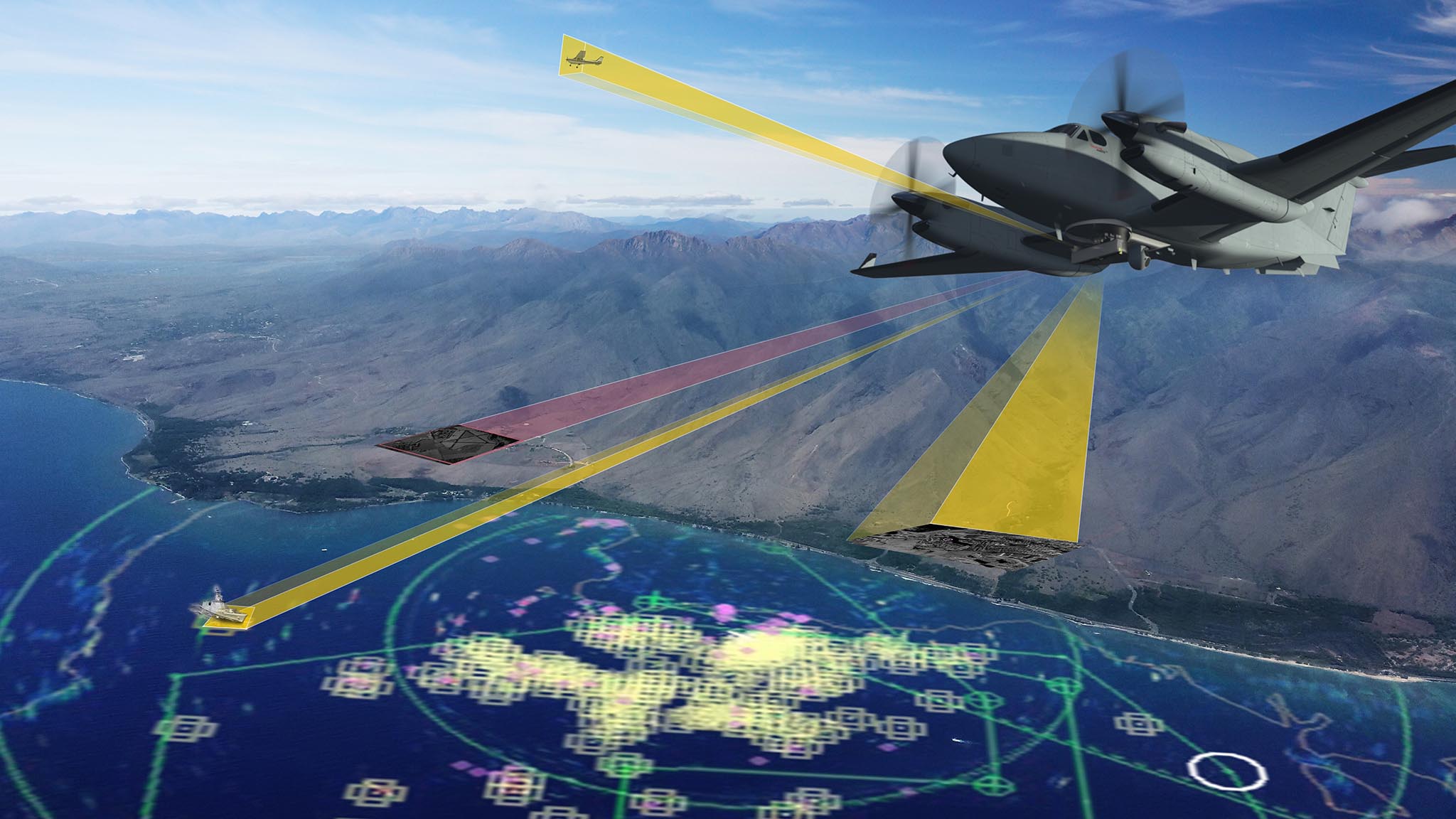
Leonardo’s Seaspray radar has been chosen to provide airborne intelligence, surveillance and reconnaissance for Australia’s Department of Home Affairs and the Australian Border Force, according to the company.
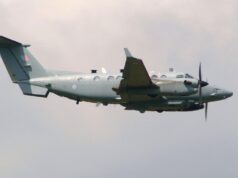
The radar was selected by Metrea, a provider of contracted military and security services, which will deliver the surveillance to the Australian government. According to the accompanying material, Metrea will operate eleven fully crewed aircraft providing short and long-range aerial surveillance under Australia’s Aerial Surveillance Service programme. The variant being supplied is the Seaspray 7500E V2.
Seaspray is an active electronically scanned array radar designed for air, sea and land surveillance. Leonardo describes it as software-driven and able to switch rapidly between modes, which the company says suits it to border security and maritime patrol where operators must track several types of target at once. According to Leonardo, the radar can detect contacts at hundreds of nautical miles, generate high-resolution ground mapping using synthetic aperture radar, and detect moving targets.
The company highlighted a Small Target Mode that it says can detect very small, low-signature objects such as people in the water or small boats at long range and in rough seas. That capability is central to the roles Australia’s border and maritime agencies perform, which combine the interdiction of unauthorised vessels with search and rescue across large stretches of ocean.
Alan Smith, Leonardo’s Head of UK Radar Campaigns, pointed to the company’s history in the country. “Leonardo has a long-standing relationship with Australia, having provided critical defence capability to the country for over a century,” he said, adding that the company was proud to supply the Seaspray 7500E V2 to the Aerial Surveillance Service programme and that it would enable Australia to monitor the maritime environment effectively.
The Seaspray belongs to a family of lightweight AESA radars that Leonardo has marketed for fixed-wing aircraft, helicopters and uncrewed platforms, and which has been adopted by a range of operators for maritime patrol and surveillance. AESA radars steer their beam electronically rather than by physically moving the antenna, allowing a single set to perform several tasks in quick succession, such as long-range search, detailed imaging and tracking, without the mechanical limitations of older designs.
Leonardo develops and builds its radars at sites in the United Kingdom and Italy, with its UK radar work centred on Edinburgh.



I’ve gained $17,240 only within four weeks by comfortably working part-time from home. Immediately when I had lost my last business, I was very troubled and thankfully I’ve located this project now in this way I’m in a position to receive thousand USD directly from home. Each individual certainly can do this easy work & make more greenbacks online by visiting
following website—.,.,.,.,.—>>> JobatHome1.Com
Which all goes to show what a great company Ferranti was….