

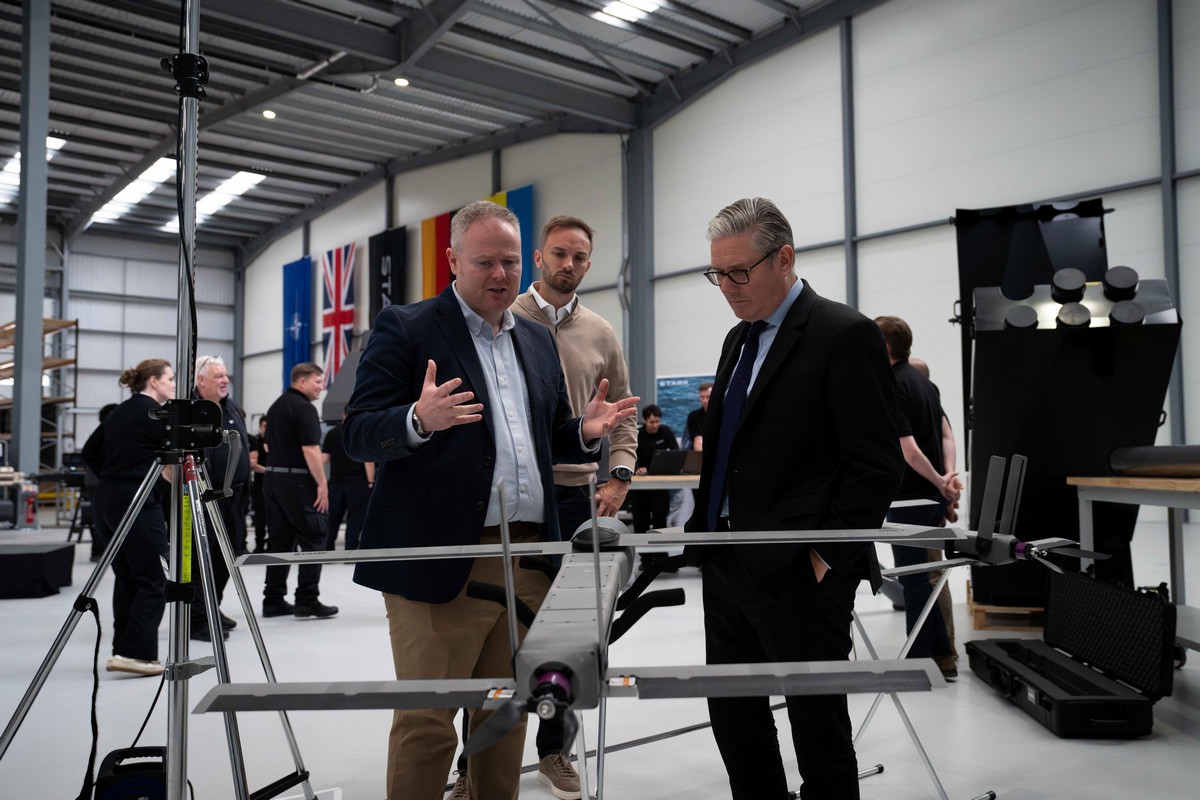
STARK, the European defence-tech firm with a fast-expanding production site in Swindon, has unveiled two new unmanned systems aimed squarely at NATO forces, a tube-launched loitering munition designed to reach as far as a hundred kilometres and a man-portable quadcopter for surveillance and short-range strike.
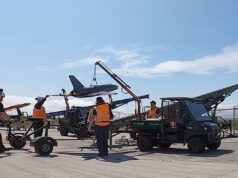
The first of the new systems, Cascade, is a tube-launched loitering munition that the company says can be fielded in three range options of 40, 60 and 100 kilometres, depending on configuration, with an endurance of up to an hour, a payload of up to 4.5 kilograms and a launch-to-ready time of under a minute. According to STARK, the munition is intended to give small mobile units the kind of reach normally associated with heavy artillery, at what it describes as a fraction of the cost of more conventional long-range weapons, and is meant to be aimed at command posts, logistics hubs, artillery positions and air-defence systems sitting behind the front line.
Cascade can be fired from a single tube, from a multi-cell launcher or from a containerised system mounted on a vehicle or a ship, and the company has now teamed up with Force Development Services, a UK engineering SME based in Hampshire, to build a six-cell launcher allowing several rounds to be sent off from a single platform on land or at sea. STARK has already demonstrated launches from its own Vanta uncrewed surface vessel, an indication of how the munition is meant to be used from light, distributed naval platforms rather than the conventional naval gun-line.
The second system, Gambit, is a lightweight quadcopter built for intelligence, surveillance and reconnaissance and for short-range precision strike at ranges of up to 25 kilometres, weighing six kilograms with a payload of up to two and a launch-to-ready time of under five minutes. STARK says the drone is designed to be carried by frontline operators and to keep working in environments where the GPS signal is jammed or spoofed, the kind of electronic-warfare conditions that have come to define the airspace over Ukraine.
Both systems are tied together by STARK’s Minerva command-and-control software, which the company says lets them operate alongside other unmanned platforms across land, air and sea and to be flown in coordinated swarms, with a single operator able to handle several aircraft at once. The chief technology officer at STARK, Johannes Schaback, framed the launches in terms of lessons drawn directly from the war in Ukraine, saying “the lesson from Ukraine is clear” and that modern armed forces needed weapons that could be built quickly, adapted on the fly and fielded in numbers.
The announcement was timed to follow a visit by Prime Minister Sir Keir Starmer to STARK’s Swindon facility, where Starmer told staff the country needed to stay “ahead of the game, ahead of the curve” on military capability for now, in five years and in ten, and used the visit to pledge that the government’s long-trailed Defence Investment Plan would be published within weeks. The Minister for Defence Readiness and Industry, Luke Pollard, struck a similar note, saying the UK-German collaboration combined the two countries’ industrial expertise and was “good for British workers, good for our defence sector”, framing it as part of a wider push to underwrite skilled defence jobs in the UK.
Claire Hemmings, managing director of Force Development Services, said the speed of STARK’s development cycle set the partnership apart, with capabilities, in her words, evolving “every few weeks, not every few years”, and her firm’s engineers working alongside STARK’s to get the new launcher into operational use.





The British garden shed strikes again 😀
It’s astounding just how many drone products the UK is making. The procurement strategy needs to be like it was in the early days of aircraft, ordering lots of different types from different suppliers to see what works and use Ukraine s the proving ground.
Well it’s what we are good at, growing such businesses beyond a 5 year sell out is what we suffer to succeed at.
I thought Tony had left the arms business 😉
It took me a second…😁 boom.