

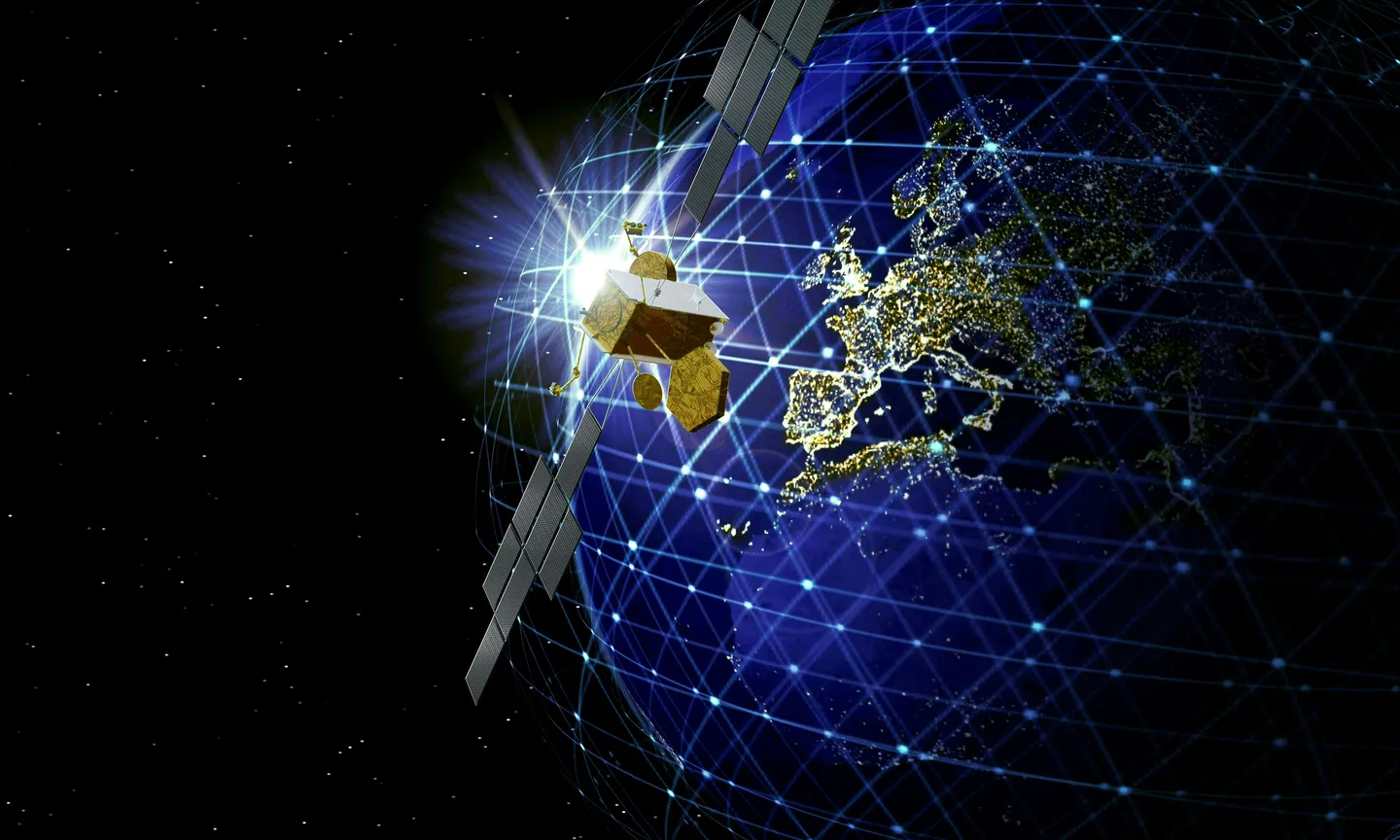
The Ministry of Defence has acknowledged that proposed international changes to satellite interference rules carry the potential to affect British military communications during conflict, telling Parliament the risks are recognised within its programmes and are being actively managed, the Ministry of Defence has said.
The Minister for Defence Readiness and Industry, Luke Pollard, set out the position in written answers to the Reform UK MP for Romford, Andrew Rosindell, who had asked what assessment had been made of the impact of the proposed changes on UK military communications, and who holds ultimate responsibility for the country’s sovereign satellite capability.
Pollard said the department was aware of proposals being considered by the International Telecommunications Union and the wider space industry “that have the potential to impact both military and civil satellite communications”, with growth in demand for spectrum across both space and terrestrial telecommunications driving the need for additional bandwidth. Those risks, he said, were “recognised within Defence programmes, including SKYNET”, and were linked to the government’s broader reliance on “assured access to the electromagnetic spectrum”.
To mitigate the risks, the minister said, the department was “actively engaged in international regulatory processes” and worked closely with the communications regulator Ofcom, other government departments and allies, while developing technical evidence to inform UK positions. The risks, he added, were “formally managed within departmental risk frameworks”, with mitigation measures being developed through cross-government and cross-programme collaboration.
In a second answer, Pollard confirmed that responsibility for Defence’s sovereign satellite capability “rests with the Secretary of State for Defence”, and that the department worked with colleagues across government and industry to shape the UK’s position within Ofcom and the International Telecommunications Union on regulatory and spectrum matters, coordination he said supported the protection of satellite assets critical to national security.


after Russia recent failure in space its interesting how the UK remains one of only two countries with a LEO satellite providers. I will admit I was skeptical at the time that Domonic Cummings bought One Web but its worked out well. Hopefully the UK government continues to support One Web and use its gold share to add significant military capability to the system. One Webs polar focus should also be very useful for UK and ENATO security.
The last thing the world needs is having all LEO satellite communication in the hands of drug riddled, debt laden James bond super villain like Elon Musk.
I’ve gained $17,240 only within four weeks by comfortably working part-time from home. Immediately when I had lost my last business, I was very troubled and thankfully I’ve located this project now in this way I’m in a position to receive thousand USD directly from home. Each individual certainly can do this easy work & make more greenbacks online by visiting
following website—.,.,.,.,.—>>> JobatHome1.Com
China is the top contributor to the ITU.
I’ve gained $17,240 only within four weeks by comfortably working part-time from home. Immediately when I had lost my last business, I was very troubled and thankfully I’ve located this project now in this way I’m in a position to receive thousand USD directly from home. Each individual certainly can do this easy work & make more greenbacks online,,, by visiting
following website—.,.,.,.,.,.,.,.—>> PayAtHome1.Com
Why must you incessantly lie? 🤥
Member States alone account for 68.4% of ITU’s total revenue in 2026. The largest donors are the United States (35 units, amounting to CHF 11.1 million per year) and Japan (30 units, CHF 9.5 million), followed by Germany (25 units; nearly CHF 8 million), France (21 units; CHF 6.7 million), and China (20 units; CHF 6.4 million). Other major donors include Italy and the Russian Federation (each contributing 15 units, or CHF 4.8 million per year), Australia and Saudi Arabia (13 units; CHF 4.1 million), Canada and Brazil (11 units; CHF 3.5 million), and India, the Republic of Korea, Switzerland and the United Kingdom (10 units; CHF 3.2 million) .