

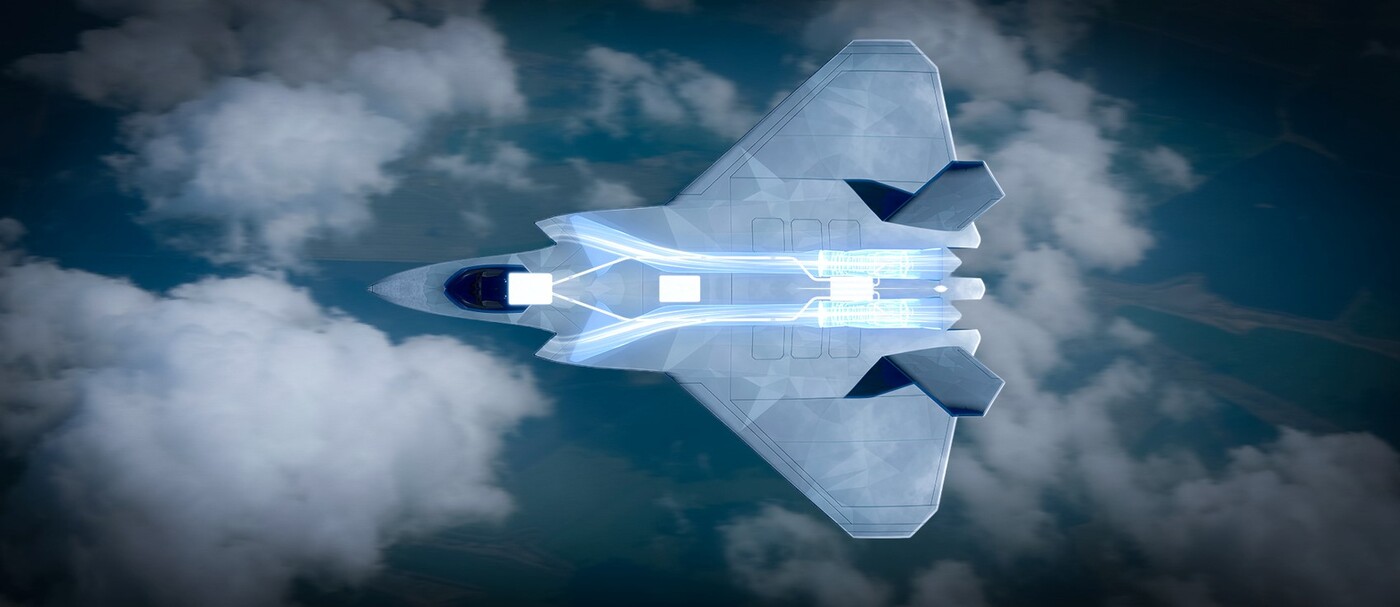
The consortium developing the power and propulsion system for the Global Combat Air Programme has moved a step closer to ground testing its engine demonstrator following a series of design reviews, Rolls-Royce stated.
Avio Aero of Italy, Japan’s IHI Corporation and Rolls-Royce make up the consortium, which according to the company is driving the change in power and propulsion required for the next-generation combat aircraft being developed under GCAP. The company states that by strengthening their collaborative approach and reaching technological milestones, the partners are advancing capabilities intended to underpin the future security of the three nations.
Rolls-Royce describes the engine demonstrator as the point at which lessons drawn from its Orpheus programme are being scaled internationally. According to the company, Orpheus serves as a test of new working methods and agile engineering processes, with the rapid learning model developed through it directly shaping technology development and reducing risk for future aircraft. The consortium’s work is intended to culminate in ground testing of the demonstrator to gather data needed to de-risk the wider programme.
Alongside the international engine work, Rolls-Royce is supplying two modified EJ200 engines for the UK’s flying combat air demonstrator under the Future Combat Air System. The EJ200 is the powerplant used in the Eurofighter Typhoon, produced by the EuroJet consortium, and its adaptation for the demonstrator aircraft allows the airframe to fly without waiting on the next-generation engine.
That demonstrator is being built by BAE Systems and the Ministry of Defence with Rolls-Royce and MBDA at Warton in Lancashire. Team Tempest partners confirmed this week that around half of the main aircraft structure is now in final assembly, with more than 11,500 parts designed to date accounting for roughly 90% of the aircraft’s overall weight.
GCAP was formed in December 2022, bringing together the United Kingdom, Italy and Japan to develop a sixth-generation crewed fighter intended to replace the Typhoon in British and Italian service and the F-2 in Japanese service, with an in-service target around 2035. The programme is overseen by a trilateral government organisation headquartered in the UK, with industrial delivery running through a joint venture formed by BAE Systems, Leonardo and Japan Aircraft Industrial Enhancement Co.
Propulsion has been structured along the same trilateral lines, with each nation contributing an established engine manufacturer. The design reviews now completed represent the point at which the three companies’ separate work converges on a common demonstrator configuration ahead of hardware testing, a stage that will establish how the technologies developed in each country perform as a single integrated system.










Is It Electric ?
I know we used to have an Electric lightning once…
We were so ahead of the times back then.
No, plug-in hybrid.
Ahh…. must be on a “long Lead” then.
No wonder It’s taking so long.
Oh I think it charges itself when it flies over electricity pylons. 🙂
Enemy pays.
Nah, solar panels. That is why they chose a Delta-Wing design, greater surface area.
good plan.
It does 68 miles on electric power and 2000 on normal fuel😏
Plant based Bio fuel I Hope 🤔😇
What I’ve heard so far doesn’t put it very far from a self-charging hybrid, with a big power storage, management and generating system to power DEW etc.
English Electric what a name that was, I go all weak at the knees.
It’s a great name…..other contenders: Handley Page; Pratt & Whiney; General Dynamics; Blohm & Voss amongst many others 🙂
It’s a great name…..other contenders: Handley Page; Pratt & Whiney; General Dynamics; Blohm & Voss amongst many others 🙂
It’s a great name…..other contenders: Handley Page; Pratt & Whiney; General Dynamics; Blohm & Voss amongst many others 🙂
Ah yes …. I fell in love with the Lightning as a 13 year, sat right by the runway as the L.T.F F3 took off and accelerated in the vertical, punching a blue hole through the grey overcast…
Those twin Avons shaking your very soul and making your eyeballs rattle in your skull…
Absolutely wonderful, made the hairs on the back of your neck stand up.
Ok. You got me again. It took a minute to sink in, but that was pretty funny.
Also, those old planes were pretty cool. I vaguely recall that they could actually super-cruise before super-cruise was actually a thing.
Will all 3 companies own the IP rights to the engine? If one company decides to use the engine for another project will they need permission from the other 2 companies? Don’t really know how these arrangements work when multiple companies who produce the same thing work together.
In programmes like this, each company normally keeps ownership of the IP it brings into the project (‘background IP’), while any new technology developed jointly is covered by the partnership agreement (‘foreground IP’).
The EJ200 used in Typhoon is probably the best example. It was developed through the EuroJet consortium (RR, MTU, Avio and ITP), but that doesn’t mean one company can simply take the complete engine design and use it elsewhere. The consortium has agreements covering IP and future use.
GCAP is likely to work in a similar way with RR, IHI and Avio.
If one company wanted to use the engine or technology elsewhere, it would depend on the rights agreed within the partnership.
GIGO owns the IP for the engine that will eventually power Tempest, GIGO is made up of 3 Countries ergo each country owns an equal share of the IP.
Sovereign Production: Every country has the legal right to manufacture the engines domestically to supply their own air forces.
Independent Maintenance: Each nation can modify, repair, and upgrade the engine software or hardware locally without paying royalties to the others.
Mutual Protection: No single country can take the joint engine design and sell it to an outside nation without a unanimous agreement from all three partners.
and in answer to your other question: If one company decides to use the engine for another project will they need permission from the other 2 companies?
Yes, they would absolutely need permission from the other two countries to do that. Because the final engine design is jointly owned by all three nations through GIGO, no single country can legally “copy and paste” the design into a different, non-GCAP project on their own.
The rules for using the joint engine IP on another project break down into two strict categories:
The Core Engine Design (Requires Unanimous Permission)The Rule: If the UK, Japan, or Italy wanted to take the complete, finalized GCAP engine and put it into a domestic drone, a different bomber, or a naval ship, they would need unanimous approval from the other two partners.
Why: The engine contains proprietary technology and blueprints co-created in the shared collaboration hub [rolls-royce.com]. Using the joint IP outside of the agreed GCAP program would violate the trilateral international treaty.
Individual Components (The Exception)
The Rule: A country can reuse specific engine technologies, but only if they exclusively invented them before the project or outside of the joint hub (Background IP)
Example: Japan’s IHI Corporation can freely use its proprietary Ceramic Matrix Composites (CMCs) on a domestic commercial airliner project without asking permission, because Japan owns that material recipe independently. However, they could not use the specific shape of the turbine blade they co-designed with Rolls-Royce.
The Ultimate Safeguard:
This permission rule is designed to protect each nation’s multi-billion dollar taxpayer investments. It ensures that one country cannot take the fruits of the joint trilateral research and use it to gain a unilateral military or commercial advantage elsewhere.
thankyou for your informative post
There seems to be a moderate amount of confidence and progress coming out of this project.
Agreed. A rare glimmer of optimism, which is quite welcome
Probably because there’s an acceptance there is no other viable option. They simply have to make it work. A lack of a cheap alternative does wonders to focus the mind!
The agreement has been made and all good, it is a still a wonder to me how 3 aero engine companies share their innermost secrets to jointly produce an advanced engine.
In the Car Engine industry, this Is pretty common.
Well there has been some disagreement amongst Japan and Italy about Roll’s unwillingness to share IP but does look like accommodation has been found. As said elsewhere urgency and necessity for all concerned does tend to focus the mind somewhat.
If ego is put to one side it’s amazing the progress that can be made. Keep ALL politicians out and let the scientists and engineers enjoy themselves. That how countries get a vision and produce “growth”. Politico’s could learn a lot from that! – having jobs they enjoy for it’s own sake.
I think that’s a right wing fallacy- like the money always trickles down. Ai companies, spacex, apple, anduril etc get huge grants from the us government. Our problem is we think our government shouldn’t get involved – perhaps that’s what America wants us to think – so that we have to buy their bits and bobs.
Spot on Chris, SpaceX only exists on money provided by the Govt in various firms, it has never made a real profit, it generates money at best from the stock market based (other than Musk’s mythical or outlandish predictions) on the the fact that there is confidence the US Govt will keep propping it up through necessity as it’s the only present large scale launch provider for its satellites. Musk even wants the Govt to actually own shares in it. Indeed they have taken investments in other defence companies and Govt keeps many of those companies even viable.
Rolls Royce have been developing an adaptive cycle engine for nearly two decades.
The Americans are already there, we’re in well in the frame.
Hope It’s a V12 again….. nothing sounds better than a V12 Merlin.
Agreed, but a Hinckley triple is also very pleasant!
Alas it is not to be. Someone broke it to me here a few weeks ago: the GCAP engine will not be adaptive cycle. Apparently the embedded electrical and thermal management systems take up a lot of space and they were deemed more important than adaptive cycle.
Adaptive cycle is not that important. You can always just add more fuel. Power and cooling is much more important.
Yes. I was really pissed off when I first heard and had a little rant, but I looked up the engineering trade offs and fair play, probably the right choice.
Yup, an adaptive cycle engine is dead weight and it also takes up more space internally, that’s why they ditched it for tempest. if the yanks were smart they would ditch it too.
You can bet a bit like having a tail on it all the “freedom boos” and Boeings marketing department will instantly claim it’s not 6th generation because it doesn’t have an adaptive cycle.
Just like they claimed no airplane with canards could be 5th generation then Boeing puts canards on the F47 and suddenly they are the best thing since sliced bread.
Engineering is always a trade off. BAE has been flying tailless aircraft for twenty years. Rolls Royce had adaptive engines prototypes dating back to the F136 15 years ago. If Tempest lacks adaptive cycle engines and selects a tail in the design it’s because they decided the trade offs were not worth it. Not that they couldn’t build it.
Same s**t as in World War II where the Americans mocked our armoured carriers until they tried to put a fleet of Okinawa and found out the 5th fleet would not last very long against kamakazies no matter how many Essex class they built. America built armoured decks on every carrier it ever built after 1945 and incorporated the British strength deck concept into the Forrestal
A USN liaison office at the time allegedly said that, a US carrier gets hit by a kamakaze and its 6 months in Pearl fo repairs, a British carrier gets hit by a kamakaze and its all hands stand by your brooms…
Some I read a few years ago.
Also Google AI just said this in connection to RN operations in support of the Okinawa Campaign,” British fleet carriers featured heavy armored steel flight decks. While this reduced the total number of aircraft each ship could carry compared to U.S. wooden-decked carriers, it made them remarkably resilient to kamikaze impacts, allowing them to quickly sweep away debris and resume operations.”
It all rather plays down that fact the a strike on a RN carrier deck still killed many people and it could take hours to get the flight deck fires under control and extinguished before anything could be swept up.
Okinawa seems to have had a unique quality of horror about it.
CR
To be fair and I only knew this earlier this year, they incorporated their armoured deck differently to the way we did it when they finally went for it so it wasn’t an inherent part of the hull thus (being bigger too) giving more hanger space which was the disadvantage of our carriers but as you say against Japan proved a massive advantage. Their theory was that a larger air wing was a better defence against attack than limiting your air wing by that armoured deck. Probabaly had some logic till the kamikazes struck.
Yes, on British carriers the hull only stopped at the flight deck but on American ones it stopped at the lower hangar deck and everything above there was effectively superstructure.
The main difference, is that you can make an adaptive cycle jet engine smaller and therefore lighter, than a comparable traditional powered engine. The adaptive 3 flow engines being “built” for the F47 by GE and P&W build on the techniques used to develop the F22 and F35 engines. Both aircraft had the option of going down the adaptive cycle route, but both chose relatively standard low bypass turbofans. I think the reason was two fold, mechanical complexity and cost. The USAF wanted a reliable engine that had a longer duration between engine out maintenance periods. They definitely got that with the P&W F119 that powers the F22, not so much with the P&W F135 used in the F35. Which was based on an enlarged version of the F119 core, but with a much larger 1st stage fan. This gave the engine a higher bypass ratio, where the larger volume of bypass air was used for avionics cooling and reducing the exhaust flow temperature. But as the aircraft’s weight increased, placed greater strain on the engine, as it had to run hotter to produce the power. Which was then seen with the engine’s turbine section developing microfractures and needing earlier than planned replacements.
General Electric (GE) in partnership with Rolls Royce (RR) designed the F136 engine, which was the competitor to the F135 engine. It was not an adaptive cycle engine. But made greater use of ceramic matric composite parts. Which gave it it a much higher operating temperature and thus it could generate more thrust compared to the P&W F135. It would also allow the jet to either cruise at a sustained supersonic speed for longer, or reach a higher top speed. It would have been a safer bet than the F135 as it could run a lot hotter and cope better with the aircraft’s weight growth.
The adaptive cycle idea was originally going to be used in the F35’s engine upgrade. But again on cost grounds the US has decided just to update the current F135 engine. Besides the adaptive cycle engine wouldn’t fit the F35B, meaning we would have ended up in the same situation faced between the Sea Harrier and the GR5/7/9. Where the larger Pegasus couldn’t be used in the smaller Sea Harrier frame, i.e. the F35A and C having different engines to the F35B.
What does the adaptive cycle 3 flow engine really bring to the party? The use of the 3 streams is as follows, the 1st stream is used by the engine’s core. The 2nd by-passes the engine’s core as per a normal turbofan. The 3rd stream also bypass the engine’s core as per the 2nd stream. But the 2nd stream can be diverted back into the engine’s core. Thereby increasing the volume of air that can either be mixed with the fuel, or used for directly cooling the turbine section. Both methods will increase the engine core’s thrust. Whilst the 3rd stream is kept purely for avionics cooling and mixing with the hot section exhaust to reduce its temperature. In essence an adaptive cycle engine can vary the bypass ratio and give the engine a pseudo turbojet mode. Meaning good for high power and high altitudes, but also having the ability for better fuel efficiency and cruising. As well as producing a much smaller and lighter engine, with a much larger overall thrust output.
A 3 stream adaptive cycle engine will always be more efficient and powerful that a traditional 2 stream engine. As you have much better air management. Plus to make comparable thrust, a 2 stream engine will have to be bigger and won’t be as fuel efficient. From what I’ve heard of GCAP, the cost of the adaptive cycle engine is the critical factor.
You make some great points about the thermodynamic advantages of a three-stream adaptive engine, especially your breakdown of how the third stream varies the bypass ratio and helps with cooling. However, your claim that adaptive cycle engines are inherently “smaller and lighter” contradicts the physical reality of aerospace engineering.
Here is why a 3-stream engine is actually bulkier, and why that matters for GCAP:
1.The Physical Weight Penalty of the Third Stream
To get a third stream of air, you cannot just code it into the software. You have to physically wrap an entirely separate outer duct, variable-stator fan blades, and complex geometric splitters around the engine core. All that extra titanium, carbon-fibre ducting, and hydraulic actuation hardware makes an adaptive engine wider and heavier than a traditional 2-stream engine of the same thrust class [1]. This creates a zero-sum game inside the fuselage: a wider engine bay naturally pushes into the space normally reserved for internal fuel tanks.
2. The Real Reason the F-35 Adaptive Upgrade Failed
You actually hit on the proof yourself when mentioning the F-35B [1]. While cost was a factor, the real nail in the coffin for putting an adaptive engine (like the GE XA100) into the existing F-35 fleet was physical volume. The engine’s outer third-stream plumbing was too bulky to fit the F-35’s tight engine bay. Shoving it in would have forced engineers to redesign the structural bulkheads and shrink the surrounding internal fuel cells, erasing the exact range benefits the engine was supposed to bring.
3. Why GCAP is Sticking to Two Streams
The GCAP team (Rolls-Royce, IHI, Avio Aero) isn’t avoiding a 3-stream engine because a 2-stream engine has to be “bigger” to match the thrust. They are doing it to keep the engine profile narrow and save internal volume for fuel. Instead of using a bulky, heavy third airflow channel for power and cooling, GCAP is relying on ultra-advanced metallurgy and an embedded electrical starter-generator buried right inside the core. This gives them the massive megawatt power they need for advanced avionics without adding the structural thickness and drag of a triple-stream layout.
Great detailed posts, both DB and BM.
Great detailed posts, both DB and BM.
And add in Magenta.
Hi BM, I kind of disagree with some of the the context, but also agree to a point.
1. A lot of the weight issue comes down to the performance requirements of the engine. If you just want an engine that develops 10,000lbs of thrust. I agree a two stream engine is significantly less complex. But think of a three stream system like variable valve timing (VVT) of a 4 stroke engine. Where some VVTs are quite simple whilst others control both intake and exhaust valves along with valve open length and duration. With the aim of giving a smaller displacement engine the power of a larger engine. In essence with an adaptative cycle engine, you can use a smaller diameter engine to develop the same 10,000lbs of thrust as the two stream engine. The complexity of introducing the 2nd (middle) stream back in to the engines core can be made relatively easy, if just injecting in to one area, say the high pressure turbine for blade cooling. However, when introducing the air to the high pressure compressor section or even the combustion section, makes life that much harder. As you quite rightly point out the valve actuation system and ducting will add a lot of bulk, weight and complexity. But does mean the engine can be made either more fuel efficient or has the ability to run a lot hotter to generate more power.
There is a problem with the F35’s F135, it doesn’t develop enough power. The aircraft’s predicted weight growth and avionics cooling demands were way off. As a consequence the engine is needing to run a lot hotter to produce both the power needed, along with the cooling air needed for the avionics. This was exasperated with the F35B’s F135-600 version. Which was doing longer that expected times spent in the hover. This additional demand and time at high power, meant the high pressure turbine was running hotter for longer and developing microfractures. The engines used in the F35A and C were also beginning show the same problems, but much later in engine’s life. Pratt and Witney (P&W) had a fix, which was designed as part of the engine’s mid-life upgrade and had to be introduced much earlier in the engine’s life cycle. The new hot section and software upgrades to the engine’s computer software are “expected” to mitigate the hot running issues.
2. The hot running issues was part of the reasoning for going down the adaptive cycle engine route with the XA100 and XA101. As the Adaptive engine could in theory develop a lot more power than the 2 stream engine in “relatively” the same volume. However, the adaptive engines were wider in diameter to use up the space available in the F35A and C airframes. But the F35B’s engine bay is a lot tighter than the other two versions, so these engines won’t fit. P&W have said the planned upgrades to the F135, will generate up to an additional 10% in thrust. Whereas the Adaptive engines requirements were for a minimum of a 10% thrust improvement. With the wider cores and 1st stage fan, the adaptive engines were showing improvements well over 10%.
If the replacement adaptive engine hadn’t been cancelled, it would mean the F35 fleet would then be running two different engines. Thus doubling the logistics, maintenance burden and costs. The Joint Project Office (JPO) decided that this would not be suitable, especially after P&W stated they could further develop the F135 to meet the JPO’s requirements. So for the moment the F35 will keep the F135 engine.
3. I’m still fairly adamant that GCAP won’t be getting an adaptive engine primarily due to development costs. But I think another reasonable argument could be time. A two stream jet engine will take considerably less time to develop than a 3 stream adaptive cycle jet engine. Especially when you consider that the expected 1st flight is around the early 2030’s. Meaning there’s not a lot of time to design, develop and then manufacture an engine ready for the GCAP’s ground runs and then first flight. The EJ200 will simply be too small and “weedy” to power GCAP, a much larger engine will be required. A 2 stream engine will be faster and less risky route to meeting the schedule dates.
I fully expect the GCAP engine to be in a similar vein to the F135, with for a fighter engine, a fairly large bypass ratio. Plus with the expected weight, to be at least double that of a Typhoon. The power needed will require an engine with a 1st stage fan much wider than 100cm, more than the F135 at 43″ (109cm), probably closer to 50″ (127cm). So I’m expecting to see a dry thrust figure around 35,000lbs and on afterburner near 53,000lbs.
Appreciate the detailed breakdown, DaveyB, and the VVT analogy is a really clever way to look at it. Your point about the F135’s thermal management issues and the nightmare of maintaining a split engine fleet for the F-35B is entirely correct.
However, a 50-inch fan diameter for GCAP would be absolutely massive—that is pushing into the territory of regional commercial airliners. If you look at the F-22’s F119, it kept the fan diameter to around 39 inches specifically to manage supersonic wave drag and fuselage cross-section. Shoving two 50-inch engines into GCAP would leave almost zero internal volume for those deep weapon bays or fuel tanks, while completely ruining the aircraft’s stealth profiling.
The real innovation Rolls-Royce and IHI are pushing isn’t massive physical scaling, but energy density. Through the E2SG programme, they are burying high-power electrical starter-generators right into the core streams. This allows them to harvest massive electrical power for advanced avionics and cooling without needing a massive, drag-inducing commercial-sized fan or a bulky third airflow duct. It is about keeping the airframe sleek while maximizing internal energy generation.
Hi BM, I’m kind of basing my engine assumptions on the expected weight of GCAP. Where I believe it will be a lot closer to size and weight of the F111, due to the range and weapons bay requirements, than the smaller and lighter F22. But wrapped up in a very low observable outer mould line, more in keeping with the F22. If the three GCAP Nations require the aircraft to be more than a missile truck, i.e. be supersonic and have some aerobatic ability. The engine will therefore need to be a lot more powerful thrust wise than the Typhoon’s EJ200, or for that matter the F35’s F135. Though if the GCAP engine isn’t ready for flight trials, I can see the F135 being used temporarily.
The F35’s F135 was based on the F119, but included a much larger by-pass ratio via a wider 1st stage fan. Whereas the F119 was designed to operate above 60,000ft, so required a much smaller by-pass ratio, where more air was needed to go through the engine’s core. Which raises a question for GCAP, are they also looking to operate around 60,000ft? Which would give the aircraft a number of advantages for both sensors and weapon launch range. But if they use a by-pass ratio similar to the F135, this will limit the altitude the aircraft can operate at. I believe the F47 will at least mirror the F22s altitude capabilities, but more likely be slightly better. Which is another reason why the 3 stream adaptive cycle engine has an advantage over a 2 stream engine. However, saying that if the airframe can contain an engine with a much wider diameter, some of the disadvantages are mitigated, by being able to ingest a greater volume of air anyway.
But you are probably right that a 50″ diameter engine may be too big, though I am certain it will be bigger than the F35’s F135. Saying that though, I do believe the GCAP will be classed as an interceptor/strike aircraft similar to the Mig-31 Foxbat. Meaning a step down aerobatic wise compared to the F22 and Typhoon. The latest engine the Foxbat uses, has a massive 51″ (146cm) fan diameter. The Foxbat is a similar size to the F111, but has a higher max take-off weight. It’s engines aren’t actually that powerful, as it only has a power to weight ratio of 0.85:1, whilst the F22 is greater than 1:1. The engine is quite old by design by today’s standards, as it uses a standard 2 stream low bypass turbofan. But perhaps importantly for this discussion, shows how a very large diameter fan allows the engine to operate well above 60,000ft. Though it is still not as powerful thrust wise as a F135 engine.
The generator contained within the main shaft is a really interesting concept. As normally the shaft is used for passageways for oil and cooling air. I guess Rolls Royce have managed to still keep these passageways as well as incorporate the generator. .
Another fantastic response, DaveyB. You’ve highlighted the exact dilemma regarding the altitude vs bypass ratio trade-off. If GCAP wants to dominate the 60,000ft envelope like the F-22, a high bypass ratio simply won’t work—the air is too thin, and the core will starve.
However, your point about a wider diameter ingesting a greater volume of air at altitude introduces a classic engine physics conflict: Mass Flow vs. Specific Thrust. A wide fan increases mass flow, which is highly efficient for subsonic flight in thick air. But for a supersonic, high-altitude interceptor, you need high specific thrust—accelerating a smaller, tightly compressed volume of air to extreme velocities. If you increase the fan diameter to 50+ inches, the massive frontal area creates an exponential increase in supersonic wave drag. The engine effectively becomes an aerodynamic brake, destroying the aircraft’s supercruise capability.
This is why the MiG-31 comparison highlights the exact trap GCAP engineers must avoid. The Foxhound can get away with a massive 51-inch D-30F6 engine because it is a non-stealthy, brute-force Soviet box. It doesn’t have to worry about burying those engines deep inside a low-observable, blended wing-body airframe, nor does it have to carve out internal volume for stealthy weapons bays. For GCAP to remain sleek, low-observable, and supersonic, the engine diameter must remain tightly constrained.
This is precisely why the Rolls-Royce and IHI approach is so radical. While the US is looking at bulky 3-stream adaptive cycle engines (like the XA100) to solve their thermal and power issues, the UK and Japan are sticking to a tighter, high-efficiency 2-stream architecture. They are relying entirely on the E2SG core generator to handle the staggering electrical loads. You’re completely right to wonder how RR managed the oil and cooling passages inside that central shaft—it is an incredible feat of coaxial engineering.
As a side note, I doubt we will ever see an F135 used for temporary flight trials. The F135 is a massive, single-engine beast with an entirely different thermal and control architecture. Trying to shove it into a twin-engine GCAP prototype would require a total airframe redesign. For flight testing the electronics, the MoD is already modifying a Boeing 757 (Excalibur) as a dedicated flying testbed, and for the propulsion, Rolls-Royce will rely on custom ground rigs and their own bespoke core prototypes rather than borrowing US hardware.
Yes, that’s the conundrum. Do you go for a more efficient engine that works better in the lower atmosphere, or push the boundaries and try to match the operational height that the F22 can reach? The height at which the F22 can operate, for me offers too many advantages to ignore. Which I feel will dictate the engine’s design.
There’s been talk of the F47 using a pair of modified F135s, if the adaptive engines aren’t ready. The talk I’ve heard is where they will use the upgraded core of the F135, but fitted with a narrower 1st stage fan to decrease the by-pass ratio. So thrust at lower altitudes will reduce, but increase for higher altitudes. This is where the idea of a pair of them for GCAP has come from.
I raised the example of the Foxbat, purely due to what could be achieved by going with a wider diameter engine. I’m not saying this will be the way RR will go, as airflow management and material science is significantly better understood, than when the Soloviev D-30F6 was designed for the Foxbat. I do find it amazingly resourceful of Russia, to look at the core D30 engine used for subsonic transport aircraft and airliners, then modify it for a Mach 2.8+ capable fighter. But if the GCAP is going to be as big as we are expecting, it’s another option.
There’s an interesting story about the B757. It’s owned by Leonardo, but originally they were going to have one modified by Boeing, but the cost was too much. So they decided to buy two, take one apart, learn how it was put together and modify the second one, which is now flying.
Jon,
GCAP will skip the bulky third stream as it operates on a different thermodynamic path than the U.S. AETP/NGAP approach, the GCAP powerplant is engineered from the metal up to deliver everything a sixth-generation air combat mission demands. By embedding multi-megawatt electrical generation directly into the core, utilising advanced ceramic matrix composites for extreme operating temperatures, and relying on sophisticated digital thermal management, the GCAP engine is built to effortlessly feed heavy AESA radars, massive electronic warfare suites, and future directed-energy weapons.
By avoiding the weight and volumetric traps of a third bypass duct, the engine ensures the fighter keeps its aerodynamic agility, low-observable profile, and the internal fuel volume required for deep, penetration strategic range. It achieves the exact same operational destination … just via a cleaner, more streamlined engineering route.
Roll-Royce’s term “Variable Cycle / Flexible Core Performance” is the core definition of an “adaptive cycle engine”. Functionally and operationally, it hits the exact same performance targets that define an adaptive cycle engine, morphing internal airflow, balancing fuel economy with high thrust, and acting as a massive generator to power heavy electrical loads.
The terminology divergence is mostly about branding, corporate origin, and patent lineage. The U.S. label “Adaptive Cycle Engine”, like GE’s work on the YF120 and later AETP programs became a ‘specific marketing and technical shorthand’ rooted in American procurement terminology. Rolls-Royce, IHI, and Avio Aero are building an equivalent thermodynamic architecture under the banner of an integrated power and propulsion system because their domestic ministries prefer their own descriptive terminology, and want to avoid the exact U.S. acronym AETP (Adaptive Engine Transition Program) as it keeps sovereign ownership boundaries clear. To reiterate; Rolls-Royce, IHI, and BAE Systems are extremely deliberate about branding. They prefer terms like “integrated power and propulsion system” or “flexible core” to carve out their own sovereign identity, distance themselves from U.S. ITAR/AETP terminology, and market the tech on their own terms.
Under the skin, the engineering goals are identical … a powerplant that changes its internal geometry dynamically to handle the brutal thermal and electrical demands of a sixth-generation airframe.
Also … there is a very good chance that the F-47 and GCAP are tracking to cross the finish line almost side by side, as the F-47 program is having intense technical hurdles of maturing a three-stream adaptive engine.
Exactly, Magenta. You’ve beautifully articulated the core engineering philosophy here. The US chose to solve the 6th-gen thermal and power crisis by mechanically redirecting air through a bulky third bypass duct, accepting a severe volumetric penalty. The UK and Japan took a far cleaner thermodynamic path—relying on high-temperature CMCs and the E2SG core generator to handle multi-megawatt electronic warfare loads without suffocating the engine or bloating the airframe. It’s a classic case of elegant British and Japanese material science out-engineering American brute force.
Without an adaptive cycle engine, GCAP is just another 5th Gen aircraft
lol, not really the yanks are stuck in a doom loop with the adaptive engine, why you ask?? well an adaptive engine is supposed to be fuel efficient, but it is bulky so they take up space internally, they take up space that would have been used for fuel tanks, and also they are very heavy.
So bulky and heavy in fact that it adds weight to the F47 there by using more fuel, but to save fuel the clever yanks came up with the idea of the adaptive engine, there by creating a doom loop. oh, and don’t get me started on cost
Good point bleak mouse, worth remembering at one point they intended to put them on F35 but gave up.
The technology is not that complicated but obviously by adding an entire different bypass channel you will inevitably increase the size and wait of an engine.
It’s an interesting tech and certainly has uses but it is not generationally defining in the way fly by wire was for 4th gen or LO was for 5th gen.
There is zero confirmation at the moment that F47 will feature an adaptive cycle. I would not be shocked if it was dropped.
I think power generation and cooling will be far more important than a 20% range efficiency.
Well I am learning something here that I hadn’t heard the last I read a few months back on the RR website I believe suggested though a little opaquely I thought that the engine that they were working on in relation to GCAP was exploring an adaptive cycle, which is why I confidently claimed it was to be, so this is new to me. Obviously that opaqueness was more meaningful than I thought. Sounds great in concept but I agree if the downside is debilitating then at this stage at least it may well be a misstep. As said RR has been exploring such technology for well over a decade so considering the advances they have and are bringing into reality in their engine ranges especially at the core stages, I would respect their view. These things are never black and white especially when such technology is in its early firms.
(forms)
The biggest difference apart from overall size between the EJ200 and the GCAP engine, is how much electricity it can generate. Apart from making sure the bypass air has sufficient capacity to handle avionics growth for cooling. One of the main requirements is having a surplus of electricity.
Some of the possible reasons for this is the aircraft will have an AI to manage the sensor fusion, but another is the electronic attack. Which requires a huge amount of power, especially if you want to attack more than one emitter at a time. But I have a feeling another requirement is for defence. All aircraft can be targeted by missiles that use imaging infrared seekers. Where these seekers are becoming more resilient to flare based countermeasures. The only credible method of defeating them is by using directed infrared countermeasures (DIRCM).
DIRCM was original just a high intensity light, giving the seeker a more juicy target to aim for. The DIRM would then lead the missile away from the aircraft. Newer DIRCMs are now using a laser, but these are intended to blind the seeker. They don’t currently have the power to burn out the seeker. I think this probably the next iteration, but the aircraft will need a surplus of power for a more destructive laser.
Spot on. You hit the nail on the head regarding power and cooling over pure range efficiency. That is exactly why the UK-Japan-Italy consortium rejected adaptive architecture for the GCAP engine. Instead of chasing a bulky third air duct, they are putting a massive 2-megawatt electrical generator right on the main turbine shaft. It saves huge amounts of internal airframe space and weight, while generating more than enough juice to power their advanced electronics and cooling systems. The US is gambling a lot on the F-47’s twin adaptive engines, but as you said, nobody should be shocked if the weight and cost penalties force them to scale it back
High Mach super cruise needs a step change in dry thrust
Are you referring to Tempest??
In which case you are spot on, and that is exactly what Rolls-Royce is doing for the Tempest to solve that problem. They are designing a brand-new variable-cycle engine to deliver that exact step change in dry thrust. It automatically switches profiles mid-air—acting like a fuel-efficient passenger jet engine at low speeds, and transforming into a high-velocity, low-bypass turbojet at high altitudes. This allows the Tempest to sustain high Mach super cruise without burning through its fuel supplies.
And to answer your next question: about thermal management—because running at those speeds creates insane heat—the engineers are using the engine’s unique third airflow stream as a massive built-in cooling system. It sucks heat away from the jet’s advanced radars and weapon bays, burying the thermal footprint inside the engine exhaust to protect the plane’s stealth while simultaneously generating megawatts of electricity.
And before you bring up material limits or compare it to the US: the GCAP partners (Rolls-Royce, Japan’s IHI, and Italy’s Avio Aero) are already manufacturing the core turbine blades using advanced Silicon Carbide Ceramic Matrix Composites (CMCs) to survive those exact high-Mach temperatures. While the US NGAD engine program is focusing its 3-stream adaptive design on single-engine, trans-Pacific range, the Tempest is utilizing a twin-engine setup optimized heavily as a flying power station for directed-energy weapons. The tech is already well past the drawing board.
And if you’re thinking this is just a paper concept, the GCAP partners have already finalized the core engine design reviews and are actively manufacturing the physical technology demonstrator for ground testing ahead of the scheduled 2035 deployment. The engineering is already happening.
Just to clarify my last point before the thread jumps on me for terminology—when I likened the Tempest engine to a variable/adaptive setup, I meant in terms of its operational flexibility, not its physical plumbing.
To be precise, the GCAP consortium (Rolls-Royce, IHI, Avio Aero) is officially utilizing a high-density, 2-stream fixed-cycle design, explicitly rejecting the bulky 3-stream mechanical layout the US is using for the F-47.
The clever part is how they achieve that variable-like capability. Instead of using heavy, drag-inducing physical air ducts to alter bypass ratios, the Tempest engine uses its embedded megawatt starter-generator right on the turbine shaft. By electrically loading or unloading the engine core in mid-flight, they can dynamically shift the engine’s behaviour—giving them high-bypass fuel efficiency during cruise and massive turbojet dry thrust for high-Mach supercruise.
Also, slight typo on my part earlier: the F-47 NGAD is obviously a twin-engine platform, but the point stands. The US is chasing that flexibility through heavy mechanical bulk, while GCAP is doing it through advanced electrical power management.
Freedom boo detected opinion invalidated. 😀
Adaptive engines are just one next generation technology. Why do you think it’s the defining technology?
Is it just because America said so? 🧐
Yup I think we know the answer to that, pr departments apparently determine what it is, indeed they invented it and US pr departments will always manipulate the “news” to favour themselves, esp with chief manipulator with no substance running the White House.
I was thinking on this 6th Gen argument and someone raised the vertical fin (even deeply angled) as a potential disadvantage which in theory it is (as with canards of course), but I find it interesting that in Tempest they are placed integrally above and obscured by the wing form. Is this in part a deliberate attempt to keep the advantages of a vertical surface while much reducing the disadvantage by it being greatly obscured by the wing so only visible from much reduced angles and thus overall adds much less to the overall signature.
For a minimal radar cross section (RCS), you want to have a nice clean and smooth shape. Where you design the shape to reflect a radar transmission away from the emitter, then use radar absorbent material to soak up the transmission to minimise how much energy is actual returned. A flying wing ala B2/B21 is the best shape for a minimal RCS. However it does have its problems aerodynamically. The primary one is Dutch Rolling, which is where the aircraft oscillates around the fore and aft axis. This plagued all flying wing aircraft up to the B2. Which was solved by using digital flight control, i.e. the flight control computer controls the aircraft, the pilot just tells it where to go. Flying wings are also really efficient aerodynamically as they have less induced drag caused by tailplanes, fins etc. So technically they could go faster and on less fuel than a comparable traditional shaped aircraft. However, for aerobatics they suck. Without the vertical stabilizer during high angle banked turns they invariable slideslip, as in loose a lot of height during a highly banked turn.
The design of GCAP like all aircraft is a compromise on needs and wants. The aircraft as shown publicly has a very large delta wing. Which is great for transonic and supersonic speeds, as it generates less drag. But with a larger surface area it will generate a lot of lift, plus with the canted fins, it will be fairly aerobatic. Just don’t expect it to be a Typhoon. It will weigh a lot more, which also means it won’t be as nimble. It will be capable of most of the Typhoon’s aerobatics, just not as fast. The placement of the fins is to hide them from surface search radars predominantly.
My thoughts on the F47 is that it will be a zoom and boom fighter, rather than a dogfighter as per the F22.
The B-2 and B-21 comparison is spot on because of Broadband Stealth. Traditional fighter tails can only hide from high-frequency fire-control radars (like those on enemy jets), but they tend to light up against low-frequency, land-based radar grids. By going completely tailless, the F-47 achieves all-aspect broadband stealth—meaning it is optimized to slip deep into heavily defended sovereign airspace. On the other hand, the Tempest keeping its canted fins means it is prioritizing theatre defence and frontal stealth over that kind of deep penetration .
Furthermore, we have to stop looking at these as standalone fighters.
Both the F-47 and Tempest are being built as airborne ‘quarterbacks’. They are massive precisely because they need the internal fuel capacity and immense computing power to command an entire autonomous swarm of 2 to 6 loyal wingman drones flying ahead of them. If a tight dogfight breaks out, the crewed fighter isn’t going to turn; it will just command its drone fleet to do the sharp, high-G maneuvering while the main jet stays safely at a distance.”
The question for me is the Tempest need to be supersonic? It appears to be a missile truck, i know missile range depends on lunch speed but i don’t think the performance should be in the vector making it more complex and costly, it should be in the missile that is much easier to improve.
For me the Tempest would be different design than has been shown: It would be stealth Convair B-58.
– podded wing engines to able to replace them with better future engines (see B-52) also more resistance to damage being well separated.
– adapted to not only conformal fuel tanks but also conformal weapons bays that can vary in size
Tempest is a Vector that due to the huge investment that probably will fly for 50-75 years or even more it needs to be vastly flexible and updatable.
Other plus and minus of my idea,
+the fuselage is all for fuel, weapons and sensors, no engines and ducts “wasting” space. Can be made conformal in many places, fatter or thinner as required.
– wings need to be stronger, so it will be heavier.
–
Let me help you fill in that second bullet point, because the minus list for podded engines on a stealth fighter is unfortunately catastrophic
– Massive Radar Cross Section (RCS): Exposing the rotating engine fan blades to the front, combined with the 90-degree ‘corner reflectors’ where the pods meet the wings, makes the aircraft light up on radar. There is a reason no stealth aircraft in history (F-22, F-35, B-2, B-21, J-20) uses podded engines.
– Extreme Parasitic Drag: Hanging pods and pylons in the slipstream creates immense aerodynamic drag. You might save fuselage space, but you lose so much aerodynamic efficiency that you’d burn through your extra fuel just trying to cruise.
Freeing up internal space is a great idea in theory, but sixth-generation warfare is defined by Very Low Observability (VLO). If you sacrifice stealth for volume, you aren’t building a 6th-gen fighter anymore—you’re building a tactical bomber that wouldn’t survive in a highly contested airspace.
The Tempest keeps its engines and ducts internal because physics gives modern stealth designers no other choice.
– I dont think radar stealth is viable in near future, that said podded design do not necessarily need to expose blades, air entrance can even come from wing edge.
– makes no sense ,if that was true, then commercial aircraft would have integrated engines a la Nimrod
´i dont agree, 6 Gen aircraft are defined by range, weapon and upgrade flexibility. And i still have an evil voice saying that aircrafts are obsolete due to airbase vulnerability, and missiles/drones will dominate everything…
Alex, you are conflating commercial airliner design with supersonic combat doctrine.
Airliners use podded engines because they cruise at subsonic speeds (Mach 0.8) where parasitic drag is manageable, and they prioritize maintenance access, cabin noise reduction, and wing bending relief over all else. The Hawker Siddeley Nimrod and Comet buried their engines in the wing root, which created massive structural heat stress and severe safety hazards if an uncontained engine failure occurred. More importantly, airliners do not have to worry about a Radar Cross Section (RCS). For a Mach 1.5+ fighter that relies on hiding its turbine blades from fire-control radars, podded engines are a total non-starter.
Your claim that stealth won’t be viable also misinterprets how low-observability works. Stealth is not about being completely invisible to every radar; it is about breaking the kill chain. Even if long-range, low-frequency radars spot a general “track” in the sky, they cannot achieve a tight, high-frequency weapons-grade lock. If an aircraft lacks internal engines and S-ducts to reduce its RCS, it can be targeted and shot down from hundreds of miles away before it even gets into missile range.
The “airbases are vulnerable so manned aircraft are obsolete” argument ignores the reality of modern peer conflict. Fixed missile sites and static drone facilities are even easier to target than a mobile, supersonic fighter. Drones cannot replace a 6th-generation platform because they lack the raw power generation, radar aperture size, and electronic warfare capabilities to fight through intense jamming on their own. The Tempest exists precisely because you need a survivable, high-altitude, supersonic command node to manage those drones and missiles in a highly contested environment. If you strip away speed and stealth, your “missile truck” gets taken out on day one.
Finally, to bring this back to the actual focus of this thread: a 6th-gen engine isn’t just pushing air; it’s a flying power station. The Rolls-Royce/IHI powerplant is designed to extract massive electrical megawatts directly from the turbine to power next-gen energy weapons and sensor suites. If you put that engine in an external wing pod, you would have to run massive, heavily shielded, high-voltage electrical conduits and thermal cooling loops right through the wing structures. That introduces catastrophic weight penalties and engineering vulnerabilities that internal integration completely avoids. Physics simply gives modern stealth designers no other choice.
I said in my first that i doubt the usefulness of supersonic speed in missile trucks
” The Hawker Siddeley Nimrod and Comet buried their engines in the wing root, which created massive structural heat stress and severe safety hazards if an uncontained engine failure occurred. ”
That is one my points and the same with any typical fighter design.
“Your claim that stealth won’t be viable also misinterprets how low-observability works. Stealth is not about being completely invisible to every radar; it is about breaking the kill chain.”
I did not misinterpreted, i expect low frequency radars to be with increasingly better processing to be able to send an active missile with dual head to the vicinity of target.
“Fixed missile sites and static drone facilities are even easier to target than a mobile, supersonic fighter.”
What a weird argument, missiles/drones are mobile in trucks.
Alex, you’re moving the goalposts now. The Nimrod had issues because the engines were buried inside the actual load-bearing wing structure. Modern fighters don’t do that—the engines are housed in an insulated central fuselage keel completely independent of the wings.
As for your radar theory, physics simply doesn’t work that way. Low-frequency radar has a massive resolution cell—often hundreds of meters wide. You cannot use that data to guide a missile close enough for its own seeker to take over, because the error margin is too large. Once that missile gets close, its tiny onboard seeker has to contend with next-gen DRFM jamming from the fighter, which will easily break its track.
Finally, truck-mounted missiles are road-bound. In a peer conflict, transport networks are the first things to get hit. A truck moving at 40mph on a damaged road cannot redeploy across a continent in 20 minutes to plug a gap in the line like a Mach 1.5+ jet can. You need the speed and the stealth, otherwise your truck is just a sitting duck
A few comments on this concept.
The B-52 engine replacement. Firstly they had to search for an engine of similar size because to do the logical ie less but larger engines would been as good as imposing one without replacing the wing. Even the new engines in the re designed pods has had to undergo very extensive testing because of potential aerodynamic problems created while ensuring airflow to the engines works as planned. So replacing podded engines is not at all an easy pricess I’m afraid and indeed in some respects is more complex that internal engines in the body of the aircraft, where many such engine replacements have occurred. To add credence to this look at the disastrous result of changing podded engines to something bigger, more powerful and heavier to the 737 Max because software changes were the cheap and quicker substitute for redesigning the wing and re balancing the centre of gravity. They did it because Airbus was threatening to eat the 737 market not because it was remotely a good technical solution. Posed engines are no easy solution to change to something different.
Secondly some fighter designs have tried to compromise by gaining some of the advantage you argue ie by moving the engines wider leaving a considerable gap between them to improve various storage potential. The F-14 did this, unfortunately there is one very big drawback for a high performance fighter with this configuration, for some years the F-14, due to utilising an engine not originally designed for high manoeuvrability found that it was very prone to flame outs in all manner of high G or sudden movements, and that wide placing made the aircraft instantly un-flyable as a result when a flame out occurred, which many pilots found to their cost and lives, especially bad for a carrier aircraft of course. It took a long time to make those engines safer but shows how every decision is fraught with plus and minuses ans Tbf you have accepted and some very serious considerations.
It is much more flexible to replace podded engines for another model that the size constrained of an internal one.
Boeing coding and decision process incompetency is irrelevant for this issue.
——-
There are several fighters with F-14 well spaced engines config. Mig 29 and Su 27 family came to mind, none has issues.
Alex, claiming the MiG-29 and Su-27 configs had ‘no issues’ completely ignores their flight manuals. Both platforms suffer from severe asymmetric yaw if an engine flames out at high alpha. More importantly, that wide engine spacing on the Flanker and Fulcrum forms a blended wing-body tunnel that generates up to 40% of the jet’s total lift. It is a highly rigid aerodynamic design, not a flexible modular choice. For a 6th-gen stealth platform like GCAP, internal packaging is non-negotiable for RCS management; podded engines are dead on arrival.
Hi Alex, sorry for the late reply. launching an air to air weapon especially at supersonic speeds from the launch platform has a massive advantage. As the platform is doing all the hard work of breaking through the sound barrier and sustaining supersonic speeds. The missile doesn’t have to waste fuel accelerating through the transonic region. If it had to accelerate through the sound barrier, it will use up a huge amount of its fuel, due to the need to overcome the massive amounts of drag. Thereby significantly reducing its effective range as well as its terminal velocity.
As a comparison compare the ranges of a ground launched ASRAAM to when its air launched. I think they are quoting around 15km vs around 25km when air launched. Part of the discrepancy is due to the speed of the launch platform.
It was one of the reasons why both Rafale and Typhoon use a delta wing. As deltas are very efficient in the transonic and supersonic regions. The emphasis was on quick acceleration from subsonic to supersonic, to give the missile additional energy. Whilst after launch being able to do a “fairly tight” supersonic turn to get out of harms way quickly. Pretty certain GCAP will still follow this modus operandi.