

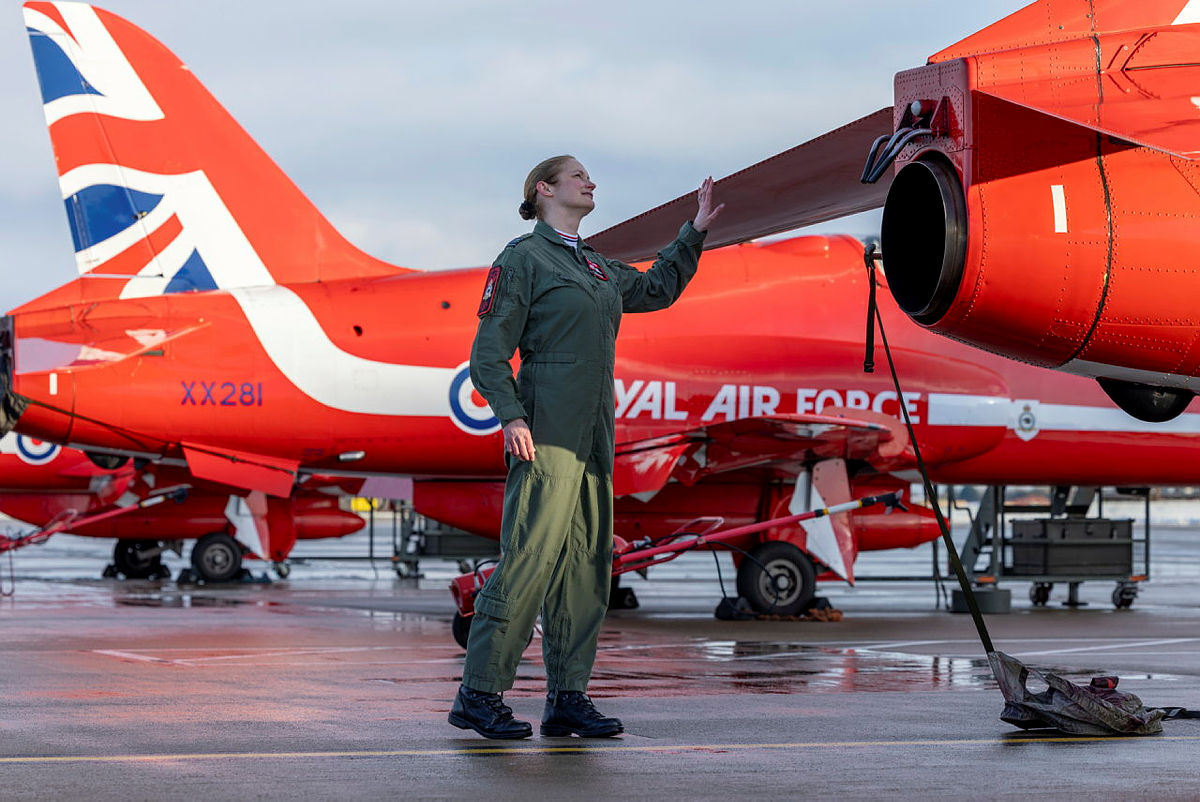
The Ministry of Defence has opened market engagement on a new Jet Training System that will deliver replacement aircraft for fast jet training and for the Red Arrows, ahead of the Hawk T1 leaving service in 2030, the department stated in a request for information.
The programme, listed under project code 700004994-RFI, was announced in the Defence Investment Plan 2026.
According to the notice, the investment will cover new jets for a modernised fast jet training system, allowing the Red Arrows to replace their ageing Hawks, and will carry a significant UK workshare. The department says the system is being designed to support the transition to fifth and sixth generation air systems.
Suppliers interested in taking part are asked to submit company details, a point of contact and their area of interest to the programme team, with a listing deadline of 11 September 2026. The notice carries the standard disclaimer that the exercise is for information gathering only, does not constitute an invitation to tender or a commitment to procure, and confers no advantage in any future competition. The work is categorised as services, and the contracting organisation is the Ministry of Defence, with the programme team operating under the National Armaments Director group.
The Hawk T1 first entered RAF service in 1976 and has been flown by the Red Arrows since 1979, when the team converted from the Folland Gnat. The type was withdrawn from its training role at RAF Valley some years ago, leaving the display team and a small number of aggressor and support aircraft as the principal remaining operators. Airframe fatigue and the age of the fleet have driven the out of service date, and the Red Arrows have continued to fly the T1 while the replacement question remained open.
Advanced fast jet training for RAF and Royal Navy pilots is currently delivered on the Hawk T2 at RAF Valley on Anglesey under the UK Military Flying Training System, operated by No 4 Flying Training School. The T2 fleet has faced availability problems in recent years, with the National Audit Office and parliamentary committees examining throughput on the pilot training pipeline.
Britain no longer builds jet trainers, though. The BAE Systems Hawk production line closed after the final export orders were completed, and the company has since said it would need a new order to restart the capability. Aircraft on the international market include the Leonardo M-346, in service with Italy, Poland and others, the Boeing and Saab T-7A Red Hawk being introduced by the United States Air Force, and the Korea Aerospace Industries T-50 family.
A British venture, Aeralis, had been developing a modular jet trainer concept aimed at the same requirement but folded recently.
The requirement also carries a national visibility dimension unusual in defence procurement, given the Red Arrows’ role in air displays and overseas engagements, and the notice frames the new aircraft as ‘inspiring future generations for decades to come’.




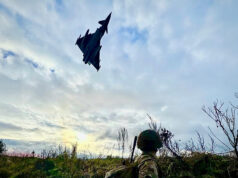



We need a light fighter combat version .
What for?
Light fighting I expect
:):):)
There’s no fight light
Tbh, if they are going for a light fighter, it will be a cca.
Interesting idea!
I would imagine that could have some export potential to less well armed airforce like Ireland who have a requirement for basic fast jet interceptors but the budget doesn’t push far enough to get a typhoon/gripen ect.
The big issue you would have is that once you start adding radar and weapons systems it becomes similar price to the above mentioned jets.
I suppose there is a use for a light fighter in a counter drone role or basic interceptor but I cant see much use for the UK beyond training and red arrows.
Resurrect John Boyd and Pierre Sprey, reform the fighter mafia and tell everyone that fighters don’t need radars, then sell it to Ireland.
The Irish would probably never go for it, but the most practical option for them would be to provide pilots and some funding for a joint Anglo-Irish Typhoon detachment based in Ireland or Northern Ireland.
The RoI gets the benefit of Irish pilots defending Irish airspace, the UK gets a little more manpower and money to help cover the job it’s already doing.
Do you mean in a similar way to No.12 Squadron with the Qatar? Thats not a bad shout although it would certainly require an uplift in Typhoon numbers because we dont have the 15 or so extra air frames to send to Ireland unless we upgraded the Type 1s if they haven’t already been scrapped? Or a new order from ireland for 8 to 12 that we match out of an existing squadron?
Pretty much exactly like the Qatari arrangement. However, it doesn’t seem likely that Ireland will foot the bill for a dozen Typhoons – that would be a multi-billion pound procurement and a serious expense.
Realistically, given that the existing Typhoon force is already covering Ireland, I reckon the most likely approach would be Ireland covers basing costs and personnel expenses for an “Irish Air Service”, and the RAF forward deploys a flight of perhaps 4 Typhoons to an Irish base using the same arrangement as we do for the Falklands.
Maybe not 12 but with them expanding their defence budget i think it would be realistic if they bought say 6 and we forward based a flight to give it some size.
This would be the best time to buy while the existing typhoon line is still hot with orders for other countries.
Depending on the specific contract, 6 Typhoons would likely still cost roughly as much as the ENTIRE Irish annual defence budget – the Germans paid €187m a jet for a Tranche 5 order of 20 aircraft.
It might be the last good opportunity to order Typhoons, but that doesn’t mean the Irish defence forces could afford them.
Agreed. The RAF and RN aren’t exactly massive in terms of numbers and a light attack version would add a bit of mass – routine North Sea patrols, anti smuggling patrols, etc – reducing wear and tear on the high end gear and being a cheaper way of training a pool of pilots.
Replacement aircraft before 2030, and I am going to be the next British astronaut. 🎆👽
Apparently so..! 🙂
A lot going to happen in 2030 apparently🙄
I hope there is some real forsight goes into this selection process. I mean something that is mature and has a swing role so trainer and light fighter.
Given the reduced numbers of fighters we actually have would be nice to supplement what we’re using and reduce the strain on the Typhoon fleet esspecial as we’re not buying more.
I totally agree, makes total sense, so that’s that out then….we are talking MoD.
Yeah, get us airchair/keyboard boys in the MOD and we’d have everything we always dreamed off for an armed forces.
No disrespect with that comment btw I genuinely feel the civilians have an objectivity that many gov departments lack.
I’m going to strongly disagree. Civilians generally don’t consider the huge number of enablers needed, and like to play fantasy fleets that are “totally achievable” but ignore political and industrial realities
Case and point; we don’t need a light fighter, the RAF has no requirement for them, and the expense of adding in that sort of capability decreases the funding available to get the numbers we need
The requirement is for a new advanced jet trainer and a Hawk replacement for the Red Arrows. Not a light fighter. We have Typhoon/F35 and new CCA coming.
Surely that’s a job for loyal wingman flying solo. Especially to attack drones. We should be acquiring them in numbers
As much as drone warfare has developed a lot in recent years especially in light of the Ukraine war I still think this brings more risks than rewards.
The risk of a drone being compromised isn’t zero and that asset turned upon there own operator is a genuine problem.
“Loyal wingman flying solo”
Contradiction in terms?
Guess it would be if it got compromised lol
You’re on top form this morning Squire
Early season form. No doubt will fade.
If BAE can restart Hawk production and national visibility is a requirement, then that would be the obvious solution. But this would also need the problems with the Adour 951 engine on the Hawk T2 to be fixed, or an alternative engine to be supplied.
Redhawk has a number of unresolved issues with in service date delayed again.
Why would BAE restart the Hawk Production line for such limited numbers?
Why would they say as reported that they would need an order to restart production?
UK would need at least 40 costing @£1b.
Since 2014, around 100 M346 have been built.
If a condition is high UK content and presumably final assembly, someone will have to start a new production line.
Isn’t India still manufacturing the Hawk under licence?
It’s an ancient 60’s airframe
Late build Hawks were very different from the original 1970s aircraft. Only about 10% commonality.
Really? Are you just referring to Hawk Mk1s or the T2s as well?
As regards T Mk1s there was little difference across the age of the fleet XX154 being the 1st Hawk and XX354 being the last registered. The main difference was a T Mk1 and a T Mk1a – the 1a has the electrical wiring harness for firing sidewinder missiles. Jets assigned to the Red Arrows had the smoke system fitted. Also a slightly different fuel control unit on the age to permit a faster engine spool up time
Unless they did something radical to TMk1s after I left Crab Air then except for the above TMk1s. I worked on HAwk TMk1s for 6yrs
So what? As Hawks don’t have a combat role then the basic design is acceptable in terms of speed and aerodynamics/performance etc. Hawks can still perform flying training etc. The biggest failure was not to keep updating the avionics/navigation systems
Nice main picture featuring Kirsty murphy, the only female pilot to fly for the Red Arrows.
No, Steve it’s Wg Cdr Sasha Nash, the new Red Arrows boss.
Ah, OK thanks. So much for “fact checking” on GOOGLE. 😂
No problem Steve. We all do it.
T1 Tiffy.
I vote Britten-Norman Islander. It’s abit slower but you could train 11 at a time.😁 Oh and it’s built entirely in blighty, just down the road from me actually.
B-N still going!? Was the Islander ever proposed in a maritime patrol variant?
They’ve moved production back to the UK, the first of the new run was rolled out not very long ago.
There was an MPA version but it’s a little short legged, more for much cheaper air forces in coastal waters.
Cheaper air forces = RAF???
The Red Arrows can go back to the future.
Traditionally, the RAF display flights were just front line fighter squadrons detailed off for amusing the public.
Nine GCAP in formation! Wow, double wow!!