

Cambridge Aerospace has closed a Series C funding round worth $300 million at a valuation of $3.4 billion, money the air defence company says will go towards scaling manufacturing and delivering on existing contracts including work for the British armed forces, the company stated.
The round was led by DFJ Growth with support from Lux, Accel, Lakestar, Never Lift, Ora Global and Elad Gil & Co. It follows a Series B of $200 million at a $1.3 billion valuation in April this year, meaning the company’s paper value has risen by more than $2 billion in four months.
Cambridge Aerospace was formed in 2024 and employs more than 250 people, two thirds of them in technical and engineering roles, with a presence in Germany, Poland, Norway, Ukraine and Australia alongside its British operations. The leadership combines Professor Steven Barrett as chief executive, chief commercial officer Chris Sylvan, who spent more than a decade in the Royal Marines before moving into defence technology, and Junaid Hussain, who has founded several technology companies.
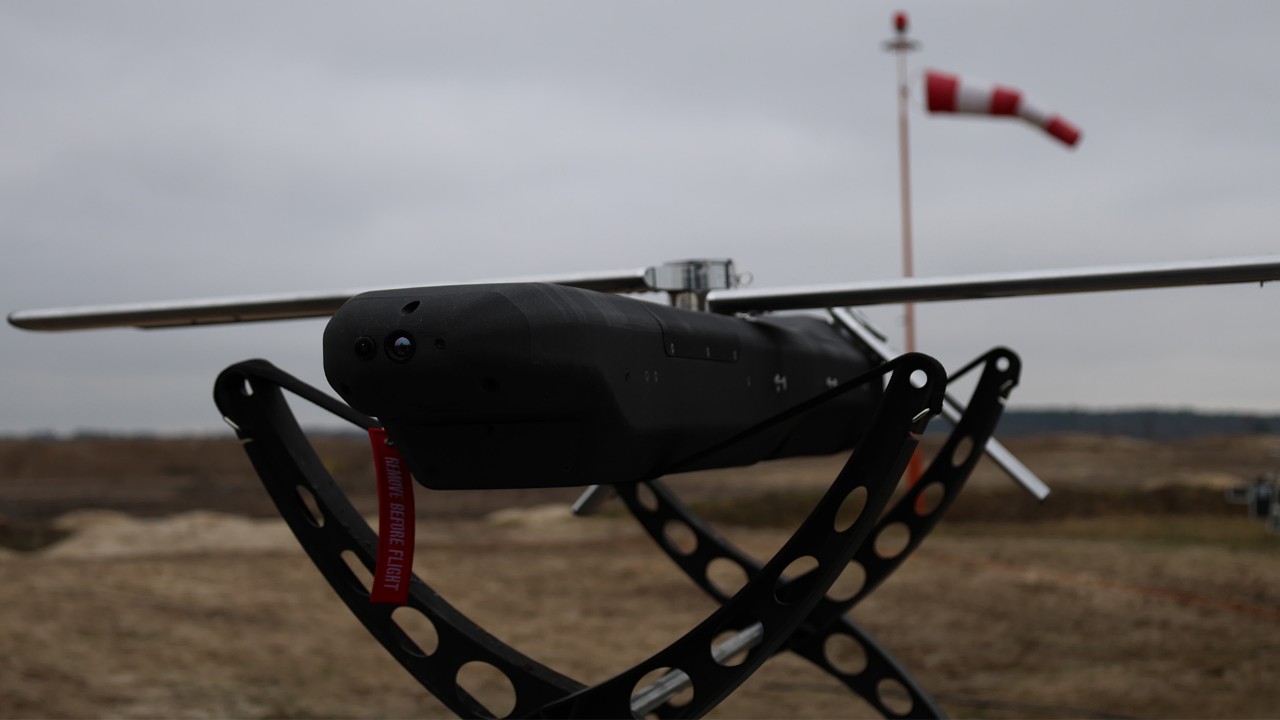
The company’s first product is Skyhammer, described as a low-cost modular interceptor designed to bring down Shahed-type attack drones. A second product, Starhammer, is intended as a higher-speed interceptor for more valuable incoming missiles and is due to reach market in 2027. The wider range also covers a multistatic radar system called Looking Glass and solid rocket motors built under the Nightstar name, and the company says it uses only secure NATO supply chains.
Since the Series B, the company has taken several contracts from the Ministry of Defence, among them an award to supply low-cost interceptors to the armed forces which was announced by the Defence Secretary at the London Defence Conference. The Low-Cost Effectors and Autonomous Platforms programme, known as LEAP, followed in July.
Professor Barrett said in the release that the raise reflected the work of the whole team and that the funds would allow the company to scale manufacturing and delivery “to meet the pace of threats, and the needs of Allied nations”.
Randy Glein, founder and managing partner at DFJ Growth, said the company was addressing one of the most pressing challenges of modern warfare, having developed an affordable and accurate counter-drone system, and that his firm had surveyed the global landscape before concluding that Cambridge had “the best team and technology to build the most advanced and modern air defense infrastructure for Europe and its allies”.
Wes Streeting, the Defence Secretary, said the valuation was a vote of confidence in Britain and that Skyhammer was an example of the low-cost interceptor missiles the armed forces need, adding that it was “exactly what our unicorn scheme is designed to create”, referring to the government effort to grow British defence start-ups into billion-pound companies.
The commercial logic behind low-cost interceptors comes from a cost exchange problem that has become acute since 2022. Russian Shahed-type one-way attack drones cost a fraction of the surface-to-air missiles typically used to shoot them down, and Ukrainian and allied forces have repeatedly found themselves expending expensive rounds against cheap targets, a trade that cannot be sustained through a long campaign. The same arithmetic applies to Houthi drone launches against shipping in the Red Sea, where Western warships have used multi-million pound missiles against targets worth a small fraction of that.
Several companies on both sides of the Atlantic are now competing to close that gap with cheaper effectors, gun-based solutions, directed energy and interceptor drones. The British government has pursued the problem through a mix of programmes, including work on the DragonFire laser and a series of counter-drone trials, alongside the LEAP effort.










Just goes to show there is no lack of capital in the UK for good businesses. The nonsense from Reaction engines that they would somehow have been successful in the USA with a concept that didn’t work because they could have raised more capital was wrong.
The UK government and industry has a good track record in funding novel ideas and start ups and the UK maintains the highest start up rate and strongest seed funding of any major economy outside the USA.
While skyhammer appears a very useful product I am hoping Cambridge Aerospace can get star hammer up and running, this is the only UK company with a a publicly disclosed design for a UK anti ballistic missile and hopefully now the company has a multi billion valuation it can develop such a weapon.
Not going to repeat my views on Reaction Engines, it simply gets boring other to say that like life it is not Black and White as you like to endlessly frame it. Fact is however while this Country is very good at generating novel start ups as you say (it helps having 4 of the top 10 Universities) it is simply terrible at turning them into longer term self sustaining viable businesses. Finance here is a lot more about short term profit and returns, pressurising innovators to sell out to existing almost inevitably foreign established competitors. That take comes from Sir Herman Hauser (amongst many others including one of the primes of DeepMind), someone who helped establish the World’s premier chip designer after all, (sadly like DeepMind mostly absorbed into the US economy and for their benefit now) so probably Jim I will appreciate the opinion of him and similar views from Sir Demis Hassabis about the self harming predisposition of British investment houses and the City somewhat more than yours. This process fuels the City, at least while the turnover and associated gravy train continues from British innovators, but damages UK plc and longer term wealth for the Country far too often.
It’s the narrative that we are all sold that the UK is crap at scaling and the Americans always steel our businesses. Fact is RE didn’t work and it had plenty of long term financial investors like ballie Gifford, Rolls Royce and BAE. The vast majority of start ups and new inventions fail.
We need to move on from the TSR2 narrative of the 1960’s
Google Deep Mind like ARM remains a UK based company with an American parents companies who owners are in large part British based fund managers.
Arm and Deep ind are not UK based. They are foreign owned and the decisions made about the business are made in foreign boardrooms now. They tell the UK offices dressed up as HQs what to do. This is what happens when you don’t have a government and civil service that draws up a list of total no go companies for foreign takeovers and ministers who just are too scared to tell the Americans or the french or Japan a clear No, they aren’t buying said UK company.
Starhammer is not an ABM. It’s a near CAMM sized interceptor nearly identical to the Israeli Tamir in both appearance and published performance with a 10km range. 20km has also been given but is unlikely given the low cost estimates of around £50k.
CA say they want to move onto BMD but Starhammer is not the way there.
@Jim
Why the fcuk don’t you STOP posting endless reams of crap on this blog?
Good. This company needs all of the support it can get to produce missiles more cheaply and faster than MBDA can manage, we are not doing a good job at interceptors larger than LMM and we have not capitalised enough on CAMM. Starhammer is going to be in production next year, we would be silly not to buy some and push CA towards more capable systems.
The “multistatic radar system called Looking Glass” is more information than we have had so far, at DSEI it was just thrown in as an “ISR platform”. Unfortunately there seems to be no more than that, though some business websites are giving $50,000 as the cost of one component of the multistatic array.
Is this an OTHR or as seems more likely a national GBAD system?
Another British company ripe for the Americans.
Interesting ideas, we need UK companies who can produce large quantities of cheap ‘ish’ weapons from attack drones, to defence from attack drones and missiles.
Currently we have absolutely nothing, we still seem to be equipped as we were 10 years ago, when we stopped the pointless insurgency wars in the sand box that achieved nothing but taking young mens lives and ruining many more, that also bled our armed forces to the bone, getting shot of much of their conventional war fighting equipment to pay for it.
I see absolutely no urgency to fund, re-equip, to fight modern war either, General Bluster and chums seems ‘far’ more concerned with keeping sufficient parade horses.