

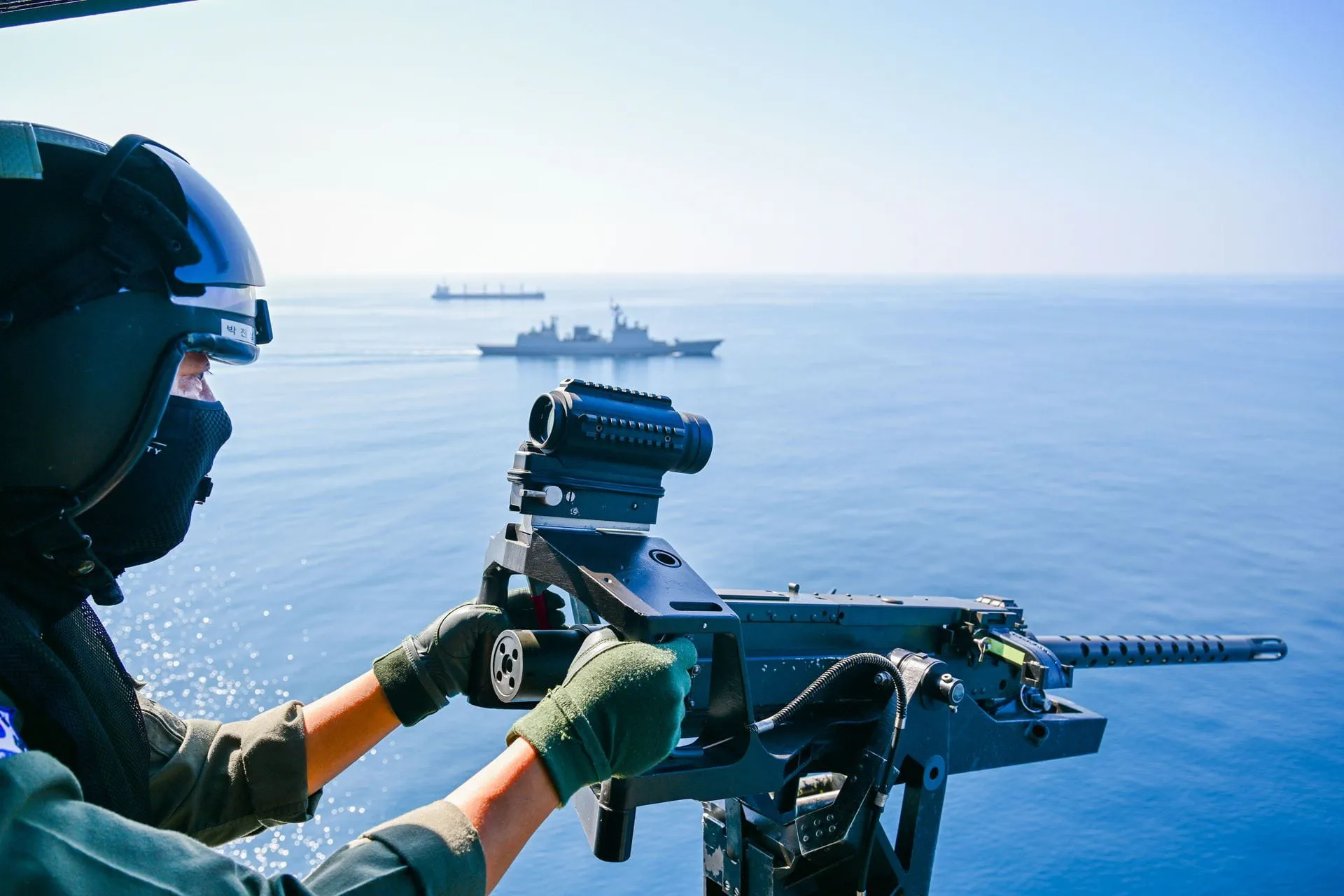
A Royal Navy-led multinational task force responded to 25 piracy-related incidents during six months in command as the service says attacks in the Indian Ocean reached their highest level in a decade.
A Royal Navy-led maritime task force has responded to 25 piracy-related incidents across the Indian Ocean during a six-month deployment in which the service says attacks rose to their highest level for ten years, the UK Defence Journal understands.
Combined Task Force 151, commanded from Bahrain by Royal Navy Captain Jase Eacock, operated across more than three million square miles of ocean with a particular focus on the Gulf of Aden and waters around the Horn of Africa. Seventeen ships and other units were assigned to the force during the British command period, which has now ended with responsibility passing to the Republic of Korea.
The Royal Navy said the resurgence in piracy has taken place while international naval attention has also been divided between the Strait of Hormuz following the US-Israeli-Iranian conflict and the continuing threat to commercial shipping in the Red Sea from the Houthis. Against that background, pirate groups have continued approaching and attacking merchant vessels in the wider Indian Ocean.
The task force was unable to prevent the seizure of a tanker during the final period of the British command, but the Royal Navy said it had been involved in more than two dozen piracy-related incidents over the preceding six months. Its ships and units also conducted nearly 70 intelligence-gathering patrols intended to build a clearer picture of suspicious and potentially illegal activity across the region.
Pirate action groups operating from Somalia have historically used larger vessels as motherships to extend the range of smaller skiffs carrying armed boarding parties. The Royal Navy described typical groups as using boarding ladders and weapons including AK-47 rifles and rocket-propelled grenades. Such tactics were used extensively during the major period of Somali piracy between 2005 and the early 2010s before sustained multinational naval operations substantially reduced the number of successful attacks.
The threat, however, was never completely eliminated. The Royal Navy said the underlying conditions associated with piracy, including poverty, weak governance and damage to Somalia’s fishing industry, have remained unresolved, leaving criminal groups with the ability to resume operations when opportunities arise.
Captain Eacock said, as quoted in a Royal Navy news update: “Our collective naval presence, alongside the European Union’s Operation Atalanta, has made a difference despite the broader tensions in the region; Deterrence works, but the threat has not gone away, and there is still much to do.”
He added: “It has been both an honour and a privilege to command Combined Task Force 151 on behalf of the United Kingdom.”
Eacock, described by the Royal Navy as its second most senior officer in the Middle East region, commanded a multinational staff containing specialists from seven other countries. The headquarters in Bahrain coordinated ships and other assets operating across an area considerably larger than Europe, requiring intelligence and surveillance activity to identify potential pirate groups before they could approach commercial traffic.
Combined Task Force 151 is one of five specialist naval formations operating under Combined Maritime Forces, a 47-nation maritime security coalition headquartered in Bahrain. CTF 151 is specifically focused on counter-piracy, while other formations within the coalition are assigned missions including counter-terrorism and mine warfare.
Command of CTF 151 has now transferred to the Republic of Korea following a ceremony at the Combined Maritime Forces headquarters in Bahrain, with the multinational force continuing its counter-piracy mission across the Indian Ocean, Gulf of Aden and waters surrounding the Horn of Africa.


speak to me charles
beautifull stitistics full time buisness millitary influence enough gig ex professionals commands of ships personally invite guys of kongsberg partner sales volume ships influence renewed ambition in africa take on chinks ? proper proposeals this from main opponent. get command fly armour mss it publicly speaking hounds come bk few months do fucking deed away again on board get paid well tech vital africa get phone ppl u can under stand cloths stuff profitable work force add in boiling station water crops animals millitary stuff pow hollywood shower them grass new market not treading on excistent most africa not legal water concerns dream the beach front i owe it to me my we pup just that heart ache dosnt happen any 1 else when u raise them matter most
you dont shit your jobs top secrets not for ur eyes u ppl come and go
know thinking sabotaging me on bail weed isnt it look it kills sexual appeal part of head done played with like a teddy bear shaft ted just saying need be fucked up pull that bk
i say things truth is they call me 4 leaf its clear indicator for me cant disagree
aye me christo
“the Royal Navy said it had been involved in more than two dozen piracy-related incidents over the preceding six months. Its ships and units also conducted nearly 70 intelligence-gathering patrols”
Just out of interest, which Royal Navy ships were involved?