

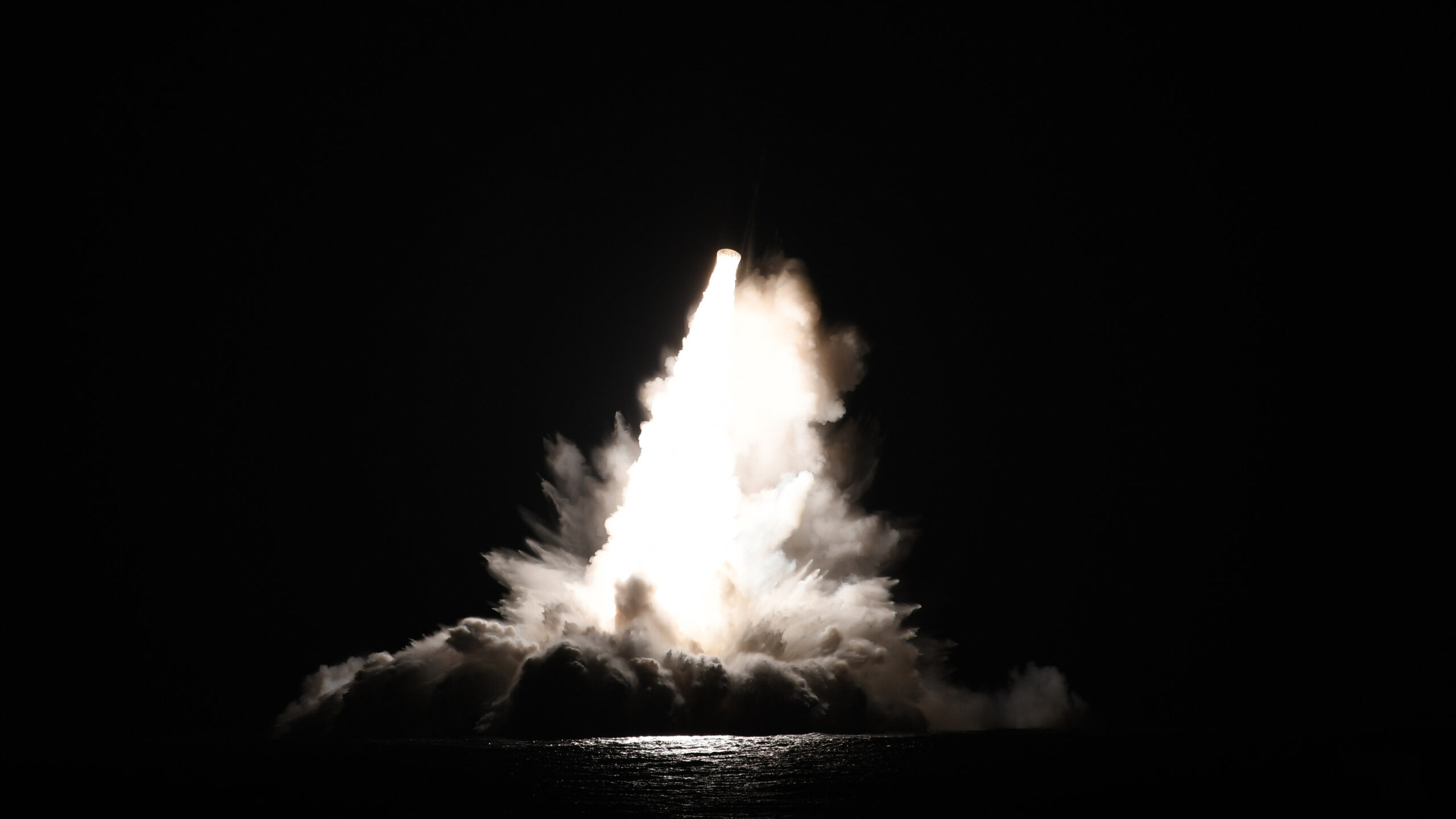
The Astraea programme passed its System Design Review in August 2025, a step the Ministry of Defence describes as significant for the design, safety, performance assessment and manufacturability of what will be the first new British nuclear warhead since the early 1990s, according to the Defence Nuclear Enterprise annual update to Parliament.
The government has committed £15 billion from 2025/26 to 2029/30 to the warhead programme, which includes development of Astraea.
The update states that Astraea “will be the first new UK warhead since the Mk4 warhead (subsequently upgraded to Mk4A) entered service in the early 1990s, and the first to be designed in the Comprehensive Test Ban Treaty (CTBT) era without explosive nuclear testing”.
Designing a warhead without the ability to test it is the central technical challenge of the programme, and the update lists the capabilities delivery depends on, covering products and technology, advanced manufacturing, warhead physics, materials, mission effectiveness, hardness and vulnerability, scientific computing, radiation protection and regulatory science, and criticality safety and non-destructive assay.
AWE is to publish an updated warhead science, engineering and technology strategy this year, compliant with the test ban treaty.
The organisation designs, manufactures and maintains British nuclear warheads, was brought back into government ownership in 2021 and marked its 75th anniversary in 2025. The update says it is undergoing a transformation including major recapitalisation of its infrastructure and nationwide investment across its supply chain and its science, engineering and technology base.
The current warhead remains the Mk4A, fitted to Trident missiles and maintained by AWE at Aldermaston, with the design sovereign to Britain. AWE assures the effectiveness and performance of the warheads along with the safety and security of the stockpile.
The update describes delivery of Astraea as a national endeavour drawing on expertise across government, industry, academia and international partners, with sovereign capability enhanced by partnerships with the United States under the Mutual Defence Agreement and the Polaris Sales Agreement.
The Mutual Defence Agreement, extended indefinitely in 2024, enables cooperation between the two countries on atomic energy for mutual defence purposes, including the exchange of nuclear materials and technology, the transfer of non-nuclear components and collaborative scientific exchanges on technology and nuclear threat reduction.
The missiles the warhead sits on are American built, with Trident and its supporting systems manufactured in the United States, with Britain having bought title to a number drawn from a shared pool of assets under the 1963 Polaris Sales Agreement as amended for Trident in 1982, and the system is operated independently by both the Royal Navy and the United States Navy.






This is the main area the UK should invest in, it’s the most important counter to Russian aggression and the only thing no one else in ENATO can do.
We need a general increase up to 500 warheads as well as complete nuclear triad with an air launched cruise missile available for nuclear sharing and a MRBM that can be either submarine or land launched along the lines of Dark Eagle.
Plenty of countries in Europe are willing to share these costs with us, all we lack is the will.
Will it be boomier than the last one?
I know that we will never get the breakdown but that seems an insane amount of money for a 5 year investment. I assume that’s likely for apox 250 warheads.