

Allied chiefs of defence have sent what NATO describes as a direct and united message to the defence industry that allies are ready to buy at scale, and that industry must be able to deliver with speed, scale and predictability, the alliance stated.
The message came from the annual Military Committee Conference, held in Copenhagen on 18 and 19 September, bringing together the 32 allied chiefs of defence with the two strategic commanders, General Alexus Grynkewich as Supreme Allied Commander Europe and Admiral Pierre Vandier as Supreme Allied Commander Transformation.
Admiral Giuseppe Cavo Dragone, Chair of the Military Committee, set out the purpose of the meeting as moving from commitments to delivery. He said: “We, the NATO Chiefs of Defence, together with SACEUR and SACT, will do the work that follows from the Ankara Summit, as we shift focus from committing budgets to delivering on capabilities that will enable NATO to deter adversaries and defend the Euro-Atlantic area.”
He added that the conference would address “collective deterrence and defence, innovation and technology, and accelerated adoption of new defence capabilities”.
His language on Russian activity over recent months was considerably blunter than the rest of his remarks. “Over recent weeks and months, we have seen once again the reckless behaviour of Russia, including airspace violations, drone incidents, hybrid activities and attempts to test Allied resolve,” he said. “Let me commend Allied forces for their swift, professional and effective responses to these incidents. NATO remains vigilant. NATO remains ready. And NATO will do what is necessary to defend every inch of Allied territory.”
General Michael Wiggers Hyldgaard, Chief of Defence of Denmark, said: “Today, in Copenhagen, NATO Allies once again show their commitments to strengthening the Alliance, bolstering our innovation and technology and our support for Ukraine. We will do what it takes to defend our common freedom and transatlantic security.”
Alongside the industry message, the conference covered implementation of the summit decisions and capability targets, and the acceleration of allied readiness and the ability to operate across multiple domains.
Allied nations also elected General Carsten Breuer, Chief of Defence of Germany, as the next Chair of the Military Committee. He takes up the post in summer 2027 for a three-year mandate, succeeding Admiral Cavo Dragone.
The line to industry echoes the commitments made at the Ankara Summit in July, where allies pledged to strengthen industrial resilience by expanding manufacturing capacity and removing barriers to defence trade within the alliance, launching the NATO Front Door for Industry and agreeing a Strategy for Industry-NATO Cooperation.
The Military Committee meets in Chiefs of Defence Session twice a year at NATO headquarters in Brussels, and once a year holds a conference hosted by a member state, with the next plenary meeting due in Brussels in January 2027.
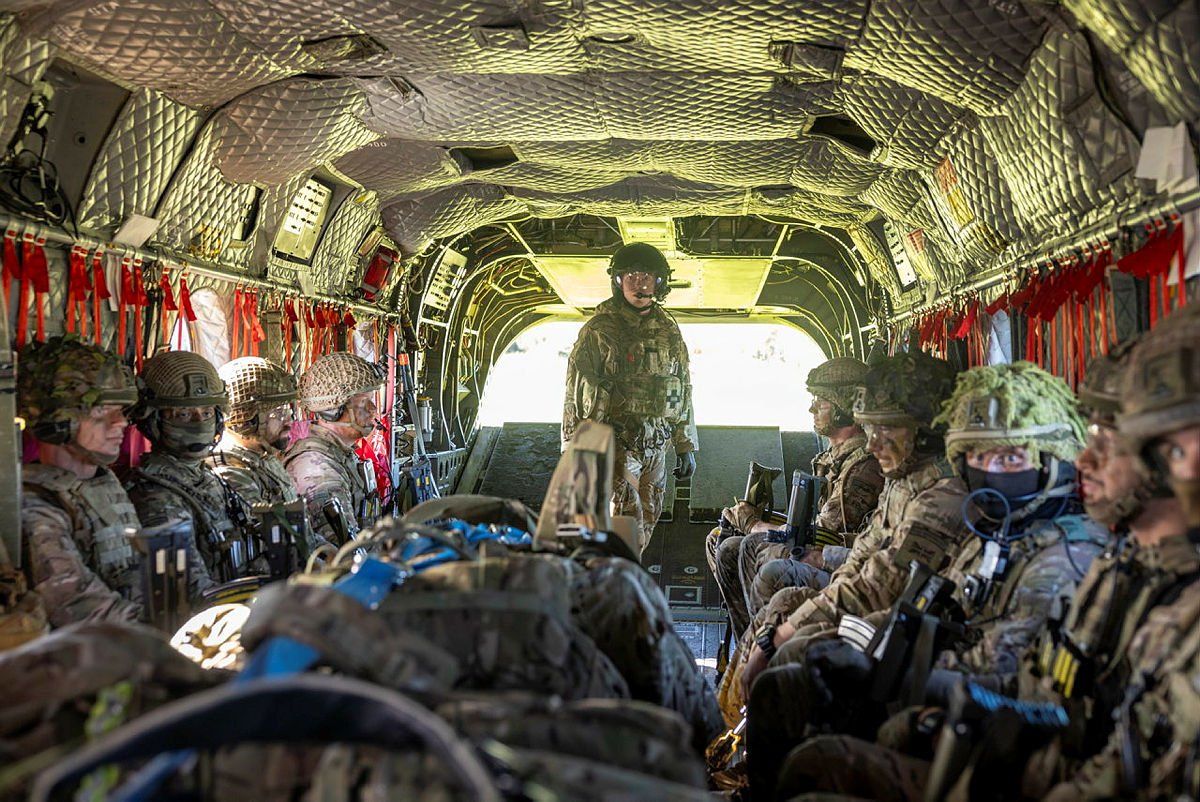


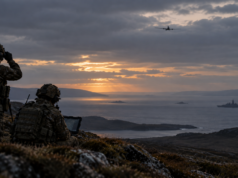
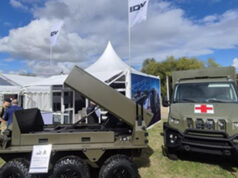
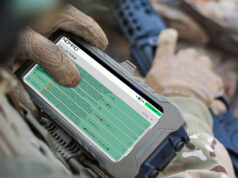




‘…we have seen once again the reckless behaviour of Russia, including airspace violations, drone incidents, hybrid activities and attempts to test Allied resolve…as we shift focus from committing budgets to delivering on capabilities’
NATO Chiefs of Defence, SACEUR and SAC 18 Sept. 2026
‘The climate crisis is not a distant threat. It is here and with us now. The British people are no longer insulated from the consequences’
UK PM 18 Sept. 2026
Desperate stuff. Britain needs an election. It might not produce a defence orientated government but it will allow the country to decide its fate.
I’m not sure then an election will help that much.
A Fromargist regime will turn into an argument circus within 3 months and then Mr Fromage will storm off in a huff and start another party.
Kemi doesn’t have a properly formed party and it will factionalise.
Lib Dem’s are are clown show.
Greens are where all the Corbynistas went to.
And Labour are totally in hoc to the left who won’t hear of welfare being sorted out.
An election now might turn, effectively, into a competition between two alternative coalitions…which is why it almost certainly isn’t going to happen, in my view unfortunately.
Few political parties in Britain since 1990 have given much sign of being ready for government. Successive governments comprising all three major parties have created an upswell of popular discontent that often presages major political change. The choice at the next election, whenever it is held, will be between centrally directed (high) tax and spend socialism and national security orientated regulated capitalism.
This government can either put its ideas (many of them not contained in its 2024 manifesto) to the test now in open debate over the course of a national election or tramp on to its certain doom in due course. But you are correct. Politicians, for reasons of short term self interest, generally select the latter course of action.
The problem is that it is government by opinion poll – not an honest declaration of a political philosophy or beliefs.
Thing is everyone knows what is talked is nonsense.
What is needed is a strong leader.
Spot on.
There is an increasingly credible one out there.
From the Major government onwards, British politicians have kept to their comfort zone of permanent campaigning, ‘in office but not in power’.
This country is supposed to be a representative democracy. We empower our representatives to get on with government facilitated, expensively, by over half a million civil servants.
The American, in fact Clinton, concept of permanent campaigning is inimical to our form of democracy. The list of PMs since 1990 is a dispiriting one. It is they who are responsible for this dereliction of duty.
Time for a new one (the triumph of hope over experience)!
Well, the message that defence spending needs to be upped a lot is one of the few where I totally agree with Trump (hate saying that) – we need to worry about Russia being aggressive, China continually expanding it’s forces and Ameria becoming a potential threat. When it all blows up is far too late for rearmament.