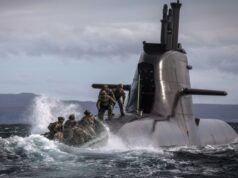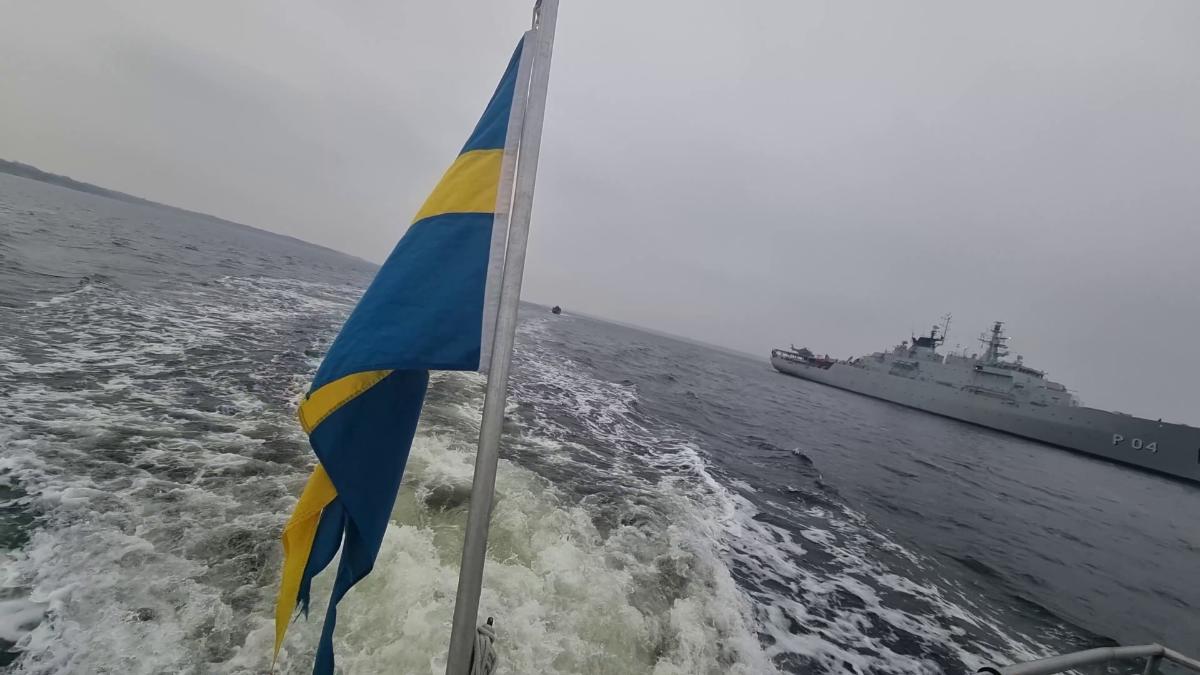
The Baltic archipelago that makes sonar so unreliable also gives a navy that knows it cover, concealment and freedom of manoeuvre, the commander of the Royal Swedish Navy’s 4th Naval Warfare Flotilla told the Apex Europe conference in London on Wednesday.
Captain Anna Jonsson, whose flotilla operates in the waters around Stockholm, opened a panel on countering undersea threats by describing the conditions her crews work in.
She said: “Sweden and my unit operates in a complex underwater environment. Our archipelago consists of tens of thousands of islands, narrow passages, shallow waters, and highly variable seabed conditions. Below the surface, rocks, wrecks and seabed formations create a challenging environment for our sensors.”
The behaviour of the water itself compounds everything the seabed is already doing. “Add variations of depth, temperature and salinity to that, and the performance of the sonar and underwater systems can change significantly from one area to another,” she said.
Her argument was that none of this amounts to a handicap for the navy that has learned to live in it. “Complexity is not necessarily a disadvantage always. For the force that understands the environment, it can provide cover, concealment and freedom of manoeuvre,” she said. “This has shaped the Swedish naval platforms, sensors, weapons and tactics for generations.”
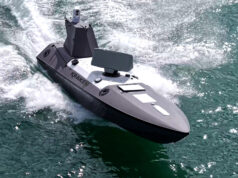
That inheritance shows in what the Swedish navy buys, since small shallow-water submarines, mine countermeasures vessels, and corvettes built for the archipelago are a different proposition from blue-water designs, and the tactics that go with them have been refined over decades of operating in exactly these conditions.
“Sweden is in some way a small state. I have limited resources within my flotilla, but we still need to achieve combat effectiveness,” she said. “It’s important for us to understand the underwater terrain better than our adversary.”
The chair observed that the Baltic condenses problems that navies meet in diluted form elsewhere, with the Black Sea the closest comparison, and that anti-submarine warfare there is a different business from where NATO navies usually operate.
Commodore David Burton, who leads the alliance work on an allied underwater battlespace network, said understanding the environment is built into how NATO is organising its experimentation, with Allied Command Transformation targeting demonstrations region by region. The Baltic has had its turn, the Mediterranean has had another, and the High North comes next.
Sweden brought all of this into NATO when it joined.