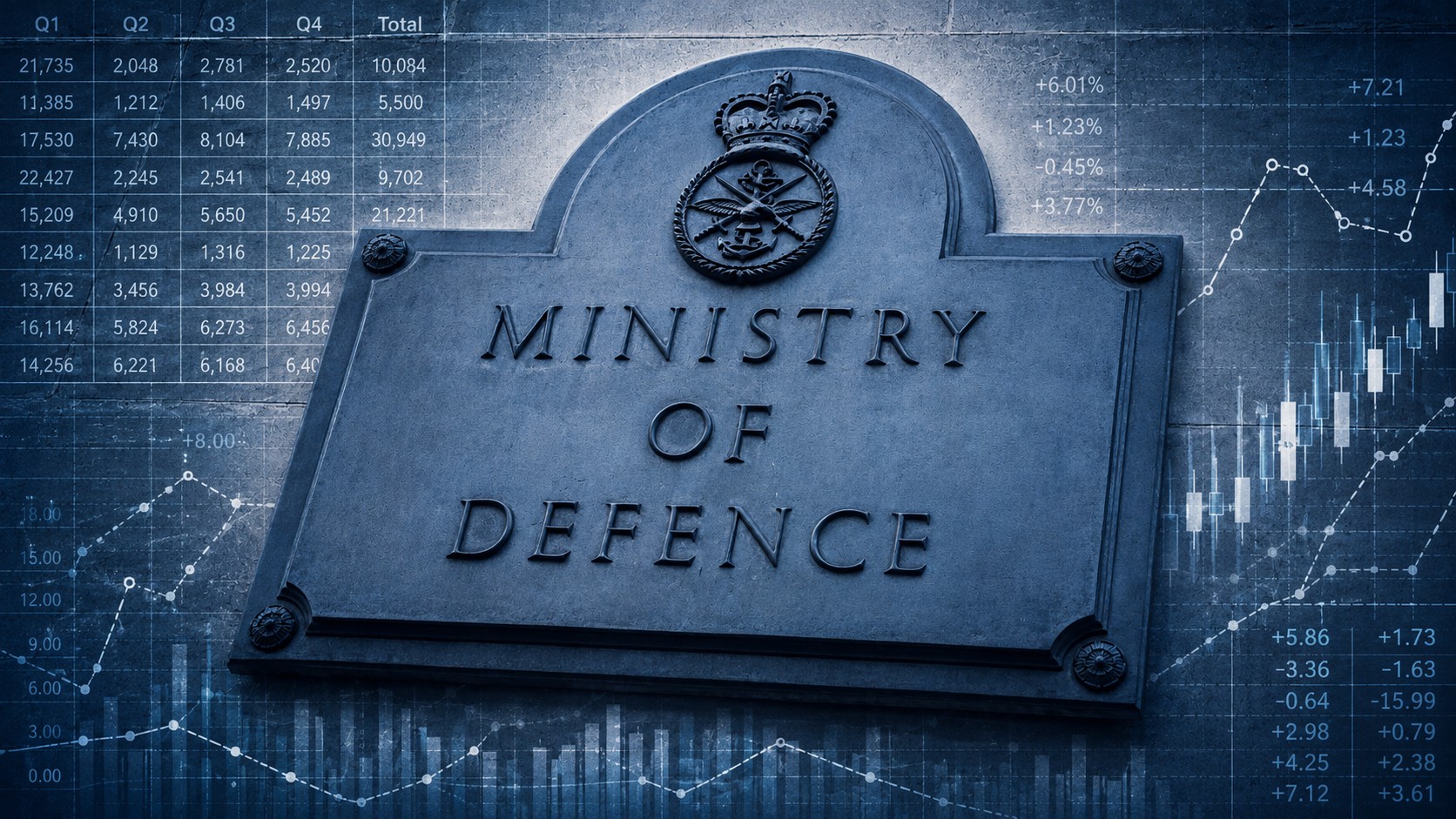
A write-off of almost £3.7m recorded in the Ministry of Defence’s accounts relates to money owed to the department by a foreign nation between 1971 and 2006, according to an answer given in Parliament.
Ben Obese-Jecty, the Conservative member for Huntingdon, asked why the International Military Services outstanding claim write-off appeared in the annual report and accounts for 2024 to 2025, published on 4 November last year.
Luke Pollard, the Minister for Defence Readiness and Industry, said: “The write off was due to a historical debt balance relating to monies owed to MOD between 1971 and 2006 by a foreign nation.”
International Military Services was the Ministry of Defence’s own arms sales company, set up to handle government-to-government defence exports and wound down from the mid-1980s. It has been in members’ voluntary liquidation for decades and exists now mainly to deal with the legal and financial tail of contracts signed half a century ago. Balances dating back to 1971 are therefore still passing through departmental accounts in 2026.
The best known of those tails is the long dispute with Iran over tanks ordered by the Shah before the 1979 revolution and never delivered. That case ran through the English courts and international arbitration for more than forty years and ended with a settlement, reported at around £400 million, paid in 2022 at the same time as the release of Nazanin Zaghari-Ratcliffe and Anoosheh Ashoori. The write-off described here is a separate and far smaller item, and the department has not identified the country involved.
Losses and special payments of this kind are reported each year in a department’s accounts under Treasury rules, with any individual item above a threshold disclosed and explained. A debt that has sat on the books for decades is eventually written off when there is no realistic prospect of recovery, which is an accounting decision and not a forgiveness of the obligation.