

Those who intentionally damage critical undersea energy and telecoms infrastructure would face prison sentences of up to fourteen years and unlimited fines under proposals published today, which also place new security and resilience duties on subsea telecoms providers and give ministers power to intervene where national security is at risk, according to the government.
A White Paper published by the Department for Science, Innovation and Technology sets out proposals to update 140-year-old legislation, and marks the start of a twelve-week public consultation.
Ian Murray, the Telecoms Minister, said: “Undersea cables are the hidden backbone of modern Britain, carrying the data we rely on every day to message friends and family, do our banking, and run our businesses.
“The threats we face have changed dramatically, with suspicious Russian activity around critical undersea infrastructure, yet some of the laws protecting these vital connections date back more than a century.
“We intend to modernise those laws with tougher penalties, stronger requirements on industry and new powers to protect our national security, making sure the UK’s critical infrastructure is fit for the threats of today and tomorrow.”
Dan Jarvis, the Security Minister, said: “Undersea cables carry the energy and data our country relies on every day. Protecting them is vital to our national security.
“We’re toughening the law to stay ahead of those who seek to do us harm. Those who deliberately or recklessly damage our undersea infrastructure will face tougher penalties, including longer prison sentences and unlimited fines.
“These measures are part of the work underway across government to protect our critical infrastructure and keep our country safe.”
Michael Shanks, the Energy Minister, said: “Undersea pipelines and cables are critical to keeping energy flowing to homes and businesses across the UK.
“This legislation will further strengthen deterrence and help ensure we can prevent, detect, and respond to threats against our energy supply.”
The fibre-optic cables running along the seabed carry around ninety-nine per cent of Britain’s international data. Undersea pipelines provide seventy-four per cent of the country’s gas supply, and undersea electricity cables carry supply from Europe and from the growing offshore wind sector.
The proposals cover four areas, the first of which would modernise criminal law on harmful conduct against telecoms and energy undersea infrastructure through new offences, stronger penalties and new enforcement measures; introduce statutory security and resilience duties for subsea telecoms cable infrastructure providers; create a national security direction power allowing the Secretary of State to direct providers of subsea cable infrastructure and repair capabilities where necessary and proportionate; and establish a regulatory regime covering sensing technologies installed on subsea fibre optic cables.
Fibre optic sensing can detect activity at sea, and the government says it could pose national security risks if sensitive data fell into the wrong hands.
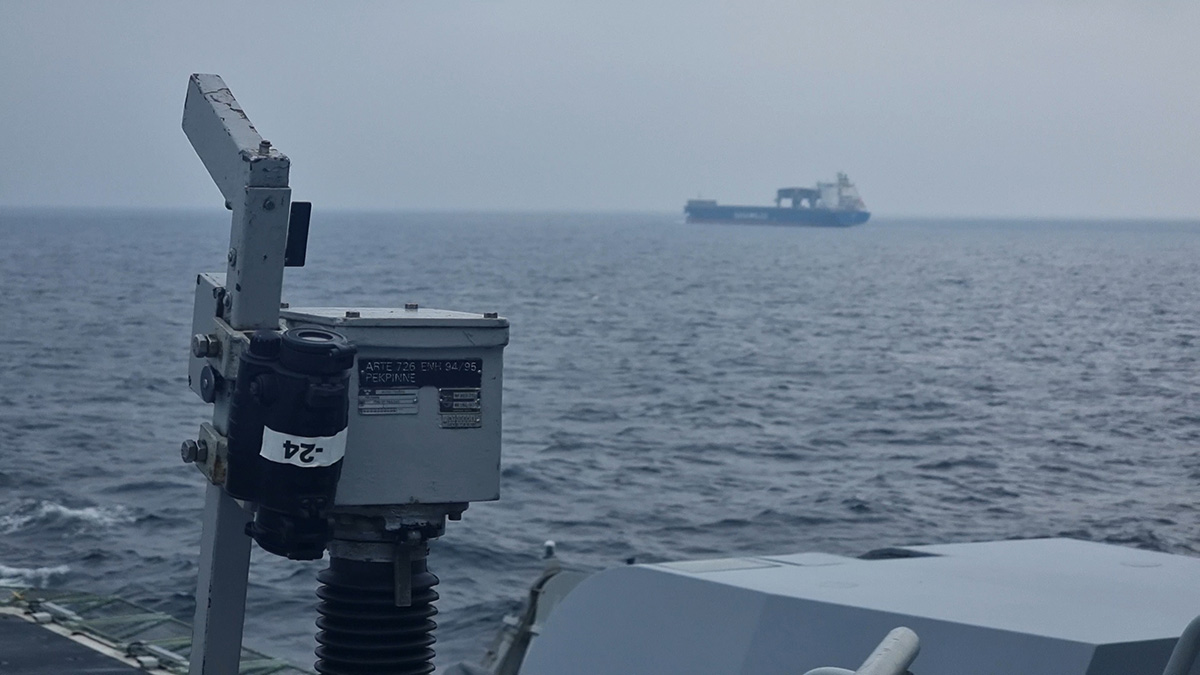
The government states that Britain already has a highly resilient subsea cable network, and that where cable faults occur they are due to accidents involving anchors or trawler nets dragged across the cables, environmental hazards or technical failures. It adds that suspicious activity around critical undersea infrastructure is increasingly being observed, and that in April the British armed forces exposed a covert Russian submarine operation around critical undersea infrastructure in and around British waters.
The Royal Navy has tracked the Russian vessel Yantar in waters around Britain, which this publication covered when the United Kingdom tracked the Russian spy ship amid cable concerns.
The Defence Committee reported yesterday that failure to deter Russia in the High North, particularly from underwater threats, puts subsea data cables and energy pipelines in and around British waters at particular risk during peacetime. Its report records that Russia’s Main Directorate for Deep-Sea Research holds assets designed specifically to degrade or destroy critical infrastructure and technological networks, including undersea energy pipelines and data cables.









And if they tweet about it, 28 years!!!!
If you want to go around tweeting slurs, or making threats, I say lock them up.
I wonder what the uk law says about anyone outside the 12 mile limit. I do wonder if anyone arrested would appeal and be released.
We have an internationally recognised right to take action within our EEZ for some things. This could be seen as extending that to recognise changing technologies and their importance.
I totally agree, I was just wondering how UK courts would view this. The government wanting one thing but the courts blocking it on their interpretation. I certainly hope that we are able to prosecute.