


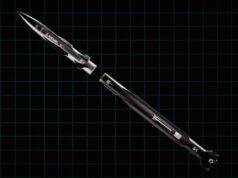
BAE Systems has signed a framework agreement running up to seven years with the United States Department of War to lift production of APKWS laser guidance kits to as many as thirty five thousand a year, according to the company.
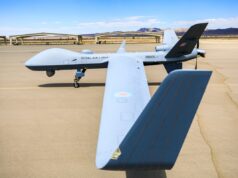
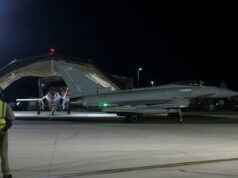
The kits turn unguided two point seven five inch rockets into precision guided munitions, and are in service with the United States Air Force, Army, Marine Corps and Navy. They are available to American allies and work in air-to-surface, surface-to-surface, surface-to-air and air-to-air engagements, including against drones.
Tom Arseneault, president and chief executive of BAE Systems, Inc., said: “APKWS delivers proven, reliable and affordable precision at scale to counter evolving threats and ensure our warfighters maintain a decisive advantage. This agreement highlights the importance of sustained investment in critical munitions to strengthen readiness and equip forces for evolving operational needs.”
Under the framework the company will increase production while negotiating a multi-year contract within it, which the company described as surge-ready support for evolving operational demands. BAE Systems said it has invested in manufacturing capacity, materials and expertise in line with the department’s Acquisition Transformation Strategy, and continues to develop upgrades, mission specific variants and new technologies.
The kits are built at BAE Systems facilities in Hudson, New Hampshire and Austin, Texas. The company delivered its hundred thousandth APKWS kit earlier, and the system is the United States government’s only programme of record for guided seventy millimetre rockets.
APKWS came to wider attention when American aircraft used the rockets against Houthi drones over the Red Sea, where a guidance kit costing a fraction of an air-to-air missile proved able to bring down one-way attack aircraft. The cost exchange problem that drove that use is the same one pushing European manufacturers towards cheaper interceptors.









Amazing that when push comes to shove defence businesses that love long term deeply expensive and complex missile projects can produce such effective and relatively cheap options for relatively low tech options. Meanwhile start ups seem equally able to quickly produce such options as the core of their business. Then of course there is little sign of sophisticated Govts encouraging or seeking to acquire such capabilities until it’s staring them in the face either.
I’m sure we can set up an impressively named committee to come to some conclusions on why we don’t seem to be able to anticipate this in peacetime at either end of the equation. Might take a decade mind but my guess would be at least in part that defence in peacetime has priorities not entirely related to actually being best prepared to fight an actual war combined with our incapacity to truly anticipate what sort of war that might even be despite all the war games in super computers.