The Ministry of Defence does not have a fixed three-year war readiness plan for each of the services, and the Integrated Force Design 2035 setting out the capabilities needed in future will not be published, according to a series of written answers.
Stuart Anderson, the Conservative MP for South Shropshire, asked a series of questions on readiness, including whether a three-year war readiness plan had been completed for each service, what assumptions underpin it and whether mobilisation targets are kept. Luke Pollard, Minister for Defence Readiness and Industry, gave the same reply to three of them: “The Ministry of Defence does not rely on a single fixed three-year war readiness plan for each Service. Instead, warfighting readiness and mobilisation planning are maintained across the Armed Forces on a continuous basis and kept under regular review in light of the strategic context, operational requirements and the United Kingdom’s defence commitments.
“The Department also maintains mobilisation planning arrangements and force generation requirements for the Services. It would not be appropriate to comment further on detailed Service-specific planning or mobilisation matters, as this would be operationally sensitive.”
Asked whether capability gaps had been identified through recent readiness assessments, Pollard said the department routinely carries out Planned Force Testing and Capability Auditing, whose details are not made public. “The Defence Investment Plan (DIP) sets out £298 billion of investment over the remainder of this Parliament. The Integrated Force Design 2035 (IFD35) will identify the capabilities required in future years to maximise the performance of the force against the missions sets and evolving threats we face. It will be completed in Autumn 2026 but is not intended for public release owing to its sensitivity.”
Pollard also declined to say what proportion of the Armed Forces is held at high readiness, saying successive governments have not disclosed detailed readiness levels. Sandher-Jones withheld the number of units below their trained strength requirement.
On mobilisation, Louise Sandher-Jones, Minister for the Armed Forces, said: “Over the last 12 months, the Ministry of Defence has routinely conducted and participated in a wide range of exercises of varying scale to test military readiness, mobilisation, resilience and interoperability with Allies. This included Exercise HEDGEHOG which tested mobilisation at scale and incorporated novel deployment and civilian capabilities to employ a force into Northern Europe by road, rail and air in a two day period.
“Looking ahead to next year, the Ministry of Defence will participate in the NATO Crisis Management Exercise 2027, ALBISTON SHADOW and STEADFAST DEFENDER 2027, which, whilst separate exercises, aim to test Alliance consultation and decision-making, military mobilisation, national resilience and preparedness. These activities are complemented by wider planning and exercising, which helps ensure Defence’s mobilisation and readiness arrangements are fully integrated with broader national resilience and preparedness efforts across Government.”
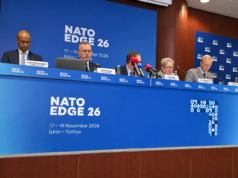
The Strategic Defence Review called for a move to warfighting readiness, and Pollard said on Thursday that a Defence Readiness Bill giving the government powers to respond to escalation towards war will come before the end of this Parliament. Admiral Pierre Vandier, NATO’s Supreme Allied Commander Transformation, told the UK Defence Journal this week that Hedgehog was the first time NATO had publicly acknowledged that some training had not gone well.