NATO is using new digital tools, including real-time maritime surveillance, to push back against a rise in Russian hybrid attacks on allies, senior officials have said.
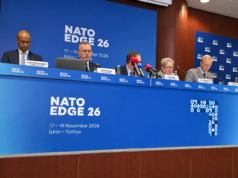
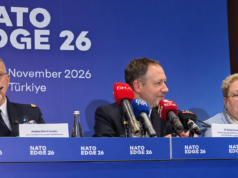
Asked at a joint press engagement at NATO Edge 26 in İzmir whether the Alliance could do more than survive sabotage, cyber attacks and drone incursions, and actually reverse those trends, Jean-Charles Ellermann-Kingombe, NATO’s Assistant Secretary General for Cyber and Digital Transformation, said allies had seen a clear uptick in hybrid attacks in recent years, particularly since Russia’s full-scale invasion of Ukraine.
Much of it, he said, was linked to Russian efforts to discourage allies from supporting Ukraine, with cyber attacks on infrastructure and attempts to undermine the cohesion of allied societies.
NATO was taking it very seriously, he said, and had put a lot of effort into improving its ability to understand what was happening and into exploring how to raise the cost for adversaries. He pointed to the maritime domain as an example.
After damage to undersea cables in the Baltic, NATO deployed a stronger physical presence through its Baltic Sentry activity, and Allied Command Transformation developed Task Force X to provide real-time situational awareness at sea. NATO’s Assistant Secretary General for Defence Industry, Innovation and Armaments, Tarja Jaakkola, later said Task Force X began after undersea infrastructure was damaged just before Christmas 2024.
Orchestrating military and civil
Admiral Pierre Vandier, NATO’s Supreme Allied Commander Transformation, said the answer lay in NATO’s concept of multi-domain operations, which he said was widely misunderstood. Most people think of it as coordinating the military across land, sea, air, space and cyber, he said, but in NATO it meant orchestrating the military instrument of power alongside non-military ones.
That was where digital technology came in, and why NATO Edge mattered, he said. NATO needed to understand that orchestration, coordinate military and civilian responses, and build a shared picture that all 32 nations could understand together. Digital, he said, brought something new: the speed and scale to make a 32-nation alliance move “not as dinosaur” but as something very active.
It echoed remarks earlier in the day by NATO’s Deputy Supreme Allied Commander Europe, Air Chief Marshal Sir Johnny Stringer, who said Europe was “not at war, but it’s not at peace either”, and that nations could respond to hybrid pressure on the diplomatic, economic and information fronts as well as the military.