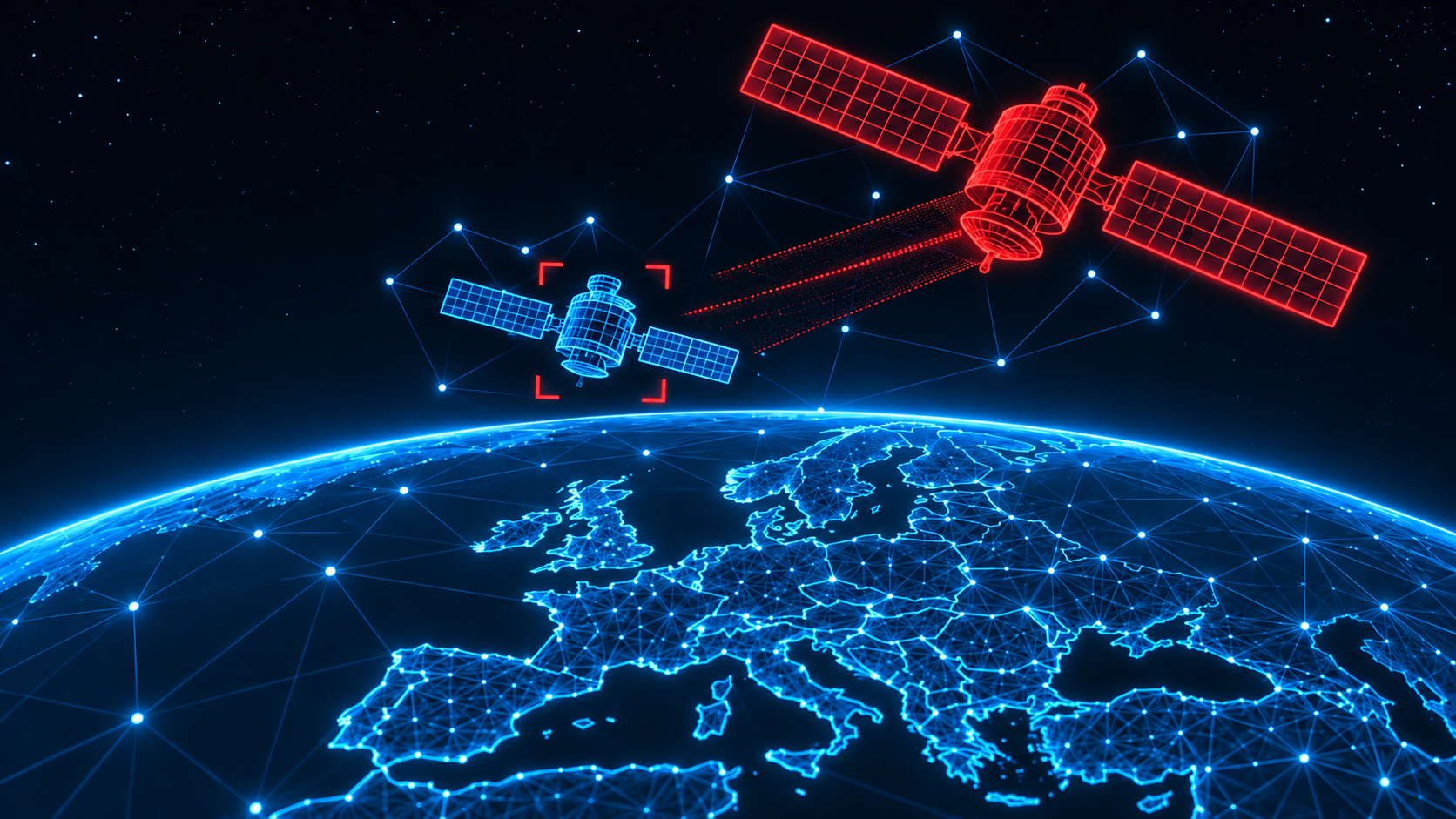
Russia and China have increased their counterspace capabilities by 70% since 2021, Major General Paul Tedman, the former commander of UK Space Command, has told Parliament’s Joint Committee on the National Security Strategy.
Asked about the threats, Tedman said: “On the space threats, people generally talk to a continuum from non-kinetic reversible jamming, just disruption of space capabilities, all the way through to exo-atmospheric nuclear explosions on orbit. In between, there are capabilities that can grapple other satellites. There are direct ascent anti-satellite missiles that launch from terrestrial sites into orbit. Most, if not all, of those capabilities have been demonstrated and are real. Russia has put a stated intent out that it wishes to put a nuclear weapon on orbit, which would break all sorts of international obligations. That range of capabilities is not science fiction any more; it all exists. If it is not on orbit, it could be on orbit.”
Comparing the two, he said: “To simplify it—as I said, simple soldier—China has greater capability but is more rational. Russia has less capability but is irrational. The two together pose us a problem. But they have increased their counterspace arsenal by 70% since 2021 as two nations, a significant increase in counterspace capabilities.”
He said Space Command should grow, but that defence had added space and cyber as domains without a matching increase in budget, and called for clearer leadership. “I think there were three Secretaries of State associated with the UK space strategy, but who is actually in charge?” he said. Asked what to prioritise, he said: “it is very clear in all the documentation sets that the capability we are underinvesting in is space control.”
Nathan Mathiot, Director of Policy and Public Affairs at ADS Group, told the same session that launch was a bottleneck, citing “existing dependence, for example, on SpaceX capacity.” Britain’s Titania military satellite was launched on a SpaceX Falcon 9 rideshare, ministers confirmed this week, and NATO announced its STARLIFT launch brokerage programme on 17 November.
Tedman said Russia destroyed one of its own satellites in orbit three months before invading Ukraine. Asked by Lord Watts whether Britain should procure only from allies, he said: “No, it is both. I think we need to diversify but not divorce from our closest allies in space.” Dr Michelle Howard and Mathiot both said national security assets should be bought only from allies.