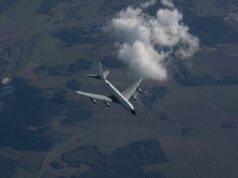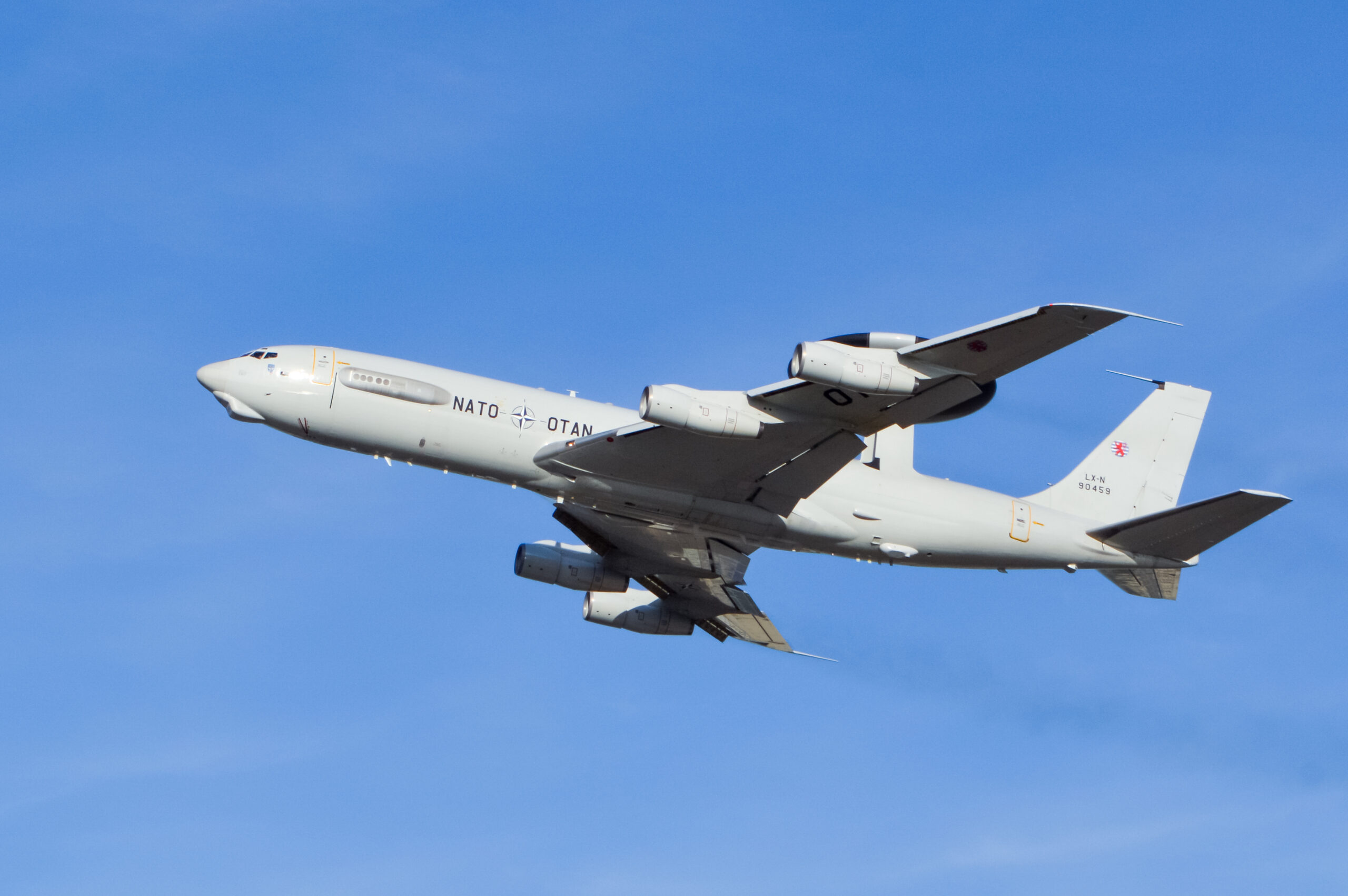
The Supreme Allied Commander Europe has authorised the forward deployment of a NATO AWACS aircraft and is examining the deployment of additional assets after Russian missiles and a drone violated Polish airspace last week, according to NATO’s spokesperson.
NATO ambassadors met in the North Atlantic Council on Monday to discuss the incursions. The spokesperson said: “Today, NATO Ambassadors met in the North Atlantic Council to discuss last week’s violations of Polish airspace. This was a dangerous incident and Russia bears full responsibility.
“NATO and Allied assets reacted quickly to the airspace violations, and the Supreme Allied Commander Europe (SACEUR) has authorised the forward deployment of a NATO Airborne Warning and Control System (AWACS) aircraft. SACEUR is now examining the deployment of additional assets as he continues to assess our deterrence and defence posture in Poland and elsewhere. All Allies stand in full solidarity with Poland. NATO remains united, ready, and committed to defending against any threat.”
On 20 November, three Russian objects entered Polish airspace during a large strike on Ukraine, staying for up to three minutes, according to the Polish defence minister. Władysław Kosiniak-Kamysz said one was most likely a Kh-101 cruise missile, found near Nowy Lipowiec, another was likely a missile and the third most likely a jet-powered drone, with debris also found near Mołodycz and Rudnik nad Sanem. He said: “Polish airspace was violated, and objects belonging to the Russian Federation entered it.”
Polish, Swedish and Dutch aircraft were scrambled but nothing was shot down because conditions did not meet Polish rules of engagement, and Kosiniak-Kamysz asked for more AWACS and F-35s and for NATO’s Eastern Sentry mission to be reinforced, the Institute for the Study of War reported. Prime Minister Donald Tusk called it an intentional provocation, and Poland did not invoke Article 4.
In August, NATO condemned earlier violations of Polish and Romanian airspace, saying: “Russia bears full responsibility for the airspace violations, which are dangerous and unacceptable”, the UK Defence Journal reported. That followed a Russian missile, most likely a Kh-101, crashing in a field near Tarnawa-Kolonia in Lublin province on 30 July, according to UK Defence Journal reporting.
NATO launched Eastern Sentry in September 2025 after Poland shot down Russian drones in its airspace, the first time a NATO member had destroyed Russian assets in its own airspace since the full-scale invasion, the UK Defence Journal reported. The mission was coordinated from SHAPE, with Denmark, France and Germany among the first to pledge aircraft, according to UK Defence Journal reporting. General Alexus Grynkewich, SACEUR, said: “NATO is not waiting, we are acting.”
Image: Timothy A. Gonsalves, via Wikimedia Commons, licensed under CC BY-SA 4.0