

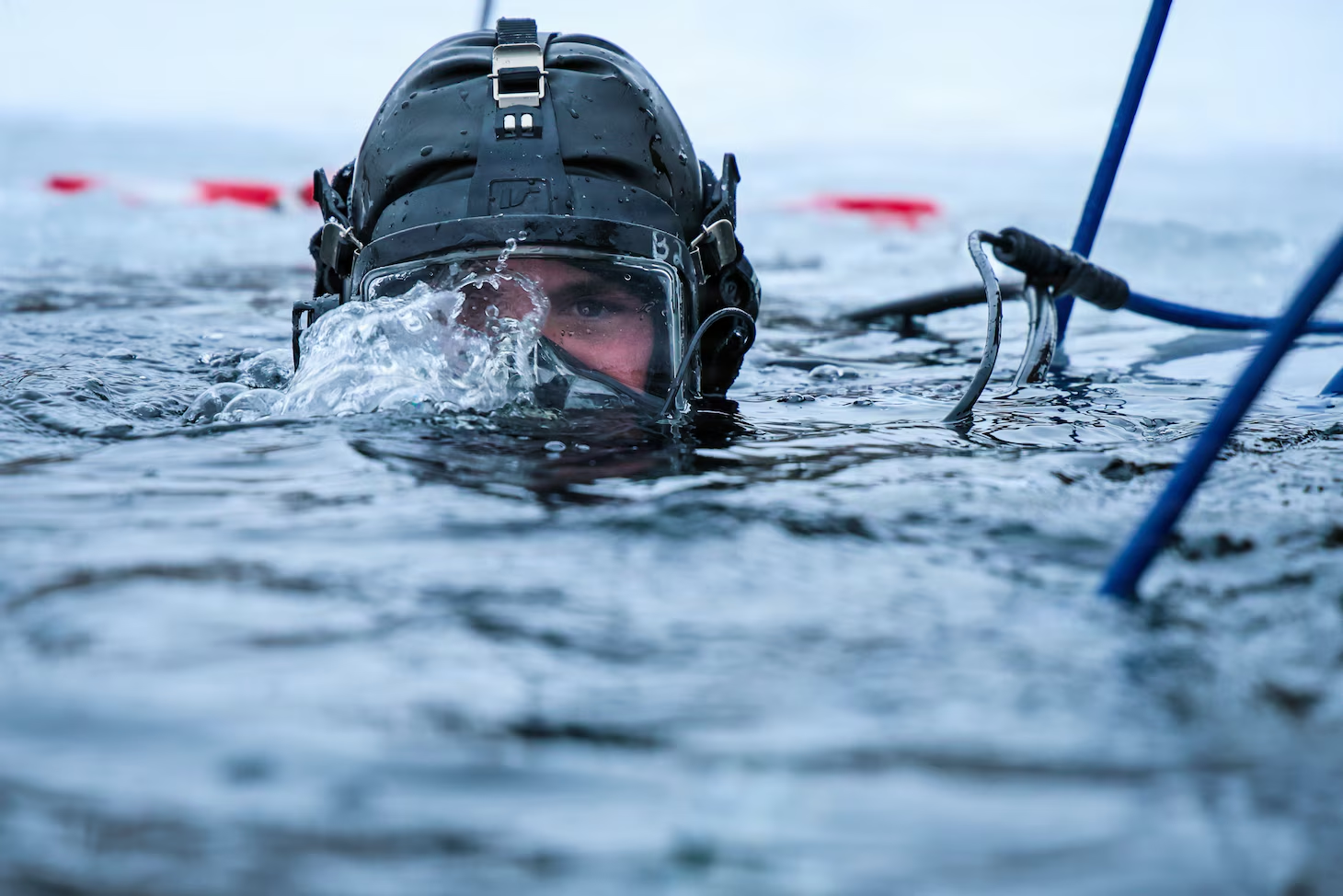
U.S. Navy Seabee divers and Estonian counterparts have conducted ice diving and underwater demolition training in Estonia.
The training, held from 31 January to 17 February 2026, involved divers from Underwater Construction Team One, Construction Dive Detachment Bravo, working alongside the Estonian Rescue Board and Estonian Navy divers. Activities took place at Rummu Quarry Lake and Miinisadam Naval Base.
According to the U.S. Navy, the exercise focused on developing cold weather diving capabilities to enhance maritime security and improve allied readiness in the Baltic. The programme included classroom instruction, pier-side safety drills, practical ice dives and a salvage survey of a submerged barge.
Senior Chief Constructionman Keith Reed, master diver assigned to UCT-1 CDD/B, said: “This opportunity builds real-world capability in one of the most demanding dive environments imaginable.”
He added: “Operating under ice requires absolute trust in equipment, procedures, and teammates, especially in conditions where precision, readiness, and discipline directly affect mission success.”
The U.S. Navy said Estonia continues to face challenges from explosive remnants of war in waterways and coastal areas. The training was described as supporting humanitarian mine action objectives and improving the ability of allied forces to detect and respond to underwater hazards affecting maritime infrastructure and commercial shipping.
Reed said: “Ice diving stresses every element of a diver’s training from planning, communications, emergency response, and execution.” He added: “Working alongside Estonian Rescue Board and navy divers allows us to exchange techniques, leverage their local expertise, and carry lessons forward that strengthen cold-weather and Arctic diving operations across the Naval Construction Force.”
Chief Builder David Madmon, diving action officer with the 22nd Naval Construction Regiment, said: “This engagement reflects years of trusted coordination with Estonia and deliberate planning across U.S. and host-nation teams.” He added: “Our role was to align the right capabilities, ensure safety and logistics were in place, and create a training environment that delivers lasting operational value for both nations.”


That’s nice… Does the Royal Navy have this ability as well?
Good question, I have no idea but I would hope it does.