

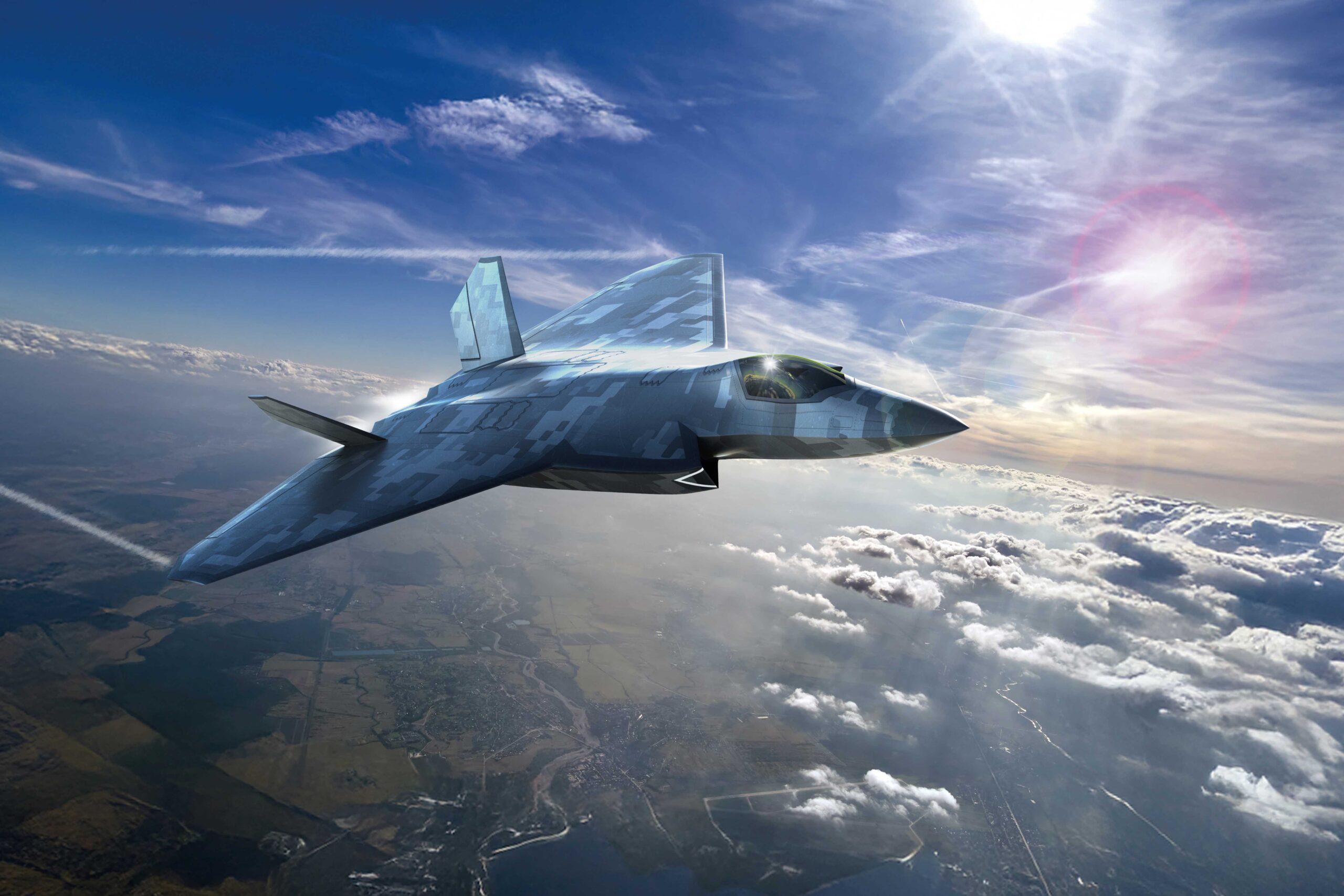
Britain will spend £8.6 billion over the next four years on the Global Combat Air Programme, the next-generation fighter being developed with Japan and Italy, the Ministry of Defence confirmed as it set out the Defence Investment Plan.
Officials said the funding, set out in the plan published on Tuesday, would carry the programme through its concept and design phases and described it as a key priority for the department, and Sir Keir Starmer confirmed it as he launched the plan, saying the government was renewing its commitment to build “Tempest fighter jets” under the £8.6 billion investment with Italy and Japan, an effort he described as developing “sixth generation stealth fighters that will secure our skies for decades to come” and rebuilding the foundations of a sovereign British aircraft industry.
The aircraft, which Britain has pursued under the Tempest banner, is intended to replace the Typhoon in RAF service and to enter service in the second half of the 2030s, and the Defence Investment Plan also commits the department to upgrading the Typhoon into the 2040s as a means of bridging the years until the new fighter arrives, with officials saying the older jet would remain the backbone of UK air defence for some time yet, while GCAP itself is being designed to operate alongside uncrewed systems and the plan separately funds a collaborative combat air programme to develop the autonomous jets that would fly with crewed aircraft.
The £8.6 billion commitment is among the largest single figures anywhere in the plan and reads as a clear vote of confidence in a programme that already supports thousands of jobs across the British aerospace sector, with Japan and Italy carrying their own parallel investments, though efforts of this kind come with well-rehearsed risks of scale and schedule attached, since rival sixth-generation fighter projects elsewhere have slipped their timelines and grown their budgets, and the money announced here covers only the next four years rather than the full life of the programme, which leaves the later and far costlier phases to be settled by future spending decisions.
Officials nonetheless presented the investment as proof that combat air remains central to the UK’s plans even as a great deal of money is shifting towards drones and autonomy.





Good – the jet has huge export potential IF governments avoid the mistakes of the past, not to mention the capability upgrades, the skills & knowledge created and retained in the UK.
Agreed, with the collapse of its only non US competitor if this is managed properly (yeah I know, I know 🤣) there should be significant sales opportunity.
I doubt if Dassault think anything has collapsed.
I think they’ll miss the German funding
doubt that very much, french Senate just approved two supplemental defense budgets of €50 billion (€36 billion followed by €14 billion
It will be significantly less capable
you havs no clue what you are talking about. France has all the expertise and industry to acxomplish the tisk
old enough to remember exact same ignorant statements made when France did Rafale from Typhoon fanboys
sorry for spelling mistakes, this touchsreen keyboard is tiny
but theres no provision for a VSTOL VERSION
I don’t think many people will be buying £200 million regional bombers from us.
It’s got as much export potential as TSR2.
Anyone who will buy it will want work share.
We are paying £16 billion+ in development for a third share on an aircraft we don’t really need.
And so speaks Labour Central. Complete with inaccurate and misleading info.
I wonder what the party view is on buying F-35A’s for nuclear bombing.
Nothing wrong with the odd bucket of sunshine being up-ended Ron, ask the Japanese, it certainly made them have a change of heart quickly enough…
I would argue we do need a capable long range door kicker Jim, its affordability of course remains to be seen.
What a fcuking usless comment – havent you got anything sensible to say
Pot Kettle !
You will be next for David’s cutting remarks halfwit, I somehow have to find the strength to go on after his rather silly attack….
Ha, I got both his “brain cells broadside” last week.
Jim said his wife mentioned something about firing blanks but It’s only rumour.
Nice to see you’re giving Jim a break I suppose David. you are an odd one, wet the bed as a child I would guess, dominated by your mother maybe??
I’m going to say short bloke syndrome too ‘possibly’, i’m visualising an angry little man with blood pressure issues…
George, can we please ban this prize idiot???
😂😂😂
What are you on about Jimbo ? Remember the Tornado was a result of collaboration and it proved successful just like the Eurofighter so why would this venture not yield a similar result?
This is welcome news for the U.K. aviation industry which we cannot afford to see fail
Agreed in full.
The TSR2 would have been bought by Australia if Labour hadn’t cancelled it.
Oh god no, not TSR2 again, ahh the TSR2 voices in my head won’t be silenced!!!!
Too late, Australia actually cancelled their official interest in TSR2 in 1963 after they had serious doubts the project would actually reach fruition. The reality is, had the Conservatives won the 1964 general election, they would have been facing cancelling TSR2 themselves.
Along with its flight test programme, that might well have uncovered other issues, it was known that production aircraft would require considerable re-design to the rear fuselage ( a very serious and extremely expensive issue, as the rear fuselage sections were manufactured in production jigs, ooops, so new jigs too). Some of the key structural alloys selected proved too fragile with a fatigue life ‘way’ lower than originally anticipated and needed swapping for heavier alternatives, its engines needed considerable addinal work, Its first generation transistor based avionics were extremely complex and unreliable.
The above issues were over and above a programme that was already over budget, net result, cancellation was inevitable, either by the Labour or the Tories.
The plus side: TSR2 gave BAC a lot of key information that later fed directly into Tornado, regarding materials and construction.
I still love the aircraft and am in awe of the incredible British cutting edge engineering that went into it. I still consider it the most beautiful aircraft that ever flew.
I think the the first time computers came to the front with the development of the TSR2.
I disagree entirely with that Jim.
It’s a potential gold mine for the UK and partners, It’s whether the Government will make the most of It’s potential that Is the main worry.
There is a problem with the current 4th and especially 5th Gen jets. The first is combat radius + duration, i.e. on-station time. A Typhoon based in Cyprus on a mission to Yemen, has to carry either 2 or 3 1000 litre drop tanks, as well as being mid-air refuelled. By carrying the drop tanks, removes the number of weapons that can be carried. The mid-air refuelling is needed to get the jet to designated area, whilst the drop tanks allow it carry out the mission, then again be mid-air refuelled on the way back. Today both Russia and China have developed very long range air to air missiles, which are designed to attack the strike enablers, i.e. AEW and tanker support. If the threat of these long range missiles denies the tanker to get to the needed area, a long range Typhoon strike won’t be doable!
The second major issue is payload, which for 4th Gen jets isn’t really a problem, except when facing a peer air defence system. Where their non-stealth, puts them at significantly greater risk. If you have a look at the current crop of 5th Gen jets starting with the F22 and F35. To maintain their low observability, they must carry their weapons internally. Which for both jets means they can only carry 6 (F22, F35A&C) beyond visual range air to air missiles (BVRAAMs). In a peer vs peer 5th Gen fight, the expectation is that you will need 2 BVRAAMs to knock out your opponent. Which in essence means, you’ll only be able to engage 3 peer enemies.
The chief of The Air Staff, laid out his primary requirements for GCAP a couple of years ago. Which was for an aircraft with a very long unrefuelled range and at least double the weapons payload capacity of the F35A. To match the fuel usage of the Typhoon’s Cyprus to Yemen mission and limit the amount of mid-air refuelling required. You will need to carry a lot of internal fuel, at least 3 times as much as the Typhoon currently carries. The volume needed to carry this amount of fuel will need a physically larger airframe. The second problem is the weapon/s bay/s. These takes up the space normally reserved for fuel and air intakes. The air intakes can’t be shrunk in cross sectional area, as the engines will require x amount of airflow to cover all the conditions from idle to max reheat. So the intakes will have to be routed around or over the weapons bay. Then there’s the question of what will the bays carry. If you want to carry Storm Shadow, which is 5.1m long, 630 mm (25 in) and 480 mm (19 in) wide, then the bay needs to have a gap around the weapon of around 10cm, to allow armourers the necessary hand space to fit and connect the weapon. Leaving you with the need for a huge hole in the underside of the aircraft, especially if you need to carry two air to surface weapons, along with a number of air to air weapons. Which means along with the fuel and the weapons bay requirements, the size of the aircraft to carry all of this, is going to be a lot bigger than a Typhoon.
Speaking under the Chatham House Rule at the IQPC IFC 2025 in Rome, a government official said that weapons payload and its delivery are the top priorities for the GCAP programme:
“When we say payload everyone thinks weapons, and I’ll make no bones about it that with GCAP we are aiming to go for a significant payload increase because somebody’s got to get that ordnance in there and I don’t want to have to fight my way in and out every time. So what we want to do [as GCAP] is as we go in is to try and carry as much as we can ourselves, and having a weapons bay which is large for large weapons that can go further and so our effects reach is extended even further,” the official explained.
For these large weapon systems, the official noted the Northrop Grumman AGM-88G Advanced Anti-Radiation Guided Missile – Extended Range (AARGM-ER) and Kongsberg-RTX AGM-184 Joint Strike Missile (JSM), as being two heavy and long-range missiles of the type that GCAP will likely be required to carry. “You only get to cut the weapons bay once – with mission systems and open architectures you get a lot of ‘re-attack’ on a lot of things, but with the weapons bay you get one go to get it right. So we are spending a long time thinking very carefully about that. And in terms of the integration solution, it is working with weapon manufacturers early in the process, alongside the industries of the three nations.”
At least with 3 equal partners, the cost burden of R&D is shared. France, along with Spain, have to fork out the costs between them, now that Germany has left the FCAS/SCAF program.
DaveyB,
Probably a very small probability that GCAP/Tempest will not meet or exceed all technical performance metrics and adhere to the nominal development schedule (courtesy of Japanese participation). Issue insufficiently addressed may well be 6th gen cost growth, especially for the Italian and British defence budgets. Per unit cost may compel RAF to designate these as strategic assets, largely relegated to nuclear strike role. F-47 may have the identical issue. Concerned there may not be an elegant, or even workable, sol’n … 🤔🤞
I think the cost growth is the elephant in the room. if we look at the unit cost of the F22, which had its numbers chopped. The cost per airframe when including the R&D was around $300M. How many F47s are the USAF looking to buy, will they match the current F22 order of 185 jets? The current rumour for the per unit cost of the F47 is similar to the all in F22 cost of $300M. But what of GCAP? I do not see GCAP being in the same price bracket, as I doubt our Government could stomach a 300M jet, but it is definitely going to be more than a new Typhoon, which is around $125M for the Tranche 4/5 with all the goodies. I suspect they will be closer to $200M, which will likely limit the numbers bought. However, the big driver will be the number of production aircraft orders, as the greater the number the lower the per unit cost.
Looking at the current fleet of RAF Typhoons (Tranche 2&3) at 107, the Italian Typhoons at 95 and the Japanese F15Js at 199. Will the Governments do a 1:1 replacement, with an order of 405 jets. Knowing the UK and the recent history of buying jets, they will initially promise large order, but in reality a much smaller order will be purchased.
I definitely see GCAP as being the second string to the UK’s nuclear capability, though nothing has been said about this requirement. Unlike the F35, it will have the range for strategic strikes, especially when carrying something similar to the French ASN4G.
Agree completely w/ post. The armchair airpower pundits state the CCA escort fleet will significantly decrease the risk profile across the spectrum of potential missions. Gray haired veterans are more circumspect in assessments, and require proof of concept before declaring mission success. 🤔🤞
We will need it if Russia and China come at us from the North, South and East……….
Based on what? Maybe all the experts are wrong and you are right?
Based on what???
Apologies, both those insightful replies were for the amazing message by Jim
Its a multi role aircraft design to replace the F2, F15j and the Typhoon. There’s a huge export market, especially in the Middle East.
From the designs available this has not an huge export potential, au contraire.
It seems to be a very expensive big multi engine aircraft.
Missiles are taking over for offensive work and countries do not need to train pilots, neither special engineering for maintenance for them, plus due to much less technology necessary already accessible to medium powers, missiles allow them be independent.
There are pros and cons. I read somewhere that this might have the range to go across the Atlantic on its own. I do have mixed feelings about it though. How many can we afford, etc. I wonder if it should have been called Vulcan 2. Anyway, we have the single engine F35 so this will offer something different. Depending on the price this could have export potential. The US F47 will apparently be really expensive so even if this is pricey it could significantly undercut it, and be easier to use with UK / European weapons. I’m sure it will make a great North Sea patrol aircraft which is what we need.
Did you copy and paste that from a 1950s newspaper? The ‘missiles make aircraft obsolete’ argument is as old as the missile itself. I should think the development and deployment of the aircraft will both be very useful.
I was concerned that Starmer & Rachel Joicey would cancel the project just as Denis Healey did under the Harold Wilson government with TSR-2. That too was an aeroplane 20 years ahead of its time that Labour’s cancelation led to gaps in our UK defence and lost export orders. As a sign of the significance of TSR-2, the follow-on after the Jaguar was the Tormado which encompassed all the developments matured over time from TSR-2
They were British aircraft which worked – unlike the F-35 which is not and does not
I’m sure japan, and alot us can breathe a sigh of relief.
Thank heaven for that, shouldn’t have needed a DIP to confirm the investment mind which has annoyed our partners somewhat. This is despite the idiots at the Telegraph et al (rapidly becoming US tools of disinformation thanks to its online advertising) a no brainer. Never has such an opportunity existed to create not just a technological success but a commercial one too thanks to focus, World events and rival’s missteps, be it the transactional restrictive nature of US politics or the infighting that’s brought down the FCAS. All manner of increased sales and tier Two opportunities have developed as a result. US behaviour and the limitations of the F-35 both aircraft and programme has pretty much destroyed the inherent advantage US programmes have held since the war on aircraft sales and with no FCAS to fight for World markets the potential here is well out of this World as long as we continue to manage it sensibly and don’t own goal it. Canada is on the brink of requesting observer status and many more will no doubt join in at that level or express interest as time passes, especially once the test aircraft flies and hopefully becomes proof of concept in design and technology development. Equally important if it does meet that full potential it could tie in markets for future projects, something we so badly failed to do historically and leading eventually to so many failed businesses and lost opportunities. If we can sustain this in the air and with naval ships we can perhaps feel less bad about failures to do so on land systems, perhaps even use it to re-generate opportunities there too eventually.
Its a relief, it really is, I suspect the amount actually required will be closer to $16 billion in the long term, but thank god the starter pistol has finally been fired!
As I’ve mentioned elsewhere, the RAF will be very happy, GCAP go ahead and its preferred option, the F35A ordered too.
I suspect the tranche of 12, will only be the first, as the RAF build a next gen high tech fleet of heavy and medium fighters, with loyal wingmen, to replace Thypoon by 2040 ish.
F35 A is cheap aswell. What 80 million or so and Tyhoons like 80-100m. New Tyhoons dont make sense, UNLESS they are ONLY for QRA which would make sense even up to 2050 etc
These new F35s should be hear by what 2032? We wont be able to order any more than 2 squadrons worth by the time Tempest comes
Mehh
@ John Clark
Can’t you even spell properly? it’s TYPHOON, idiot
Can’t you even spell properly? It’s Typhoon, you idiot.
A number of thoughts here. Firstly, costs need to be managed – no expensive compromises if everyone wants something different! Secondly, it needs to be set up from the beginning to carry all the European/Japanese missiles – with US missiles as an after thought or for export markets. Those weapons would ideally include any nuclear bombs/missiles that we develop or buy in. Thirdly, it needs to enter service as quickly as possible with no delays.
I hope it’s worth it. That £8.6bn could more than double the size of the UK’s F35 fleet.
The UK’s share of the total development costs, £16bn (so I hear), could buy 150+ F35s. Not to mention the actual capital costs.
Don’t forget to subtract UK exports from your costs. UK’s share of overseas sales of Typhoon, even though not generally seen as a great export success, are nevertheless £22.5bn over the last 20 years. The reason we also get significant sales value from the F-35 programme and the Gripen is because of UK expertise, which you only get from doing.
That might be true, but the F35A also has a range and payload issue. Which means it must have air tanker support to reach its target/release point. GCAP is being designed to remove the constant need for tanker support. But being capable of carrying a much bigger payload as well.
good- get it pushed through to completion- this has the potential to be an industrial capacity boom and absolute world-wide best seller- as long as capability is matched by actual numbers in service- which will be determined by costs per airframe- if the defence companies get greedy it will fail.
Tempest is big, very very big, think F-111/F-14 sized big.
Have you got the specs please, I’d love to see them ?
The mock up displayed had a 19m wingspan but that’s only been a concept. Some real figures will come into the public domain next year when a demonstrator will be in the air.
Hi Mate, a lot can be derived from the aircraft’s requirements as stated by the CAS. Massive unrefuelled range and at least double the internal payload of the F35A. There’s only so many ways that can be packaged together. For example, the Typhoon carries around 6200L of fuel internally, with the option of carrying up to 3 external 1000L drop tanks, to give a total of around 9200L. Which gives it a ferry range of around 2900km, with no underbody or wing stores and the pilot is flying economically. Put some stores under the wing, this drops to around 1400km. Exuberant use of the afterburners, this can reduce by half.
The artists impressions of the jet shown so far, the aircraft has a large delta wing mounted on to quite a wide blended body. Deltas are good for transonic and supersonic cruising, as well as enabling a lot of internal volume for fuel. The wide fuselage will be good for generating additional lift, but more importantly be able to house not only the engines and necessary intakes, but also a big weapons bay. But none of this can be packaged in an aircraft the size of a Typhoon. The aircraft will be at least twice as big, so it can carry the fuel, weapons, bigger engines etc. The similarities between the F111 and GCAP may be correct. Though I think the GCAP will be a bigger overall aircraft than the F111, as the F111 wasn’t packaged all that well due to the swing wing configuration. Don’t forget the naval version of the F111 was replaced by the F14, so a fighter the size of the F111 does have some precedence.
Thanks Davey, I’m entirely happy that It will be all of that but I just have not seen any confirmation of final specs. Hence my asking.
This project just must go ahead In my mind. I can also sense the potential for sales/Jobs will be huge.
(I always appreciate your posts, you should comment here a lot more, you’re one of the few I take seriously…. just sayin).
From my understanding the weapons bay dimensions have been a major bone of contention between all Nations. Its one of those design choices that when made and where the aircraft is put into production it can’t be changed. You’re either stuck with what you’ve got or face a complete fuselage redesign along with the incurred costs and production delays.
In some ways the South Korean KF21 has shown a different path to getting an aircraft into production. Where it has started out with under fuselage slots for AMRAAM/Meteor in the Block 1 version. Then with the Block 2 version, they’re introducing a weapons bay, for internal carriage, to give it a more 5th Gen stealthiness. Which is probably fine for a smaller aircraft, not the GCAP.
I have absolutely no doubt that the jet will be going ahead. Appointing the ex-Japanese defence minister as the head of GIGO, means he won’t put up with BAES excuses. You get one deliverable delay, then you either deliver or face penalties is the Japanese business model. They don’t like adding delays onto delays, as its not part of their ethos. Additionally Japan have an urgent requirement to get the jet as soon as possible, due to the growing obsolescence of the F15J, which is their main long range air defence fighter.
JASDF have a requirement to provide a CAP as far south as Taiwan from mainland airbases.
Do that math – this things got very long legs
It’s a Hefty boi
https://x.com/nicholadrummond/status/1919740381165506585?s=61
Estimated Physical Dimensions & Weight of Tempest/GCAP
Length: Approximately 62.3 feet (19.00 metres).
Wingspan: Approximately 44.3 feet (13.50 metres).
Height: Approximately 16.4 feet (5.00 metres).
Maximum Take off Weight: Estimated over 30 tonnes (exceeding the Eurofighter Typhoon’s 23 tonnes).
Performance Targets
Estimated Top Speed: Up to Mach 2.1 (Approx. 1,600 mph / 2,500 km/h).
Combat Radius / Range: Estimated 1,500 miles (2,415 kilometres), designed for “really extreme range” deep into enemy territory.
Climb Rate: Engineered to go from a standstill to cruising altitude in less than 5 minutes
Good thing we’ve got two large carriers then.