

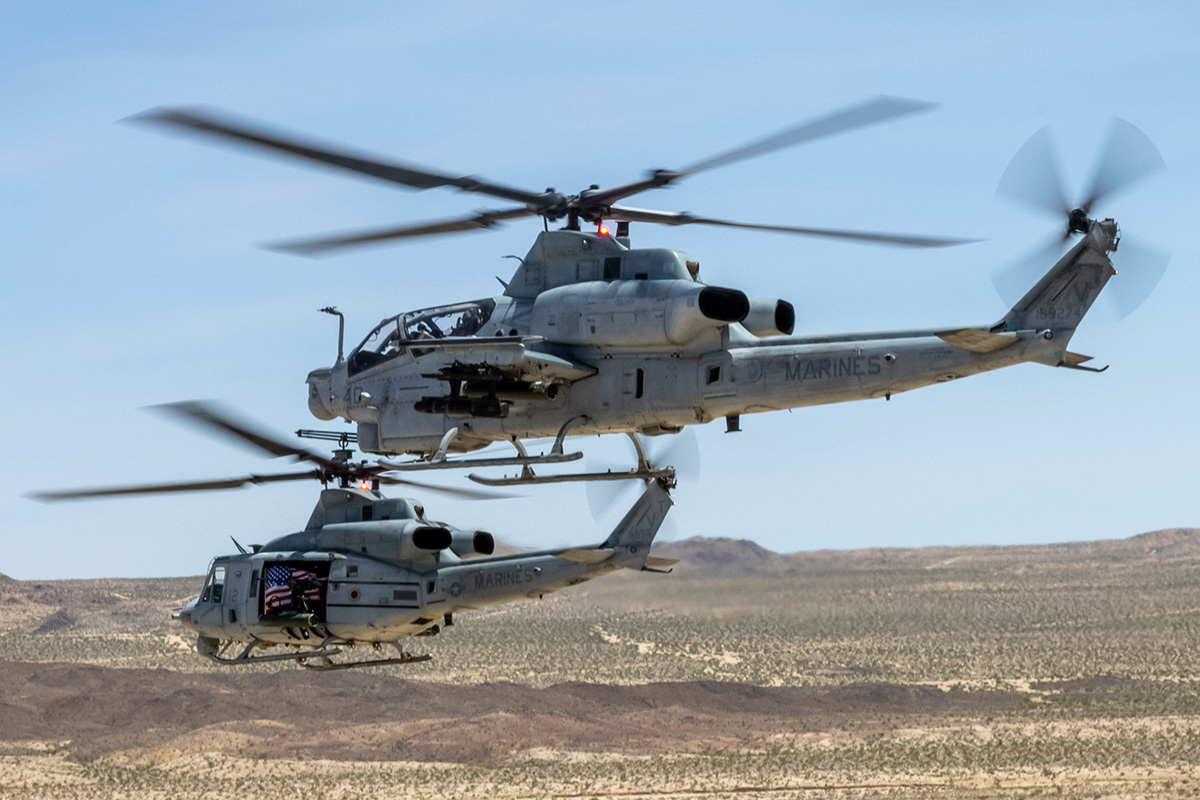
Bell has been awarded a contract estimated at $300 million to fit structural and electrical upgrades to 49 United States Marine Corps AH-1Z Viper and UH-1Y Venom helicopters, opening the way for Link 16 and networked weapons on the fleet, the company stated.
The award from the Department of the Navy covers Structural and Power Improvements for NextGen Effects, known as SPINE, and runs as a base period with three option years. Designated Phase 3.0, it covers 28 Vipers and 21 Venoms, with work starting at Bell’s Amarillo Assembly Center in Texas in mid-2027 and first deliveries of modified aircraft in 2028. The contract combines firm-fixed-price, fixed-price incentive and cost-plus-fixed-fee elements.
The programme, previously known as SIEPU, increases the electrical power available on the airframe and reworks the internal architecture so newer systems can be integrated. According to Bell, the resulting Series A configuration brings improved defensive systems, digital interoperability and the ability to carry net-enabled weapons and data links. Also included are changes to the Venom’s fast rope, hoist and litter kit intended to support personnel recovery from austere locations.
Danielle Markham, programme manager at Bell, said the phase “emphasizes the importance of this essential modernization effort” and enables the fleet to remain competitive against current and future capabilities.
Colonel Jason Duke, programme manager at PMA-276, said the H-1s are essential to Marine Corps attack, strike and utility capability, and that SPINE will “ensure the H-1 fleet will continue to be relevant into the 2040s”.
The company sets out the tactical case in terms of pairing helicopters with fixed-wing aircraft. With Link 16 and longer-range networked weapons, Bell says the Viper and Venom can operate low enough to sit beneath radar resolution cells while receiving target locations from fixed-wing platforms standing off outside enemy missile range, allowing the helicopters to contribute to the maritime fight in ways not previously available.
Bell completed the first SPINE conversions on one Venom and one Viper in autumn 2025, and those aircraft went to Naval Air Station Patuxent River in Maryland for flight testing. The current contract marks the transition from prototype work to fleet modification, with the aircraft to be fielded through subsequent efforts.
The AH-1Z and UH-1Y emerged from the H-1 upgrade programme launched in 1996, which took the Marine Corps’ Cobra and Huey fleets and gave both a common four-bladed composite rotor system, common engines, drivetrain and much of the same cockpit, cutting the logistics burden of running two types. The Venom reached initial operational capability in 2009 and the Viper in 2011, and the Corps ended new-build procurement in recent years with roughly 350 aircraft delivered between the two variants.
Both types have found export customers. The Czech Republic operates a mixed fleet acquired through Foreign Military Sales, Bahrain has ordered Vipers, and Nigeria and Slovakia have also taken aircraft, with several of those deliveries arranged as transfers of surplus or reallocated airframes. The Marine Corps meanwhile faces a longer-term question over what follows the H-1, with the Corps having examined options under attack and utility replacement studies without committing to a new programme.




Logistically & Operationally, the USMC has this sorted, smaller footprints that BlackHawks & Apaches and many, many common parts and flying characteristics.
I know helicopters would be extremely difficult to use in a modern battlefield, but realistically attack helicopters are needed to support any form of marine engagement, as heavy weapons would take time to get to shore. When you compare the US helicopters firepower to the UK version which only has machine guns it’s shocking.
I was watching a video on operation barras, as the lynx providing rocket fire helps prevent the counter attack. Unless there are Apache on board (not designed for maritime operations) then that capability is gone.
Isnt that only the naval version and not the one used by the marines, not seen mention of the marine versions having the capability
There was an interview with someone senior in the marines not that long ago where he was heavily indicating they needed to up gun the wildcat and were looking at options. Assume one option was not to do so due to lack of funds.